Beyond the Grid: Integrating Solar Power Systems with 48V DC Telecom Plants

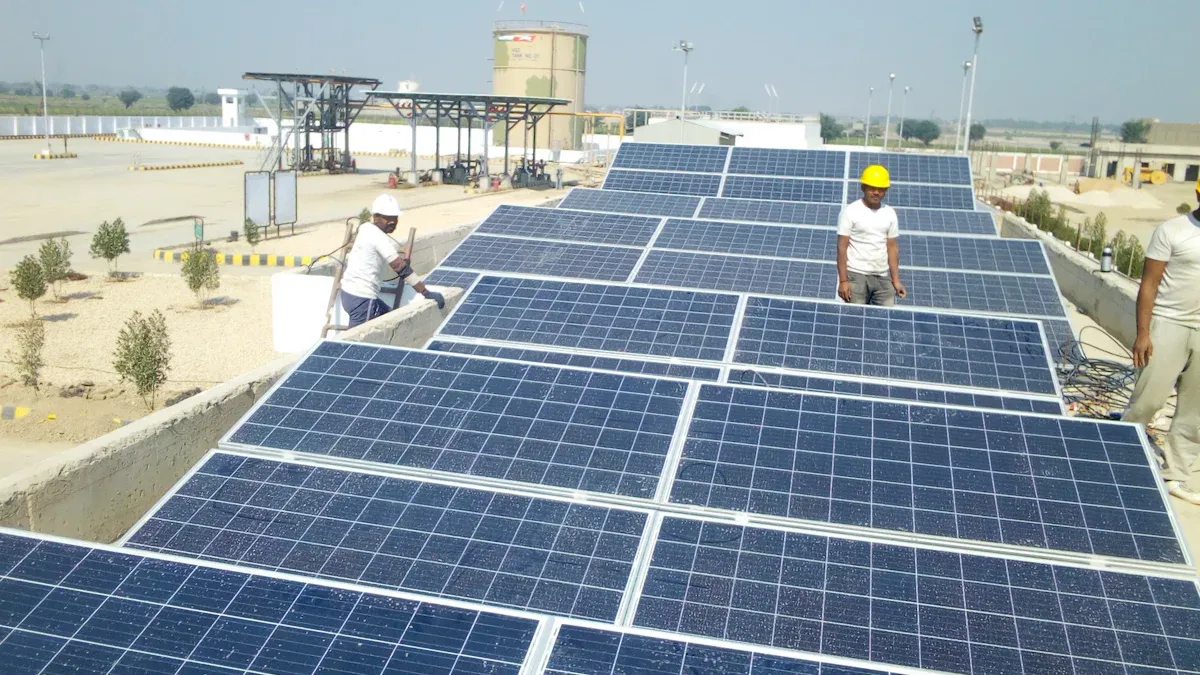
You can increase reliability and sustainability at your telecom site by integrating Solar Power Systems with 48V DC plants. This approach works well because hybrid inverters manage electricity consumption efficiently. You use generated electricity immediately or feed it into the grid, which optimizes energy use and reduces reliance on expensive storage systems.
In 2024, solar power supplies energy to 12% of global telecom tower sites.
By 2030, this number is expected to reach 20%.
Hybrid and backup solutions benefit both remote and urban telecom locations. When you choose these systems, you lower costs, improve reliability, and support sustainability.
Key Takeaways
Integrating solar power with 48V DC telecom plants can cut fuel costs by up to 80%, leading to significant savings.
Solar systems help reduce carbon emissions, supporting sustainability goals and meeting regulatory requirements.
Proper site assessment and system sizing are crucial for ensuring reliable power and avoiding costly mistakes.
Using hybrid systems can improve energy reliability and reduce downtime by combining solar power with generators.
Regular maintenance and smart monitoring are essential for keeping solar telecom systems running efficiently and safely.
1. Benefits of Solar Power Systems for 48V DC Telecom
Cost Savings and Fuel Reduction
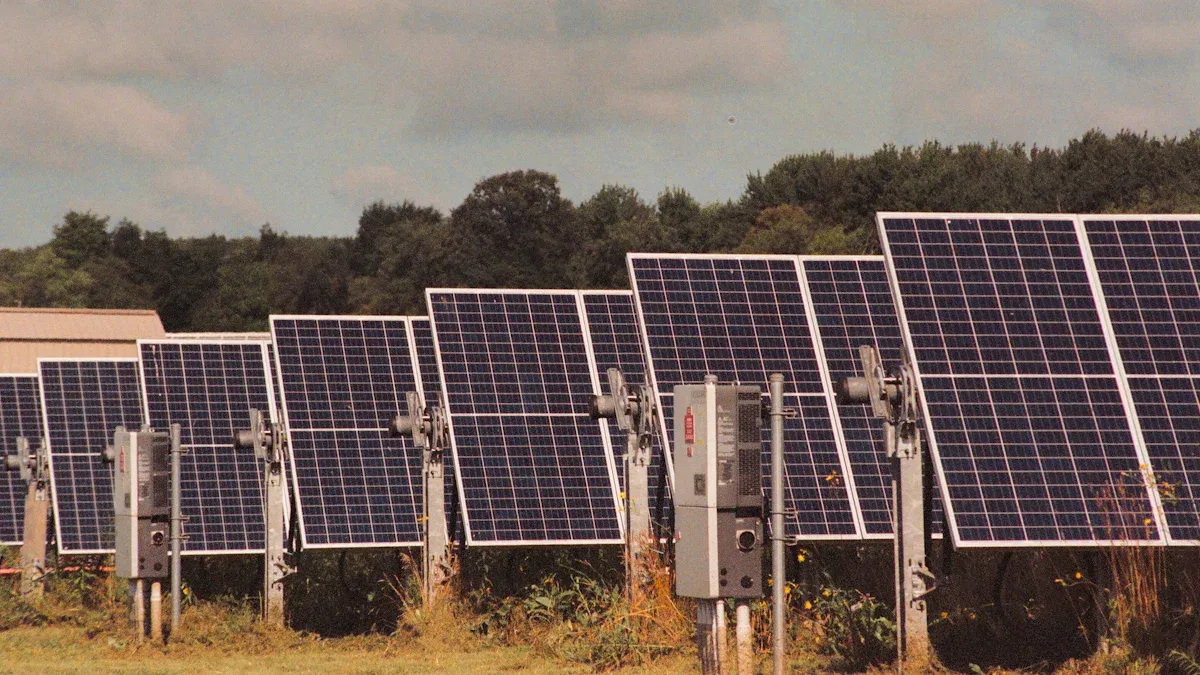
You can achieve significant cost savings by switching to Solar Power Systems at your telecom sites. These systems help you cut fuel expenses and reduce generator run-time. Here are some key savings you can expect:
Solar-powered towers can reduce fuel consumption by up to 80%.
Solar light towers save 68% on fuel compared to diesel generators.
Hybrid systems can reduce generator use by 93.6%.
Some telecom operators have reported annual fuel savings of $31,900 per site.
Tip: Lower fuel use means fewer deliveries and less risk of supply interruptions, especially in remote areas.
Sustainability and Emissions
Solar Power Systems support your sustainability goals. You help the environment by reducing emissions and using clean energy. Many countries encourage solar adoption through policies and incentives. These include:
Renewable Portfolio Standards that require a certain percentage of energy from renewables.
Solar Carve-Out Programs that create markets for Solar Renewable Energy Certificates.
Financial incentives like tax credits and subsidies that lower your investment costs.
Understanding the policy landscape helps you maximize the benefits of solar integration and meet regulatory requirements.
Versatility for Urban and Remote Sites
Solar Power Systems offer flexibility for both urban and remote telecom locations. The table below shows how these systems adapt to different environments:
Application Area | Benefit | Description |
|---|---|---|
Urban Areas | Cost Reduction | Hybrid systems integrate solar panels with grid electricity to lower energy use during peak hours. |
Remote Areas | Reliable Power | Off-grid solar energy systems provide consistent power, improving service reliability and reducing operational costs. |
Environmental Impact | Pollution Reduction | Solar systems operate without emitting pollutants, making them eco-friendly solutions. |
You can also combine solar with wind or battery storage in rural areas. This ensures reliable power even when infrastructure is limited.
2. Key System Components
Solar Panels and Direct DC Coupling
You start with solar panels as the main source of renewable energy. These panels generate DC electricity, which you can connect directly to your 48V DC telecom plant. Direct DC coupling reduces energy loss because you avoid unnecessary conversions. You must check that the voltage output from your solar panels matches the requirements of your telecom equipment. If you size your solar panel strings correctly, you improve efficiency and prevent equipment damage. Pay attention to MPPT (Maximum Power Point Tracking) compatibility, as it helps you get the most energy from your panels.
48V Lithium-Ion Batteries
You rely on 48V lithium-ion batteries for energy storage. These batteries offer a long service life and deep discharge capability. You can see their main characteristics in the table below:
Characteristic | Description |
|---|---|
Long service life | 8–10+ years |
Deep discharge | ≥80% Depth of Discharge |
Compact footprint | High energy density |
Maintenance | Virtually maintenance-free |
Thermal stability | Performs well in hot/cold environments |
You benefit from advanced battery management systems that optimize performance and extend battery life. These batteries can last for about 3,000 charge cycles, which is three times longer than traditional lead-acid batteries. You also enjoy lower maintenance needs and reliable operation in extreme temperatures.
Charge Controllers and DC-DC Conversion
You use charge controllers and DC-DC converters to manage the flow of energy from your solar panels to your batteries and telecom loads. These devices ensure safe charging and efficient power delivery. The table below shows key features:
Feature | Description |
|---|---|
Functionality | Converts solar energy into 48V DC for telecom loads |
Efficiency | Achieves up to 99.9% conversion efficiency with MPPT tracking |
Input Range | Supports 65~200VDC input voltage |
Communication | Allows remote management via RS485 or Modbus protocol |
Design | Easy installation and maintenance, even in remote locations |
You get the best results when you use controllers with high MPPT accuracy and wide input voltage support. This setup helps you maximize energy harvest and reduce carbon emissions.
Integration with Existing Infrastructure
You must ensure compatibility between your new Solar Power Systems and your existing 48V DC telecom infrastructure. Voltage matching is critical. If the voltage from your solar panels does not align with your system, you risk underperformance or damage. You should also check string sizing and power ratings to match your equipment. The NetSure™ 7100/5100 series supports efficient integration, offering flexible battery compatibility and high conversion efficiency. These systems help you upgrade your site without major changes, making the transition smooth and reliable.
Tip: Always verify voltage and current ratings before connecting new components to your telecom plant.
3. Integration Steps
Site Assessment
You start by evaluating your site to ensure solar integration is practical. Follow these steps for a thorough assessment:
Complete a feasibility study to check if solar power fits your needs.
Measure sunlight availability, shading, and local weather patterns.
Analyze environmental conditions such as temperature and dust accumulation.
Check if your site has enough space and structural support for solar panels.
Assess the energy requirements of your telecom equipment.
Use solar mapping software to evaluate sunlight exposure.
Monitor environmental factors to optimize your system design.
Tip: Accurate site assessment helps you avoid costly mistakes and ensures reliable system performance.
System Sizing
You must size your system correctly to meet your telecom plant’s energy needs. Consider these factors:
Energy Demands: Calculate how much energy your equipment uses, especially during the month with the highest demand.
Critical Design Month: Identify the month with the lowest solar insolation and highest load to determine system capacity.
System Availability: Check how often your system can meet energy needs throughout the year.
Battery Sizing: Choose battery capacity based on daily energy use and desired backup days.
Array Sizing: Size your solar array to cover load during the critical month, accounting for system losses.
Proper sizing ensures your system delivers reliable power year-round.
Wiring and Protection
You need safe and efficient wiring for your solar power system. Follow these best practices:
Use certified electrical equipment from reputable labs.
Size wires and conduits for current capacity and site conditions.
Implement grounding and bonding to reduce shock risks.
Install circuit breakers or fuses for overcurrent protection.
Set up a disconnecting method for maintenance and emergencies.
Maintain clearances around equipment for safety.
Label all components and keep documentation for safe operation.
Schedule regular inspections to maintain safety and compliance.
Installation and Commissioning
You finish by installing and commissioning your system. Key steps include:
Step | Description |
|---|---|
1 | Prepare the plant for energization with pre-commissioning activities. |
2 | Use a checklist to confirm all components, including inverters, modules, and cabling. |
3 | Perform operational checks and tests on energized systems. |
4 | Conduct functional tests and measurements before energizing, following IEC 62446 standards. |
5 | Submit a test protocol summarizing results to the asset owner. |
6 | Fix any faults found during testing and retest as needed. |
🛠️ Careful installation and commissioning guarantee safe operation and long-term reliability.
4. Challenges and Solutions
Power Reliability
You face several operational challenges when you transition to Solar Power Systems for telecom sites. The table below highlights the most common issues:
Challenge | Description |
|---|---|
Unreliable Power Supply | Off-grid telecom sites often experience interruptions, causing dropped calls and equipment failures. |
High Maintenance and Fuel Costs | Diesel generators require costly fuel and frequent maintenance, especially in remote areas. |
Safety and Thermal Risk | Lithium-ion batteries can overheat or catch fire in high temperatures. |
Logistics and Deployment Complexity | Remote sites are hard to access, making equipment deployment slow and difficult. |
Environmental Impact | Diesel energy models increase carbon footprints and may not meet new sustainability standards. |
Reliable power supply is essential for telecom operations. You can improve reliability by using hybrid systems and monitoring energy production.
Battery Management
You optimize battery performance by using a Battery Management System (BMS). Here are key strategies:
A BMS manages charging cycles to prevent overcharging and deep discharges.
It monitors battery health and balances charge among cells.
Integration with solar inverters increases energy extraction, sometimes by up to 20%.
The BMS enhances safety and extends battery life.
Proper battery management protects your investment and ensures consistent power for telecom equipment.
System Monitoring
You maintain long-term reliability by monitoring your system. Important practices include:
Advanced monitoring checks the health of batteries and rectifiers.
Tracking energy production helps you avoid outages.
Monitoring battery health ensures reliable energy for telecom micro towers.
System monitoring allows you to detect problems early and maintain stable operations.
Maintenance Strategies
You extend the life of your Solar Power Systems by following effective maintenance strategies:
Control temperature using HVAC systems or insulation to keep batteries between 68°F and 77°F.
Clean terminals and check voltage regularly.
Conduct visual inspections and monitor battery temperature.
Follow manufacturer-recommended charging profiles and avoid deep discharges.
Use personal protective equipment and ensure proper ventilation.
Regular maintenance and smart monitoring help you catch issues early and keep your system running safely.
5. Real-World Cases and Future Trends
Successful Deployments
You can learn from several successful deployments of solar power systems in 48V DC telecom plants. These projects show how solar energy supports reliable telecom operations in challenging environments.
Project Name | Location | Configuration Details | Applications Description |
|---|---|---|---|
Project 1 | Afghanistan | 7.1 kWh Modules at 48V, Solar + Generator | Backup power for telecom sites in extreme conditions, enduring -10°C temperatures. |
Project 2 | UAE | 142 kWh at 48V, 88 kW hybrid inverter, 110 kW solar | Provides 48 hours of backup for critical loads in remote areas. |
Project 3 | UAE | 128 kWh at 48V, 100 kW hybrid inverter, 110 kW solar | Ensures uninterrupted operation with fast response time during night using stored energy. |
AT&T Project | California | 15 kWp solar PV array, 60 kVA diesel generator, 12 modules of 3.55 kWh at 48V | Reduced diesel generator runtime from 6 hours to 50 minutes, leading to significant operational cost savings. |
Etisalat Project | UAE | 30 kVA Diesel Generator, three 7.1 kWh ENCAP modules | Reduced diesel generator runtime to 6 hours, showcasing efficiency in off-grid telecommunications. |
These examples highlight how you can achieve reliable backup and reduce operational costs by integrating solar solutions.
Hybrid Solar/Generator Systems
You can boost energy reliability by using hybrid solar/generator systems. These systems combine solar panels with generators, offering several advantages:
Benefit | Value |
|---|---|
Reduction in generator use | Over 90% |
Reduction in downtime | 25% |
Decrease in operational costs | Nearly 50% |
Energy consumption reduction | 18.2% |
CO₂ emissions reduction | 15.6% |
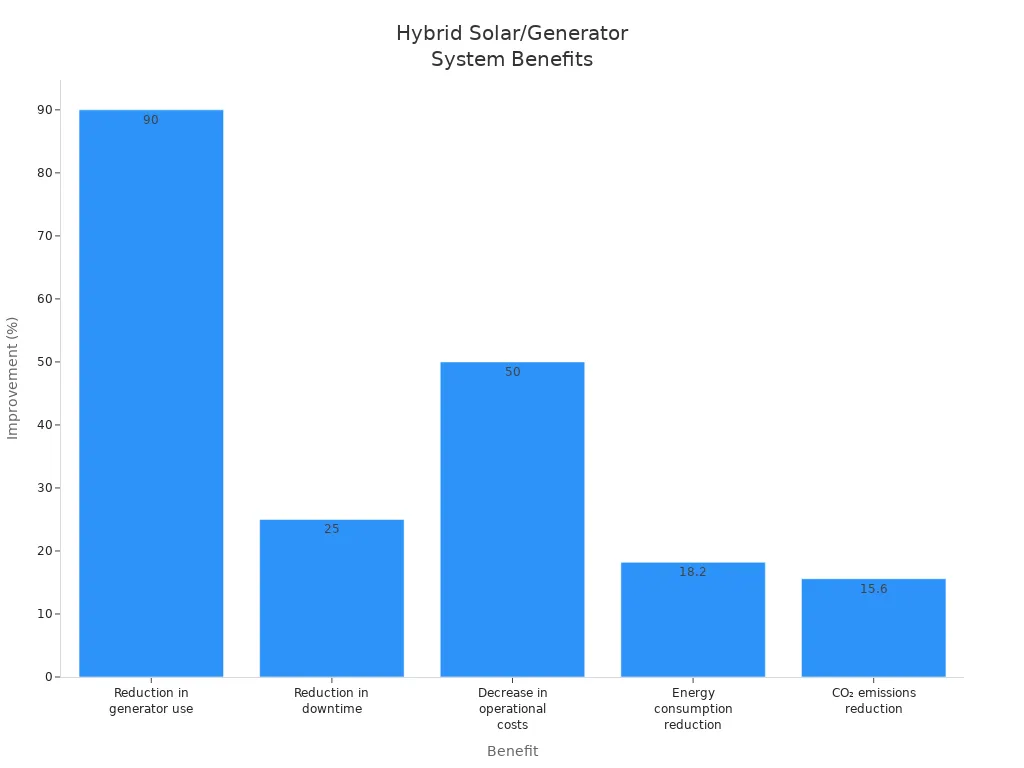
Hybrid systems help you maintain uptime and cut costs, especially in remote or off-grid locations.
Performance Data
You can measure the impact of solar-powered telecom plants by looking at performance data. The following table summarizes key results:
Evidence Type | Description |
|---|---|
Energy Savings | The hybrid BESS can reduce fuel consumption by up to 30%, extending generator life and lowering CO₂ emissions. |
Uptime | The BESS ensures uninterrupted power for telecom sites, providing reliable 48Vdc output. |
Reliable performance data shows you can expect both energy savings and improved uptime.
Smart Monitoring and Scalability
You can enhance operational efficiency and scalability with smart monitoring technology. Here are some innovations you should consider:
Modular, plug-and-play systems simplify deployment for remote sites.
IoT frameworks predict efficiency and ensure stable electricity generation.
AI improves energy efficiency and forecasts demand trends.
Real-time analysis of weather and consumption data maximizes system performance.
Advanced energy management platforms supervise energy distribution for expanding networks.
Smart monitoring helps you scale your solar-powered telecom systems and maintain high efficiency as your network grows.
You gain many advantages by integrating solar power with 48V DC telecom plants. The table below highlights real-world benefits and long-term impacts:
Case Study / Impact | Key Outcome |
|---|---|
Remote Sites (Afghanistan) | Reliable operation in harsh conditions |
Off-Grid Sites (UAE) | Lower OPEX, reduced diesel use, ensured uptime |
Carbon Savings | Lower emissions, cleaner energy |
Energy Security | Less reliance on fuel, stable power supply |
To maximize results, you should:
Assess your site’s power needs and location.
Choose efficient solar panels and long-life batteries.
Use monitoring systems for better performance.
You help your network succeed and support global sustainability by making this transition.
FAQ
What is the main advantage of using solar power for 48V DC telecom plants?
You lower your energy costs and reduce fuel use. Solar power gives you a clean, reliable source of electricity. You also cut down on maintenance and support sustainability goals.
How do you size a solar system for your telecom site?
Measure your equipment’s daily energy use.
Check the lowest sunlight month.
Choose batteries for backup days.
Select solar panels to cover your needs.
Can you use existing batteries with a new solar system?
You can use existing batteries if they match the voltage and capacity requirements. Check compatibility with your charge controller and inverter. Always consult your equipment manuals.
What maintenance does a solar-powered telecom system need?
Clean solar panels regularly.
Inspect wiring and connections.
Monitor battery health.
Test system performance every few months.
How do you monitor your solar telecom system remotely?
You use smart monitoring platforms. These tools track energy production, battery status, and system health. You get alerts for faults or low performance, so you can act quickly.
See Also
Telecom Cabinets Powered By Grid-Connected Solar Inverter Systems
Solar Energy Storage Solutions for Telecom Cabinet Power Needs
Calculating Power Systems and Battery Needs for Telecom Cabinets
Innovative Energy Storage Solutions for Telecom Cabinets Using Microgrids
Strategies for Maintaining Reliable Power Supply in Telecom Cabinets
CALL US DIRECTLY
86-13752765943
3A-8, SHUIWAN 1979 SQUARE (PHASE II), NO.111, TAIZI ROAD,SHUIWAN COMMUNITY, ZHAOSHANG STREET, NANSHAN DISTRICT, SHENZHEN, GUANGDONG, CHINA
