Rapid Deployment Solution for Telecom Power Systems: 2-Hour Single-Site Setup with Standardized Components

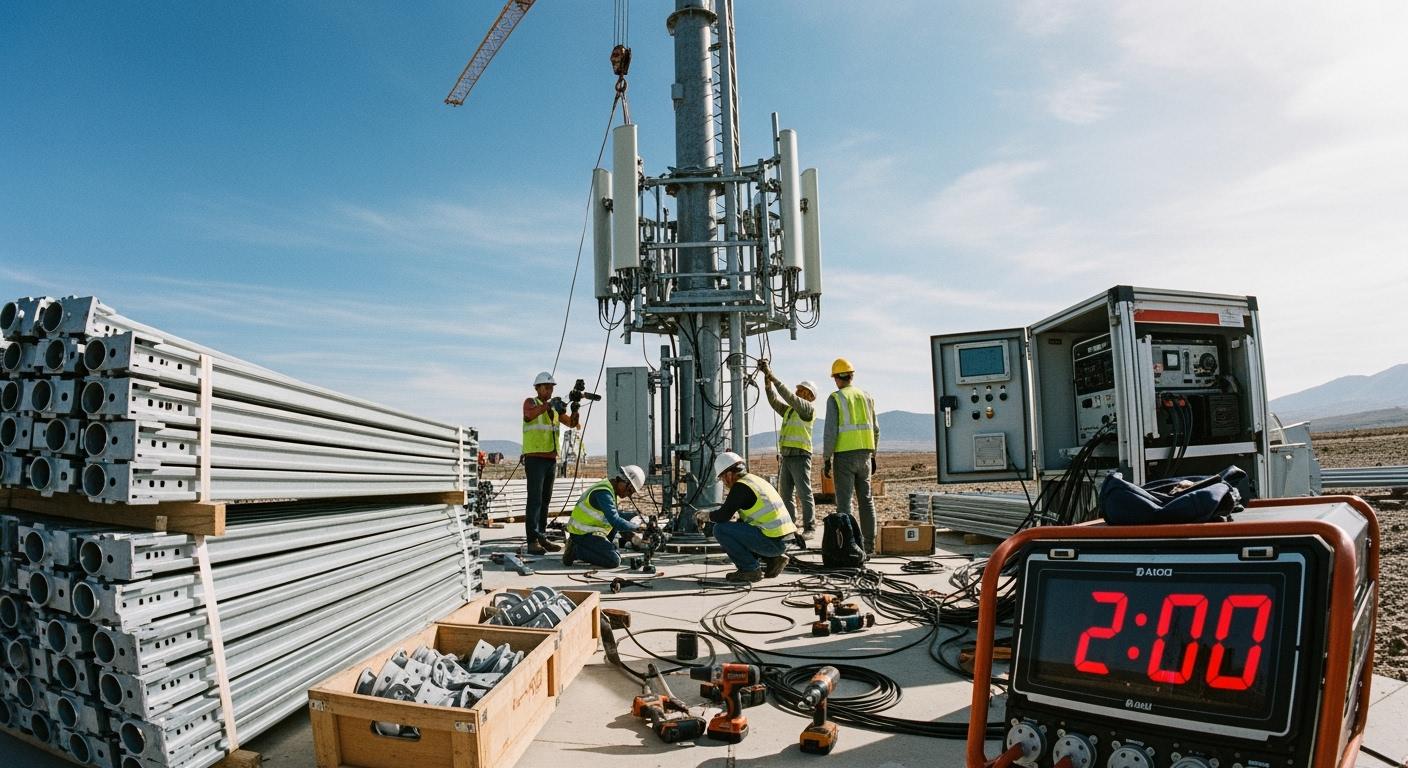
You can achieve a 2-hour single-site setup using standardized components. Rapid deployment transforms telecom infrastructure by shortening deployment time from weeks to days. Standardized templates make systems easier to maintain and scale. You see improved reliability and increased developer productivity as processes become simpler. ESTEL leads the industry with innovative and reliable solutions like the Telecom Power System, helping you build efficient networks faster.
Key Takeaways
Achieve a 2-hour setup for telecom power systems by following a structured process. Prepare equipment in advance to minimize downtime.
Use standardized components to simplify installation and maintenance. This approach reduces errors and speeds up deployment.
Evaluate site conditions and resources before deployment. Factors like location and equipment type can impact setup speed and efficiency.
Address traditional deployment challenges by adopting rapid deployment solutions. This helps reduce costs and improve network reliability.
Plan for future growth by choosing modular designs. These systems allow easy upgrades and adjustments without major disruptions.
2-Hour Single-Site Deployment Feasibility
Rapid Setup Overview
You can achieve a 2-hour single-site deployment by following a clear and structured process. The goal is to minimize downtime and ensure that your telecom site becomes operational as quickly as possible. You start by preparing all necessary equipment and tools before arriving at the site. Once you reach the location, you follow a series of technical steps that guide you from installation to final handover.
Here is a table that outlines the main technical requirements for a rapid setup:
Step | Description |
|---|---|
3 | Equipment Installation: Mount antennas, RRUs, and feeders; install indoor equipment; establish power supply and grounding. |
4 | Transmission & Backhaul Setup: Connect to the core network; perform alignment and testing. |
5 | Integration & Commissioning: Load configurations; align antennas; integrate into the core network. |
6 | Final Acceptance & Handover: Conduct ATP; finalize documentation; handover to operations team. |
You see that each step builds on the previous one. You mount the hardware, connect the power, set up the network, and then test everything before handing over the site. Using a Telecom Power System that supports quick installation and integration makes this process even faster.
Tip: Always check that all components are compatible and ready for immediate use. This reduces delays during installation.
Key Success Factors
Several factors influence whether you can complete a single-site deployment in just two hours. You need to consider the location, available resources, and the type of equipment you use. Here are the main factors that affect feasibility:
The distance to the nearest transmission line can impact how quickly you connect your site to the network.
Capital costs and resource potential play a role in deciding if rapid deployment is practical for your region.
Strong solar radiation and steady winds can support renewable energy projects, making some locations more suitable for quick setups.
Large, unobstructed land areas allow for easier and faster installation of equipment.
Limited infrastructure and the need for thorough assessments can slow down the process.
You should always assess these factors before starting your deployment. When you use standardized solutions like modular cabinets and a Telecom Power System, you can overcome many of these challenges. You save time, reduce complexity, and ensure a smooth transition from installation to operation.
Traditional Deployment Challenges
Common Obstacles
You face several challenges when you use traditional methods to deploy telecom power systems. These obstacles can slow down your project and increase costs. Here are some of the most common issues:
High Operational Costs: You spend a lot on transporting fuel to remote sites. Diesel prices often change, which makes budgeting difficult.
Maintenance Burden: Diesel generators require regular maintenance. You need skilled workers to keep them running, which adds to your expenses.
Environmental Impact: Using fossil fuels increases greenhouse gas emissions. This harms the environment and can affect your company’s reputation.
Reliability Issues: Generators sometimes fail during extreme weather. This can cause network outages and disrupt fuel supply.
Security Concerns: Remote sites often attract theft and vandalism. Valuable equipment and fuel make these locations targets.
You must address these obstacles to keep your network reliable and cost-effective.
Impact on Telecom Operations
Traditional deployment delays can hurt your business in many ways. You lose time and money when your network is not ready on schedule. The following table shows how these delays affect your operations:
Evidence | Description |
|---|---|
Revenue Losses | Manual policy management causes delays, leading to lost revenue opportunities during rollout. |
Market Competition | Slow service launches prevent you from gaining market share, especially in fast-moving sectors like enterprise 5G. |
Unplanned Downtime Costs | Network outages can quickly lead to large financial losses for your company. |
Time-to-Market Disadvantages | Delays in launching services mean you miss out on high-value markets, increasing your operational costs. |
Note: Quick and efficient deployment helps you avoid these risks. You improve uptime, reduce costs, and stay ahead of your competitors.
By understanding these challenges, you can make better decisions when planning your next telecom power system deployment.
Standardized Components in Telecom Power System

What Are Standardized Components?
You use standardized components to build a Telecom Power System quickly and efficiently. These components follow industry standards, which means you can mix and match them without compatibility issues. Standardized parts help you avoid delays and confusion during installation. The main categories include:
Batteries: Store energy for quick deployment during outages.
Rectifiers: Convert AC power from the grid into DC power suitable for telecom equipment.
Inverters: Transform DC back into AC when needed, ensuring compatibility with various devices.
Generators: Provide backup power during outages.
You select these components based on your site’s needs. Standardization ensures you can replace or upgrade parts without changing the whole system.
How Standardization Enables Speed
Standardization speeds up your deployment process. You save time because you do not need to customize every part. You benefit from power saving techniques, such as adaptive power supply units and micro DTX, which reduce operational time. BCCH carrier power reduction lets you lower transmit power during idle times, saving energy and optimizing resources. Improved cell hardware allows you to deactivate components during low traffic, which boosts efficiency and saves time.
You install a Telecom Power System faster when you use standardized components. You avoid lengthy configuration steps and reduce the risk of errors. You also streamline maintenance, since technicians can quickly identify and replace faulty parts.
ESTEL’s Modular Solutions
ESTEL’s modular solutions make your Telecom Power System deployment even easier. You gain flexibility because you can add or replace modules without overhauling the entire system. This modularity keeps your operations running smoothly as power demands change. When faults occur, you only need to fix the affected module, which reduces downtime.
Feature | Benefit |
|---|---|
Reduces operational costs and environmental impact by minimizing energy loss during power conversion. | |
Advanced Technology | Enables seamless integration and real-time monitoring, enhancing system reliability and maintenance. |
Compact and Modular Design | Saves space and allows for easy scaling of power systems, reducing downtime during maintenance. |
Durability in Harsh Environments | Ensures consistent performance in extreme conditions, protecting equipment from environmental damage. |
You integrate ESTEL’s modular solutions with ease. You maintain your Telecom Power System efficiently and keep your network reliable.
2-Hour Setup Steps

Preparation and Planning
You start by preparing your site for a rapid deployment. Careful planning ensures you avoid delays and mistakes. Follow these steps for effective preparation:
Site Acquisition & Planning: Identify the best location for your equipment. Complete RF surveys and secure all permits.
Site Survey & Civil Works: Inspect the site for any issues. Build the necessary infrastructure, such as foundations and cable routes.
Equipment Installation: Gather all components, including the Telecom Power System and rectifier modules, before you arrive.
Transmission & Backhaul Setup: Plan how you will connect the site to the core network.
Integration & Commissioning: Prepare configuration files and testing tools.
Final Acceptance & Handover: Organize documentation for a smooth handover.
Tip: Always check that your equipment list matches your site requirements. This step prevents last-minute surprises.
Installation Process
You can complete the installation quickly by following best practices and a clear sequence. ESTEL’s modular design makes this process straightforward. Here is what you should do:
Position the Telecom Rectifier System in a rack or cabinet, making sure the area is clean and dry.
Connect the input power supply, double-checking all connections for safety.
Wire the output terminals to your telecom equipment using the correct cables.
Integrate with build servers and avoid common deployment mistakes.
Use effective release strategies and understand your deployment environment.
A modular system lets you add or replace components without extra tools. This feature saves you time and reduces errors.
Commissioning and Testing
You must test your system before going live. Commissioning ensures your Telecom Power System works reliably. Follow these steps:
Inspect all power units and sensors for damage or loose connections.
Use multimeters to check wires and connections.
Test new installations with acceptance checks.
Run electrical tests on breakers and transformers.
Check the grounding system for safety.
Verify metering accuracy.
Test sensors, controllers, and alarms.
Schedule regular professional inspections.
Testing and commissioning remove hidden risks. You ensure your site operates smoothly from day one.
Deployment Case Studies
ESTEL Success Stories
You can see the impact of rapid deployment when you look at real-world projects using ESTEL solutions. One telecom operator needed to set up a new site in a remote mountain area. The team used ESTEL’s modular outdoor cabinets and Telecom Power System. They completed the installation in two hours. The site became operational without delays. The modular design allowed the team to assemble and connect all components quickly. Another project involved a network upgrade in a coastal region. The operator used ESTEL’s rectifier system and weatherproof cabinets. The team finished the deployment in record time. The site maintained stable power and reliable connectivity, even during harsh weather.
You benefit from ESTEL’s standardized approach. You avoid compatibility issues and reduce installation errors. You achieve faster site launches and improved network reliability.
Lessons Learned
You learn important lessons from these rapid deployment projects. Teams faced several challenges, but they overcame them by following best practices. The table below shows common challenges and solutions:
Challenge Type | Description |
|---|---|
Integration Issues | Difficulty in ensuring compatibility between devices and protocols |
Environmental Factors | Overheating and electromagnetic interference affecting performance |
Monitoring and Maintenance Needs | Requirement for regular inspections and sensors to detect anomalies in power supply |
You can address integration issues by using factory-built modules that follow industry standards. You solve environmental problems by choosing durable cabinets and efficient cooling systems. You improve monitoring by installing sensors and scheduling regular inspections.
Emphasize energy efficiency to lower operational costs.
Use scalable designs to support future growth.
Choose modular solutions for quick deployment.
You gain confidence in your deployment process. You know that following these best practices leads to reliable and efficient telecom sites.
Benefits and Considerations
Operator Advantages
You gain several operational advantages when you deploy telecom power systems rapidly with standardized components. You shorten build cycles, which means you can launch new sites faster and respond to market demands quickly. You reduce capital costs because standardized fabrication lowers expenses. Factory-level production improves quality control, so you get consistent results. Enhanced energy efficiency helps you manage resources better and supports sustainability goals.
Advantage | Impact |
|---|---|
Shorter build cycles | 30–50% reduction in time for deployment |
Reduced capital costs | Lower expenses due to standardized fabrication |
Improved quality control | Consistency from factory-level production |
Enhanced energy efficiency | Better resource management and sustainability |
You also see long-term cost savings. Major telecom operators in Canada reduced their equipment footprint by 58% and doubled backup time at a lower cost. Etisalat in the UAE achieved a 75% reduction in generator use and saved fuel at off-grid sites. GreenConnect saw energy use drop by 30%, saving millions of dollars. CO₂ emissions fell by 40%. Smart systems cut downtime by 25%. These results show that rapid deployment solutions deliver both immediate and lasting benefits.
💡 Rapid deployment with standardized components helps you stay competitive and supports your sustainability targets.
Key Considerations
You need to evaluate several factors before implementing a rapid deployment solution. Site selection matters. Assess sunlight exposure, security, and accessibility for installation and maintenance. Installation quality is crucial. Trained professionals ensure system integrity and longevity. Remote monitoring lets you track power generation, consumption, and battery status in real time. Preventive maintenance, such as regular checks of connections and battery health, contributes to long-term reliability.
Site Selection: Evaluate sunlight, security, and accessibility.
Installation Quality: Use trained professionals for proper setup.
Remote Monitoring: Track power and battery status in real time.
Preventive Maintenance: Schedule regular checks for reliability.
Load: Understand the type of power load for efficiency.
Grid Hours of Operation: Know grid stability and availability.
Autonomy: Consider battery capacity for backup power.
Battery: Choose the right technology for performance.
Cooling or Heating: Assess temperature control needs.
Solar: Ensure adequate sunlight for solar viability.
Generator: Select based on fuel use and maintenance.
Space: Provide a shade-free location for solar panels.
You also need to manage risks. Follow damage prevention best practices to avoid severing vital services. Prioritize risk mitigation efforts based on immediate needs and greatest impact. Increase training effectiveness to improve operational safety. The telecommunications sector faces high damages from excavation activities, so effective risk management is essential.
🛡️ Careful planning and risk mitigation help you achieve reliable and safe deployments.
Recommendations for Operators
Choosing the Right Solution
You need to select a telecom power system that matches your current needs and supports future growth. Start by understanding your usage patterns. Many operators make the mistake of choosing plans or systems without analyzing how much power or capacity they actually use. This can lead to oversized systems and higher costs. Always evaluate the costs of different solutions based on your specific requirements. Avoid agreements that do not allow for changes if your needs shift. Flexibility in your contracts helps you optimize resources and avoid waste.
When you compare solutions, look for modular designs. These systems let you add or remove power modules as your network grows or changes. You do not need to replace the entire system if your needs change. You can add new outlets or configurations without disrupting service. This approach saves you money and reduces downtime.
Tip: Choose a provider that offers strong technical support and clear upgrade paths. This ensures you can adapt quickly as technology evolves.
Planning for Future Needs
You should plan for future scalability and upgrades from the start. Begin by assessing your current system for any inefficiencies. Create a roadmap for upgrades that fits your business goals. Select solutions that meet your needs today but also allow for easy expansion.
Follow these steps to prepare for future growth:
Design a roadmap for upgrades.
Choose solutions that match your needs.
Plan for future growth.
Regular inspections help keep your system ready for upgrades. Check batteries and rectifiers for wear or corrosion. Keep all components clean. Test rectifiers for efficient output and update monitoring software to maintain reliability.
Modular designs allow you to scale up or down without replacing the whole system.
You can add new configurations without service interruptions.
By planning ahead, you ensure your telecom power system stays reliable and cost-effective as your network expands.
You gain faster site launches and improved reliability when you use standardized components for telecom power systems. ESTEL enables efficient setups with modular designs and proven durability. Users praise ESTEL for uninterrupted power during critical moments and reduced downtime. Industry awards and certifications highlight ESTEL’s commitment to innovation and quality.
To maximize your deployment success:
Assess your current infrastructure and identify pain points.
Set clear objectives for network upgrades.
Invest in training and automation.
Monitor technology trends and collaborate for innovation.
Choose ESTEL for your next telecom deployment. You secure a reliable, scalable, and future-ready power solution.
FAQ
How fast can you deploy an ESTEL Telecom Power System?
You can deploy an ESTEL Telecom Power System in as little as two hours. Standardized components and modular designs make installation quick and easy.
What tools do you need for installation?
You need basic hand tools, such as screwdrivers and multimeters. ESTEL’s modular systems fit standard racks, so you avoid specialized equipment.
Can you scale the system after installation?
You can scale the system easily. ESTEL’s modular design lets you add or remove power modules without disrupting your network.
How do you monitor system performance?
You monitor system performance using built-in communication ports and remote monitoring software. This helps you track power usage and battery status in real time.
Is ESTEL equipment suitable for harsh environments?
You can use ESTEL equipment in harsh environments. Weatherproof cabinets and natural cooling features protect your telecom power system from extreme conditions.
See Also
Ensuring Consistent Power Supply for Telecom Cabinets
Energy Storage Solutions Using Photovoltaics for Telecom Cabinets
Battery Systems and Inverters for Grid-Connected Telecom Cabinets
CALL US DIRECTLY
86-13752765943
3A-8, SHUIWAN 1979 SQUARE (PHASE II), NO.111, TAIZI ROAD,SHUIWAN COMMUNITY, ZHAOSHANG STREET, NANSHAN DISTRICT, SHENZHEN, GUANGDONG, CHINA
