Backup Power Strategies in Telecom Power System: Best Practices for 48V Battery Banks

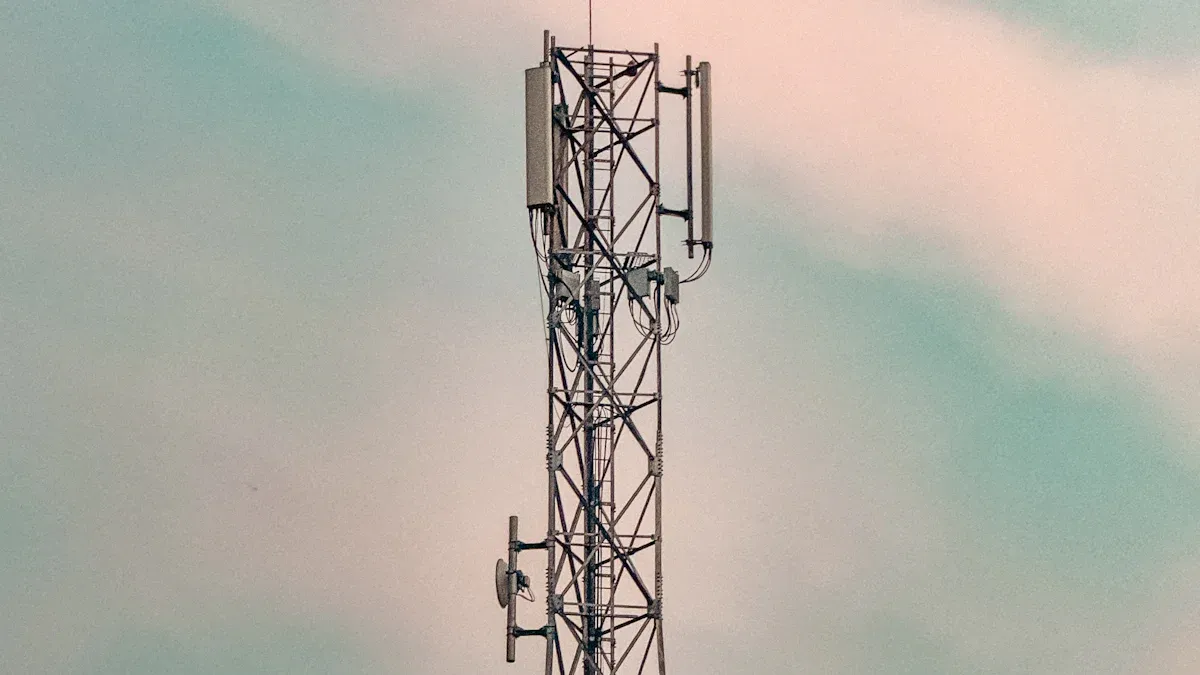
You depend on a telecom power system that runs smoothly, even during outages. Reliable backup power keeps critical communications online, and 48V battery banks play a central role in this process. Compared to other voltage standards, 48V options deliver higher energy density, better reliability, and improved efficiency, as shown below:
Attribute | 48V Battery Banks | Other Voltage Standards |
|---|---|---|
Energy Density | High energy density, compact size | Varies, often less efficient |
Reliability | Excellent reliability and longevity | May require more frequent replacements |
Efficiency | Consistent voltage delivery, energy savings | Often less efficient |
Compatibility with Renewables | Well-suited for integration with solar and wind | Limited compatibility |
You can strengthen your system’s performance by following proven best practices and selecting trusted solutions from brands like ESTEL.
Key Takeaways
Choose 48V battery banks for higher energy efficiency and better reliability in telecom systems.
Regular maintenance and monitoring of your battery bank can significantly extend its lifespan and prevent unexpected outages.
Integrate renewable energy sources like solar panels with your 48V system to enhance sustainability and reduce grid reliance.
Use smart battery management systems to optimize performance and ensure safe operation of your battery bank.
Follow proper sizing and installation guidelines to avoid common pitfalls that can lead to system failures.
Telecom Power System Requirements
Reliability and Uptime
You need a telecom power system that delivers consistent performance, even during unexpected outages. High reliability ensures your network stays online and supports critical communications. International standards set strict uptime requirements for telecom facilities. The table below shows the minimum uptime guarantees for different tier levels:
Tier Level | Uptime Guarantee | Maximum Downtime per Year |
|---|---|---|
Tier I | 99.671% | 28.8 hours |
Tier II | 99.741% | 22 hours |
Tier III | 99.982% | 1.6 hours |
Tier IV | 99.995% | 26.3 minutes |
You can see that even a few minutes of downtime can impact your service quality. ESTEL designs power solutions that help you meet these demanding standards. Their systems provide stable voltage and efficient backup, supporting your network’s reliability goals.
Environmental Challenges
Your telecom power system often faces harsh conditions. Temperature swings and high humidity can damage batteries and sensitive electronics. High temperatures speed up battery wear and increase the risk of overheating. Humidity can cause corrosion, short circuits, and insulation failures. You need equipment that can handle these challenges. ESTEL’s outdoor cabinets use advanced cooling, ventilation, and IP55-rated enclosures. These features protect your equipment from heat and moisture, keeping your backup power running smoothly in any climate.
Safety and Compliance
Safety must always come first. You need to follow strict industry regulations to protect your staff and equipment. Proper grounding, secure enclosures, and reliable circuit protection are essential. ESTEL’s telecom power system includes built-in safety features, such as grounding bars and anti-theft locks. Their products meet international standards, giving you peace of mind and helping you stay compliant with local and global requirements.
48V Battery Bank Overview
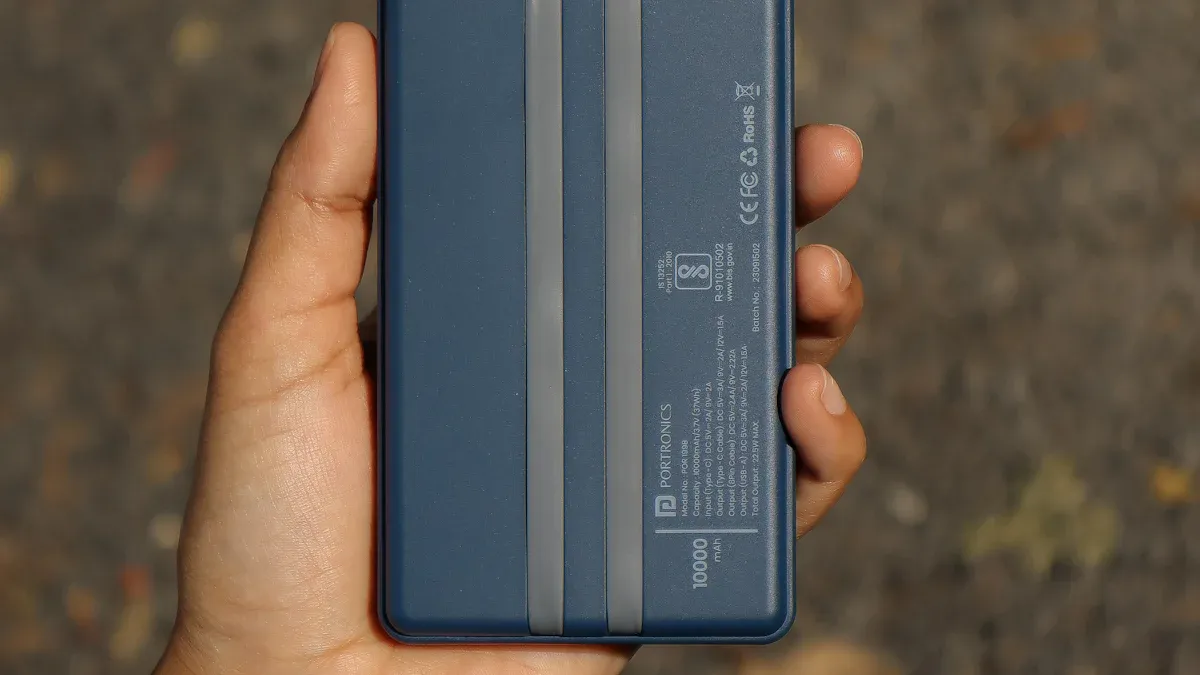
Why 48V Is Standard
You see 48V as the industry standard for telecom battery banks for several technical reasons. Historically, telecom systems used the earth as a return path. This required a negative power supply to reduce ground noise interference. The -48V standard remains because it protects cables from corrosion and increases system reliability.
Here is a quick look at why 48V is the preferred choice:
Reason | Explanation |
|---|---|
Safety considerations | 48V is a safe low voltage, meeting most safety regulations. |
Historical compatibility | 48V works with existing telecom systems worldwide. |
Reduced signal loss | 48V allows low signal loss over long distances. |
Corrosion prevention | Negative polarity helps prevent cable corrosion and extends system life. |
Voltages above 48V can be dangerous. Lower voltages need thicker wires, which increases costs and causes voltage drop losses. The negative polarity of 48V also reduces ground noise. You benefit from a standard that balances safety, efficiency, and compatibility.
Battery Types for Telecom
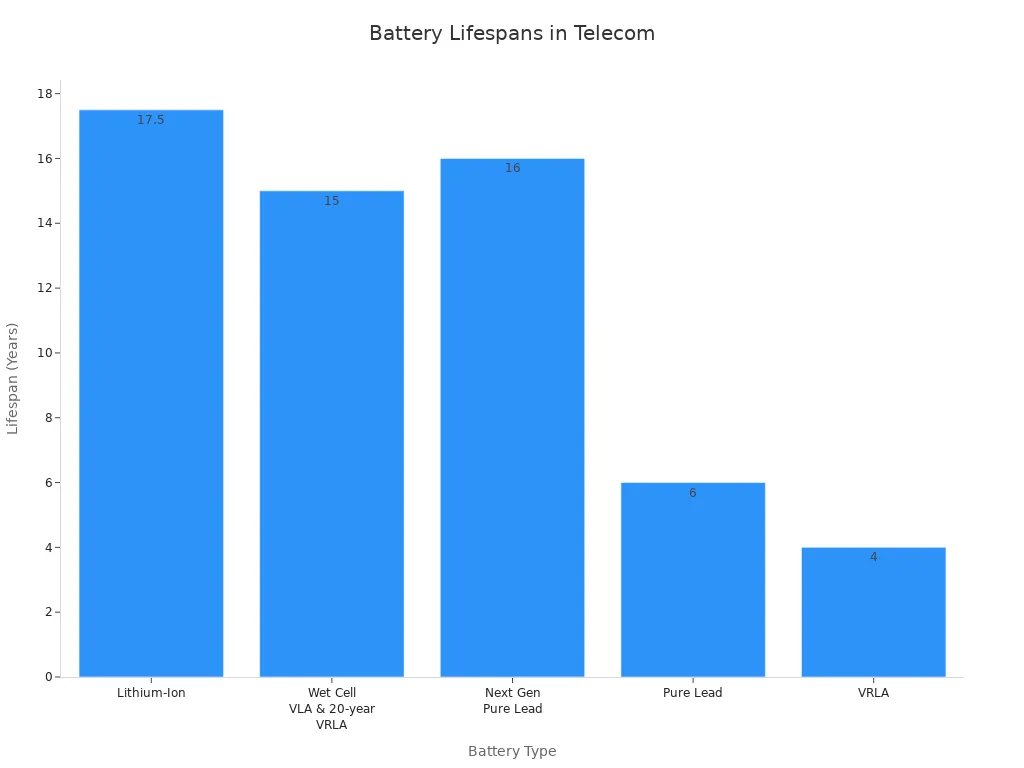
You have several battery options for telecom applications. The most common types include lithium-ion, wet cell VLA, VRLA, and pure lead. Each type offers different lifespans and maintenance needs.
Battery Type | Lifespan (Years) | Maintenance Frequency |
|---|---|---|
Lithium-Ion | 15-20 | Once a year |
Wet Cell VLA & 20-year VRLA | Up to 15 | Four times a year (quarterly) |
Next Gen Pure Lead | 16 | Every 8 years |
Pure Lead | 5-7 | Every 5 years |
VRLA | 3-5 | Every 3-4 years |
You can choose lithium-ion batteries for long life and low maintenance. VRLA batteries offer lower upfront costs but need more frequent checks. ESTEL provides advanced battery storage solutions that support both lithium-ion and VRLA options. Their cabinets protect your battery investment with features like anti-corrosion coatings and climate control.
Benefits of 48V Battery Banks
You gain many advantages by using 48V battery banks in your telecom power system:
Safety: The 48V level is safe for human contact.
Standardization: Most global telecom equipment supports -48V.
Reliability: DC power ensures stable operation for sensitive electronics.
Battery integration: You can easily connect large battery banks for backup.
Compatibility: 48V works well with 48v low frequency inverters and inverters, making system upgrades simple.
Voltage regulation: 48V battery banks help maintain steady voltage during outages.
Energy storage solutions: You can scale your storage to meet growing network needs.
You also benefit from easy integration with 48v low frequency inverters. These inverters convert DC power from your battery into AC power for your equipment. ESTEL’s telecom power systems and rectifier systems support seamless operation with 48v low frequency inverters and other inverters. This ensures your backup power stays reliable, efficient, and ready for any challenge. If you consider 48v alternatives, you may face higher costs or safety risks. Sticking with 48V keeps your network safe and efficient.
Tip: Choose battery banks and inverters that match your system’s needs. ESTEL’s experts can help you select the right combination for your site.
Best Practices for Battery Management
Sizing and Configuration
You need to size your 48V battery bank correctly to ensure reliable backup power and maximize system efficiency. Start by calculating your site's total power demand and the required backup duration. Choose a series-parallel configuration, such as 4S4P, to achieve the desired voltage and capacity. This setup balances current flow and maintains voltage stability, which helps prevent early battery failure. For high-availability telecom sites, implement N+1 redundancy. This approach allows your system to keep running even if one module fails. Modular battery banks make it easy to scale your capacity as your network grows. ESTEL’s outdoor battery cabinets support flexible configurations, so you can expand storage without major rewiring.
Tip: Always plan for future growth. A modular design lets you add more batteries or inverters as your needs change.
Installation Guidelines
Proper installation is essential for safety and performance. Follow these best practices:
Assemble and arrange cells carefully to optimize performance.
Install overcurrent and short circuit protection devices.
Use a battery cooling system to manage heat.
Apply correct wiring techniques and check insulation.
Schedule regular safety tests and maintenance.
You should always de-energize circuits before making connections. Verify voltage with a multimeter to ensure circuits are safe. Use insulated tools rated for your system’s voltage. Maintain proper grounding to protect against electrical faults. Consult a qualified professional to ensure compliance with local codes. ESTEL’s cabinets feature built-in grounding bars, anti-theft locks, and natural cooling systems, which simplify safe installation and help maintain charging efficiency.
Maintenance and Monitoring
Regular maintenance keeps your 48V battery bank healthy and extends its life. Make monthly visual inspections a habit. Look for signs of corrosion, leaks, or swelling. Adjust inspection frequency based on battery usage and performance trends. Establish a simple routine for cleaning terminals and checking connections. ESTEL’s telecom power systems support easy access for maintenance, reducing downtime.
Monitoring technology plays a key role in modern telecom sites. Use advanced tools to track battery health and performance. The table below shows effective monitoring technologies:
Technology Type | Features |
|---|---|
Proactive Resistance Testing | Checks each cell’s health and predicts performance. |
Onboard SOH and SOC Analysis | Provides real-time data on battery health and charge state. |
Remote Monitoring Capabilities | Lets you monitor your system from anywhere, improving operational efficiency. |
ESTEL’s rectifier systems offer remote monitoring and integration with site management platforms. You can receive alerts and analyze trends, which helps you act before problems affect your network.
Battery Health and Lifecycle
You can maximize battery lifespan by controlling key factors. Poor storage, high temperatures, over-cycling, improper float voltage, and incorrect application are the most common causes of premature failure. Store unused batteries in a cool, dry place. Avoid exposing your battery bank to high ambient temperatures. Use the correct float voltage settings for your battery type. Match your battery to the application and avoid over-cycling. ESTEL’s outdoor cabinets provide climate control and anti-corrosion coatings, which protect your investment and support a longer lifecycle.
Note: Regular monitoring and maintenance help you spot early warning signs, such as voltage drops or overheating. Address these issues quickly to prevent costly failures.
Safety Protocols
Safety must always be your top priority when handling and maintaining 48V battery banks. Inspect batteries regularly for bulging, leaking, or corrosion. Store batteries away from direct sunlight in a cool, dry location. Use fireproof safety bags for lithium-ion batteries. Always wear gloves and safety goggles when working with batteries. Follow the manufacturer’s charging guidelines to avoid overcharging. ESTEL’s cabinets include secure enclosures and built-in safety features, which help you maintain a safe working environment.
You should also ensure that your 48v low frequency inverters and inverters are installed according to safety standards. Proper integration with your battery bank reduces risks and improves system reliability. ESTEL’s telecom power systems and rectifier systems are designed for seamless operation with 48v low frequency inverters, supporting both safety and performance.
Remember: A well-managed battery bank, paired with reliable 48v low frequency inverters, ensures your telecom site stays online and efficient, even during unexpected outages.
Advanced Backup Strategies

Integrating 48V Low Frequency Inverters
You can boost the reliability of your telecom power system by integrating 48v low frequency inverters. These inverters play a vital role in converting DC power from your battery into stable AC power for your telecom equipment. You benefit from intelligent control, which uses microcomputer technology to respond instantly to changes in your environment. This ensures your backup power never skips a beat.
The table below highlights the key features of 48v low frequency inverters and how they improve your system:
Feature | Description |
|---|---|
Intelligent Control | Real-time response to environmental changes for uninterrupted power supply |
Pure Sine Wave Output | Stable frequency and voltage, reducing noise and distortion for sensitive telecom equipment |
Electrical Isolation | Complete isolation between DC and AC, preventing interference |
Load Compatibility | Maintains pure sine wave output under different load conditions |
Safety Protections | Overvoltage and short circuit protection for safe operation |
You can use multiple inverters in parallel to increase capacity and redundancy. This setup allows your system to handle higher loads and maintain service even if one inverter fails. You also achieve better energy transmission and reduce the risk of power interruptions. ESTEL’s telecom power system and rectifier system support seamless integration with 48v low frequency inverters, making your backup solution more robust.
Tip: Always match your inverters to your battery bank’s capacity to maximize charging efficiency and system stability.
Renewable Energy Integration
You can further enhance your backup power by integrating renewable energy sources like solar or wind with your 48v low frequency inverters and battery banks. This approach reduces your reliance on the grid and supports sustainable operations. To succeed, you need to follow a few key steps:
Evaluate your telecom site’s energy and power requirements to ensure reliable backup.
Design a system layout that optimizes energy flow and simplifies installation.
Ensure compatibility between solar panels, charge controllers, battery banks, and inverters to prevent performance issues.
Install and position solar panels correctly to maximize energy generation and avoid shading.
Implement safety measures during installation to protect both equipment and personnel.
You can connect renewable sources directly to your battery bank through your 48v low frequency inverters. This setup allows you to store excess energy for later use, improving your energy storage solutions and reducing operational costs. ESTEL’s outdoor cabinets and rectifier systems are designed to work with renewables, providing reliable protection and efficient energy management.
Note: Proper integration of renewables with your battery and inverters ensures consistent power delivery, even in remote or off-grid locations.
Smart Battery Management Systems
You can extend the life and performance of your battery bank by using a smart battery management system (BMS). These systems use advanced technology to monitor and control every aspect of your battery’s operation. You get features like state-of-charge estimation, cell balancing, and temperature management, all of which protect your battery and maximize efficiency.
Here are some benefits you gain from a smart BMS:
Advanced monitoring and control for safe operation
Protection mechanisms to prevent overcharge and over-discharge
Intelligent energy management to increase reliability
Optimized battery usage for better energy efficiency
Cell balancing for even charge distribution
Temperature management to prevent overheating
The table below summarizes the most important features to look for in a smart BMS:
Feature | Description |
|---|---|
Shows how long your battery lasts during use (measured in ampere-hours) | |
Lifespan and quality | Indicates how many charge cycles your battery can handle |
Charging and usage stability | Measures charging speed and performance consistency |
Maintenance | Involves regular checks for optimal performance |
Climate adaptability | Ensures your battery works in extreme heat or cold |
You can rely on ESTEL’s telecom power system and rectifier system to support smart BMS integration. This combination helps you maintain high charging efficiency and extends your battery’s lifespan. You also gain real-time insights into your battery’s health, which allows you to act before problems arise.
Remember: A smart BMS, paired with 48v low frequency inverters, keeps your battery bank safe and efficient, even under heavy loads.
Remote Monitoring with ESTEL
You can take your backup power management to the next level with remote monitoring. ESTEL’s telecom power system and rectifier system offer advanced remote monitoring features that give you complete control over your site’s power status. You receive real-time alerts for outages, which lets you respond quickly and minimize service interruptions.
Remote monitoring provides several key advantages:
Reduces downtime and extends battery lifespan, lowering maintenance costs
Sends instant notifications for outages, ensuring fast response
Enables predictive maintenance by analyzing load profiles and spotting potential failures
Monitors environmental factors like temperature and humidity to prevent equipment damage
Activates backup systems instantly to prevent downtime
You can access your system’s data from anywhere, making it easier to manage multiple sites. This capability is especially valuable when you use multiple inverters and battery banks across a large network. ESTEL’s remote monitoring solutions help you maintain consistent performance and protect your investment in energy storage solutions.
Pro Tip: Use remote monitoring to schedule maintenance, track battery health, and optimize your backup power strategy for every telecom site.
By combining 48v low frequency inverters, renewable energy, smart battery management, and remote monitoring, you create a telecom power system that is reliable, efficient, and ready for the future. ESTEL’s solutions give you the tools you need to build a robust backup power infrastructure that supports your network’s growth and resilience.
Common Pitfalls and Solutions
Sizing Errors
You may encounter issues if you do not size your battery bank and inverters correctly. Undersized systems can lead to unexpected outages, while oversized setups waste resources. To avoid these problems:
Calculate your energy needs and capacity requirements before installation.
Use equal-length cables and matching lugs for each string.
Mount the main fuse or breaker close to the positive post.
Confirm busbar locations and label polarity.
Connect each string to the busbars with equal length, same-gauge cables.
Precharge the inverter DC link with a resistor before powering up.
ESTEL’s outdoor cabinets and telecom power systems support flexible configurations, making it easier for you to scale your battery bank and integrate 48v low frequency inverters efficiently.
Maintenance Neglect
Neglecting regular maintenance can cause major disruptions in your telecom network. The table below shows how maintenance impacts reliability and costs:
Evidence Type | Details |
|---|---|
Downtime Statistics | More than two-thirds of telecom network downtime is caused by insufficient upkeep. |
Battery Failure Link | Up to 20% of downtime is directly linked to faulty batteries. |
Safety Protocol Improvement | Improved safety protocols have reduced battery failure rates by 98% between 2018 and 2024. |
Cost Savings | Preventive maintenance offers significant cost savings compared to reactive approaches. |
You can prevent these issues by managing environmental factors, training your team, establishing a structured maintenance schedule, keeping spare parts available, and using advanced monitoring. ESTEL’s rectifier systems and remote monitoring features help you track battery health and system performance, reducing the risk of unexpected failures.
Environmental Oversights
Environmental factors often lead to backup power failures. Excessive heat can damage capacitors and circuits, while humidity causes corrosion and intermittent faults. Poor thermal management may cut equipment life in half. Hurricanes and severe weather events can also disrupt your network, even if your physical infrastructure survives.
Issue | Description |
|---|---|
Thermal Failures | Excessive heat causes capacitors to swell, solder joints to crack, and circuits to warp. |
Environmental Failures | Corroded terminals change electrical resistance and create intermittent faults due to humidity. |
Cooling System Importance | Poor thermal management can cut equipment life in half under certain conditions. |
To address these risks, use lithium iron phosphate batteries for their thermal stability and long cycle life. Integrate photovoltaic solar power to reduce reliance on diesel and improve energy independence. ESTEL’s outdoor cabinets offer advanced cooling and IP55 protection, helping you maintain optimal conditions for your battery bank and inverters.
Safety Lapses
Safety lapses can have severe consequences. For example, a data center fire in South Korea occurred because the design failed to separate batteries from the UPS, and fire prevention procedures were lacking. This led to a widespread outage. You can avoid similar incidents by installing battery monitoring systems that test integrity and alert you to issues. Replace batteries promptly and never delay maintenance. ESTEL’s cabinets include secure enclosures, grounding bars, and support for remote monitoring, helping you maintain a safe and reliable backup power system.
Tip: Always follow best practices for integrating 48v low frequency inverters and inverters with your battery bank. This ensures safe operation and efficient energy transmission across your telecom site.
You can achieve strong telecom backup power by following best practices for 48V battery banks. Focus on correct sizing, safe installation, and regular maintenance. Use advanced tools like smart battery management and remote monitoring to improve reliability. Consider ESTEL’s solutions for efficient and robust power systems.
For more guidance, visit ESTEL’s official website or contact their experts for tailored advice.
FAQ
What is the main advantage of using a 48V battery bank in telecom systems?
You get higher energy efficiency, improved safety, and easier integration with standard telecom equipment.
48V is the global standard for telecom backup power.
How often should you perform maintenance on your battery bank?
You should inspect your battery bank monthly. Clean terminals and check for corrosion or leaks.
For lithium-ion: once a year
For VRLA: every 3-4 years
Can you integrate solar panels with your 48V battery bank?
Yes, you can connect solar panels to your 48V battery bank using compatible charge controllers and inverters.
This setup helps you reduce grid dependence and supports green energy goals.
How does ESTEL support remote monitoring of backup power systems?
ESTEL provides telecom power systems and rectifier systems with built-in remote monitoring.
You receive real-time alerts, track battery health, and schedule maintenance from anywhere.
See Also
Methods For Calculating Power Systems And Batteries In Telecom
Battery Systems And Inverters For Grid-Connected Telecom Cabinets
Energy Storage Solutions Using Photovoltaics For Telecom Cabinets
Ensuring A Consistent Power Supply For Telecom Cabinets
A Detailed Risk Analysis Guide For Telecom Cabinet Batteries
CALL US DIRECTLY
86-13752765943
3A-8, SHUIWAN 1979 SQUARE (PHASE II), NO.111, TAIZI ROAD,SHUIWAN COMMUNITY, ZHAOSHANG STREET, NANSHAN DISTRICT, SHENZHEN, GUANGDONG, CHINA
