Deep Collaboration Between Telecom Power Systems and 5G Base Stations: Dynamic Output Adjustment by Traffic Volume

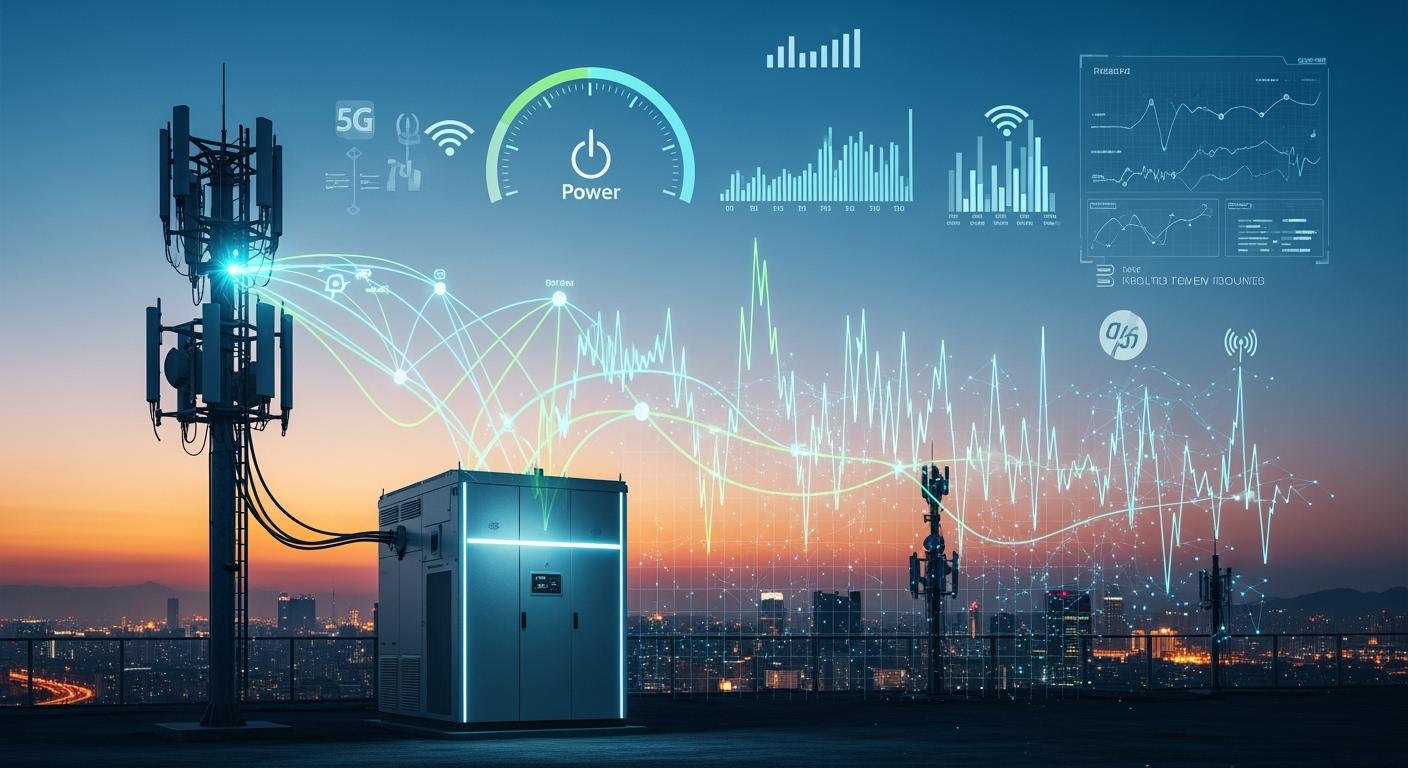
You see deep collaboration between telecom power systems and 5G base stations transform how networks respond to changing traffic volumes. This approach lets you adjust power output in real time, which improves energy efficiency and operational reliability. When data volume rises, yearly energy consumption increases across all device density classes, as shown below:
Device Density Class | |
|---|---|
Indoor-hotspot | Increase |
Dense-urban | Increase |
Urban | Increase |
Rural | Increase |
ESTEL leads in integrated telecom power solutions. Their Telecom Power System and Telecom Rectifier System help you automate power management and support dynamic adjustment for 5G base stations.
Key Takeaways
Dynamic output adjustment allows telecom power systems to adapt power delivery based on real-time traffic demands, improving energy efficiency.
Using real-time traffic monitoring can lead to significant energy savings, with some strategies saving up to 73% while maintaining network reliability.
Automated power response enhances network reliability by instantly adjusting power output, reducing downtime and improving performance.
Implementing ESTEL’s Telecom Power System can lead to energy cost reductions of 15% to 30% and lower maintenance costs to just 7% of traditional systems.
Combining real-time monitoring, automated responses, and predictive models creates a resilient and efficient network that adapts to changing demands.
Dynamic Output Adjustment Explained

What Is Dynamic Output?
You experience dynamic output as a system that adapts power delivery based on real-time demand. In telecom networks, this means the power system responds instantly to changes in traffic volume. The technical principle behind dynamic output adjustment relies on reactive power management. The system provides or absorbs reactive power as needed. This process improves voltage regulation and enhances power factor. You see higher efficiency because the Telecom Power System automatically adjusts its output to match the needs of the equipment.
Dynamic output differs from traditional static power management. The table below shows the main differences:
Aspect | Dynamic Output Adjustment | Traditional Static Power Management |
|---|---|---|
Responsiveness | Real-time optimization and adaptive allocation | Operates on fixed thresholds |
Adaptability | Adjusts to changing demands dynamically | Lacks responsiveness to demand fluctuations |
Control Granularity | Offers granular control at server and component levels | Operates at rack or facility level, leading to inefficiencies |
You benefit from AI and machine learning algorithms that enhance adaptability. These technologies allow the Telecom Power System to balance loads proactively and reduce manual intervention.
Relevance for 5G Base Stations
Dynamic output adjustment plays a crucial role in 5G base stations. You see measurable improvements in speed, latency, and capacity compared to previous generations:
Metric | 4G LTE | 5G |
|---|---|---|
Speed | Up to 100 Mbps | Up to 20 Gbps |
Latency | 50 to 100 milliseconds | As low as 1 millisecond |
Capacity | Limited device support | Up to 1 million devices per km² |
You gain access to advanced features such as Massive MIMO, which supports multiple data streams at once. Intelligent beamforming directs signals precisely, reducing interference and improving coverage. The Telecom Power System ensures that these technologies operate efficiently by adjusting power output to match the demands of the network. You achieve higher reliability and performance as a result.
Collaboration Mechanisms in Telecom Power System
Real-Time Traffic Monitoring
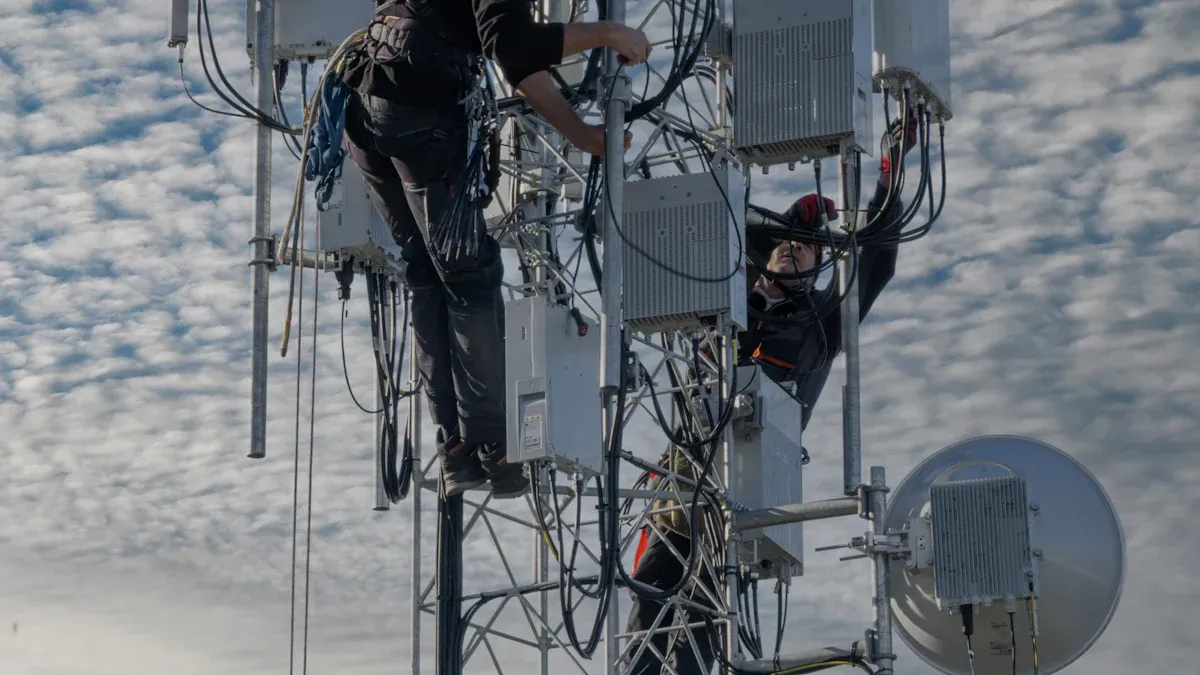
You can optimize your 5G base station’s power usage by using real-time traffic monitoring. This process involves collecting and analyzing data about network activity as it happens. ESTEL’s Telecom Power System and Telecom Rectifier System support this by providing multiple communication ports and advanced control features. These features let you track power consumption and network load instantly.
When you monitor traffic in real time, you can make smart decisions about energy use. For example, you can deactivate certain links or even entire base stations during periods of low demand. This strategy does not affect network reliability but can lead to significant energy savings. In fact, studies show that a threshold-based approach can save up to 73% of energy while still maintaining user coverage.
Here is a table that summarizes some effective strategies for optimizing power usage through real-time monitoring:
Strategy | Description | Energy Savings |
|---|---|---|
Link Deactivation | Temporarily disables selected links during low usage | Optimizes power usage without impacting reliability |
SDN-driven Routing | Identifies and deactivates redundant elements while rerouting traffic | Lowers power consumption in IP networks |
Power-aware Traffic Engineering | Uses deep reinforcement learning to optimize router power states | Maximizes energy savings based on real-time data |
You also benefit from the ability to let network elements enter sleep modes during low activity periods. This approach reduces energy consumption without sacrificing responsiveness. ESTEL’s systems make this possible by providing accurate, up-to-the-second data on both traffic and power status.
Automated Power Response
You can take advantage of automated power response to further improve efficiency and reliability. ESTEL’s Telecom Power System uses advanced technologies such as AI and machine learning. These technologies process real-time data and predict future network demands. The system then adjusts power output automatically, matching the needs of your 5G base station.
Automated power response relies on closed-loop automation. This means the system monitors itself and makes adjustments without manual input. You see fewer interruptions and less downtime because the system responds instantly to changes in traffic volume. Predictive maintenance features also help you avoid unexpected failures by identifying issues before they become problems.
Collaboration between telecom power systems and 5G base stations involves several key mechanisms. The table below outlines these mechanisms and their roles:
Mechanism | Description |
|---|---|
Resilience Enhancement | 5G base stations ensure reliable power supply and act as flexibility resources in system scheduling. |
Storage Capacity Mechanism | Base stations manage energy storage while supporting communication loads and participating in power dispatch. |
Collaborative Optimization | Models consider communication load migration and energy storage dynamic backup. |
Coordinated Optimization Model | Interaction between distribution and 5G communication networks is optimized. |
Distributed Algorithm | Improved algorithms ensure optimal operation of both power and communication networks. |
You can also integrate traffic prediction models and energy storage to achieve dynamic output. For example, some deployments use traffic prediction to anticipate high-demand periods. The system stores energy during low-demand times and releases it when traffic spikes. This approach ensures your network remains stable and efficient, even as demand changes throughout the day.
Tip: By combining real-time monitoring, automated response, and predictive models, you create a network that is both energy-efficient and highly reliable.
ESTEL’s Telecom Power System and Telecom Rectifier System give you the tools to implement these advanced collaboration mechanisms. You gain control, flexibility, and peace of mind as your network adapts to every situation.
Benefits for Networks and Operators
Energy Efficiency and Cost Savings
You can achieve impressive energy savings and cost reductions when you deploy advanced power solutions. ESTEL’s Telecom Power System helps you optimize energy use by adjusting output to match real-time demand. Many operators report a decrease in energy costs ranging from 15% to 30% after switching to ESTEL telecom rectifier systems. You also see maintenance costs drop to just 7% of those for traditional systems. If you upgrade multiple sites or operate in areas with high energy costs, you may experience a return on investment in as little as 18 months.
Operators have reported a reduction in maintenance costs to just 7% of those for traditional systems.
Many operators experience a return on investment (ROI) in as little as 18 months, particularly when upgrading multiple sites or in high energy cost areas.
A significant number of telecom operators report a decrease in energy costs ranging from 15% to 30% after switching to ESTEL telecom rectifier systems.
You benefit from lower operational expenses and improved sustainability. These savings allow you to invest in network expansion and new technologies.
Reliability and Performance Gains
You gain stronger network reliability and performance when you use dynamic output adjustment. This approach reduces downtime and improves resilience during disruptions. The system responds quickly to changing traffic conditions, which keeps your network stable and efficient.
Key Findings | Description |
|---|---|
Dynamic Resilience Action | Reduces delays by 12.3% under high delay conditions compared to traditional traffic control methods. |
Methodological Framework | Incorporates dynamic stochastic assignment, real-time congestion scanning, and Bayesian analysis for effective decision-making. |
Case Study | Chaudière Bridge outage demonstrates the effectiveness of dynamic resilience in managing post-disruption traffic delays. |
You can measure reliability gains using several performance metrics. These include link stability, node availability, failure probabilities, service availability, fault tolerance, and recovery time objectives. You see fewer interruptions and faster recovery after outages.
Link stability
Node availability
Failure probabilities
Service availability
Fault tolerance
Recovery time objectives (RTOs)
You build a network that adapts to every situation and delivers consistent service to your users.
Overcoming Challenges
Integration Barriers
You face several integration barriers when deploying dynamic output adjustment in telecom power systems. Complex system design often requires precise voltage regulation and thermal management, which increases costs and adds extra circuitry. Outdoor environments present challenges such as temperature fluctuations, vibrations, and electromagnetic interference. These factors can degrade performance and reliability. Long-term stability issues arise because frequency drift demands frequent recalibration, especially in remote locations. Compatibility with existing protocols also creates obstacles, since traditional synchronization standards need significant engineering changes to support advanced features. Manufacturing scalability remains a concern due to specialized materials and assembly processes, which can drive up unit costs.
Barrier Type | Description |
|---|---|
Power Management | Precise voltage regulation and thermal management complicate system design and increase costs |
Environmental Sensitivity | Performance degrades under temperature fluctuations, vibrations, and interference |
Long-term Stability | Frequency drift requires frequent recalibration, especially in remote deployments |
Compatibility with Protocols | Retrofitting advanced capabilities into traditional standards demands engineering effort |
Specialized materials and assembly processes increase unit costs |
Security and Data Privacy
You must address security risks when real-time data flows between telecom power systems and 5G base stations. Attackers can overload servers, causing resource exhaustion and service disruption. Data leakage becomes a threat if encryption and integrity checks are weak. Overloading one network slice can affect others, leading to denial of service attacks. Interfaces between slices are vulnerable, which can compromise user data. The new 5G architecture introduces risks due to isolation and new interfaces, making networks more susceptible to threats.
Security Risk Description |
|---|
Attackers can overload servers, causing resource exhaustion for other users |
Data leakage risk increases with inadequate encryption and integrity checks |
Overloading one network slice disrupts others within the same infrastructure |
Denial of Service (DoS) attacks can consume resources of other slices |
Interfaces between slices are vulnerable to attacks, compromising user data |
5G architecture introduces new risks due to isolation and interfaces |
You protect proprietary data by establishing strict access controls. Advanced frameworks allow you to anonymize sensitive information while enabling AI agents to operate effectively. You define clear data access for each AI agent to maintain integrity.
You prioritize protection of proprietary data.
You establish strict data access controls.
You use frameworks to anonymize and protect sensitive information.
You define clear access for AI agents.
Solutions and Best Practices
You overcome integration and security challenges by following best practices. You identify and validate risks, then prioritize them based on impact. You evaluate and implement mitigation strategies. You measure the success of these actions and monitor any remaining risks. This approach ensures your telecom power system operates reliably and securely.
Best Practice Steps | Description |
|---|---|
Risk Identification and Validation | Identify potential risks and validate relevance |
Risk Prioritization | Prioritize risks based on potential impact |
Remediation and Mitigation | Evaluate and implement mitigation strategies |
Deployment of Mitigation | Implement identified mitigations |
Measuring Success | Assess effectiveness of mitigations |
Monitoring Residual Risk | Continuously monitor remaining risks |
Tip: You build a resilient and secure network by combining technical solutions with ongoing risk management.
Implementation Steps with ESTEL
Required Technologies
You need to ensure compatibility between your 5G base station and ESTEL’s solutions. Start by confirming that your equipment meets industry voltage and power standards. ESTEL’s Telecom Rectifier System delivers a consistent DC48V output, which aligns with what most 5G infrastructure requires. You can install the system on a standard 19-inch rack, making it easy to integrate with both new and existing devices. Multiple communication ports allow you to connect the system to your current management and monitoring platforms.
Here is a table that summarizes the main compatibility requirements:
Requirement Type | Details |
|---|---|
Voltage and Power Standards | Consistent DC48V output for industry alignment |
Interface Protocols and Connections | Standard 19-inch rack installation for new and legacy devices |
Management and Monitoring | Multiple communication ports for seamless integration |
You should also consider modular PDUs for flexibility. These units make upgrades and the integration of intelligent features easier as your network grows.
Deployment Best Practices
You can follow a series of practical steps to deploy ESTEL’s Telecom Power System in your 5G base station environment:
Schedule regular checks to verify load balancing. This step minimizes downtime and extends the lifespan of your equipment.
Perform routine maintenance. Inspect physical components, clean dust, and monitor performance metrics such as voltage and temperature.
Troubleshoot common issues by checking for tripped breakers. Use real-time monitoring data to quickly identify and resolve problems.
Plan for scalability. Evaluate your current setup and monitor power load and space utilization to support future growth.
Choose modular PDUs. These provide flexibility and make it easier to upgrade or add intelligent features.
You should test network scalability by simulating increased loads. Monitor key metrics like bandwidth, latency, and packet loss to ensure your network can handle growth. Security stress tests help you maintain a strong security posture during expansion. Flow aggregation improves scalability, especially when managing dynamic adjustments in large networks. Proper provisioning at the control plane ensures efficient performance.
For ongoing management, set clear goals for your team. Align these goals with your strategic objectives. Conduct regular check-ins to discuss progress and challenges. Provide feedback and coaching to encourage skill development. Use analytics to identify trends and areas for improvement. Recognize achievements to keep your team motivated.
Tip: A well-planned deployment and ongoing management strategy help you achieve reliable, scalable, and efficient network operations with ESTEL.
You see how deep collaboration and dynamic output adjustment help you build smarter, more efficient 5G networks. ESTEL’s solutions let you automate power management and reduce costs. Over the next five years, you will notice more sites using digital energy, green technologies, and rectifiers with up to 99% efficiency. Automation will drive real-time monitoring and predictive maintenance. You prepare your network for the future by choosing intelligent power systems that adapt to every challenge.
FAQ
What is dynamic output adjustment in telecom power systems?
Dynamic output adjustment lets you match power delivery to real-time network demand. You save energy and improve efficiency by automatically increasing or decreasing power based on traffic volume at your 5G base stations.
How do ESTEL’s systems support real-time monitoring?
You use ESTEL’s Telecom Power System and Rectifier System to track power usage and network load instantly. Multiple communication ports and advanced control features help you monitor and manage your equipment with ease.
Can you integrate ESTEL’s power systems with existing 5G infrastructure?
Yes, you can. ESTEL’s systems fit standard 19-inch racks and support industry-standard voltages. You connect them easily to both new and legacy equipment, making upgrades and integration straightforward.
How do you ensure data security when using automated power management?
You protect your network by setting strict access controls and encrypting sensitive data. ESTEL’s solutions support secure frameworks, so you can safely use AI-driven automation without risking your proprietary information.
See Also
Essential Insights Into Telecom Power Supply Characteristics
Solar Energy Storage Solutions for Telecom Equipment
Strategies for Maintaining Steady Power in Telecom Cabinets
CALL US DIRECTLY
86-13752765943
3A-8, SHUIWAN 1979 SQUARE (PHASE II), NO.111, TAIZI ROAD,SHUIWAN COMMUNITY, ZHAOSHANG STREET, NANSHAN DISTRICT, SHENZHEN, GUANGDONG, CHINA
