Collaboration Between Telecom Power Systems and Industry 4.0 Production Lines: Dynamic Power Output by Production Rhythm

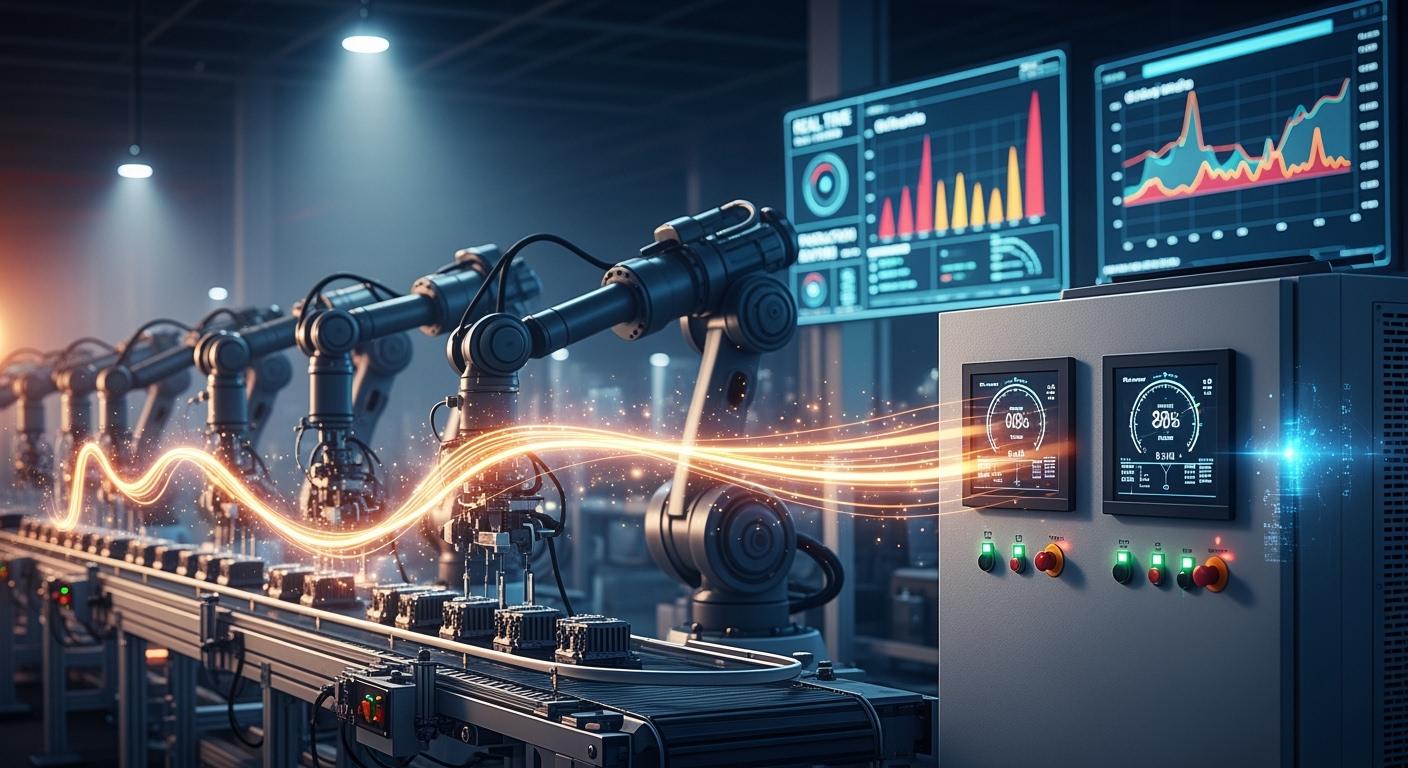
You see factories transform as Industry 4.0 production lines and telecom power systems work together to deliver dynamic power output. This collaboration helps you optimize energy use and improve manufacturing efficiency. ESTEL leads in providing reliable telecom power solutions for these advanced setups.
Only 16% of manufacturers in Canada report a high level of adoption of Industry 4.0 technologies.
You gain flexible power management that matches production rhythm and supports sustainable growth.
Key Takeaways
Collaboration between telecom power systems and Industry 4.0 enhances manufacturing efficiency and energy use.
Real-time data monitoring allows factories to respond quickly to changes in production needs.
Dynamic power output reduces energy waste and lowers operational costs, leading to significant savings.
Integrating advanced technologies like AI and IoT improves predictive maintenance and operational flexibility.
Sustainable practices, such as using renewable energy, help factories meet environmental goals while staying competitive.
Industry 4.0 Essentials
Smart Manufacturing Technologies
You experience a new era in manufacturing with Industry 4.0. This revolution brings together advanced technologies that change how you manage production lines. You see machines equipped with sensors that collect and share information about their health and performance. These networks, known as the Internet of Things (IoT), help you monitor equipment in real time. You use smart factories that combine cloud computing, predictive maintenance, and even 3D printing to boost efficiency.
Cyber-physical systems connect machines to each other and the internet, letting you control and monitor processes from anywhere.
Analytical software services, called the Internet of Services, give you insights into your machinery.
System integration allows you to exchange data between different applications and equipment.
Cloud and edge computing help you process and store large amounts of data quickly.
Big data analytics and artificial intelligence (AI) let you find patterns and make better decisions.
Robots work alongside you, improving accuracy and productivity.
Cybersecurity protects your machines and data from threats.
You move away from traditional, isolated production methods. Instead, you use real-time data and automation to create flexible and responsive environments. This shift helps you adjust quickly to changes in demand and production needs.
Production Rhythm and Data Flow
You notice that production rhythm now depends on the flow of information. Real-time monitoring lets you track every step of the process. You can respond instantly to changes, such as a sudden increase in orders or a machine needing maintenance. This agility means you no longer rely on static production lines.
When you integrate a Telecom Power System, you support this dynamic environment. The system adapts to the changing power needs of your smart factory, ensuring that energy use matches production activity.
You benefit from seamless data exchange between machines, software, and power systems. This integration helps you maintain efficiency, reduce waste, and keep your operations running smoothly.
Telecom Power System Integration
ESTEL’s Power Solutions
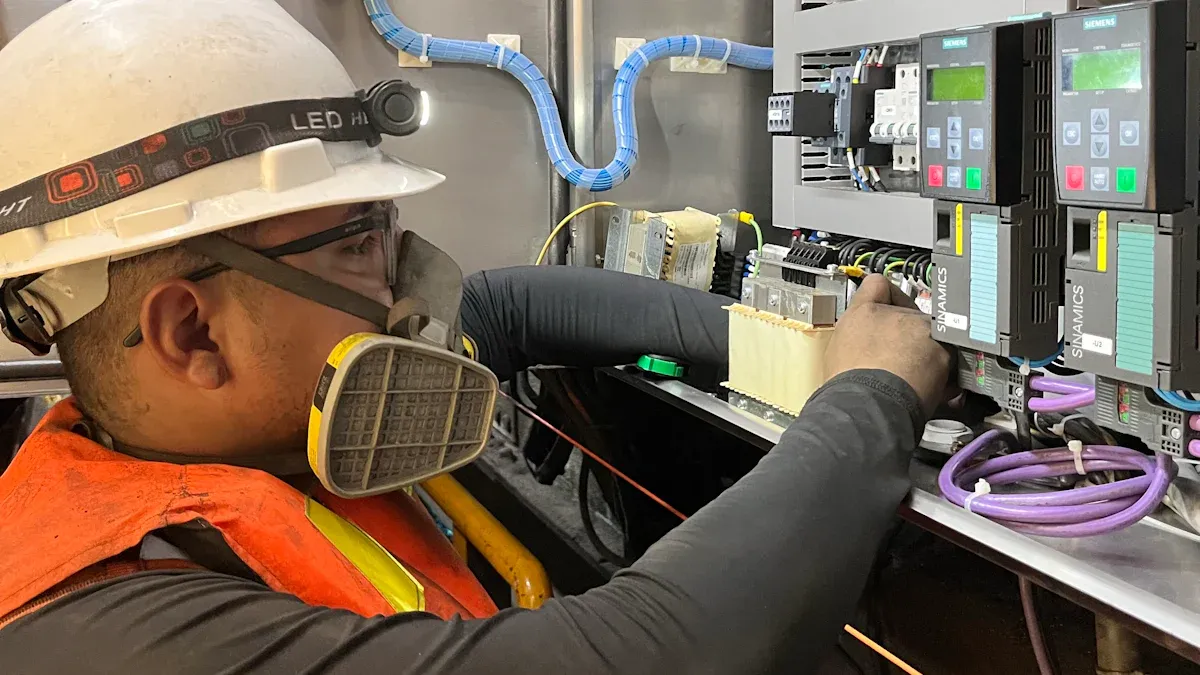
You see ESTEL’s power solutions as a foundation for smart manufacturing. The Telecom Power System adapts to the demands of Industry 4.0 production lines. You gain flexibility because the system supports a wide range of input voltages and offers advanced control features. You can install it on a standard 19-inch rack or inside a cabinet, making integration easy.
You benefit from modular designs that simplify upgrades and help you meet growing energy needs. IoT technology enables real-time monitoring and maintenance, which improves system performance and reliability. Stronger materials increase safety and durability, protecting your equipment from overheating and fires.
Feature | Description |
|---|---|
Modular Designs | Simplifies upgrades and adapts to growing energy needs. |
IoT Technology | Enables real-time monitoring and maintenance, enhancing system performance. |
Stronger Materials | Increases safety and durability, addressing issues like overheating and fires. |
You notice that ESTEL’s Telecom Power System incorporates advanced battery technologies, such as lithium-based batteries. These batteries enhance efficiency and resilience. You also see renewable energy sources integrated into backup systems, which reduces reliance on fossil fuels and supports environmental goals. Hybrid renewable energy systems have proven cost-effective and reliable, increasing energy throughput.
You experience a 98% reduction in battery failure rates since 2018. Smart Battery Management Systems detect anomalies early, minimizing risks and ensuring safe operation. You gain confidence in the system’s ability to support continuous production.
You must consider regulatory and compliance requirements. Governance aligns operations with your goals and ensures accountability. Risk management identifies threats and protects your operations. Compliance ensures you follow laws and standards, especially regarding data privacy. You need to adhere to laws governing spectrum allocation, interconnection, pricing, data protection, and consumer rights. The rollout of 5G and IoT adds complexity, so you must pay attention to compliance. Non-compliance can lead to penalties, including fines and license revocation. You must demonstrate transparent costing and robust protection of customer data.
Role of Telecom Rectifier System
You rely on the Telecom Rectifier System to convert alternating current (AC) to direct current (DC), which is essential for powering your production equipment. You gain high efficiency rates, often exceeding 96%, which reduces energy loss and operational costs. The modular design allows you to scale the system as your production needs grow. You can maintain and upgrade the system easily, minimizing downtime.
You benefit from flexible input voltage options, such as AC220VAC and 380VAC. The system delivers a consistent DC48V output voltage, which is crucial for telecom applications. You install the rectifier system in standard racks, optimizing space and simplifying integration.
You see grounding protection through copper bars, which increases safety.
Flexible cable inlet designs make connectivity convenient.
The system supports hybrid renewable energy setups, further improving sustainability.
You use the Telecom Power System and rectifier system together to create a reliable power infrastructure. You support smart manufacturing with real-time data exchange and adaptive power output. You achieve efficient, flexible, and sustainable production by integrating these advanced solutions.
Real-Time Collaboration Mechanisms

Data Exchange and IoT
You see real-time collaboration in smart factories when data flows seamlessly between machines and power systems. IoT devices collect information from sensors and equipment, giving you insights that help you make quick decisions. You use platforms like Microsoft Azure to manage this data, which supports innovation and efficiency. Effective data management lets you analyze information across departments, improving production and power management.
You benefit from secure data exchange when you follow best practices. Standardization protocols like JSON and XML help systems communicate smoothly. Encryption protocols such as AES-256 and secure transport mechanisms like TLS protect your data during transfer. These practices ensure interoperability and keep sensitive information safe.
Core Element | Description | Practical Application | Importance |
|---|---|---|---|
Standardization protocols | Enable systems to communicate effectively | XML integrates inventory data from various suppliers | Ensures smooth data flow across systems |
Secure transport mechanisms | Protect data during transfer | TLS encrypts customer payment data | Prevents unauthorized access |
Encryption protocols | Secure data in transit and at rest | AES-256 encrypts transaction data between branches | Reduces risk of breaches |
You rely on mechanisms that enable real-time collaboration:
Mechanism | Description |
|---|---|
Interoperability | Systems exchange, interpret, and act upon information across platforms |
Unified Namespace (UNS) | Provides a single source of truth for real-time data integration |
Digital Twins | Virtual representations for monitoring and optimization |
Asset Administration Shell | Standardizes digital representation of devices for easier integration |
Adaptive Power Output
You experience adaptive power output when the Telecom Power System responds to production changes. Programmable power supplies adjust voltage and current in real time. You monitor system health remotely through digital interfaces. Integration with industrial protocols allows smarter control and predictive maintenance.
Centralized power control manages energy across production lines.
Condition-based maintenance optimizes system performance.
Remote diagnostics reduce downtime.
Load-following behavior sets programmable limits for power use.
Real-time telemetry monitors power conditions.
Customizable power profiles match different operational states.
You scale adaptive power output easily. Microservices architecture supports flexible expansion. Self-adapting multi-agent systems outperform rigid setups in job-shop environments. Cloud-based analytics tools give you enterprise-grade capabilities, making scalability accessible even for small businesses.
Benefits of Dynamic Power Output
Efficiency and Cost Savings
You gain a clear advantage when your factory uses dynamic power output. The Telecom Power System adjusts energy delivery based on production needs. This approach reduces waste and improves throughput. You see machines operate only when necessary, which lowers energy bills and extends equipment life.
You notice that real-time power management helps you avoid unnecessary energy consumption. This means you spend less on electricity and maintenance.
Here is a summary of efficiency improvements:
Metric | Improvement |
|---|---|
Specific Energy Consumption | |
Throughput | 27.9% increase |
You achieve a 23.9% reduction in specific energy consumption. You also see a 27.9% increase in throughput. These numbers show that dynamic power output leads to significant cost savings and higher productivity.
Sustainability and Flexibility
You support sustainability when you match power output to production rhythm. This method reduces your carbon footprint and helps you meet environmental goals. You use renewable energy sources more efficiently. You also minimize reliance on fossil fuels.
You adapt quickly to changes in demand.
You scale operations up or down without wasting energy.
You maintain stable production during peak hours.
You benefit from flexible power management. You respond to market shifts and new technologies with ease. You keep your factory running smoothly, even as requirements change. This flexibility ensures you stay competitive and environmentally responsible.
Future Trends and ESTEL’s Vision
Advanced Analytics and AI
You will see advanced analytics and artificial intelligence shape the future of smart manufacturing. These tools help you predict equipment failures before they happen. You can use predictive maintenance schedules to reduce emergency repairs. This approach saves money and extends the life of your network equipment. Accurate demand forecasting lets you allocate resources efficiently. You can invest in areas with the highest return, which optimizes your costs. Proactive management of network resources improves customer service and boosts satisfaction.
You can rely on smart grid technologies to increase reliability. Predictive analytics help you reduce downtime and lower maintenance costs. IoT and AI work together to adjust power loads based on real-time data. This improves energy efficiency and supports your sustainability goals.
Trend | Impact |
|---|---|
Smart grid technologies | Enhanced reliability through predictive analytics, reducing downtime and maintenance costs. |
Renewable energy integration | Support for integration with renewable energy sources, optimizing hybrid power solutions. |
IoT and AI for predictive maintenance | Improved energy efficiency by dynamically adjusting power loads based on real-time data insights. |
ESTEL uses these innovations to enhance the Telecom Power System. You benefit from systems that learn and adapt to your production needs.
Evidence Description | Impact on Operational Efficiency |
|---|---|
Predictive maintenance schedules reduce the need for emergency repairs. | This leads to significant cost savings and extends the life of network equipment. |
Accurate demand forecasting allows for efficient resource allocation. | Investments can be directed towards areas with the highest potential return, optimizing costs. |
Proactive management of network resources enhances customer service. | This results in increased customer satisfaction and loyalty, improving overall operational efficiency. |
Evolving Industry Partnerships
You will notice that industry partnerships play a key role in future growth. Companies work together to share knowledge and develop new solutions. ESTEL partners with technology leaders to stay ahead in telecom power and Industry 4.0 integration. You see more collaboration between manufacturers, software providers, and energy companies.
The market for telecom power systems continues to grow. You can expect the market size to reach 15 billion USD by 2032, with a compound annual growth rate of 10%. This growth shows strong demand for advanced power solutions in smart factories.
Year | Market Size (USD) | CAGR (%) |
|---|---|---|
2022 | 5 Billion | N/A |
2030 | 7.69 Billion | 12.2 |
2032 | 15 Billion | 10 |
You can prepare for these trends by adopting flexible, data-driven systems. ESTEL’s vision focuses on ongoing innovation, strong partnerships, and sustainable solutions. You will stay competitive as you embrace these future developments.
You see how the integration of Industry 4.0 production lines and the Telecom Power System creates efficient, flexible, and sustainable manufacturing. You gain real-time tracking, improved efficiency, and enhanced connectivity. The table below shows the main takeaways:
Technology | Benefit |
|---|---|
Cloud computing | Efficient data storage and analysis |
Artificial intelligence | Predictive maintenance and automation |
5G | Real-time communication and IoT connectivity |
Digital twins | Virtual testing for process improvement |
You can prepare for future growth by investing in advanced power solutions and energy-efficient technologies.
FAQ
How does ESTEL’s Telecom Power System support Industry 4.0 production lines?
You gain flexible power management. The system adapts to changing production needs. You monitor energy use in real time. This helps you optimize efficiency and reduce waste.
What are the main benefits of integrating telecom power systems with smart factories?
You see improved energy efficiency, lower costs, and greater sustainability. You adjust power output to match production rhythm. This keeps your factory responsive and competitive.
Can you install ESTEL’s power solutions in existing manufacturing setups?
You can install ESTEL’s systems on standard 19-inch racks or inside cabinets. The modular design makes upgrades and integration easy. You scale your setup as your needs grow.
How does real-time data exchange improve power management?
You use IoT devices to collect and share information. Real-time data lets you adjust power output quickly. This reduces downtime and supports predictive maintenance.
Are ESTEL’s products suitable for harsh outdoor environments?
You rely on ESTEL’s products for durability. The cabinets feature weatherproof designs, anti-corrosion coatings, and strong locks. You protect your equipment from extreme conditions.
See Also
Essential Insights Into Telecom Power Supply Characteristics
Tips for Maintaining Consistent Power Supply in Telecom Cabinets
Methods for Calculating Power Systems and Batteries in Telecom
Solar Energy Storage Solutions for Telecom Cabinet Power
Integrated Solar Inverter and Battery Systems for Telecom Cabinets
CALL US DIRECTLY
86-13752765943
3A-8, SHUIWAN 1979 SQUARE (PHASE II), NO.111, TAIZI ROAD,SHUIWAN COMMUNITY, ZHAOSHANG STREET, NANSHAN DISTRICT, SHENZHEN, GUANGDONG, CHINA
