Industrial-Grade Telecom Power Security: Compliant with IEC 62443 Standards

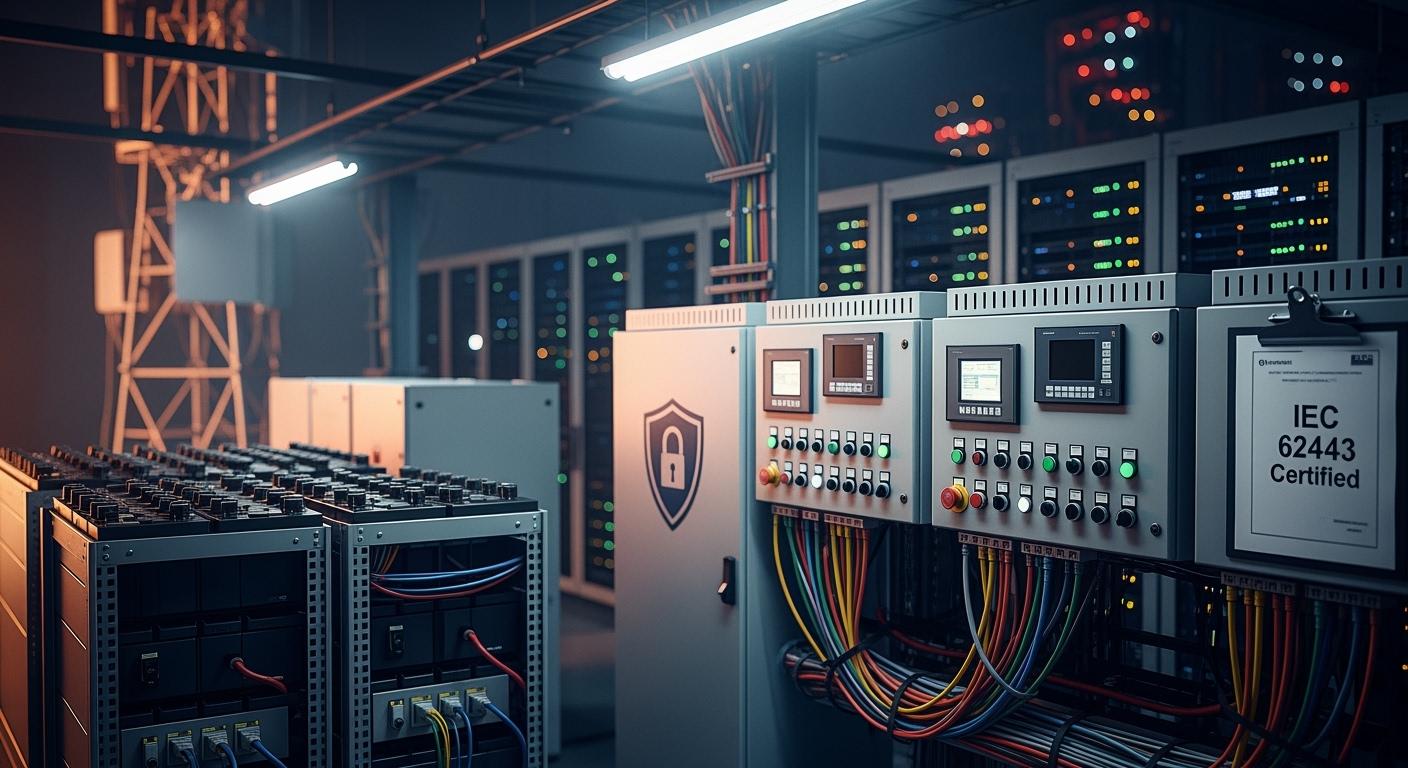
You achieve industrial-grade security for your telecom power systems by following IEC 62443 standards. Cybersecurity protects your network and ensures reliable communication. International standards help you meet strict security requirements. ESTEL delivers trusted solutions that support your needs. You gain peace of mind with a Telecom Power System that meets compliance and strengthens your infrastructure.
Key Takeaways
Follow IEC 62443 standards to secure your telecom power systems and protect against cyber threats.
Conduct regular risk assessments to identify vulnerabilities and prioritize security measures based on risk levels.
Implement strong access controls and real-time monitoring to detect threats quickly and respond effectively.
Use network segmentation to isolate critical areas of your system, reducing the impact of potential breaches.
Choose compliant solutions like ESTEL's Telecom Power System to simplify your path to security and regulatory approval.
IEC 62443 Overview and Relevance
What Is IEC 62443?
You may wonder what makes IEC 62443 so important for your operations. IEC 62443 is a global standard that sets out how to secure industrial automation and control systems. It helps you protect your critical infrastructure from cyber threats. The standard has a clear structure with three main layers:
IACS Processes: This covers your policies, risk management, procurement, and daily operations.
System Security: This focuses on your network architecture and the controls you use to protect it.
Component Security: This ensures your devices and products are hardened against attacks.
IEC 62443 also highlights four key functions: identification, protection, detection, and response. These functions guide you in building a strong defense for your Telecom Power System.
The standard uses several core principles to help you secure your environment. Here is a quick overview:
Core Principle | Description |
|---|---|
Cybersecurity Framework | Sets guidelines for securing industrial automation and control systems. |
Availability and Safety | Keeps your systems running and your people safe. |
Zones and Conduits | Segments your network to match different security needs. |
Security Levels | Matches security measures to the level of risk. |
Risk Assessment | Finds your critical assets and weak points. |
Layered Security Measures | Uses multiple controls to protect each part of your system. |
Compliance and Standards Alignment | Ensures you meet IEC 62443 and other regulations. |
Why It Matters for Telecom Power
You face growing cyber threats every year. Ransomware and malware attacks on industrial systems have increased since 2010. In 2023, 18% of ransomware attacks on industrial firms caused production stops. IEC 62443 gives you a framework to manage these risks. It covers risk assessment, secure design, monitoring, and incident response for your Telecom Power System.
When you follow IEC 62443, you improve your security and meet regulatory requirements. Many organizations must comply with these standards to operate. The US Cybersecurity and Infrastructure Security Agency recommends IEC 62443 for critical infrastructure. Compliance helps you gain regulatory approval and access new markets. You show your commitment to security and keep your operations running smoothly.
Telecom Power System Security Requirements

Key IEC 62443 Controls
You need to understand the main controls that IEC 62443 sets for your Telecom Power System. These controls help you build a secure foundation and protect your infrastructure from cyber threats. IEC 62443 requires you to use strong authentication, manage user access, and monitor your system for unusual activity. You must also keep your software updated and patch vulnerabilities quickly.
Before you follow IEC 62443, your Telecom Power System may face several common vulnerabilities. Attackers often target these weaknesses because they are easy to exploit. Here are some of the most frequent issues:
Out-of-bounds write errors can let attackers overwrite critical data.
Improper restriction of operations within memory buffers may allow unauthorized access.
Improper input validation can open the door to malicious code.
Many vulnerabilities are remote and low-complexity, so even less skilled attackers can exploit them.
You reduce these risks by applying IEC 62443 controls. You create secure zones in your network, limit access to sensitive areas, and use layered security measures. You also perform regular risk assessments to find and fix weak points.
Tip: Always review your system logs and set alerts for suspicious activity. Early detection helps you respond quickly and minimize damage.
Security Levels and Risk Management
You must match your security measures to the level of risk in your Telecom Power System. IEC 62443 defines four security levels. Each level addresses different threats and requires stronger controls as the risk increases.
Security Level | Description | Example Threats |
|---|---|---|
SL 1 | Protects against casual or accidental threats | Basic malware, human error |
SL 2 | Defends against intentional but low-skill attacks | Simple hacking attempts |
SL 3 | Guards against skilled attackers | Targeted cyber attacks |
SL 4 | Shields from advanced persistent threats | State-sponsored attacks |
You start by identifying your critical assets and evaluating the risks. You then select the security level that fits your needs. You use risk management to prioritize your actions and allocate resources. This process helps you focus on the most important areas and ensures your Telecom Power System stays resilient.
Note: Risk management is not a one-time task. You should review and update your strategy regularly as new threats emerge.
Implementing Compliance with ESTEL Solutions
Risk Assessment and Network Segmentation
You start your journey toward IEC 62443 compliance by conducting a thorough risk assessment. This process helps you identify the most critical assets in your telecom network and understand the threats you face. IEC 62443 recommends matching your security measures to the level of risk. The table below shows how you can align your protection strategies with different security levels:
Security Level | Description |
|---|---|
SL 1 | Protection against casual or coincidental violation |
SL 2 | Protection against intentional violation using simple means |
SL 3 | Protection against sophisticated attack with moderate resources |
SL 4 | Protection against state-sponsored attack with extensive resources |
After you assess your risks, you need to segment your network. Network segmentation plays a key role in securing your Telecom Power System. According to IEC 62443 guidelines, segmentation restricts data flow and isolates different areas of your network. This approach reduces the impact of any security breach. You can use Virtual Local Area Networks (VLANs) for basic segmentation. For higher security needs, you should consider physical segmentation. This layered approach makes it harder for attackers to move through your system.
Tip: Review your network map and identify areas where segmentation can limit the spread of threats.
Access Control and Monitoring
You must control who can access your Telecom Power System. Strong access control ensures that only authorized users can make changes or view sensitive information. You should use unique credentials for each user and set permissions based on their roles. Regularly update your access lists to remove users who no longer need entry.
Real-time monitoring is another essential part of IEC 62443 compliance. You gain several benefits when you monitor your system continuously:
You detect threats as they happen, which helps you respond quickly.
You gain visibility into your operations and understand your security posture.
You manage cyber risks proactively by using real-time analytics to address vulnerabilities.
You should set up alerts for unusual activity and review your logs often. This practice helps you spot problems before they cause damage.
Note: Combine access control with real-time monitoring for the best results. This combination strengthens your defense and supports compliance.
ESTEL Telecom Power System and Rectifier System
You can simplify your path to compliance by choosing solutions designed with security in mind. ESTEL offers a Telecom Power System that supports your efforts to meet IEC 62443 standards. The system provides reliable power delivery and advanced control features. Its wide input voltage range and natural cooling design make it suitable for many environments. You can install it on a standard rack or inside a cabinet, which gives you flexibility.
The ESTEL Telecom Rectifier System also helps you achieve compliance. Its modular design allows for easy maintenance and scalability. The system supports different input voltages and delivers consistent output, which is critical for telecom applications. High efficiency rates reduce energy loss and operational costs. You benefit from grounding protection and flexible cable inlets, which enhance safety and ease of installation.
Both systems support network segmentation and access control. Multiple communication ports allow you to integrate these products into your existing security framework. You can monitor performance and receive alerts in real time. These features help you maintain compliance and protect your infrastructure from evolving threats.
Callout: ESTEL’s solutions give you the tools you need to secure your telecom network and meet international standards.
Overcoming Challenges in Compliance
Legacy Systems and Integration
You may encounter several obstacles when you work toward IEC 62443 compliance. Many telecom operators face these common challenges:
Resource allocation often requires significant investment, especially if your organization has not focused on cybersecurity before.
Integration complexity can disrupt your daily operations as you add new security measures to existing systems.
The threat landscape keeps changing, so you must adapt your security practices regularly.
Legacy systems present unique hurdles. These older systems may not support modern security features. You need strategies that help you bridge the gap between old and new technologies. The table below outlines effective approaches:
Strategy | Description |
|---|---|
Defense-in-depth architecture concepts | Use multiple layers of security to protect your systems. |
Network segmentation and access control | Divide your network into segments to limit access and reduce risk. |
Role-based access and user authentication | Assign permissions based on user roles for better security. |
Security zones and conduits definition | Define areas with different security levels and their interactions. |
Security considerations for legacy systems | Address vulnerabilities specific to older equipment. |
Security design validation and testing | Test your security measures to ensure they work as intended. |
To integrate legacy systems smoothly, you can follow these steps:
Set up your Active Directory infrastructure with a dedicated OT domain that aligns with IEC 62443.
Test new policies on a non-critical engineering station before full deployment.
Define user roles and permissions using Role-Based Access Control.
Migrate systems gradually during scheduled maintenance to avoid disruptions.
Enable centralized logging and auditing for better traceability.
Tip: Take a phased approach to integration. This method helps you minimize risks and maintain service continuity.
Skills, Resources, and Continuous Improvement
You need skilled personnel and the right resources to maintain compliance. Training your team on IEC 62443 principles ensures everyone understands their role in security. Regular security audits and proactive measures, as outlined in IEC 62443-4-2, help you embed security throughout your system’s lifecycle. This secure development lifecycle strengthens your defenses and keeps your telecom power systems resilient.
Continuous improvement is essential. You should review your security posture often and update your practices as new threats emerge. The IEC 62443 framework guides you in protecting your critical infrastructure and adapting to changes in the cyber landscape.
Callout: Partnering with ESTEL gives you access to expert support, advanced solutions, and ongoing guidance. You can focus on your core operations while ESTEL helps you stay compliant and secure.
You can achieve IEC 62443 compliance in your telecom power systems by following these steps:
Establish a Cybersecurity Management System.
Conduct a risk assessment and segment your network.
Define security requirements and assign roles.
Implement technical controls.
Monitor and improve your defenses continuously.
Benefit Description | Measurable Impact |
|---|---|
Regulatory Alignment | Reduces compliance costs and supports global cybersecurity requirements. |
Market Benefits from Certification | Lowers insurance premiums and builds customer trust. |
Digital Transformation Enablement | Secures your path to Industry 4.0 and advanced analytics. |
Supply Chain Security Improvements | Reduces procurement risks and strengthens vendor relationships. |
Financial Impact of Breaches | Lowers the risk of costly incidents in critical infrastructure. |
By adopting IEC 62443 standards, you improve operational reliability and minimize downtime. ESTEL provides secure, compliant solutions that help you protect your network and support your digital transformation.
FAQ
What is IEC 62443 compliance, and why do you need it?
IEC 62443 compliance means you follow a global standard for securing industrial systems. You need it to protect your telecom power systems from cyber threats and to meet industry regulations.
How do ESTEL’s Telecom Power Systems help you achieve compliance?
You get advanced control features, network segmentation, and real-time monitoring with ESTEL’s systems. These features support your efforts to meet IEC 62443 requirements and keep your infrastructure secure.
Can you upgrade your legacy telecom systems for IEC 62443 compliance?
Yes, you can upgrade legacy systems. You should use network segmentation, add access controls, and integrate ESTEL’s solutions to bridge security gaps.
What are the main benefits of using ESTEL’s compliant solutions?
You gain:
Enhanced security
Reliable power delivery
Lower operational costs
Easier regulatory approval
How often should you review your telecom power system’s security?
You should review your system’s security at least once a year. Regular reviews help you find new risks and keep your defenses strong.
See Also
Ensuring Consistent Power Supply for Telecom Equipment Cabinets
Essential Specifications for Outdoor Telecom Equipment Cabinets
Safeguarding Equipment Using Outdoor Telecom Cabinets Effectively
Proven Strategies to Secure Communication Cabinets in Risky Locations
CALL US DIRECTLY
86-13752765943
3A-8, SHUIWAN 1979 SQUARE (PHASE II), NO.111, TAIZI ROAD,SHUIWAN COMMUNITY, ZHAOSHANG STREET, NANSHAN DISTRICT, SHENZHEN, GUANGDONG, CHINA
