Smart Li-ion Backup: Telecom Power Solution with 5-7X Longer Life Than VRLA

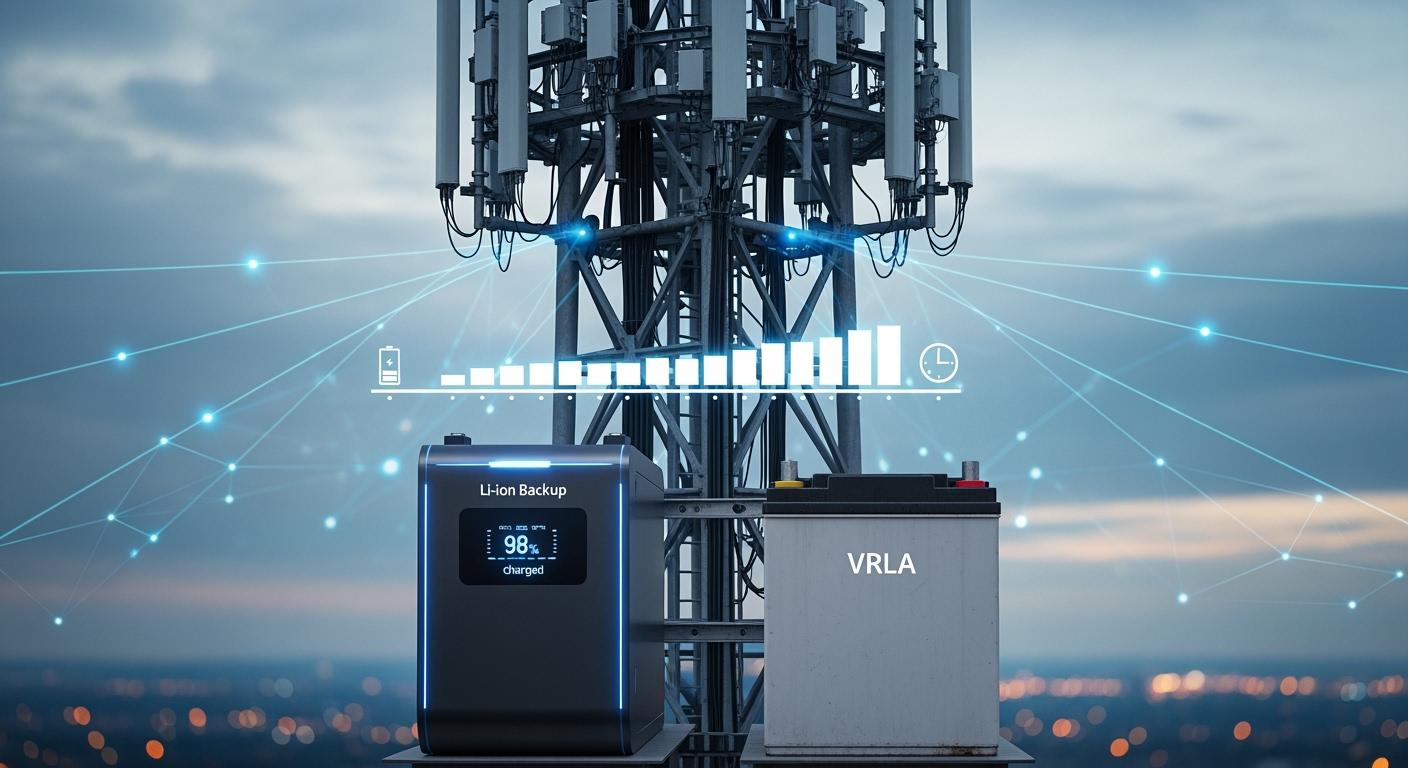
You face a critical choice in powering your telecom infrastructure. Smart Li-ion Backup delivers a lifespan five to seven times longer than VRLA batteries. This means fewer replacements and lower maintenance costs. ESTEL stands at the forefront of telecom power solutions, offering advanced systems that boost reliability. Consider the real-world impacts:
Impact Type | Description |
|---|---|
Total Cost of Ownership | Smart Li-ion Backup reduces long-term expenses through better performance and less downtime. |
Operational Reliability | Improved system reliability minimizes unexpected failures and service interruptions. |
You gain these advantages when you upgrade your Telecom Power System.
Key Takeaways
Smart Li-ion Backup lasts 10-15 years, significantly longer than VRLA batteries, which last only 3-5 years. This means fewer replacements and lower costs.
The system offers real-time monitoring and safety features, reducing maintenance needs and preventing unexpected failures.
Smart Li-ion Backup is compact and lightweight, allowing for more efficient use of space in telecom sites compared to bulkier VRLA batteries.
With higher energy density and faster charging, Smart Li-ion Backup ensures reliable power during outages, keeping your telecom network operational.
Choosing Smart Li-ion Backup supports a greener future by reducing waste and energy consumption, making it a sustainable choice for telecom infrastructure.
What Is Smart Li-ion Backup?
Key Features
You benefit from Smart Li-ion Backup because it brings advanced technology to your telecom site. These systems use a built-in intelligent battery management system (BMS) that monitors performance in real time and protects against overcharging, over-discharging, and overcurrent. You can expand capacity easily by adding more batteries as your project grows. The system reduces on-site service and operational costs, making your operations more efficient.
Here are some defining features:
Real-time monitoring and multiple safety protections
Modular and scalable design for easy expansion
Maintenance-free operation that lowers costs
Wide compatibility with major telecom power systems
Prevention of voltage, temperature, and current issues to keep cells safe
You can see how Smart Li-ion Backup stands out compared to traditional lead-acid batteries:
Feature | Smart Li-ion Backup | Traditional Lead-Acid Batteries |
|---|---|---|
Energy Density | Higher | Lower |
Lifespan | Longer | Shorter |
Charging Speed | Fast | Slow |
Temperature Stability | Excellent | Limited |
Physical Footprint | Reduced | Larger |
Role in Telecom Infrastructure
You rely on continuous service in your telecom network. Smart Li-ion Backup ensures your towers stay online 24/7, even during power outages or emergencies. The system responds quickly to power disruptions, keeping your equipment running until the main supply returns. You get superior efficiency and a longer lifespan, which means fewer interruptions and more reliable service.
Aspect | Description |
|---|---|
Service Uptime | Ensures 24/7 operation for telecom towers |
Power Disruption Response | Provides rapid backup during grid failures or disasters |
Efficiency and Lifespan | Delivers better performance and longer life than lead-acid batteries |
Backup Activation | Keeps your network running when the main power fails |
ESTEL’s Smart Li-ion Solutions
You gain extra advantages when you choose ESTEL’s Smart Li-ion Backup for your Telecom Power System. ESTEL uses a modular design that lets you scale your power infrastructure as your needs change. The advanced cooling system keeps your equipment at the right temperature, which extends its life. Integrated monitoring tools give you real-time insights into power usage and battery health. You also get transient-voltage protection, high-capacity batteries, and full compliance with industry safety standards. These features make ESTEL’s solutions reliable and efficient for your telecom operations.
Telecom Power System Advantages
Lifespan and Reliability
You want your telecom network to run without interruption. Smart Li-ion Backup gives you a major advantage in lifespan and reliability compared to traditional batteries. Most VRLA batteries last about 5 to 7 years. Smart Li-ion Backup can last 10 to 15 years, which means you replace batteries less often and avoid unexpected failures. You also get higher charge and discharge efficiency, reaching over 95%. This keeps your Telecom Power System running smoothly and reduces the risk of downtime.
Feature | 48V Lithium-Ion | 48V Lead-Acid (VRLA/Flooded) |
|---|---|---|
Average Lifespan | 5–7 years | |
Charge/Discharge Efficiency | 95%+ | 70–85% |
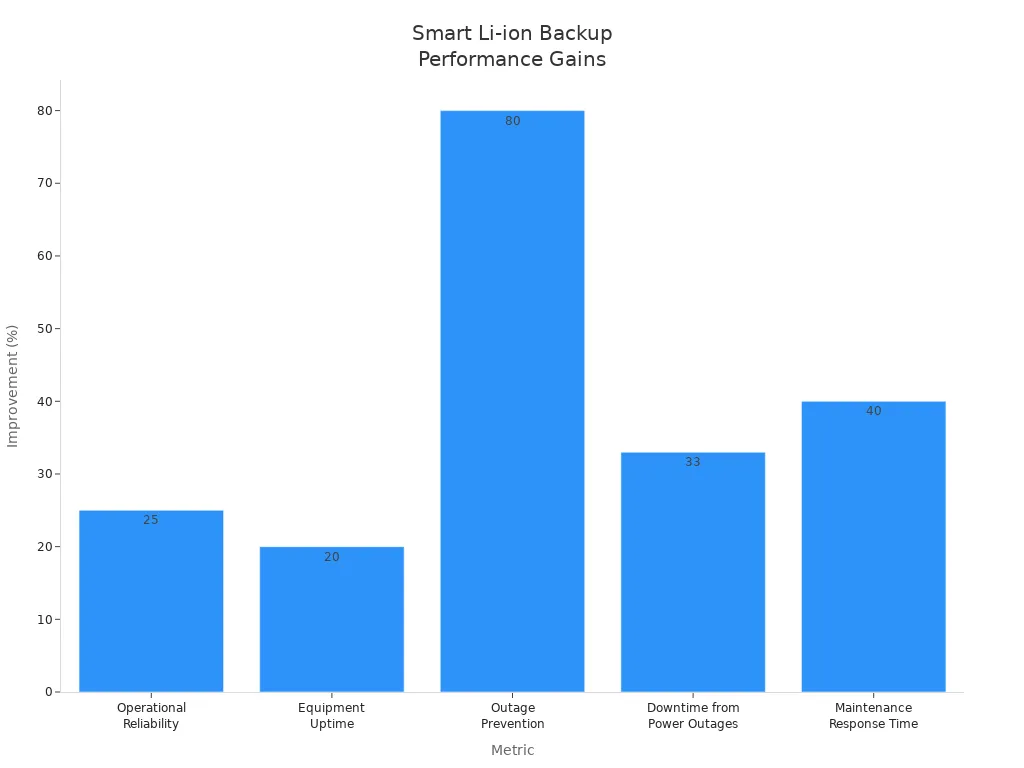
You can see how Smart Li-ion Backup increases operational reliability by 25% and improves equipment uptime by 20%. It prevents 80% of outages and reduces downtime from power outages by 33%. You also benefit from faster maintenance response times and predictive analytics that anticipate failures weeks in advance.
Metric | Improvement |
|---|---|
Operational Reliability | |
Equipment Uptime | 20% improvement |
Outage Prevention | 80% of outages prevented |
Downtime from Power Outages | 33% reduction |
Maintenance Response Time | 40% faster |
Predictive Analytics | Failure anticipation weeks in advance |
You get peace of mind knowing your Telecom Power System uses advanced lithium iron phosphate cells and a smart battery management system. These features protect your network from overcharge, overcurrent, and overheating. You keep your critical equipment safe, even in harsh environments.
Performance and Efficiency
You need a Telecom Power System that delivers power efficiently and adapts to changing demands. Smart Li-ion Backup provides higher energy density and faster charging than VRLA batteries. You can deliver nearly all the rated capacity quickly, which is essential during emergencies. The compact design saves space and reduces the weight of your equipment racks.
You get a superior power-output-to-weight ratio.
You enjoy faster charging and higher energy density.
You benefit from minimal energy loss, which lowers your operating costs.
You support both telecom and data center backup needs with modern 48V DC architectures.
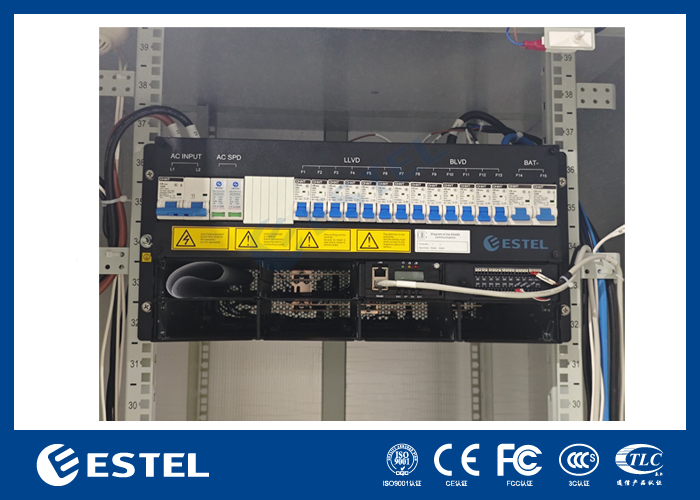
ESTEL’s Telecom Power System supports a wide AC input voltage range from 90 to 300 Vac. You can install it on a standard 19-inch rack or inside a cabinet, giving you flexibility for different sites. Natural cooling reduces the need for extra fans or air conditioners, which saves energy and cuts maintenance costs. You can rely on consistent performance, even when the power supply fluctuates.
Maintenance and Safety
You want to spend less time and money on maintenance. Smart Li-ion Backup requires only regular checks, not frequent service visits. You avoid the hassle of topping up fluids or replacing worn-out parts. The advanced battery management system monitors the health of each cell and alerts you to any issues before they become serious.
Aspect | Smart Li-ion Backup | VRLA Batteries |
|---|---|---|
Performs reliably in extreme conditions | Limited adaptability | |
Maintenance Requirements | Reduced maintenance with regular checks | Requires more frequent maintenance |
Safety Records | High safety standards in harsh climates | Established safety records |
You can trust your Telecom Power System to perform reliably in extreme temperatures, humidity, and dust. The system meets international safety standards, including IEC 62933, UL 9540, and the EU Battery Directive. These certifications ensure your backup solution protects both your equipment and the environment.
Tip: With ESTEL’s flexible installation options and robust safety features, you can deploy your Telecom Power System in remote or challenging locations with confidence.
You gain a safer, more efficient, and longer-lasting backup solution for your telecom network.
Comparing Smart Li-ion and VRLA
Lifespan Differences
You want your backup batteries to last as long as possible. Smart Li-ion Backup gives you a much longer service life than VRLA batteries. Most VRLA batteries last only 3 to 5 years before you need to replace them. Smart Li-ion Backup can keep working for 10 to 15 years. This means you spend less time and money on replacements.
You also get more charge and discharge cycles with Smart Li-ion Backup. The battery management system protects each cell, so you avoid problems like sulfation and water loss that often shorten the life of VRLA batteries. You can trust your backup to stay reliable for many years, even in tough conditions.
Note: A longer battery lifespan means fewer disruptions and less waste. You keep your Telecom Power System running smoothly and avoid unexpected failures.
Operational Benefits
You face many challenges when you use VRLA batteries. These batteries need regular maintenance, such as cleaning and checking for leaks. They also perform poorly in high temperatures and take up a lot of space and weight in your equipment racks. Smart Li-ion Backup solves these problems.
Here is a comparison of the main technical and operational differences:
Feature | Lithium-Ion Batteries | VRLA Batteries |
|---|---|---|
Energy Density | Multiple times higher | Lower energy density |
Size Occupied | Less than 50% of VRLA | Larger footprint |
Weight | Less than 25% of VRLA | Much heavier |
Charge Time | 2–4 hours | 8–16 hours |
Initial Cost | Higher | Lower |
Total Cost of Ownership | Lower | Higher |
Maintenance | Minimal, BMS used | Regular cleaning, ventilation |
Environmental Impact | Lower overall | Higher overall |
You can see that Smart Li-ion Backup charges much faster and weighs less. You can install more backup power in the same space. You also reduce the structural load on your site. The advanced battery management system means you do not need to check the batteries as often. You save time and lower your maintenance costs.
Let’s look at how Smart Li-ion Backup addresses common VRLA challenges:
Challenge with VRLA Batteries | How Smart Li-ion Backup Addresses It |
|---|---|
Shorter lifespan (3–5 years) | Longer cycle life (up to 10–15 years) |
High maintenance requirements | Lower maintenance needs |
Poor performance in high temperatures | Better temperature tolerance (-20°C to +55°C) |
Heavy weight and bulky size | Lighter weight, reducing structural load |
You get a more reliable and efficient Telecom Power System. You also improve uptime and reduce the risk of service interruptions.
Environmental Impact
You care about the environment and want to reduce your carbon footprint. Smart Li-ion Backup helps you do that. These batteries use fewer raw materials and last longer, so you create less waste. You also avoid the risk of acid leaks and toxic fumes that can come from VRLA batteries.
Smart Li-ion Backup has a lower overall environmental impact. You use less energy for cooling because the batteries run cooler and do not need extra ventilation. You also recycle fewer batteries over time, which helps protect the environment.
Tip: By choosing Smart Li-ion Backup, you support a greener future for telecom infrastructure. You make your network safer and more sustainable.
Benefits for Telecom Operators
Reduced Downtime
You want your network to stay online, even during power outages. Smart Li-ion Backup systems give you reliable backup power that keeps your telecom equipment running. These batteries have a higher cycle life and faster charging speed than VRLA batteries. You experience fewer interruptions and faster recovery after outages. For example, ESTEL’s Outdoor Battery Cabinet protects your batteries from harsh weather, while the Telecom Rectifier System ensures stable power delivery. Many operators, like Vodafone, have seen improved site uptime after switching to lithium-ion batteries.
Li-ion batteries provide 3–5 times more cycles than VRLA.
You get higher depth of discharge, which means more reliable backup during emergencies.
Compact size and fast charging help your network recover quickly.
Battery Type | Pros | Cons |
|---|---|---|
VRLA (Sealed Lead-Acid) | Low upfront cost, mature technology | Shorter cycle life, bulky, temperature-sensitive, maintenance required |
Lithium Iron Phosphate (LiFePO4) | Long lifespan (3000+ cycles), compact size, low maintenance, excellent thermal stability, fast charging | Higher initial cost, requires advanced BMS |
Cost Savings
You save money in several ways when you use Smart Li-ion Backup. You replace batteries less often, which lowers your procurement and installation costs. You also spend less on maintenance because these batteries need fewer service visits. Many operators, such as Vodafone and T-Mobile US, report lower operational costs and better network reliability after adopting lithium-ion solutions. You can also reduce or eliminate diesel fuel use by integrating renewable energy, which brings long-term savings.
Lower replacement frequency reduces costs.
Less maintenance means fewer service calls.
Enhanced reliability protects your revenue and customer satisfaction.
Space and Weight Efficiency
You often face space and weight limits at telecom sites. Smart Li-ion Backup systems solve this problem with higher energy density and a smaller footprint. For example, China Mobile uses Li-ion batteries for 5G small cells in cities where space is tight. ESTEL’s Outdoor Battery Cabinet and Telecom Rectifier System both support compact, lightweight installations.
Feature | Smart Li-ion Backup | VRLA Batteries |
|---|---|---|
Energy Density (Wh/kg) | 20–40 | |
Cycle Life | 3000+ | <350 |
Footprint Reduction | 40–60% smaller | Larger |
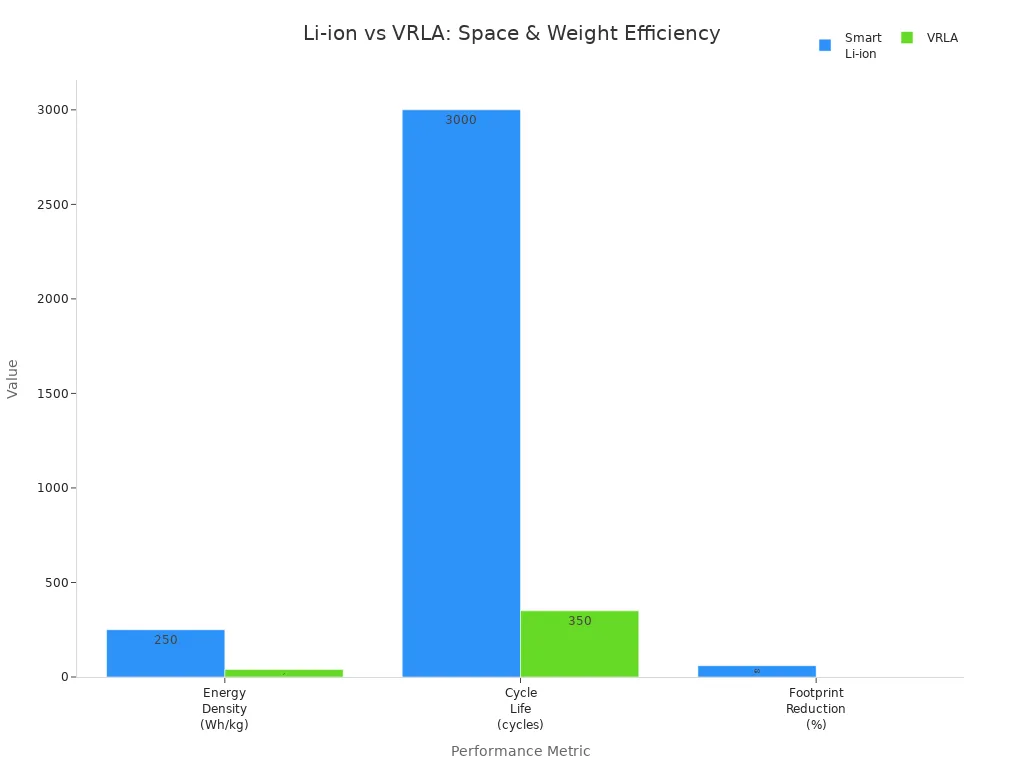
You can install more backup power in less space and reduce the load on your structures.
Remote Monitoring
You gain better control over your network with advanced remote monitoring. Smart Li-ion Backup systems, like those in ESTEL’s solutions, use intelligent gateways to centralize battery data. You can view real-time battery health, performance, and alarms from anywhere. The system supports secure protocols and can handle thousands of data points. Field technicians find setup easy, which reduces configuration time.
Centralized data collection over secure IP connections.
Support for Modbus RTU, Modbus TCP, HTTPS, and SNMPv3.
Real-time visibility of up to 2500 battery data points.
Fast response to network events and alarms.
Easy setup for field teams.
Tip: With remote monitoring, you can prevent problems before they cause downtime and keep your telecom network running smoothly.
Switching from VRLA
Upgrade Steps
You can upgrade your telecom backup system from VRLA to Smart Li-ion Backup by following a clear process. Start by evaluating your current backup power needs and identifying the limitations of your VRLA batteries. Next, research lithium-ion solutions that match your network requirements. Choose batteries with high energy density, long cycle life, and low maintenance needs. Plan the installation to minimize service interruptions. After installation, monitor the new system to ensure reliability and efficiency.
Step | Recommendation |
|---|---|
1 | Evaluate the current backup power needs and identify the limitations of VRLA systems. |
2 | Research and select high-density lithium-ion solutions that fit the network requirements. |
3 | Plan for the installation process, ensuring minimal disruption to existing services. |
4 | Implement the new systems and monitor performance to ensure reliability and efficiency. |
Tip: Always plan for future scalability and energy demands when selecting your new backup system.
Best Practices
You can achieve the best results by following proven practices during your transition. Use smart DC/DC converters and modular busbar designs to handle peak loads efficiently. Implement temperature-compensated charging to prevent voltage issues. Multi-stage current limiting will protect your system from surges. Employ CAN bus communication for real-time monitoring and control. Prioritize advanced Battery Management Systems (BMS) for safety and predictive failure detection.
Use modular designs for easy upgrades.
Monitor battery health with real-time data.
Protect your system with surge and temperature controls.
Choose solutions with advanced BMS for maximum safety.
ESTEL Support
You do not have to make this transition alone. ESTEL provides expert guidance at every stage. You receive help with system evaluation, product selection, and installation planning. ESTEL’s Telecom Power System and Outdoor Battery Cabinet support flexible installation and natural cooling, making upgrades easier. You can rely on ESTEL’s technical team for training, remote monitoring setup, and ongoing support. With ESTEL, you ensure a smooth and successful switch to Smart Li-ion Backup.
Note: ESTEL’s commitment to quality and innovation means you get reliable solutions that meet international standards and your network’s unique needs.
Case Studies & Testimonials
Success Stories
You can see the impact of Smart Li-ion Backup in real-world telecom networks. Many operators have upgraded their systems and experienced dramatic improvements. For example, a telecom provider in Southeast Asia replaced VRLA batteries with ESTEL’s Smart Li-ion Backup in remote mountain sites. The network uptime increased by 22%. Maintenance visits dropped by half. The operator saved thousands of dollars each year.
Another success story comes from a European mobile operator. You installed ESTEL’s Outdoor Battery Cabinet with Smart Li-ion Backup at urban base stations. The compact design allowed you to fit more backup power in limited spaces. You reduced downtime during power outages by 35%. The operator reported faster recovery times and improved customer satisfaction.
You can find similar results in rural deployments. A telecom company in Africa used ESTEL’s Telecom Rectifier System with Smart Li-ion Backup. The system handled extreme temperatures and dust. You saw a 30% reduction in battery replacements. The operator achieved reliable service in challenging environments.
Tip: You can achieve these results by choosing ESTEL’s solutions for your telecom infrastructure.
ESTEL Customer Feedback
You value feedback from other telecom professionals. ESTEL customers share positive experiences with Smart Li-ion Backup. Here are some highlights:
“You reduced maintenance costs and improved site reliability.”
“You found the installation process easy and quick.”
“You appreciated the remote monitoring features for real-time battery health.”
“You noticed a significant improvement in backup performance during outages.”
“You saved space and lowered structural load with the compact battery design.”
Customer Type | Key Benefit Experienced |
|---|---|
Mobile Operator | Increased uptime, reduced downtime |
Rural Provider | Reliable service in harsh climates |
Urban Network | Space-saving, fast recovery |
You can trust ESTEL’s Smart Li-ion Backup to deliver proven results. You join a community of satisfied telecom operators who enjoy longer battery life, lower costs, and better network reliability.
You gain major advantages with Smart Li-ion Backup for your telecom network. These include:
High energy efficiency and density, which reduce fuel and generator costs.
Fewer maintenance visits, saving you time and money.
Real-time monitoring and predictive analytics for better reliability.
Seamless integration with grid-scale storage and AI-driven management.
ESTEL stands out by offering scalable, customizable solutions built with advanced monitoring and durable materials. You can trust ESTEL’s commitment to innovation and quality for your next infrastructure upgrade.
Feature | Li-ion Batteries | VRLA Batteries |
|---|---|---|
Size | Compact | Bulkier |
Lifecycle | Longer | Shorter |
Recharge Time | ~2 hours | Up to 24 hours |
FAQ
How long does Smart Li-ion Backup last compared to VRLA batteries?
You can expect Smart Li-ion Backup to last 10–15 years. VRLA batteries usually last 3–5 years. You replace batteries less often and save money over time.
Can you install Smart Li-ion Backup in outdoor telecom cabinets?
You can install Smart Li-ion Backup in outdoor cabinets like ESTEL’s. The batteries handle harsh weather and temperature changes. You protect your equipment and keep your network running.
What maintenance does Smart Li-ion Backup require?
You only need regular checks. The built-in battery management system monitors health and alerts you to issues. You avoid frequent service visits and reduce maintenance costs.
Is Smart Li-ion Backup safe for telecom sites?
You get high safety standards. The system includes protections against overcharge, overheating, and overcurrent. You can trust it in extreme conditions.
How does remote monitoring work with Smart Li-ion Backup?
You access real-time battery data through secure connections. You view performance, alarms, and health from anywhere. You respond quickly to network events and prevent downtime.
See Also
The Superiority Of Lithium Batteries In Telecom Applications
Optimal Energy Storage Solutions For ESTEL Telecom Systems
Solar-Powered Energy Storage Systems For Telecom Infrastructure
Integrated Energy Storage Solutions For ESTEL Telecom Cabinets
Calculating Power Systems And Battery Needs For Telecom Cabinets
CALL US DIRECTLY
86-13752765943
3A-8, SHUIWAN 1979 SQUARE (PHASE II), NO.111, TAIZI ROAD,SHUIWAN COMMUNITY, ZHAOSHANG STREET, NANSHAN DISTRICT, SHENZHEN, GUANGDONG, CHINA
