Data Interconnection of Telecom Power Systems with Smart Meters: Accurate Accounting with <0.5% Metering Error

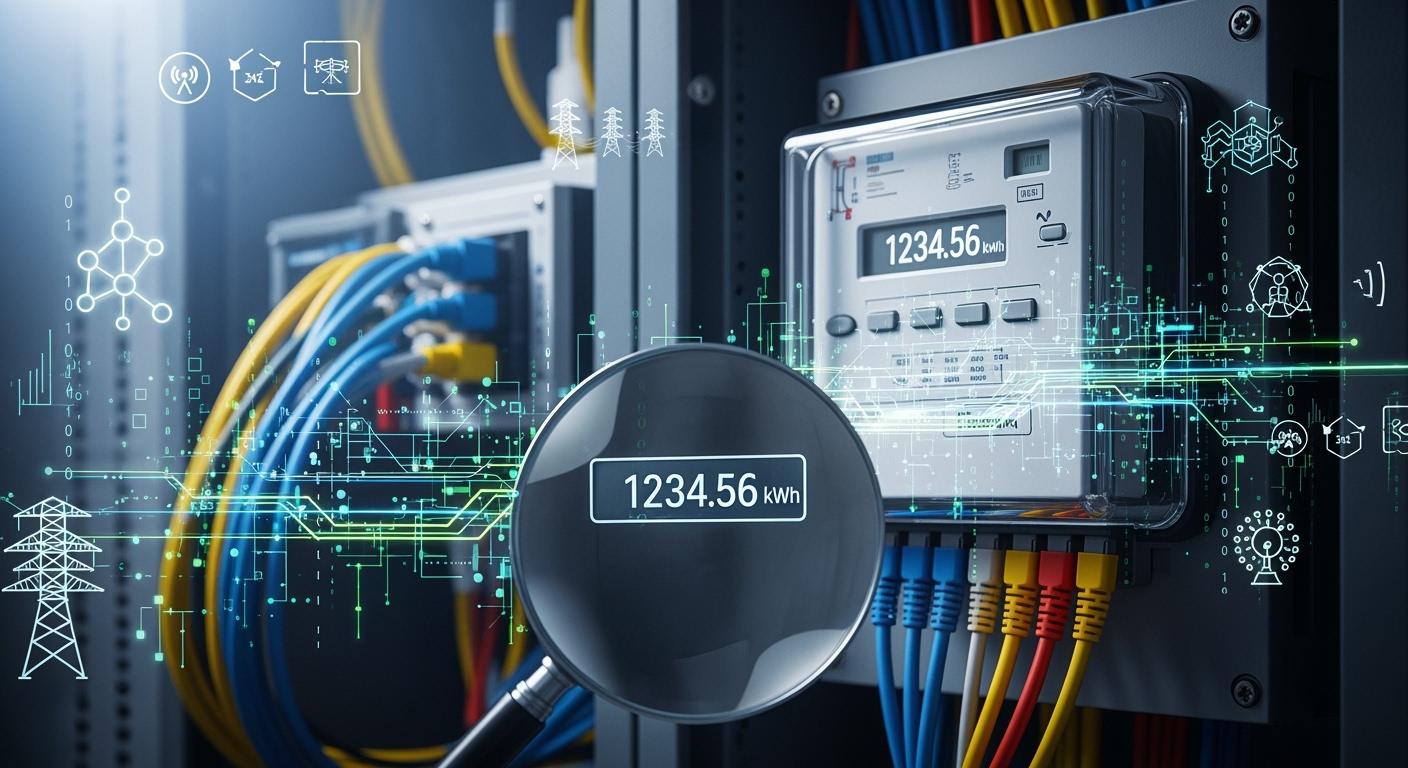
Imagine you manage a telecom network in a remote area. You need to track every unit of energy your equipment uses. Even a small error can lead to big costs. When you connect your Telecom Power System with smart meters, you get precise energy data with less than 0.5% error. ESTEL’s Smart Power Distribution Unit helps you monitor and control power in real time. You gain confidence in your data and improve your network’s efficiency.
Key Takeaways
Connect your telecom power systems with smart meters to achieve energy data accuracy of less than 0.5%. This precision helps avoid costly billing errors.
Implement data interconnection to monitor and control energy use in real time. This leads to better decision-making and reduced waste.
Follow a clear integration process for smart meters, including physical installation and communication setup. This ensures smooth operation and accurate data collection.
Regularly calibrate your smart meters to maintain high accuracy. This practice helps ensure reliable readings and compliance with industry standards.
Utilize ESTEL’s Smart Power Distribution Unit for real-time monitoring and remote control. This enhances your network's efficiency and supports proactive maintenance.
Data Interconnection in Telecom Power Systems

Core Concepts and Definitions
Data interconnection means linking different systems so they can share information instantly. In telecom infrastructure, you use data interconnection to connect power systems, smart meters, and network devices. This connection lets you monitor, control, and analyze energy use in real time. You gain the ability to track every watt consumed, which helps you make better decisions and avoid waste.
Data interconnection improves performance and scalability in several ways:
You can access information from the nearest data center, which reduces lag time.
Dynamic load balancing lets you distribute traffic based on demand, preventing bottlenecks.
You can add new connections and expand capacity quickly, adapting to changing needs.
Integration with cloud services becomes easier, which boosts overall network performance.
Role in Modern Telecom Networks
Modern telecom networks rely on data interconnection for smooth operation. You need reliable links to ensure data flows without interruption. Interconnection solutions act as bridges, allowing different parts of your network to exchange information and services efficiently.
Function | Description |
|---|---|
Scalability | Enables the network to grow and adapt to increasing data demands. |
Security | Ensures data integrity and protection during transfer between data centers. |
Cost Efficiency | Reduces operational costs by optimizing resource usage and minimizing redundancy. |
Disaster Recovery | Facilitates backup and recovery processes, ensuring business continuity in case of failures. |
You also benefit from access to multiple service providers, greater flexibility, and the ability to reach new markets.
ESTEL’s Integrated Solutions
ESTEL’s Smart Power Distribution Unit and Telecom Power System support seamless data integration. The Smart Power Distribution Unit offers real-time monitoring, remote control, and network protocol support like SNMP. You can track voltage, current, and power usage from anywhere. The unit uses standard Cat5 connections for reliable network access and includes a redundant power supply for stability. These features ensure your telecom infrastructure remains efficient, scalable, and secure.
Smart Meter Technology and Accuracy
How Smart Meters Work
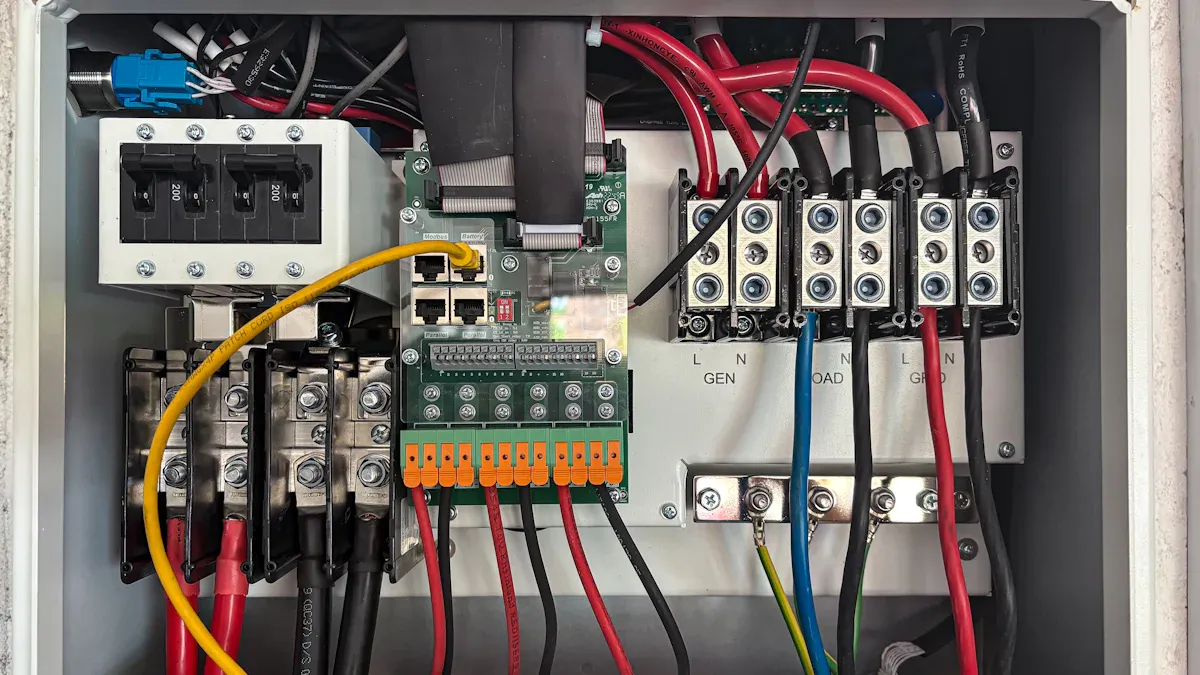
Smart meters measure energy use with advanced electronic sensors. You get real-time data about how much power your equipment uses. These meters send information to a central system, so you can monitor and manage energy from anywhere. In a Telecom Power System, smart meters connect directly to your power distribution units and network. This setup lets you track every watt and spot unusual patterns quickly.
Smart meters use several key features to ensure accurate readings:
Feature Description | Contribution to Accuracy |
|---|---|
Two-way active energy measurement | Delivers real-time data with a maximum error of 1% |
Four-quadrant reactive measurement | Measures energy in all directions for complete accuracy |
Load profile registration | Captures detailed usage at set intervals for better data granularity |
Two-way PLC communication | Ensures reliable data transfer between meter and network |
Remote reading capabilities | Allows for timely updates and accurate billing |
Immediate transmission of alerts | Sends real-time notifications for failures or tampering |
Achieving <0.5% Metering Error
You can achieve less than 0.5% metering error by using smart meters with fast data sampling. When the meter samples data every 14 seconds or less, it keeps errors very low. This high level of accuracy meets strict industry standards and helps you avoid billing mistakes. ESTEL’s Smart Power Distribution Unit supports real-time monitoring and remote management. You can track both energy use and carbon emissions, which helps you meet sustainability goals and industry regulations.
Tip: Regular calibration and using advanced metering units help maintain this high accuracy over time.
Communication Protocols and IoT Integration
Smart meters use modern communication protocols to connect with IoT systems. These protocols make sure your data moves securely and efficiently. Some of the most common protocols include:
DLMS/COSEM (IEC 62056) – Used for energy meter data exchange.
ANSI C12.22 – Supports data transport over IP networks.
MODBUS – Popular in industrial energy management.
MQTT – Lightweight and ideal for IoT applications.
REST – Standardized communication with software systems.
You can also use power-line communication, cellular networks, or wireless mesh networks to link your meters with your Telecom Power System. ESTEL’s Smart Power Distribution Unit uses these protocols to give you reliable, real-time data and remote control, making your energy management smarter and more efficient.
Integrating Telecom Power System with Smart Meters
Step-by-Step Integration Process
You can connect your telecom power equipment with smart meters by following a clear process. Start by identifying the main components in your setup. These include the Telecom Power System, the smart meter, and the power distribution unit. Make sure each device supports standard communication protocols, such as MODBUS or DLMS/COSEM.
Here is a simple integration process you can follow:
Physical Installation: Mount the smart meter near the output of your Telecom Power System. Use proper wiring to connect the meter to the power lines.
Communication Setup: Link the smart meter to your network using Ethernet, RS485, or wireless connections. Check that the meter and the power system use compatible protocols.
System Configuration: Set up the smart meter to measure voltage, current, and energy. Program the meter to send data at regular intervals.
Data Integration: Connect the smart meter to your monitoring platform. Use the Smart Power Distribution Unit to collect and display real-time data.
Testing and Validation: Run tests to confirm that the data from the smart meter matches the output from the Telecom Power System. Adjust settings if you see any differences.
During integration, you may face some challenges. These can include interoperability issues, data security concerns, and privacy considerations. You can address these by using privacy-preserving techniques and robust cybersecurity strategies. Always check for compatibility between devices before starting the process.
Tip: Label all connections and keep a wiring diagram. This helps you troubleshoot problems quickly.
Real-Time Data Exchange
Smart meters and power systems work together to provide real-time data. The smart meter acts as an information hub. It collects data on power consumption and quality. It also receives remote commands from your monitoring system. This setup lets you see energy use as it happens.
A strong communication network connects your smart meters to your control center. You can use Ethernet, cellular, or wireless mesh networks. These networks allow you to receive instant updates, alerts, and even flexible billing data. The Smart Power Distribution Unit from ESTEL supports these features. You can monitor your Telecom Power System and make quick decisions based on accurate information.
Smart metering technology also helps you manage tariffs and energy costs. You can adjust your usage patterns to save money and improve efficiency.
Smart meters provide real-time billing data.
They support flexible tariffs and remote commands.
They help you track power quality and spot problems early.
Ensuring Compatibility with ESTEL Products
You need to make sure your smart meters work well with your power equipment. ESTEL designs its Telecom Power System and Rectifier System for easy integration. Both systems support standard rack installation and common communication protocols. This makes it simple to add smart meters and connect them to your network.
The Telecom Rectifier System offers modular design and flexible input options. You can scale your setup as your needs grow. The Smart Power Distribution Unit acts as a bridge between your smart meters and the rest of your network. It supports remote management, real-time monitoring, and surge protection.
When you use ESTEL products, you get reliable performance and easy compatibility. You can focus on managing your network instead of solving technical problems. Always check the specifications of each device before integration. This ensures smooth operation and accurate data collection.
Note: ESTEL’s commitment to international standards means you can trust their products to work with most smart metering solutions.
Ensuring <0.5% Metering Error
Technical Features for High Accuracy
You need the right technical features to achieve high metering accuracy in your telecom power system. Start by choosing meters with the correct phase configuration and accuracy class. Look for devices that support modern communication protocols and provide alarm outputs for quick response. Tariff support helps you track energy costs and manage loads efficiently.
Feature | Description |
|---|---|
Phase Configuration | Choose single-phase or three-phase metering for precise monitoring. |
Accuracy Class | Select meters with 0.5% or 1.0% accuracy to meet your requirements. |
Communication Protocol | Use protocols like Modbus or DNP3 for easy integration with energy management systems. |
Alarm Outputs | Get alerts for abnormal conditions to respond quickly. |
Tariff Support | Track energy costs and manage loads based on time-of-use tariffs. |
ESTEL’s Smart Power Distribution Unit and Telecom Power System offer real-time monitoring, intelligent load-balancing, and environmental monitoring. These features help you spot inefficiencies and take corrective action right away.
Calibration and Error Correction
You must calibrate your sensors and meters regularly to maintain high accuracy. ESTEL recommends calibrating temperature, humidity, smoke, and water leakage sensors at least once a year. Always use certified reference tools and follow the manufacturer’s calibration steps. This ensures your readings stay reliable and meet international standards.
Tip: Use troubleshooting checklists to quickly fix common problems like false alarms or inaccurate readings. Regular checks help you avoid unexpected errors and keep your system running smoothly.
Data Security and Reliability
Protecting your metering data is just as important as measuring it accurately. You should use encryption to keep sensitive information safe. Role-based permissions let only authorized users access your data. ESTEL’s systems support digital firmware signatures and physical security features like seal switches and locks.
Security Measure | Description |
|---|---|
Encryption | Keeps your metering data confidential. |
Role-based Permissions | Allows secure access for multiple users. |
Digital Firmware Signature | Confirms the authenticity of your meter’s firmware. |
Physical Security | Prevents tampering with seal switches and locks. |
Protocols like Secure and Reliable AMI (SRAMI) and Elliptic Curve Cryptography (ECC) add extra layers of protection. These measures ensure your data stays accurate, secure, and reliable at all times.
Benefits and Best Practices
Operational and Financial Advantages
You gain many advantages when you use accurate energy accounting and interconnected systems in your telecom network. Smart meters give you detailed consumption data, which improves billing accuracy. You can allocate costs more efficiently and ensure fair distribution of energy expenses. With real-time data, you spot inefficiencies and optimize your operations. Smart metering also supports proactive maintenance by letting you analyze consumption trends. This reduces downtime and helps you plan better. Reliable data from your Telecom Power System allows you to use dynamic pricing models, which can increase your revenue. When you reduce billing errors, you protect your cash flow and avoid financial losses.
Improved billing accuracy through detailed consumption data
Efficient cost allocation for fair energy expense distribution
Enhanced operational efficiency by identifying and correcting inefficiencies
Reliable data supports proactive maintenance and dynamic pricing
Regulatory Compliance
You must follow strict regulatory requirements when managing energy in telecom power systems. Security standards require you to use data encryption and tamper-resistant devices. Functionality standards demand features like remote control and load monitoring. Durability standards ensure your equipment works well in different environments. Communication standards require you to use uniform protocols for real-time and accurate data transmission. Installation and maintenance standards guide you to set up and maintain your systems properly. Meeting these standards helps you avoid penalties and ensures reliable service for your customers.
Implementation Tips with ESTEL Solutions
You can get the best results by following proven best practices when deploying ESTEL solutions. Regular maintenance and inspections keep your system running smoothly. Redundancy ensures you have backup power during failures. High-quality components reduce failure rates and improve performance. Training your team helps them manage and troubleshoot the system effectively.
Best Practice | Description |
|---|---|
Effective Maintenance | Regular inspections and updates reduce downtime and ensure consistent power delivery. |
Implementing Redundancy | Backup systems maintain power supply during failures, increasing reliability. |
Using High-Quality Components | Premium equipment ensures better performance and lowers the risk of failures. |
Training Teams for Effective Maintenance | Well-trained staff can troubleshoot and manage the system efficiently. |
Combine self-checking rectifiers with predictive maintenance for long-term reliability. Schedule regular training sessions to keep your team updated on the latest technologies.
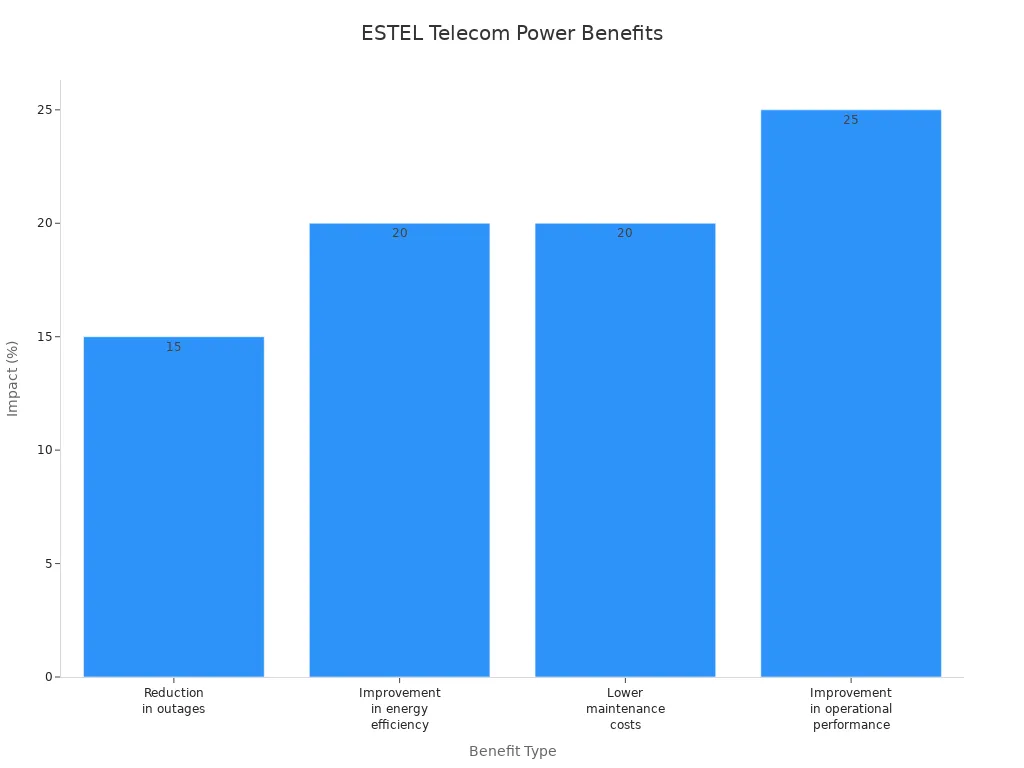
You can achieve precise energy accounting with ESTEL’s integrated telecom power systems and smart meters. These solutions help you reduce outages by 15%, improve energy efficiency by up to 20%, and lower maintenance costs by 30%. The table below highlights key benefits:
Benefit | Statistic/Impact |
|---|---|
Reduction in outages | 15% |
Improvement in energy efficiency | Up to 20% |
Lower maintenance costs | 30% lower, leading to 20% overall savings |
Improvement in operational performance | 25% improvement |
Regular monitoring and advanced analytics extend equipment lifespan and boost network reliability. Explore ESTEL’s innovative solutions for dependable telecom infrastructure. For more details, visit ESTEL’s official website or contact their team.
FAQ
How do you connect a smart meter to your telecom power system?
You connect the smart meter using standard communication protocols like MODBUS or DLMS/COSEM. Make sure both devices support the same protocol. Use Ethernet or RS485 cables for a stable connection.
What makes ESTEL’s Smart Power Distribution Unit reliable for telecom networks?
ESTEL’s Smart Power Distribution Unit offers real-time monitoring, remote control, and surge protection. You can manage power efficiently and respond quickly to issues. Its robust design ensures long-term reliability in harsh environments.
Can you achieve less than 0.5% metering error with ESTEL products?
Yes, you can. ESTEL’s smart meters and power systems use advanced sensors and regular calibration. You get highly accurate readings, which help you avoid billing mistakes and improve energy management.
How do you keep your metering data secure?
You use encryption, role-based permissions, and physical security features like locks. ESTEL’s systems support digital firmware signatures. These measures protect your data from unauthorized access and tampering.
See Also
Calculating Power Systems and Battery Needs for Telecom Cabinets
Essential Features of Power Supply Systems in Telecommunications
Solar Energy Storage Solutions for Telecom Cabinet Power
Understanding Telecom Power Supply Systems: A Beginner's Overview
Ensuring Consistent Power Supply for Telecom Cabinet Operations
CALL US DIRECTLY
86-13752765943
3A-8, SHUIWAN 1979 SQUARE (PHASE II), NO.111, TAIZI ROAD,SHUIWAN COMMUNITY, ZHAOSHANG STREET, NANSHAN DISTRICT, SHENZHEN, GUANGDONG, CHINA
