Smart Park Energy Management Integration of Telecom Rectifier Systems: Unified Control Platform for Multiple Subsystems

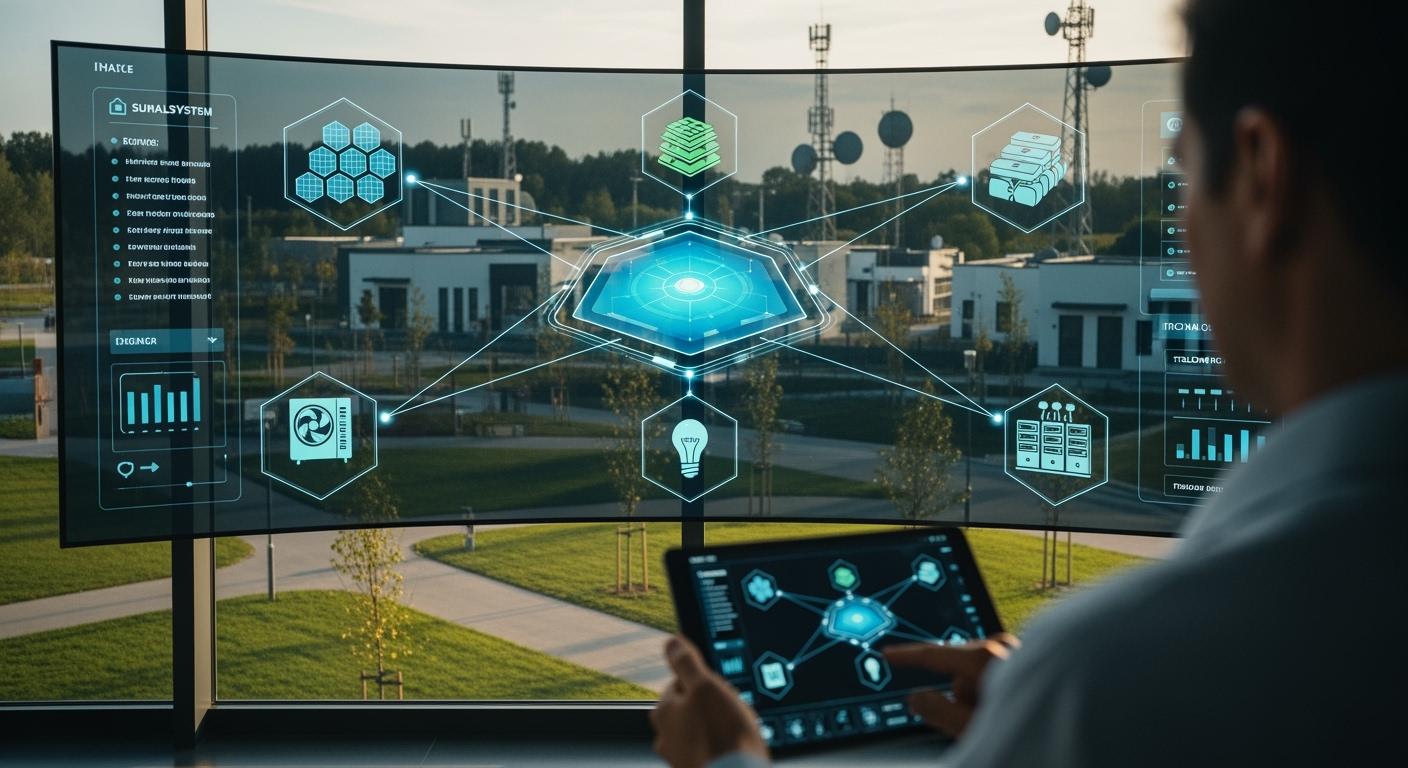
Unified control platforms solve integration and management challenges in smart park telecom power systems by connecting subsystems for efficient operation. You can see operational efficiency improvements from these platforms. The data below shows that resource allocation efficiency rises to 94.5% and AI & ML integration efficiency reaches 96.62%.
Improvement Type | Percentage Improvement |
|---|---|
Resource Allocation Efficiency | 94.5% |
AI & ML Integration Efficiency | 96.62% |
Smart energy management and seamless subsystem integration help you reduce costs and boost reliability. ESTEL stands out as a leader in the industry, holding a 60% market share in outdoor cabinets and over 45% in telecom applications. The Telecom Power System provides robust solutions for your infrastructure, supporting long-term operational success.
Key Takeaways
Unified control platforms enhance efficiency by integrating multiple subsystems, leading to improved resource allocation and operational performance.
Modular designs allow for easy upgrades and maintenance, reducing downtime and enabling faster deployment of telecom power systems.
Real-time monitoring and AI integration optimize energy management, helping to reduce costs and improve system reliability.
Implementing smart microgrids supports sustainable energy practices, allowing for better management of renewable resources and energy consumption.
Addressing integration challenges with advanced technologies and compliance measures ensures long-term success in smart park energy management.
Smart Energy Management Needs in Telecom Parks
Traditional Power System Limitations
You often face several obstacles when managing energy in telecom parks. Traditional power systems rely on manual processes and fragmented controls. These systems make it hard for you to monitor energy use and optimize performance. You may struggle with outdated equipment that cannot support real-time data analysis or remote monitoring. Weak network connectivity and unstable sensor signals further complicate your tasks. The table below highlights the main challenges you encounter in energy management:
Challenge Description | Details |
|---|---|
Monitoring and analyzing energy data in real-time | Difficulty in integrating existing instruments with new energy management systems. |
Weak network and internet connectivity | Major challenge faced during project implementation, affecting communication between sensors. |
Stability of signals from existing sensors | Unstable nature of signals from existing instruments complicates monitoring tasks. |
Need for remote monitoring capabilities | Essential for effective energy management in telecom parks. |
You need reliable solutions that address these issues and help you achieve smart energy management goals.
Drivers for Unified Control Platforms
You see a growing demand for unified control platforms in telecom parks. These platforms simplify your operations by connecting multiple subsystems, such as rectifiers, batteries, and cooling units. You gain access to real-time monitoring and automated controls, which improve efficiency and reduce manual intervention. Regulatory requirements also influence your decisions. You must comply with legal and industry standards to avoid penalties and build customer trust. Meeting these standards helps you minimize operational disruptions and financial losses. Unified control platforms support transparency and accountability, making your energy management more effective. You benefit from streamlined processes and enhanced data visibility, which drive smart energy management across your telecom park.
Unified Platform Architecture for Telecom Power System Integration
Key Components and System Design
You see that a unified platform architecture brings together all the essential parts of a telecom power system. You manage rectifier modules, batteries, distribution panels, and monitoring systems from one central location. This centralization gives you a clear view of your entire operation. You use modularity to divide the system into smaller units. Each module handles a specific function, which makes management easier and more efficient. You scale the system as your needs grow. You add new modules without disrupting your existing setup. You maintain the system with consistent updates, which reduces inconsistencies and keeps everything running smoothly. You integrate all components through a common management point. This enhances synergy and ensures that every part works together.
Feature | Description |
|---|---|
Centralization | Establishes a centralized point of control to manage various components, ensuring coherence. |
Modularity | Divides the system into modules or subsystems, allowing for specialized functions and efficient management. |
Scalability | Enables seamless scaling of components to adapt to varying loads and demands. |
Maintenance | Simplifies upkeep and reduces inconsistencies through consistent updates and maintenance procedures. |
Integration | Facilitates collaboration between components through a common management point, enhancing synergy. |
Orchestration | Emphasizes the distribution of events or actions from a central location to subsystems. |
You optimize energy efficiency in your telecom power system by using advanced materials like Gallium Nitride. You implement effective cooling systems and thermal management strategies. You design innovative circuit layouts to minimize energy losses and improve reliability. You benefit from these features because they help you reduce costs and improve return on investment.
Rectifier module
Batteries
Distribution panel
Monitoring system
You integrate process and power control, which enhances productivity and improves your return on investment. You see that the architecture supports scalability and interoperability. You split conventional base station functions into open interfaces, which allows you to use multi-vendor solutions. You reconfigure nodes in an interoperable manner. You move processing to a general-purpose computing cloud, which gives you greater scalability. You use AI and ML for optimization, which improves operational efficiency and adaptability.
Feature | Description |
|---|---|
Disaggregation | Splits conventional base station functionalities into ORAN-RU, ORAN-DU, and ORAN-CU with open interfaces, enhancing flexibility and integration of multi-vendor solutions. |
Openness of Interfaces | Allows full reconfiguration of RAN nodes in an interoperable manner, enabling competitive multi-vendor RAN deployments and a variety of user services. |
Virtualization | Enables the movement of processing to a general-purpose computing cloud, facilitating efficient resource utilization and greater scalability compared to traditional hardware. |
Incorporation of Intelligence | Utilizes AI and ML for optimization of RAN networks, with dedicated components for real-time and non-real-time management, enhancing operational efficiency and adaptability in resource management. |
Subsystem Integration: Rectifiers, Batteries, Cooling
You connect rectifiers, batteries, and cooling subsystems within your telecom power system using advanced integration methods. You use thermal energy storage to facilitate power-to-cooling strategies. You operate chillers during times of excess renewable energy generation or low electricity prices. You store cooling capacity for future use. This strategy enhances the utilization of renewable energy sources and minimizes dependence on grid power during peak demand.
Thermal Energy Storage (TES) can facilitate the integration of Renewable Energy Sources (RESs) in AI Data Centers by enabling power-to-cooling strategies. This method allows chillers to operate during times of excess RES generation or low electricity prices, effectively storing cooling capacity for future use. This strategy not only enhances the utilization of RESs but also minimizes dependence on grid power during peak demand or high-emission periods.
You implement rack- and server-level energy storage systems to address constraints that centralized UPS or battery energy storage systems cannot meet. You use local buffering for rapid transients and fault domain management. You contain power disturbances and respond locally to faults. This approach allows smoother power dynamics and enhances the integration of rectifiers, batteries, and cooling systems.
In modern data center architectures, rack- and server-level Energy Storage Systems (ESSs) are implemented to address constraints that centralized UPS/BESS cannot meet. These include local buffering for rapid transients and fault domain management to contain power disturbances. This approach allows for smoother power dynamics and localized responses to faults, enhancing the overall integration of rectifiers, batteries, and cooling systems.
You evaluate subsystem integration using performance metrics. You measure scalability, deployment speed, maintenance flexibility, upgrade capability, cost efficiency, load balancing effectiveness, real-time monitoring, energy storage backup duration, system reliability, and demand response metrics.
Summary Metric | Description / Relevance | Notes / Benefits |
|---|---|---|
Scalability | Supports incremental upgrades and future growth | Modular designs allow flexible, incremental upgrades; single modules require full replacement. |
Deployment Speed | Measures installation and upgrade speed | Modular systems deploy about 40% faster than fixed modules. |
Maintenance Flexibility | Indicates ease of repair and replacement | Hot-swappable modules reduce downtime and labor costs. |
Upgrade Capability | Reflects speed and ease of adopting new technologies | Modular systems enable up to three times faster upgrades. |
Cost Efficiency | Captures overall savings from faster upgrades and reduced downtime | Example: Verizon saved $3.7M and achieved 89% faster upgrades with modular PV panels. |
Load Balancing Effectiveness | Assesses ability to balance power loads dynamically | Intelligent power management and real-time monitoring support this metric. |
Real-Time Monitoring | Tracks power demand, temperature, and system status continuously | IoT sensors and cloud dashboards enable predictive maintenance and rapid incident response. |
Energy Storage Backup Duration | Measures reliable backup power duration during outages | Lithium-based batteries with 10+ hours backup recommended for multi-operator cabinets. |
System Reliability | Evaluates stability under fluctuating loads and harsh conditions | Modular, stackable, and flood-resistant designs improve reliability. |
Demand Response Metrics | Gauges effectiveness of peak shaving, load shifting, and optimized charging/discharging | Reinforcement learning algorithms optimize real-time charging and discharging strategies. |
ESTEL Solutions for Smart Energy Management
You rely on ESTEL to deliver smart solutions for your telecom power system. You use battery banks to provide reliable energy storage and delivery. You reduce battery failure rates by up to 98% and ensure consistent power supply. You use charge controllers to regulate voltage and current from solar panels. You prevent overcharging and deep discharging, which enhances battery longevity. You use high-efficiency inverters to convert DC from solar panels to AC for telecom equipment. You minimize energy loss and ensure maximum power delivery.
Component | Function | Benefit |
|---|---|---|
Battery Bank | Provides reliable energy storage and delivery. | Reduces battery failure rates by up to 98% and ensures consistent power supply. |
Charge Controllers | Regulate voltage and current from solar panels. | Prevents overcharging and deep discharging, enhancing battery longevity. |
Inverters | Convert DC from solar panels to AC for telecom equipment. | High-efficiency inverters minimize energy loss, ensuring maximum power delivery. |
You see real-world improvements when you use ESTEL's telecom power system and rectifier system. You achieve a 20% reduction in energy consumption. You reduce energy use by 15%. You cut power loss by up to 75%. You reach energy conversion efficiency above 96%.
Improvement Type | Measurement |
|---|---|
Energy Consumption Reduction | 20% reduction |
Energy Use Reduction | 15% reduction |
Power Loss Reduction | Up to 75% reduction |
Energy Conversion Efficiency | Above 96% efficiency |
You benefit from modular design and advanced control features. You deploy modular systems about 40% faster than fixed modules. You upgrade your system up to three times faster. You use hot-swappable modules to reduce downtime and labor costs. You balance power loads dynamically with intelligent power management and real-time monitoring. You track power demand, temperature, and system status continuously. You use IoT sensors and cloud dashboards for predictive maintenance and rapid incident response. You rely on lithium-based batteries with more than 10 hours backup for multi-operator cabinets. You improve system reliability with modular, stackable, and flood-resistant designs. You optimize charging and discharging strategies with reinforcement learning algorithms.
You see that ESTEL's telecom power system and rectifier system enable unified control and integration. You manage all subsystems from a single platform. You achieve smart energy management with modular design and advanced control features. You improve operational efficiency, reduce costs, and enhance reliability. You use ESTEL's solutions to meet your smart energy management goals.
Implementation Steps and Microgrids Application
Planning and Assessment
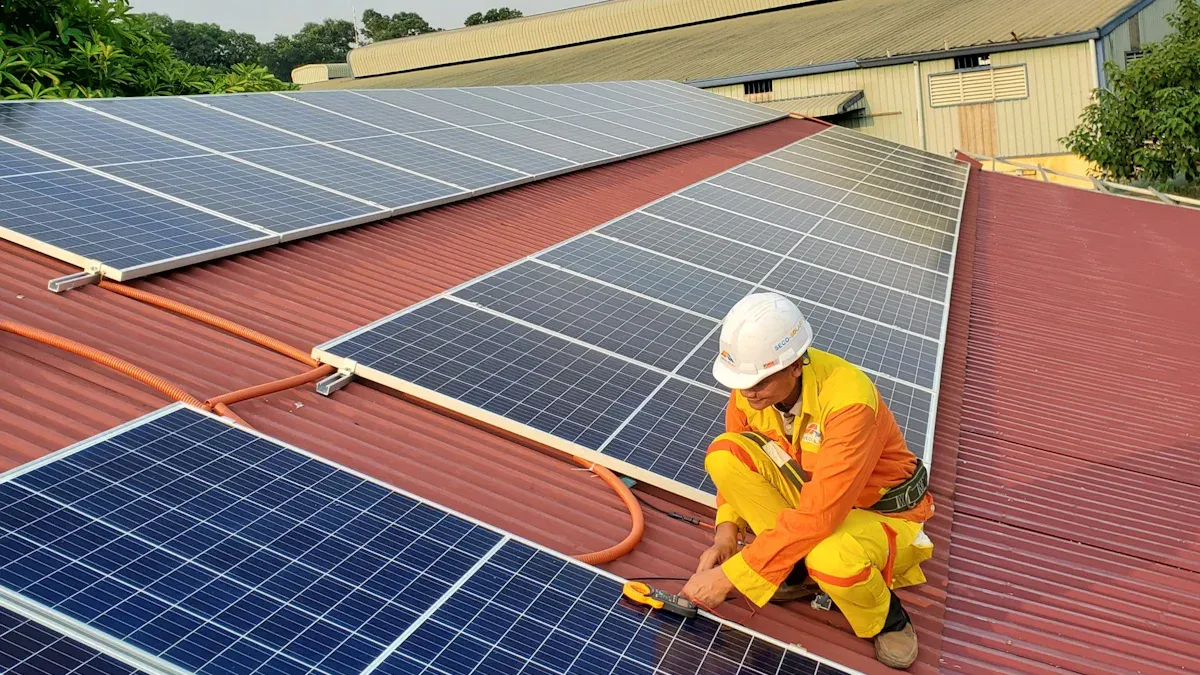
You start your journey with microgrids by understanding your site’s unique needs. You look at your energy consumption patterns and check the availability of local renewable resources. You set clear objectives for energy management in your smart microgrids. You analyze how microgrids can support your telecom infrastructure and improve reliability. You consider the integration of solar panels, batteries, and controllers into your microgrids. You also evaluate the flexibility of your system design so you can upgrade your microgrids in the future. You make sure your microgrids can handle changes in demand and technology. You use forecasting to predict energy needs and manage variability in your microgrids. You align protection measures to keep your microgrids safe and stable.
Integration Process and Best Practices
You follow a series of best practices to ensure successful integration of telecom power systems with microgrids. Here is a step-by-step approach:
Assess site needs by analyzing energy requirements and local renewable resources for your microgrids.
Design your microgrids for flexibility, allowing for future upgrades and changes.
Select quality components such as solar panels, batteries, and controllers for your microgrids.
Implement smart monitoring systems to track energy production and usage in your microgrids.
Schedule regular maintenance to keep your microgrids efficient and reliable.
You also establish layered controls in your microgrids to maintain stability. You use real-time data to optimize the integration of all subsystems. You align your microgrids’ protection measures with industry standards. You make sure your microgrids can respond quickly to faults and changes in load.
Tip: Use IoT sensors in your microgrids for continuous monitoring and predictive maintenance. This helps you detect issues early and keep your microgrids running smoothly.
Case Study: ESTEL in Smart Park Microgrids
You can see the impact of ESTEL’s solutions in a real-world smart park microgrids project. In this case, you use ESTEL’s telecom power system and rectifier system to power a network of microgrids across a large campus. You integrate solar panels and lithium batteries into your microgrids to provide clean and reliable energy. You use ESTEL’s unified control platform to manage all microgrids from a single dashboard. You monitor energy flows, battery status, and system health in real time. You achieve a 20% reduction in energy consumption and a 75% decrease in power loss across your microgrids. You also improve system reliability and reduce downtime. You find that modular design and advanced controls make it easy to scale your microgrids as your needs grow. You ensure that your smart microgrids deliver efficient, sustainable, and resilient energy for your telecom operations.
Overcoming Integration Challenges
Technical and Operational Barriers
You encounter several barriers when integrating telecom power systems into a smart grid. High initial investment costs often exceed $1.5 million per site, which can deter smaller operators. Regulatory compliance adds complexity, with costs sometimes reaching $250,000 per site. You must upgrade networks, power supplies, and communication systems to support smart grid interoperability. These upgrades increase operational costs and make technology management more difficult. Cost considerations affect system performance and maintenance. Employee training and guest education help minimize disruptions during the transition to smart distribution grids. You need to manage multiple disciplines, including IoT, big data statistics, ergonomics, and remote sensing science. This multidisciplinary approach increases the difficulty of facilities management.
Barrier Type | Description |
|---|---|
High Initial Investment Costs | The costs for deploying advanced telecom power systems can exceed $1.5 million per site, deterring smaller operators. |
Regulatory Compliance Complexities | Compliance with regulations, such as EU energy efficiency directives, can incur costs over $250,000 per site, complicating integration. |
Challenge Type | Impact on Performance and Maintenance |
|---|---|
Infrastructure Needs | Upgrading networks, power supplies, and communication systems is essential for supporting smart technology. This can lead to increased operational costs and difficulties in managing the technology. |
Cost Considerations | High implementation costs and ongoing maintenance expenses can strain budgets, affecting overall system performance. |
Transition Hurdles | Employee training and guest education are necessary to minimize disruptions during the transition to smart systems. Proper planning can ease these challenges. |
Management of smart parks involves multiple disciplines:
IoT
Big data statistics
Ergonomics
Remote sensing science
Solutions and Recommendations
You can overcome integration challenges by using advanced rectifiers made from materials like Silicon Carbide. These minimize energy loss and support renewable energy sources such as solar and wind. Modular designs enable network scaling and maintenance without downtime. You expand capacity quickly and maintain smart grid interoperability. AI-powered management optimizes energy distribution and storage using real-time data and predictive analytics. Machine learning algorithms identify inefficiencies in power usage and recommend corrective actions. Hybrid power systems combine solar, wind, and grid power to reduce diesel reliance and enhance sustainability. Advances in energy storage, like lithium-ion batteries, help manage renewable source intermittency. Remote monitoring facilitates management of remote or off-grid sites through automated maintenance scheduling. Compliance with industry standards ensures equipment durability and reliability in harsh environments.
Solution Type | Description |
|---|---|
Advanced Rectifiers | Utilize materials like Silicon Carbide (SiC) to minimize energy loss and support renewable sources. |
Enable network scaling and maintenance without downtime, allowing for quick capacity expansion. | |
AI-Powered Management | Optimize energy distribution and storage using real-time data and predictive analytics. |
Machine Learning Algorithms | Identify inefficiencies in power usage and recommend corrective actions to enhance performance. |
Hybrid Power Systems | Combine solar, wind, and grid power to reduce diesel reliance and enhance sustainability. |
Advances in Energy Storage | Use lithium-ion batteries to manage renewable source intermittency. |
Remote Monitoring | Facilitate management of remote or off-grid sites through automated maintenance scheduling. |
Compliance with Industry Standards | Ensure equipment durability and reliability in harsh environments through adherence to standards. |
You should:
Adhere to industry standards like IEC 62040 for UPS systems and IEEE 1625 for batteries.
Integrate with network management systems using APIs for centralized control and automation.
Implement security measures such as encryption and access controls.
Conduct regular maintenance and testing to mitigate risks associated with battery degradation and system failures.
Balance initial investment with operational costs by considering energy efficiency measures.
Tip: You can achieve smart grid optimization by combining modular designs, AI-powered management, and hybrid power systems. This approach improves demand response and supports renewable integration in smart distribution grids.
Future Trends in Smart Park Energy
Evolving Technologies and IoT
You see rapid changes in smart park energy as new technologies reshape urban environments. IoT devices now connect thousands of sensors across parking facilities. Over 400,000 LoRaWAN sensors monitor parking spaces, collecting real-time data for energy management systems. You use smart meters to track energy consumption and automate fine collection for illegal parking. LPR cameras capture license plates quickly, improving urban parking efficiency. Analytics solutions process large volumes of data, helping you make better decisions about energy use and automation.
You notice that IoT technologies enable real-time monitoring and control of smart items. You manage energy more efficiently, reducing total consumption by up to 25% compared to centralized systems. Smart parking solutions help decrease greenhouse gas emissions and fuel waste, supporting sustainable urban energy community goals. European initiatives focus on sustainability, using automated parking systems to lower energy consumption. You benefit from improved interoperability between devices, which allows seamless integration of energy management systems and smart grid communication.
You rely on automation to optimize energy flows. You use smart grid communication to connect subsystems and share data instantly. You see interoperability as a key factor in future energy management. You integrate smart meters, sensors, and analytics platforms to create a unified system. You track energy demand, adjust supply, and respond to changes quickly. You use automation to streamline operations and reduce manual intervention. You build urban energy community networks that support flexible energy sharing and efficient resource allocation.
Tip: You can leverage IoT-enabled sensors and analytics to enhance energy management in smart parks. This approach improves operational efficiency and supports sustainability.
You gain many advantages when you use unified control platforms for smart park telecom power systems. You improve efficiency, reliability, and scalability with ESTEL’s advanced solutions. You can start by assessing your current systems and planning for integration. You should use real-time data to guide your decisions and monitor progress. You prepare for a future where smart energy management continues to evolve and support your growth.
FAQ
What is a unified control platform in telecom power systems?
You use a unified control platform to manage all subsystems, such as rectifiers, batteries, and cooling units, from one dashboard. This approach improves efficiency and makes your energy management easier.
How do modular designs benefit telecom power systems?
You gain flexibility with modular designs. You can add or replace modules without shutting down the whole system. This reduces downtime and helps you scale your operations as your needs grow.
Why should you consider interoperable smart microgrids?
You should consider interoperable smart microgrids because they let you connect different energy sources and systems. This improves reliability and makes it easier to manage energy across your site.
How does real-time monitoring help your energy management?
You use real-time monitoring to track energy use, temperature, and system status. This helps you spot problems early and keep your system running smoothly.
What role does ESTEL play in smart park energy management?
You rely on ESTEL for advanced telecom power systems and rectifier solutions. These products help you achieve efficient, reliable, and scalable energy management in your smart park.
See Also
Energy Storage Solutions for Telecom Cabinets Using Photovoltaics
Telecom Cabinets: Integrated Battery and Grid-Connected Inverter Systems
Smart Energy Storage Systems for Telecom Cabinets with Microgrid Integration
Calculating Power Systems and Battery Needs for Telecom Cabinets
Ensuring Consistent Power Supply for Telecom Cabinet Operations
CALL US DIRECTLY
86-13752765943
3A-8, SHUIWAN 1979 SQUARE (PHASE II), NO.111, TAIZI ROAD,SHUIWAN COMMUNITY, ZHAOSHANG STREET, NANSHAN DISTRICT, SHENZHEN, GUANGDONG, CHINA
