Satellite Ground Station Collaboration of Telecom Rectifier Systems: High-Stability Power for Signal Reception

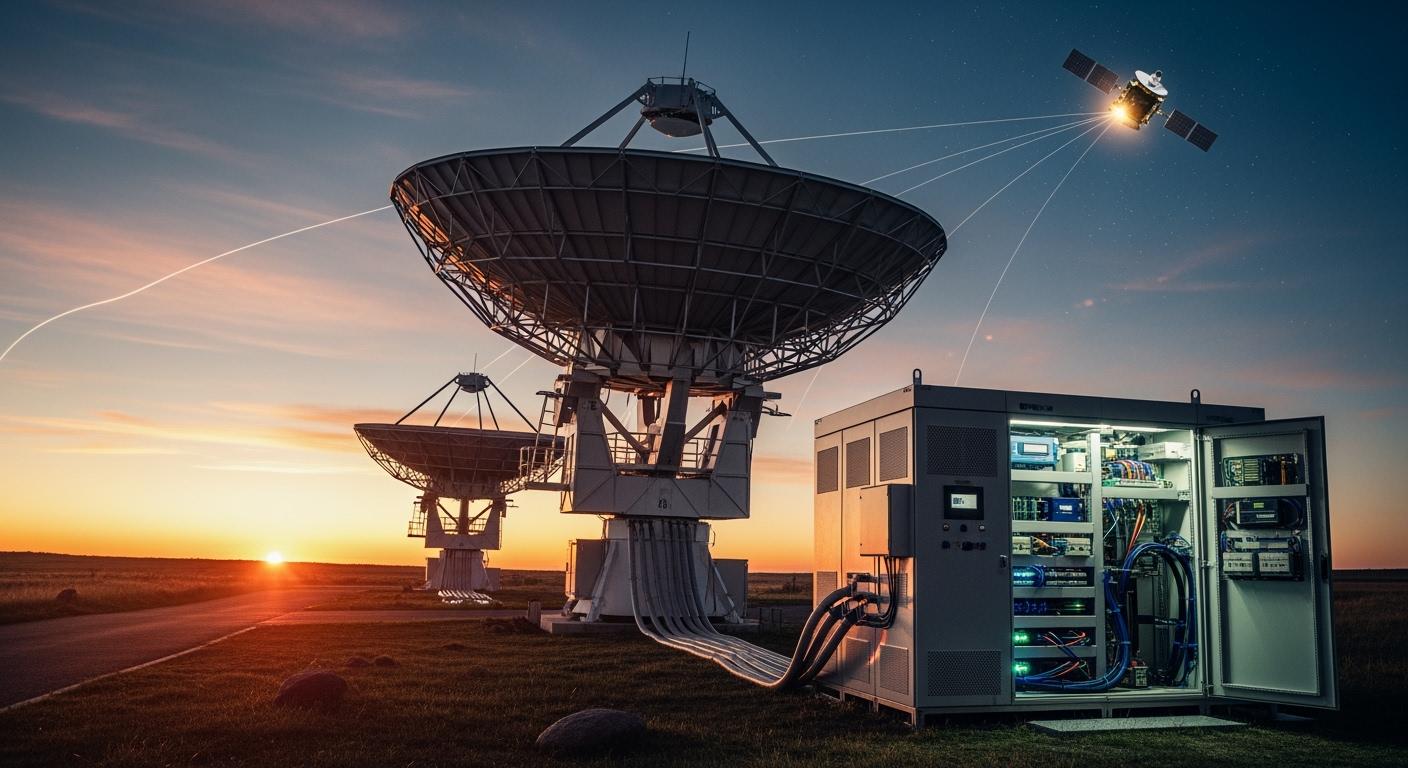
You rely on precise, uninterrupted power to keep satellite ground stations performing at their best. Telecom rectifier systems and a trusted Telecom Power System, like those from ESTEL, work together to deliver the stable energy needed for clear satellite signal reception. ESTEL’s advanced technology and focus on innovation help you achieve consistent results, even in demanding environments.
Key Takeaways
Stable power is crucial for satellite ground stations. It ensures clear signal reception and reliable communication with satellites.
Telecom rectifier systems convert AC power to DC power, providing the necessary energy for equipment and protecting against voltage spikes.
Implement redundancy and load sharing in rectifier systems to maintain power stability and prevent equipment damage during failures.
Regular maintenance, such as inspecting connections and cleaning components, extends the life of your telecom power system and prevents unexpected failures.
Upgrading to modular systems allows for easy maintenance and scalability, ensuring your ground station remains operational without downtime.
Power Stability and Signal Reception
Why Stable Power Matters
You need stable power at your satellite ground station to ensure clear and reliable signal reception. Even small changes in voltage or current can disrupt sensitive equipment. When you use a Telecom Power System, you help maintain the right conditions for your receivers and transmitters. Studies show that when power stability improves, the reliability of satellite signal reception also increases. For example, correlation coefficients between different satellite codes can rise from 0.2 to 0.8 as power stability gets better. This means you get more accurate and dependable positioning solutions.
Satellite ground stations face several technical challenges in keeping power stable. Here is a quick overview:
Challenge | Description |
|---|---|
Environmental Exposure | You must protect your equipment from weather and other outdoor conditions. |
Thermal Management | You need to control heat to prevent equipment from overheating. |
RF Performance Precision | You must keep radio frequency performance precise across many frequency bands. |
To address these challenges, you often rely on features like redundancy layers, fault tolerance measures, parallel communication channels, backup power supplies, and automated failover systems. A modern Telecom Power System supports these needs by offering reliable backup and advanced monitoring.
Effects of Power Fluctuations
Power fluctuations can cause serious problems for your ground station. If the power supply is unstable, you may experience dropped signals, data loss, or even equipment damage. These issues can interrupt communication with satellites and reduce the quality of your service.
You can use several strategies to reduce the impact of power fluctuations:
Site shielding helps block harmful signals and keeps interference low.
Rapid detection and classification of interference events allow you to respond quickly.
Autonomous monitoring frameworks help you keep track of power and signal quality as satellite traffic increases.
Techniques like EPFD compliance and separation angles help manage interference in shared frequency bands.
When you use a Telecom Power System with these strategies, you create a more robust and reliable environment for satellite signal reception. This approach helps you maintain high performance, even as demands on your ground station grow.
Telecom Power System and Rectifier System Basics
What Is a Telecom Power System?
You use a Telecom Power System to deliver reliable power to your satellite ground station. This system is different from regular power systems because it operates at -48V DC. This voltage level helps reduce energy loss and keeps your equipment safe. The system includes several important parts that work together to keep your station running smoothly.
Component | Functionality |
|---|---|
Rectifier Flatpacks | Provides stable DC power essential for satellite ground station operations. |
Filtering and Surge Protection | Ensures signal integrity by preventing electrical noise and voltage spikes. |
Reliability | Minimizes downtime in critical space-to-ground communication, crucial for various satellite applications. |
You can count on these features to keep your communication equipment working, even in tough conditions.
Role of Rectifier Systems
Rectifier systems play a key role in your ground station’s power setup. They convert alternating current (AC) from the grid into direct current (DC) that your equipment needs. You also use rectifiers to charge backup batteries, supply power to communication devices, and monitor the status of your power supply. These systems protect your equipment from voltage spikes and help prevent damage.
Function | Description |
|---|---|
AC to DC Conversion | Converts alternating current (AC) to direct current (DC) power necessary for equipment operation. |
Battery Charging | Provides power to charge batteries, ensuring a reliable power source for satellite systems. |
Power Supply for Equipment | Supplies power for various communication equipment, including satellite ground stations. |
Monitoring Capabilities | Includes features for monitoring power supply status, enhancing reliability in operations. |
Protection Functions | Offers protection mechanisms to maintain stable power supply and prevent equipment damage. |
You rely on rectifier systems for satellite communications, access networks, and microwave links. These systems keep your ground station running, even during peak times, by using voltage regulators and advanced circuits.
ESTEL Product Features
ESTEL’s Telecom Power System and Telecom Rectifier System give you high efficiency, modularity, and adaptability. You can install these systems in standard 19-inch racks or cabinets, which makes setup easy. The modular design lets you scale up or perform maintenance without shutting down your station. High efficiency rates—over 96%—mean you save energy and reduce costs. Built-in monitoring and flexible input voltage options help you adapt to different environments. You get reliable power, less downtime, and better performance for your satellite ground station.
Tip: Choose systems with advanced monitoring and protection features to ensure continuous operation and protect your valuable equipment.
Rectifier System Collaboration
Redundancy and Load Sharing
You depend on rectifier systems that work together to keep your satellite ground station running smoothly. Redundancy means you have extra rectifier modules ready to take over if one fails. This setup helps you avoid interruptions and keeps your equipment safe. When you use redundancy, you maintain a stable power supply, which is essential for sensitive telecom devices. Built-in noise filtering and voltage regulation in these systems help you minimize signal loss and keep voltage stable. You control power fluctuations that could disrupt your receivers and transmitters.
Load sharing is another important feature. You distribute the electrical load across multiple rectifier modules. This approach prevents any single module from becoming overloaded. You reduce the risk of overheating and extend the lifespan of your equipment. If one module needs maintenance, others continue to supply power. You keep your ground station operational without downtime.
Here are some ways redundancy and load sharing improve power stability:
You maintain continuous power even if one rectifier fails.
You minimize signal loss by filtering noise and regulating voltage.
You prevent equipment damage by controlling power fluctuations.
You extend the life of your rectifier modules through balanced load distribution.
ESTEL’s rectifier systems use modular designs that make redundancy and load sharing easy to implement. You can add or remove modules as needed, which gives you flexibility and reliability.
Synchronization and Monitoring
You rely on synchronization to ensure all rectifier modules work together. Synchronization keeps voltage and current levels consistent across your system. You avoid sudden changes that could affect your signal reception. When modules synchronize, you get smooth transitions between power sources and stable operation.
Monitoring plays a key role in maintaining high-stability power. Automation and remote monitoring let you track system performance in real time. You use smart rectifiers to monitor voltage, temperature, and load cycles. These systems alert your maintenance team if they detect unusual trends. You can anticipate equipment health issues and schedule repairs before problems occur. Predictive maintenance uses AI and IoT data to help you reduce downtime and prolong equipment lifespan.
You benefit from seamless integration with plant control systems. You boost operational efficiency and keep your ground station running at peak performance. ESTEL’s Telecom Power System supports advanced monitoring features, giving you the tools to manage your power supply effectively.
Collaboration Mechanism | How It Helps You |
|---|---|
Redundancy | Maintains power during failures |
Load Sharing | Balances electrical load and prevents overheating |
Synchronization | Keeps voltage and current levels consistent |
Monitoring | Enables real-time tracking and predictive maintenance |
Tip: Use systems with modular designs and advanced monitoring to ensure your ground station receives high-stability power for reliable signal reception.
Benefits and Best Practices
Improved Signal Integrity
You gain many advantages when you improve signal integrity at your satellite ground station. High-quality connections help you achieve reliable data transmission. This reliability is essential for clear communication with satellites. You also support data-heavy applications, such as HD video streaming and real-time monitoring. You can see these benefits in your daily operations:
You reduce latency, which means faster communication with satellites.
You support higher bandwidths, allowing for more data to move quickly.
You protect sensitive equipment from overload, which increases its lifespan.
You maintain strong performance even in noisy environments, thanks to robust system design.
You avoid electromagnetic interference, which keeps your signals clear.
When you use advanced technologies like RF-over-Fiber, you get faster and clearer signal transmission. This technology also helps you manage varying signal levels from different satellites.
Maintenance and Upgrades
You keep your Telecom Power System reliable by following best practices for maintenance. Regular care prevents unexpected failures and extends the life of your equipment. Here are some steps you should follow:
Inspect and tighten all electrical connections often.
Check connectors and terminals for wear or looseness.
Seal gaps with weatherproof materials to block water and prevent corrosion.
Examine cables for cracks or discoloration.
Clean dust and debris from heatsinks and fan blades every few months.
Update firmware to improve system stability.
Run diagnostic tests to catch problems early.
You should also choose materials that resist corrosion and apply protective coatings. These actions help your system last longer, even in harsh outdoor conditions.
Real-World Applications
You can see the value of these best practices in real-world scenarios. For example, a satellite ground station in a coastal region used ESTEL’s modular rectifier system. The team followed a strict maintenance schedule and used weatherproof coatings. As a result, the station operated without interruption during storms and high humidity. Another station upgraded to a modular design, which allowed for quick repairs and easy expansion. These choices led to fewer outages and better signal quality.
Tip: Regular maintenance and smart upgrades help you achieve reliable performance and protect your investment.
You depend on collaborative rectifier and power systems for high-stability power and reliable satellite signal reception. ESTEL’s solutions give you higher efficiency, lower maintenance costs, and better uptime than other brands.
Metric | ESTEL Rectifier System | Other Brands |
|---|---|---|
Efficiency | Varies | |
Maintenance Cost | Reduced by 35% | Higher |
System Uptime | Increased by 25% | Lower |
You can expect even more progress in the future. New telecom power innovations include AESA antennas, multi-orbit capabilities, and automated systems. These advances will help you achieve greater performance and flexibility at your ground station.
FAQ
What makes ESTEL’s rectifier systems suitable for satellite ground stations?
You get high efficiency, modular design, and flexible installation. These features help you maintain stable power and adapt to different site needs. You can easily scale or upgrade your system as your requirements change.
How do you maintain a telecom rectifier system?
You should inspect connections, clean components, and check for signs of wear. Regular maintenance helps you prevent failures and extend equipment life.
Tip: Schedule routine checks every three months for best results.
Can you upgrade your power system without downtime?
Yes, you can. ESTEL’s modular systems let you add or replace modules while your station stays operational. This design reduces service interruptions and keeps your ground station running smoothly.
Why is monitoring important for your power system?
Monitoring lets you track voltage, temperature, and load in real time. You can spot problems early and schedule repairs before failures happen.
Benefit | Result |
|---|---|
Early detection | Fewer outages |
Real-time data | Faster response times |
See Also
Ensuring Consistent Power Supply for Telecom Equipment
Understanding the ESTEL Power System for Telecom Cabinets
Solar Energy Storage Solutions for Telecom Cabinets
CALL US DIRECTLY
86-13752765943
3A-8, SHUIWAN 1979 SQUARE (PHASE II), NO.111, TAIZI ROAD,SHUIWAN COMMUNITY, ZHAOSHANG STREET, NANSHAN DISTRICT, SHENZHEN, GUANGDONG, CHINA
