How ESTEL Telecom Power Systems Enable Audible Visual and SMS Alerts

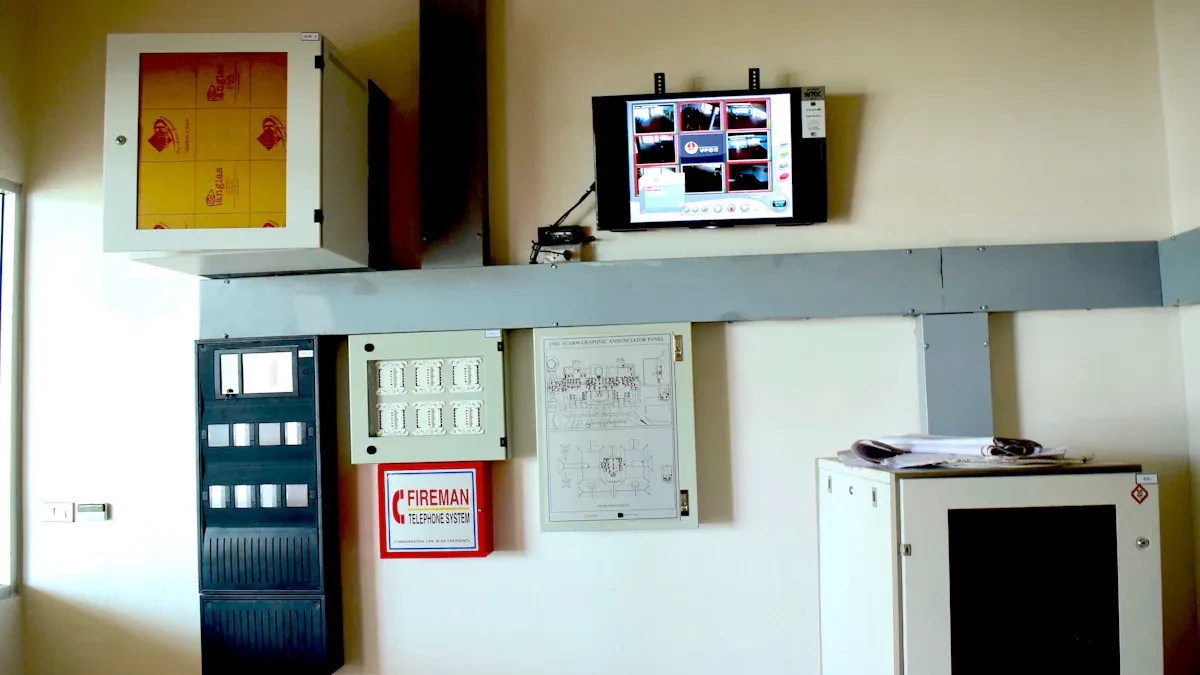
Imagine a remote telecom site. An AC failure drains your batteries silently. You discover it only after equipment fails or service drops. A unified alarm system that links power and environment monitoring solves this problem. ESTEL Telecom Power Systems act as the intelligent hub. They bridge power management and environment sensors. Three automatic alert channels keep you informed. An audible siren alarms on-site personnel. A visual beacon warns of critical conditions. An SMS notification reaches you anywhere. These alerts operate on backup power, so you stay connected even during outages. This blog explains the practical integration steps and the operational benefits for your sites.
Key Takeaways
ESTEL systems connect power and environment sensors for real-time monitoring.
Three alert types keep you informed: audible siren, visual beacon, and SMS.
Alerts run on backup power, so they work during outages.
SMS alerts use cellular networks and need no internet connection.
Proactive monitoring cuts maintenance costs by 30% and prevents downtime.
Integrating Telecom Power Systems with Environment Monitoring
Protocols for Power and Environment Links
Your ESTEL Telecom Power System communicates with environment sensors through several standard protocols. The system supports SNMP, Modbus, and MQTT for data exchange. It also provides Ethernet, RS232, and RS485 interfaces for connecting IoT sensors, remote telemetry units, and gateways. These options let you match the protocol to your existing hardware and data needs.
RS485 deserves special attention. It is not a sensor protocol itself. Instead, it defines how electrical signals travel over wires. Think of RS485 as the road, and Modbus as the vehicle. RS485 supports communication up to 1,200 meters between devices. It allows up to 32 devices on a single bus, expandable to 128 or more with repeaters. The technology uses differential signaling for noise immunity. This makes it resistant to electrical interference from motors, pumps, and other noisy equipment. Modbus RTU runs on top of RS485. You will find this combination in professional weather stations, flow meters, motor controllers, and HVAC systems.
SNMP plays a different role. It enables continuous parameter monitoring. You can track voltage, current, temperature, and overall power status in real time. The protocol sends automated alerts whenever a fault occurs. SNMP v3 adds secure communication between your network operations center and remote equipment. This allows you to troubleshoot remotely without exposing infrastructure to threats.
A centralized management platform translates sensor data into alarm triggers. Platforms like T/Mon support more than 25 protocols. They act as a protocol mediator between legacy field equipment and modern SNMP-based systems. T/Mon receives alarms from field gear, converts them into SNMP traps, and forwards them to your enterprise management platform. It also includes Root Alarm functionality. This feature identifies the root cause of an alarm flood and suppresses dependent secondary alarms. You focus on the single critical alarm instead of thousands of downstream indicators.
Key Integration Components
The integration starts with the right sensors. You can connect temperature sensors, humidity sensors, smoke detectors, gas detectors, and dust detectors to your power system controller. Leak detection sensors include rope-style detectors, spot leak detectors, and liquid level float switches. Airflow sensors track cold air supply and hot air return. Humidity sensors prevent static buildup and support energy-efficient set points.
Wiring these sensors to the controller follows a clear path. Connect the sensors to the RS485 port on your controller. Collect environmental data via the RS485 bus. Combine your power system with bus probes to create a complete environmental monitoring system. Available probe types include ambient temperature, temperature and humidity, ambient light, three-axis accelerometer, flood/leak, and opto-isolated digital input sensors.
Linking power system controllers with temperature and humidity sensors enables real-time monitoring. You detect abnormalities early before they escalate into failures. Automated cooling and dehumidifying functions activate based on sensor data. This maintains optimal conditions inside telecom cabinets. Your equipment stays protected from heat stress, condensation, and corrosion. The integration also supports remote management. You reduce the need for on-site visits and enable predictive maintenance that extends equipment lifespan.
Alert Types and Triggers for Power Anomalies

Audible and Visual Alert Setup
Your ESTEL Telecom Power System triggers audible and visual alerts through direct local detection. The environment monitoring system watches for threshold breaches. These breaches include high temperature, water leaks, or smoke. When a sensor detects a problem, the system activates a hardwired siren or buzzer. This process needs no internet connection. Local control keeps the alarm working during network outages.
Visual alerts work the same way. A flashing indicator light or strobe activates on the control panel. You can mount these beacons on walls indoors. The strobe accepts activation from a dry contact closure or a 70 V amplified speaker signal. This makes it compatible with many existing alarm circuits.
Modern visual beacons offer flexible options. You can choose customizable RGB colors and selectable flash patterns. The devices support Power over Ethernet for simple networking. They also work with SIP for VoIP integration. You can address them individually or group them into zones. Full software programmability lets you change behavior without rewiring. These beacons suit high-noise environments where a siren might go unheard. They also help you meet ADA compliance requirements. Strobe synchronization prevents confusing overlapping flashes. Night ring functionality keeps alerts visible after dark.
The table below summarizes how each alert type triggers and what connectivity it needs.
Alert Type | Trigger Mechanism | Connectivity Requirement |
|---|---|---|
Audible alarm (siren/buzzer) | Environment Monitoring System detects threshold breach (e.g., high temperature, water leak, smoke) and directly activates hardwired siren | No internet needed; hardwired local control |
Visual alarm (flashing indicator light) | Same local detection triggers flashing red light on control panel | No internet needed; hardwired local control |
SMS alert | Cellular network (GSM) notification | No internet needed; uses GSM cellular network |
Consider a high-temperature event. The sensor crosses your set threshold. The system sounds the siren for anyone on site. At the same time, it sends an SMS to your phone. An AC failure follows a similar path. The power system detects the loss of mains power. A beacon flashes to warn nearby technicians. An SMS message reaches your remote team. Both alerts run on backup power. Your Telecom Power Systems keep working when the grid goes down.
SMS Alerts via GSM and IoT
SMS alerts give you remote awareness without an internet connection. The system uses a GSM or LTE module to send text messages. An IoT gateway can also handle this task. The cellular network carries your notification to any phone. You do not need a data plan or Wi-Fi hotspot. This matters at remote sites where broadband is unavailable or unreliable.
You configure the SMS routing inside the power system controller. You define which phone numbers receive which alarms. You can set different thresholds for different recipients. A technician might get a water leak alert. A manager might get a battery voltage warning. The controller stores these rules and executes them automatically.
The GSM module operates on backup power. A mains failure does not stop the SMS function. The system continues monitoring and reporting. You stay informed even when the site loses commercial power. This independence from the internet and the grid makes SMS the most reliable remote alert channel for critical infrastructure.
Telecom Power System Implementation and Benefits
ESTEL System Components and Workflow
Your ESTEL Telecom Power System delivers reliable performance across demanding conditions. Natural cooling eliminates the need for fans or air conditioners. This design reduces energy consumption and maintenance requirements at remote sites. You can install the unit on a standard 19-inch rack or inside a cabinet.
Parameter | Value |
|---|---|
Cooling Mode | Natural cooling |
Installation | 19-inch rack or cabinet |
A typical deployment follows four steps. First, you install environment sensors for temperature, humidity, and smoke detection. Second, you configure alarm thresholds inside the power system controller. Third, you define alert routing for each recipient and alarm type. Fourth, you test every channel to confirm proper operation. This workflow ensures your site responds correctly before a real emergency occurs.
Operational, Safety, and Cost Benefits
Proactive monitoring transforms how you manage remote sites. Real-time alerts and programmable thresholds enable immediate action when power quality deviates from safe levels. Without this capability, delayed responses cause cascading network failures, longer repair times, and higher labor costs. Logging and reporting on power quality also gives you evidence for discussions with utility providers. You can prove root causes and pursue compensation opportunities that would otherwise remain out of reach.
The financial returns are measurable. You also optimize capital investment by identifying high-risk locations through centralized reporting. This lets you prioritize site improvements where they matter most. Your Telecom Power Systems protect critical infrastructure, reduce downtime, and support compliance with telecom reliability standards.
You now know the three core integration steps. First, connect environment sensors through supported protocols like RS485, Modbus, and SNMP. Second, configure alert thresholds inside the power system controller. Third, select your notification channels: audible siren, visual beacon, or SMS.
ESTEL Telecom Power Systems deliver a reliable, all-in-one solution for all three alert types. The system runs on backup power, so your alerts keep working during grid failures. You gain full visibility into every remote site. This proactive monitoring prevents costly downtime and protects your critical infrastructure.
Contact ESTEL today for a tailored site integration plan or a product demo.
FAQ
Can the system send SMS alerts without an internet connection?
Yes. The system uses a GSM or LTE module to send text messages over the cellular network. You do not need an internet connection or Wi-Fi hotspot for this alert channel to work.
How do environment sensors connect to your ESTEL power system?
Connect your temperature, humidity, smoke, and other sensors to the RS485 port on the system controller. The system supports Modbus, SNMP, and MQTT protocols for data exchange between sensors and the controller.
Do the alerts still work during a power outage?
Yes. The entire alert system operates on backup power. A mains failure does not stop the audible siren, visual beacon, or SMS notification from functioning.
What triggers an audible or visual alarm?
The environment monitoring system watches for threshold breaches like high temperature, water leaks, or smoke detection. When a sensor detects a problem, it activates the hardwired siren or visual beacon.
How many sensors can connect to one RS485 bus?
You can connect up to 32 devices on a single RS485 bus. Adding repeaters expands the capacity to 128 or more devices.
See Also
Understanding The ESTEL Telecom Cabinet Power System Basics
How ESTEL Maintains Correct Voltage For Communication Cabinets
Energy Storage Batteries Designed For ESTEL Telecom Cabinets
Safety Structure Of Custom ESTEL Outdoor Telecom Cabinets Explained
CALL US DIRECTLY
86-13752765943
3A-8, SHUIWAN 1979 SQUARE (PHASE II), NO.111, TAIZI ROAD,SHUIWAN COMMUNITY, ZHAOSHANG STREET, NANSHAN DISTRICT, SHENZHEN, GUANGDONG, CHINA
