Rectifiers and batteries for 3–5 kW 5G macro sites

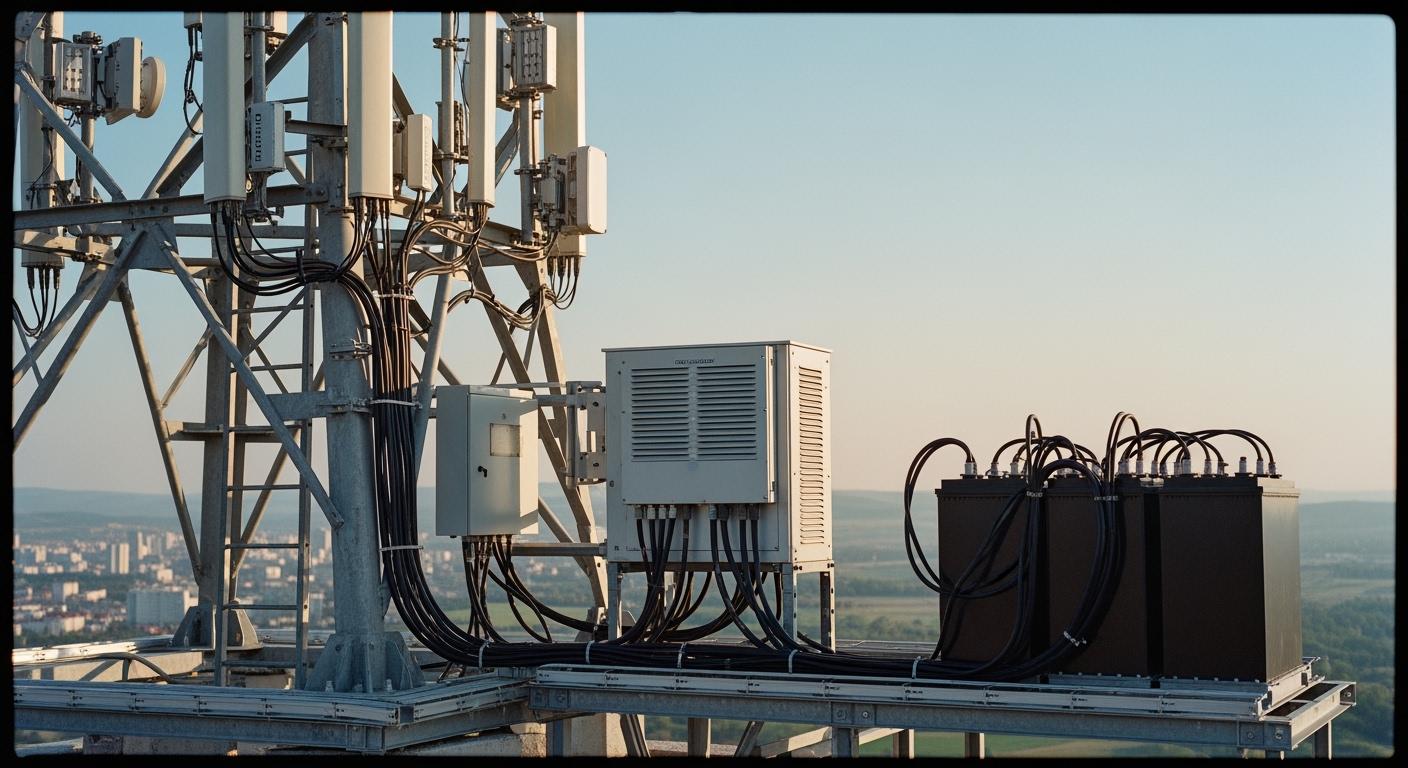
You need reliable power solutions for your 5G macro sites. Selecting the right Telecom Rectifier System and battery cabinet ensures high efficiency and strong uptime. ESTEL delivers trusted products that match your site’s requirements. When you optimize your power systems, you lower operational costs and simplify maintenance.
Deploying efficient rectifiers and batteries can lead to major savings, with models like ECO6G predicting over a billion dollars in reduced expenses for large-scale 5G networks in the USA.
Key Takeaways
Choose rectifiers and batteries that meet your 3–5 kW power needs to ensure efficiency and reliability.
Implement redundancy in your power design to protect against unexpected failures and maintain continuous service.
Select modular rectifier systems for easy upgrades and maintenance, allowing for scalability as your network grows.
Prioritize high energy efficiency in your systems to reduce operational costs and improve overall performance.
Ensure compliance with safety standards and certifications to protect your equipment and ensure reliable operation.
Power needs for 5G macro sites
Load profiles and redundancy
You need to understand the power demands of your 5G macro site before choosing equipment. Most sites require between 3 and 5 kW of continuous power. This range supports the base station, radio units, and auxiliary systems. Accurate assessment helps you avoid oversizing or undersizing your power solution. If you oversize, you waste energy and money. If you undersize, you risk outages and equipment damage.
Redundancy plays a vital role in telecom power infrastructure. You can implement redundancy using models like N+1 or 2N. These models ensure backup power is available if one component fails. For example, N+1 means you have one extra unit beyond what is needed, while 2N means you have a complete duplicate system. Proactive monitoring and predictive analytics help you anticipate failures. You can schedule maintenance before problems occur, which reduces unexpected downtime and keeps your network running smoothly.
Tip: Always plan for redundancy in your power design. This approach protects your site from unexpected failures and supports continuous service.
Reliability considerations
Reliability benchmarks guide your selection of rectifier and battery systems. You want systems that meet high standards for efficiency, protection, and environmental performance. The following table shows key reliability features for telecom power systems:
Performance Aspect | Measurement / Feature | Impact on 5G Infrastructure |
|---|---|---|
Energy Efficiency | Over 91% efficiency in AC to DC conversion | Reduces energy loss and operational costs |
Power Capacity | Nearly double power compared to older models | Supports increased power demands of 5G networks |
Protection Mechanisms | Advanced safeguards against voltage issues | Ensures uninterrupted power delivery |
Environmental Operating Range | -25°C to +55°C | Reliable operation in harsh environments |
Scalability | Modular, hot-swappable design | Enables easy expansion and minimal downtime |
You should look for systems that comply with Energy Star, ISO 14001, CE, and UL standards. These certifications show that your equipment operates sustainably and safely. Testing covers maximum average rectified current, reverse working voltage, and breakdown voltage. This process confirms the long-term reliability of your Telecom Rectifier System and battery solutions.
Telecom Rectifier System selection
Choosing the right rectifier (ESTEL solutions)
Selecting the right Telecom Rectifier System for your 3–5 kW 5G macro site requires careful attention to several technical criteria. You want a system that matches your site's power needs and supports reliable operation. ESTEL offers rectifier solutions that meet international standards and deliver consistent performance.
Here is a table to help you compare the main selection criteria:
Criteria | Description |
|---|---|
Output Voltage and Current | Choose a system that provides a stable -48V DC output and enough current for your site's peak load. |
Efficiency Rating | Look for efficiency of at least 90% to reduce heat and lower electricity costs. |
Input Voltage Range | Select a rectifier with a wide AC input range (such as 85–264V AC) for stable operation. |
Redundancy Support | N+1 redundancy ensures your site stays online if one module fails. |
Thermal Management | Good cooling extends equipment life. Consider systems with effective thermal design. |
Digital Monitoring & Communication | Remote diagnostics and integration with network management systems improve reliability. |
Surge and Overvoltage Protection | Protection against electrical surges is essential for outdoor sites. |
Mechanical Form Factor | Make sure the system fits your rack or cabinet and matches your installation needs. |
ESTEL rectifiers provide a stable DC48V output, which is the industry standard for telecom equipment. You can rely on their flexible input voltage support, which allows you to connect to different power sources without worry. Intelligent monitoring systems in ESTEL rectifiers help you detect issues early and maintain continuous operation.
Tip: Always check that your Telecom Rectifier System supports remote monitoring and has built-in protection features. This will help you manage your site more efficiently.
Efficiency and modular design
Efficiency plays a key role in reducing operational costs and improving site reliability. Modern Telecom Rectifier Systems, including those from ESTEL, achieve efficiency ratings over 96%. High efficiency means less energy wasted as heat, which lowers your electricity bills and reduces the need for cooling.
You should also consider modular design when choosing a rectifier system. Modular systems let you add or remove power modules as your site’s needs change. This flexibility supports easy upgrades and maintenance. If a module fails, you can replace it without shutting down the whole system. This feature is especially important for 5G macro sites, where uptime is critical.
Here is a comparison of ESTEL rectifiers with other leading brands:
Feature | ESTEL Rectifiers | Leading Brands |
|---|---|---|
Over 96% | Comparable or Higher | |
Input Voltage Range | Wide compatibility | Limited in some models |
Modularity | Scalable design | Often fixed capacity |
Compliance with Safety Standards | Yes | Varies by brand |
A modular Telecom Rectifier System gives you the ability to scale your power infrastructure as your network grows. You avoid costly system replacements and minimize downtime. Hot-swappable modules make maintenance quick and easy, so your team can keep the site running smoothly.
Benefits of modular design:
Customizable configurations for different site sizes
Easy integration into existing racks
Simple maintenance with hot-swappable modules
Installation and scalability
Proper installation ensures your Telecom Rectifier System operates safely and efficiently. You should install the DC distribution unit (DCDU) at the top of a standard 19-inch rack. Connect the DCDU to the rectifier using two 125A fuses for protection. Arrange fiber and power cables in trays and ducts, and clamp them according to guidelines. Label all power cables clearly for easy identification.
Grounding is essential for safety. Always ground new racks, and make sure each unit is grounded if you use a painted rack. Leave at least 30 mm of free space behind the baseband unit for cooling. Adjustable brackets help you position equipment correctly in the rack.
Scalability is another key factor. A scalable Telecom Rectifier System lets you expand capacity as your site grows. You can add modules without replacing the entire system, which saves money and reduces downtime. This approach protects your initial investment and supports future network upgrades.
Note: Investing in a scalable and modular rectifier system helps you avoid costly overhauls as your power needs increase.
By focusing on efficiency, modularity, and proper installation, you ensure your 5G macro site operates reliably and cost-effectively. ESTEL’s Telecom Rectifier System solutions provide the flexibility, protection, and performance you need for today’s demanding telecom environments.
Battery system and cabinet options
Battery chemistries and sizing
You need to choose the right battery chemistry for your 5G macro site. Lithium iron phosphate (LiFePO₄) batteries are popular because they offer high safety and reliability. These batteries meet the technical demands of modern 5G networks. You may also consider VRLA batteries, which are maintenance-free and cost-effective. Each type has strengths and limitations.
Lithium-ion batteries provide high energy density and long lifespan.
VRLA batteries are heavier but require less maintenance and have a lower initial cost.
When sizing your battery system, you should calculate based on your site's load requirements and desired backup runtime. Accurate sizing prevents unnecessary expenses and ensures your site runs smoothly. Telecom experts recommend tailoring battery capacity to your specific needs.
Feature | VRLA Battery | Lithium-Ion Battery |
|---|---|---|
Energy Density | Low | High |
Initial Cost | Low | High |
Lifespan | Short | Long |
Weight & Size | Heavy | Light |
Charging Speed | Slow | Fast |
Temperature Stability | Good in cold | Sensitive to extremes |
Backup duration and lifecycle
Backup duration plays a key role in site reliability. You need a strategy that protects your data and supports recovery within your target timeframe. As your network grows, your backup system must adapt to handle increased data volumes. A clear data map helps you plan efficient backup strategies.
Batteries for 5G macro sites, especially lithium iron phosphate models, offer long cycle life. This reduces how often you need to replace batteries and lowers maintenance costs. Intelligent battery management systems help you monitor performance and extend battery lifespan.
ESTEL Outdoor Battery Cabinet features
You need a cabinet that protects your batteries from harsh outdoor conditions. ESTEL Outdoor Battery Cabinets feature IP55 or IP65 ratings, which shield your equipment from dust and water. These ratings are essential for telecom environments.
Proper thermal management extends battery life and reduces costs. ESTEL cabinets include air conditioning and direct air cooling to keep temperatures stable. Efficient cooling systems use less energy and help your batteries perform better.
Feature | Description |
|---|---|
IP Rating | IP55 or IP65 for dust and water resistance |
Thermal Management | Air conditioning and direct cooling for stable temperatures |
Low energy consumption for cost-effective operation |
You can integrate these cabinets with your Telecom Rectifier System for a complete power solution. ESTEL designs cabinets to withstand tough environments and support reliable telecom operations.
Integration and best practices
System compatibility and monitoring
You need to ensure that your rectifier and battery systems work together without issues. Voltage and current compatibility is essential. If you mismatch these, you risk damaging your equipment or reducing battery life. Environmental factors like temperature and moisture also affect system performance. Impedance mismatches can cause efficiency losses and extra heat. Complex installations may require special tools and knowledge.
When you integrate these systems, you may face several challenges:
Challenge | Description |
|---|---|
Capacity Expansion | Need for more capacity to support 5G and IoT devices |
High Operational Costs | Increased costs from diesel generators and maintenance |
Maintenance Issues | Frequent servicing for traditional systems |
Environmental Concerns | Emissions from diesel generators |
Reliability Risks | Generator failures or fuel delivery delays |
Security Threats | Theft and vandalism at remote sites |
Complexity with Renewables | Difficulty adding renewable energy sources |
Regulatory Changes | New rules complicate upgrades |
For monitoring, you should use real-time data collection and centralized dashboards. These tools give you immediate insights and help you manage multiple sites. Customizable alerts let you focus on critical issues. Predictive maintenance uses real-time data to schedule repairs before problems occur. Load balancing ensures even power distribution and reduces shutdowns.
Safety and compliance
You must follow strict safety and compliance standards when installing telecom power systems. These standards protect your equipment and your team. Key standards include EN61000-4-5 for voltage protection, EN55022 for electromagnetic compatibility, and EN60950 or UL950 for safety. You should also look for UL Listed, CE Mark, FCC Class A, and IEC 62368-1 certifications. These show that your equipment meets global safety and emission requirements.
Protection Aspect | Relevant Standards | Protection Mechanism |
|---|---|---|
Transient-Voltage Protection | EN61000-4-5, EN41003 | Resilience to voltage spikes |
Electromagnetic Compatibility | EN55022 | EMI/RFI limits and compliance testing |
Safety Standards | EN60950, UL950 | Isolation voltage and distance |
Cost and maintenance strategies
You can lower costs by choosing efficient, modular systems. Modular designs let you replace parts without shutting down your site. This reduces downtime and service costs. Use predictive maintenance to plan repairs before failures happen. Centralized monitoring helps you spot problems early and avoid expensive emergencies. Secure your site to prevent theft and vandalism, which can lead to unexpected expenses. By following these strategies, you keep your 5G macro site reliable and cost-effective.
You can boost your 5G macro site’s performance by following these best practices:
Choose rectifiers and batteries that match your site’s power needs.
Focus on high efficiency and modular designs for easy upgrades.
Prioritize reliability and safety to lower long-term costs.
For robust and efficient telecom power, ESTEL solutions give you proven quality. Keep reviewing your power systems as technology and site demands change.
FAQ
What is the main advantage of using a modular rectifier system?
You can expand or replace modules without shutting down your site. This design saves time and reduces maintenance costs. Modular systems also let you scale power as your network grows.
How do you choose the right battery backup duration?
First, calculate your site’s total load in kilowatts. Then, decide how many hours of backup you need. Multiply the two numbers to find the required battery capacity.
Why is IP rating important for outdoor battery cabinets?
IP ratings show how well a cabinet protects against dust and water. You need a high IP rating, like IP55 or IP65, to keep your batteries safe in harsh weather.
Can you monitor ESTEL rectifier and battery systems remotely?
Yes. ESTEL systems support remote monitoring. You can track performance, receive alerts, and manage maintenance from a central dashboard.
What certifications should you look for in telecom power equipment?
Certification | Purpose |
|---|---|
CE | European safety |
UL | U.S. safety |
ISO9001 | Quality management |
You should check for these certifications to ensure safety and reliability.
See Also
Telecom Cabinets Powered by Grid-Connected Solar Inverter Systems
ESTEL Telecom Cabinets Equipped with Advanced Energy Storage Batteries
Smart Energy Storage Solutions for ESTEL Microgrid Telecom Cabinets
Solar-Powered Energy Storage Solutions for Telecom Cabinet Systems
Calculating Power Systems and Battery Needs for Telecom Cabinets
CALL US DIRECTLY
86-13752765943
3A-8, SHUIWAN 1979 SQUARE (PHASE II), NO.111, TAIZI ROAD,SHUIWAN COMMUNITY, ZHAOSHANG STREET, NANSHAN DISTRICT, SHENZHEN, GUANGDONG, CHINA
