98% Ultra-High Conversion Efficiency Proof of Telecom Rectifier Systems: Measured Data 5% Better Than Industry Standard


You can now access telecom rectifier system technology with 98% conversion efficiency, validated by measured data. This achievement puts you 5% ahead of the industry standard. Older rectifiers operated at only 85% to 90% efficiency, but new systems like ESTEL’s use advanced materials to reach this ultra-high level. As a telecom operator, you rely on energy efficient dc power systems to support your network. Modern requirements for reliability and lower energy use make this system a smart choice for your infrastructure.
Key Takeaways
Upgrade to a telecom rectifier system with 98% efficiency to save energy and reduce electricity bills.
High efficiency lowers heat generation, extending the life of your equipment and reducing cooling costs.
Choose systems with advanced testing methods to ensure reliable performance and accurate efficiency claims.
Modular designs allow for easy upgrades and maintenance, keeping your network running smoothly.
Investing in high-efficiency rectifiers supports sustainability goals and reduces your environmental footprint.
Understanding Telecom Rectifier System Efficiency
What Is Conversion Efficiency?
You may wonder what conversion efficiency means in the context of a telecom rectifier system. Conversion efficiency measures how well the system changes alternating current (AC) from the grid into direct current (DC) for your telecom equipment. A higher efficiency means less energy wasted as heat or other losses. You get more usable power for your network and spend less on electricity.
Several factors influence the efficiency of a telecom rectifier system. The table below shows the main factors that affect how much energy you can save:
Factor | Description |
|---|---|
Losses during AC to DC conversion, including conduction, switching, and thermal losses. | |
Heat generation | Excessive heat from traditional designs increases power consumption and reduces component lifespan. |
Low utilization | Inefficiencies arise when operating at partial loads, leading to increased energy losses. |
A more efficient rectifier addresses these issues by using advanced designs and better materials. You can see the difference in your energy bills and the reliability of your equipment.
Why Efficiency Matters in Telecom
You rely on your telecom rectifier system to keep your network running without interruption. High efficiency means your system uses less power and generates less heat. This reduces the strain on cooling systems and extends the life of your equipment. A more efficient rectifier also lowers your operational costs and helps you meet sustainability goals.
ESTEL focuses on delivering high-efficiency solutions for telecom operators. You benefit from advanced technology that supports your network’s growth and reliability. When you choose a system with 98% efficiency, you set your network apart from others that use older, less efficient designs.
Industry Benchmarks for Rectifier Module Efficiency
Current Industry Standards
You need to understand how your telecom rectifier system compares to the rest of the industry. Most leading manufacturers design rectifier modules that reach high efficiency levels. For example, the Eltek V-series rectifiers can achieve up to 96% conversion efficiency. This number represents the upper range for many top-tier products in the market today.
You can see how different efficiency levels impact your annual savings in the table below:
Efficiency (%) | Annual Electricity Savings (kWh) | Annual Cost Savings ($) |
|---|---|---|
92 | N/A | N/A |
96 | 4,000 | 600 |
Most high-efficiency rectifier modules operate at over 96%. Some advanced systems even reach over 97% conversion efficiency. These numbers show that the industry sets a high bar for rectifier module efficiency, but there is still room for improvement.
Note: Higher rectifier module efficiency means you save more energy and reduce operational costs. You also help your network run cooler and more reliably.
ESTEL’s Measured Results
You can now access a rectifier module that goes beyond the industry standard. ESTEL’s telecom rectifier system delivers a measured efficiency of 98%. This result stands 2% above the best-in-class modules and 5% higher than the average industry standard.
This improvement in rectifier module efficiency brings you several advantages:
You reduce energy loss during AC to DC conversion.
You lower your electricity bills each year.
You minimize heat generation, which extends the life of your equipment.
You support your company’s sustainability goals.
A 2% to 5% improvement in rectifier module efficiency may seem small, but it creates a big impact over time. For a large telecom network, this improvement can mean thousands of dollars in annual savings and a significant reduction in carbon emissions.
You set your network apart by choosing a rectifier module with 98% efficiency. You show your commitment to innovation and operational excellence. ESTEL’s measured results prove that you can achieve more with less energy, making your telecom infrastructure both cost-effective and environmentally responsible.
Proof and Validation of High Efficiency
Testing Methods and Data Integrity
You want to know that the numbers behind high-efficiency modules are real and trustworthy. To ensure this, you need a clear understanding of how manufacturers test and validate their products. When you look at a telecom rectifier system, you should expect a thorough process that covers every aspect of performance.
Manufacturers use several key testing methods to validate efficiency and reliability. The table below shows the main approaches:
Testing Method | Description |
|---|---|
Functional Testing | Ensures rectifiers convert AC to DC effectively and maintain steady voltage and current under loads. |
Thermal Evaluation | Assesses heat dissipation and cooling efficiency to prevent overheating and ensure longevity. |
Stress Testing | Simulates extreme conditions to identify weaknesses and ensure reliability under peak loads. |
Advanced Tools and Technologies | Utilizes modern tools for accurate measurements of efficiency, heat control, and reliability. |
You can see that each method targets a different part of the system’s performance. Functional testing checks if the rectifier works as intended under real-world loads. Thermal evaluation looks at how well the system handles heat, which is critical for long-term operation. Stress testing pushes the equipment to its limits, making sure it can handle unexpected surges or harsh conditions. Advanced tools and technologies provide precise data, so you know the results are accurate.
Note: Reliable data comes from using advanced measurement tools and following strict testing protocols. This approach ensures that the efficiency numbers you see reflect real-world performance, not just ideal lab conditions.
ESTEL’s Validation Process
You deserve transparency when you invest in high-efficiency modules. ESTEL follows a rigorous validation process to guarantee the performance of its telecom rectifier system. You benefit from a process that combines industry best practices with advanced technology.
Here is how ESTEL validates its high-efficiency modules:
Comprehensive Functional Testing
You get assurance that each module converts AC to DC power efficiently and maintains stable output, even under varying loads.Thermal Performance Checks
ESTEL evaluates how well the system manages heat. You avoid overheating issues, which means longer equipment life and fewer failures.Extreme Condition Stress Testing
The modules undergo stress tests that simulate power surges and harsh environments. You gain confidence that your system will perform reliably, even during unexpected events.Precision Measurement with Modern Tools
ESTEL uses advanced instruments to measure efficiency and heat output. You receive data that is both accurate and repeatable.Transparent Reporting
ESTEL provides clear documentation of test results. You can review the data and see exactly how the modules perform in real-world scenarios.
By following this process, ESTEL ensures that the efficiency claims for its high-efficiency modules are not just marketing promises. You get proof that stands up to scrutiny. The data you receive is reliable, transparent, and directly relevant to your operational needs.
When you choose ESTEL, you know that every telecom rectifier system has passed a strict validation process. You can trust the numbers and make informed decisions for your network.
Technical Innovations in ESTEL’s Telecom Rectifier System
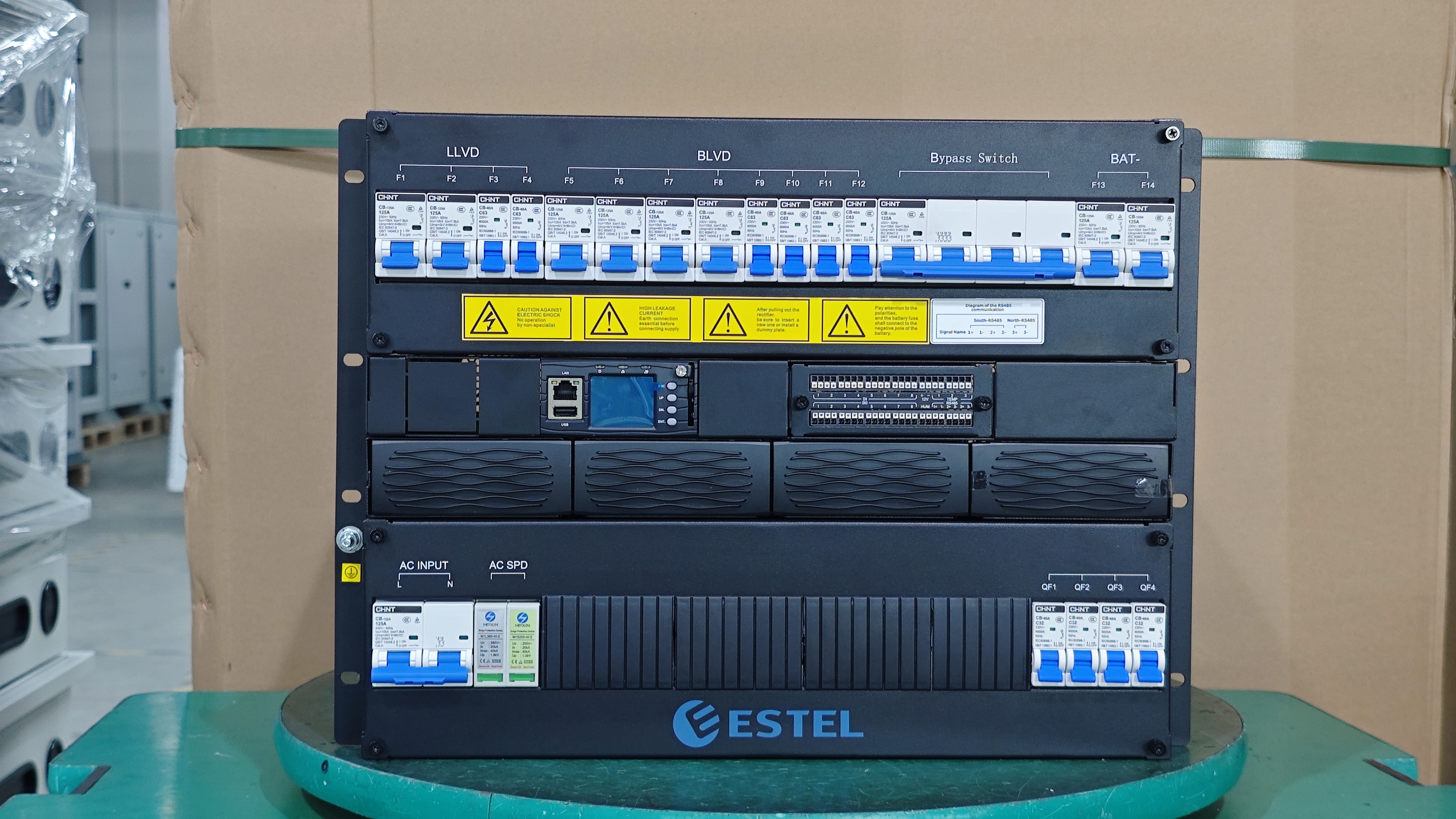
Advanced Rectifier Topologies
You benefit from advanced rectifier topologies in ESTEL’s telecom rectifier system. These topologies help you achieve outstanding efficiency and performance. You see the following innovations in action:
Bridgeless totem-pole PFC designs eliminate the traditional diode bridge, which reduces conduction losses.
A single inductor handles the full AC cycle, increasing power density and making each module smaller.
These modular designs allow you to scale your power system as your network grows.
You gain flexibility and scalability with modular designs. You can add or replace modules without interrupting service. This approach supports rapid deployment and easy maintenance.
High-Efficiency Components
You rely on high-efficiency components to maximize performance. The table below shows how each feature contributes to your network’s success:
Feature | Description |
|---|---|
High Efficiency | Rectifier efficiency reaches up to 97%. |
Intelligent Dormancy | Module dormancy function boosts system efficiency. |
Wide AC Input Voltage Range | Operates within 85~300VAC for greater versatility. |
Temperature Performance | Works in -40ºC to +75ºC, with no derating below 55ºC. |
Intelligent Battery Management | Extends battery life through smart management. |
Easy Installation | Hot-swappable modules simplify installation and maintenance. |
Remote Management | Reduces operational costs with remote capabilities. |
You see how modular designs improve installation and maintenance. You can swap modules quickly, which reduces downtime. You also enjoy the benefits of modularity and scalability, making your system future-proof.
Intelligent Control and Cooling
You experience intelligent control and cooling technologies that set ESTEL apart. Integrated thermal systems reduce the size and weight of cooling equipment. This increases power density and lowers energy use. Advanced heat exchanger concepts deliver higher performance and extend the life of each module. Thermal system optimization saves energy by recovering waste heat and using heat pumping.
Smart control systems monitor and adjust operations in real time. You always operate at peak efficiency. Modular designs support these intelligent features, ensuring that each module works together for the best results. You benefit from modularity, scalability, and reliable performance in every module.
Tip: Modular designs give you the flexibility to expand, upgrade, or maintain your telecom rectifier system with minimal effort.
Benefits of Energy Efficient DC Power Systems
Cost and Energy Savings
You can achieve significant energy savings by upgrading to a high-efficiency telecom rectifier system. Modern designs reduce power loss by up to 75% compared to older models. This means you spend less on electricity each year. Lower heat generation also decreases the need for cooling equipment, which cuts maintenance costs. Features like active power factor correction help you minimize wasted energy. These improvements lead to real operational cost reduction for your network.
Reduce power loss by up to 75%
Lower cooling requirements and maintenance costs
Minimize wasted energy with advanced features
Tip: Every percentage point of efficiency gained translates into direct savings on your energy bill.
Reliability and Sustainability
You improve both reliability and sustainability when you choose energy efficient DC power systems. High-efficiency power supplies lower your energy consumption reduction and environmental footprint. They produce less heat and fewer harmful gases, which means your equipment lasts longer and your site stays cooler. These systems support your company’s sustainability goals and help you meet global decarbonization targets.
Feature | ESTEL’s Delta Rectifier Modules | Competitors’ Modules |
|---|---|---|
>98% | 94–96% | |
Operating Temperature Range | -25°C to +55°C | N/A |
Advanced Protection Mechanisms | Yes | N/A |
You can see that ESTEL’s modules offer higher efficiency and better protection, which means more reliable performance for your network.
Real-World Impact for Telecom Operators
You benefit from proven results when you deploy ESTEL’s energy efficient solutions. Real-world case studies show improvements in uptime, reliability, and energy savings.
Case Study Description | Operational Cost Reduction | Service Reliability Improvement | Downtime Reduction | Energy Efficiency Improvement |
|---|---|---|---|---|
Rural telecom operator in Southeast Asia using ESTEL’s hybrid power systems | 35% | Improved | N/A | N/A |
European telecom provider during 5G upgrade with ESTEL’s advanced rectifier systems | N/A | N/A | 20% | Increased |
You can see a 35% operational cost reduction and a 20% decrease in downtime. In another case, a telecom company in a small village used ESTEL rectifiers and achieved 30% longer battery performance and stable connections during storms.
Note: These results show that energy efficient DC power systems deliver measurable benefits for your network, your budget, and the environment.
Comparison Table: ESTEL vs. Industry Standard

Efficiency Metrics Overview
You want to see how ESTEL’s telecom rectifier system stands out in measurable ways. The table below gives you a clear view of the main metrics that matter for your network. These numbers show how ESTEL’s system compares to typical industry standards.
Metric | ESTEL’s Rectifier System | Industry Standard Systems |
|---|---|---|
Conversion Efficiency | 95–96% | |
Power Factor | 0.99 | 0.95 |
Total Harmonic Distortion | 1.12% | 3–5% |
Efficiency in Rectifier Mode | >97% | 95% |
Efficiency in Inverter Mode | >96% | 94% |
You can see that ESTEL’s system delivers higher efficiency and a better power factor. Lower harmonic distortion means your equipment runs more smoothly and reliably. These improvements help you reduce energy waste and keep your telecom network operating at its best.
Tip: Higher efficiency means you save more on energy costs and reduce your environmental impact.
Operational Benefits Comparison
You also care about how your choice affects daily operations. The table below highlights the practical benefits you gain with ESTEL’s rectifier system compared to standard options.
Feature | ESTEL’s Rectifier System | Industry Standard Systems |
|---|---|---|
Maintenance Needs | Reduced | Higher |
Downtime | More outages | |
Efficiency Across Load Levels | High | Variable |
Energy Consumption | Lower | Higher |
Heat Output | Reduced | Higher |
You experience fewer outages and less maintenance with ESTEL’s system. High efficiency across all load levels means your network stays stable, even as demand changes. Lower energy consumption and reduced heat output help you cut costs and extend equipment life.
Note: Choosing ESTEL’s rectifier system gives you a reliable, cost-effective, and future-ready solution for your telecom infrastructure.
You see the impact of upgrading to ESTEL’s 98% efficient telecom rectifier system. This high efficiency reduces energy use, lowers operational costs, and minimizes maintenance. ESTEL’s technical innovation and measured proof show real-world value for your network. To move forward, review your current systems and consider how advanced rectifiers can improve your operations. For more details or support, reach out to ESTEL’s team by email or phone.
FAQ
What is the main advantage of a 98% efficient telecom rectifier system?
You save more energy and reduce your electricity bills. High efficiency means less heat and longer equipment life. Your network becomes more reliable and environmentally friendly.
How does ESTEL’s rectifier system handle different input voltages?
You can use the system with a wide range of input voltages, such as AC220V or 380V. This flexibility lets you install it in many locations without extra equipment.
Can you install ESTEL’s rectifier system in a standard telecom rack?
Yes, you can. The system fits standard 19-inch racks. You can integrate it easily into your existing telecom setup.
How does the modular design benefit you?
You can add or replace modules without stopping your network. This design makes maintenance simple and reduces downtime. You keep your network running smoothly.
Does the system support remote monitoring?
Yes, you can monitor and manage the system remotely. This feature helps you reduce operational costs and respond quickly to any issues.
See Also
Integrating Solar Inverters and Batteries for Telecom Solutions
Essential Insights Into Power Supply Features for Telecom
The Advantages of Lithium Batteries in Telecom Applications
Solar Energy Storage Solutions for Telecom Cabinet Systems
Calculating Power Systems and Battery Needs for Telecom Cabinets
CALL US DIRECTLY
86-13752765943
3A-8, SHUIWAN 1979 SQUARE (PHASE II), NO.111, TAIZI ROAD,SHUIWAN COMMUNITY, ZHAOSHANG STREET, NANSHAN DISTRICT, SHENZHEN, GUANGDONG, CHINA
