Auto Parameter Adjustment of Telecom Rectifier Systems to Match Output Efficiency Based on Load Changes

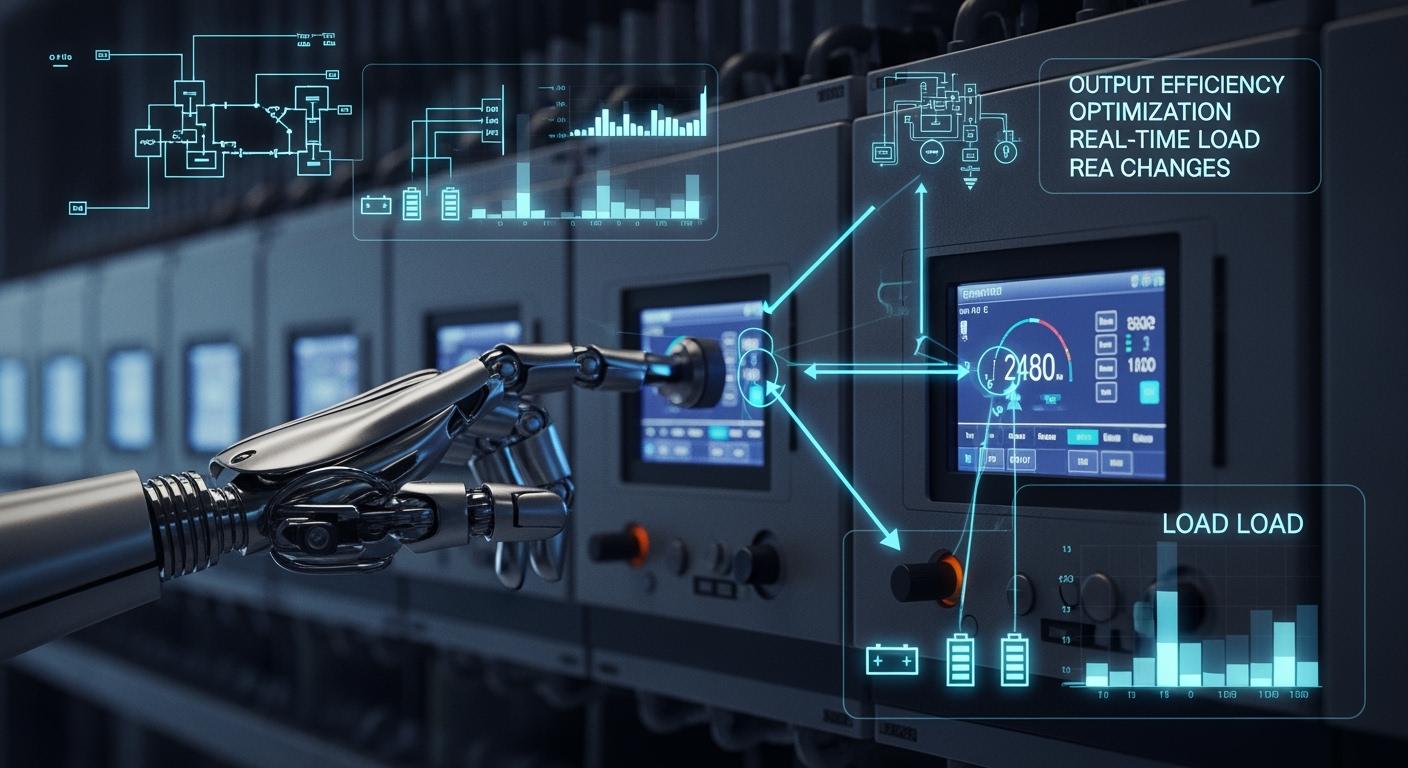
You rely on stable power for your telecom network. Auto parameter adjustment in a Telecom Rectifier System lets you maintain high output efficiency when the network load changes. ESTEL’s advanced technology helps you achieve reliable performance, lower energy costs, and improved sustainability. As a telecom engineer or manager, you benefit from ESTEL’s innovation and strict quality standards, making your operations more efficient and dependable.
Key Takeaways
Auto parameter adjustment keeps telecom networks efficient and reliable during load changes.
ESTEL's rectifier systems save energy and reduce costs with over 96% efficiency.
Modular design allows easy expansion and maintenance without network downtime.
High efficiency supports sustainability by lowering carbon emissions and energy waste.
Advanced control methods ensure stable power delivery, protecting equipment from damage.
Telecom Rectifier System Overview

Key Features and Functions
You depend on a Telecom Rectifier System to convert alternating current (AC) from the power grid into direct current (DC) for your telecom equipment. This conversion is essential because most telecom devices require a stable DC supply to operate reliably. The system uses several main components to achieve this:
Input filter: Removes electrical noise from the incoming AC power.
Rectification and filtering: Changes AC into a smoother DC output.
Inverter: Converts rectified DC into high-frequency AC for better efficiency.
Output rectification and filtering: Delivers a steady DC supply to your network.
Control methods: Uses advanced techniques like pulse-width modulation (PWM) and pulse-frequency modulation (PFM) to regulate voltage and current.
These features ensure your network receives clean, reliable power. You also benefit from remote monitoring and control, which lets you manage the system without being on-site. Hot-swappable modules allow you to perform maintenance without shutting down your network. Advanced protection features guard against overvoltage, overcurrent, and overheating, keeping your equipment safe.
ESTEL’s Product Advantages
When you choose an ESTEL Telecom Rectifier System, you gain several advantages over standard solutions. ESTEL’s systems achieve energy conversion rates above 96%, which means you save on energy costs and reduce waste. The modular design lets you expand your power system as your network grows. You can add or replace modules quickly, which minimizes downtime and supports future upgrades.
ESTEL’s systems work efficiently in harsh outdoor environments, making them ideal for remote or challenging locations. The flexible input voltage options ensure compatibility with different power sources. The table below highlights how modular design benefits you:
Feature | Description |
|---|---|
Scalability | Easily expand your system as your network grows. |
Maintenance | Replace or add modules without interrupting service. |
Redundant Architecture | Maintain reliability with N+1 or N+2 configurations for backup and uptime. |
With these advantages, you ensure your telecom network remains reliable, efficient, and ready for future demands.
Importance of Output Efficiency
Impact on Telecom Operations
You need your telecom network to run smoothly and reliably. Output efficiency plays a key role in making this possible. When your Telecom Rectifier System operates at high efficiency, your network uses less energy to deliver the same level of service. This means you can handle more data traffic and maintain low latency, which is especially important as networks move toward 5G technology.
Energy efficiency metrics help you measure how well your network uses power.
As you upgrade to new technologies, you must consider factors like data traffic and connectivity.
Managing energy costs becomes easier when you understand how your system uses power.
If your output efficiency drops, you may face several operational challenges. The table below shows some common issues:
Challenge Type | Description |
|---|---|
Misinterpretation of Telecom Standards | Incorrect understanding of technical requirements can lead to non-compliance and network issues. |
Errors in Network Optimization | Poor resource allocation can reduce service quality and increase costs. |
Ineffective Fault Detection | Troubleshooting becomes harder, which can lower network reliability. |
Challenges in Customer Experience Management | Inaccurate support can frustrate users and harm your reputation. |
Cost and Sustainability Benefits
Improving output efficiency in your rectifier system brings direct financial and environmental benefits. You save money by reducing energy waste and lowering your electricity bills. High-efficiency systems, like those from ESTEL, can reach efficiency rates above 96%, which means less power is lost during conversion.
A high power factor means your system uses energy more effectively.
Less reactive power gets lost along cables, so you get more usable power.
Efficient systems reduce operational costs and support your sustainability goals.
You also help the environment by cutting down on carbon emissions. Efficient rectifiers generate less heat and use less energy, which supports global efforts to reduce carbon footprints. Many modern systems can work with renewable energy sources, further lowering your reliance on fossil fuels. Reliable power delivery also means less downtime, so your network stays up and running.
Load Changes and System Performance
Typical Load Variation Scenarios
You often see your telecom network experience different types of load changes. These changes can happen suddenly or gradually. For example, when many users connect to the network at the same time, you get a sudden surge in demand. This can occur during peak hours or special events. Sometimes, the load increases slowly as more devices come online over time. Maintenance activities or equipment upgrades can also cause shifts in power demand.
You may also notice load drops when users disconnect or when certain network sections go offline for repairs. Environmental factors, such as extreme temperatures, can affect how much power your system needs. Battery charging cycles and backup power activation during outages add to these variations. Each scenario puts unique stress on your power system.
Tip: Monitoring your network’s usage patterns helps you predict and manage these load changes more effectively.
Effects on Rectifier Output
When your network load changes, your Telecom Rectifier System must respond quickly to keep output stable. Sudden load surges can lead to voltage instability and increased power losses. If the voltage drops or becomes unstable, your service may get disrupted, and sensitive hardware could face damage. You might also see service interruptions or even data loss if the system cannot handle the change.
Overheating and equipment overload can occur when the system works beyond its rated capacity.
Battery failures may result from poor maintenance or extreme temperature swings.
Demand side management helps stabilize voltage and reduces power losses during these events.
You need to ensure your rectifier system can adapt to these changes. A well-designed system maintains steady output, protects your equipment, and keeps your network running smoothly. By understanding these effects, you can take steps to improve reliability and prevent costly downtime.
Adjustment Mechanisms in Telecom Rectifier Systems
Auto Parameter Control Methods
You need your Telecom Rectifier System to adapt quickly when network demands shift. Auto parameter control methods make this possible. These methods use advanced electronics to monitor and adjust voltage, current, and frequency in real time. Pulse-width modulation (PWM) stands out as a key technique. PWM changes the width of electrical pulses to control how much power flows to your equipment. This keeps the output voltage stable even when the load changes.
Frequency tuning also plays a major role. By adjusting the switching frequency, the system can reduce energy loss and improve overall efficiency. You benefit from a system that responds instantly to any change in demand. The Vienna rectifier topology supports these methods by providing a sinusoidal input current waveform and low total harmonic distortion. This design helps you achieve higher efficiency and better power quality. Sliding-mode control in Vienna rectifiers allows for precise power factor correction and stable DC output, which makes modular upgrades easier.
Note: Auto parameter control methods help you maintain reliable service and reduce energy costs, especially in environments with frequent load changes.
Sensing and Feedback Systems
You rely on accurate sensing and feedback systems to keep your network running smoothly. These systems use sensors to measure voltage, current, and temperature at different points in the rectifier. The sensors send this data to the control unit, which analyzes the information and makes adjustments as needed.
A feedback loop forms the core of this process. The system compares the actual output with the desired setpoint. If it detects any difference, it adjusts the parameters to bring the output back in line. This closed-loop control ensures that your Telecom Rectifier System delivers consistent performance, even during sudden load surges or drops.
Sensors monitor key parameters like voltage, current, and temperature.
The control unit processes real-time data and sends commands to adjust output.
Feedback loops correct any deviation from the target values.
You gain peace of mind knowing your equipment stays protected from overvoltage, overheating, and other risks. The modular design of ESTEL’s systems means you can add or replace sensing modules without disrupting service.
Control Algorithms and Automation
You see the real power of modern rectifier systems in their control algorithms and automation features. AI-driven control systems use machine learning to analyze real-time data from your network. These smart systems adjust power conversion parameters automatically, which improves reliability and efficiency. Dynamic voltage scaling and precise voltage regulation help you manage energy use and minimize transmission losses.
Multi-level designs, such as those found in advanced rectifiers, require sophisticated algorithms. These algorithms keep the system stable and ensure accurate voltage regulation. The Vienna rectifier topology uses sliding-mode control to simplify power factor correction and DC output regulation. This reduces the computational load on the system and makes it easier to scale up as your network grows.
AI-driven systems analyze data and adjust parameters for optimal performance.
Dynamic voltage scaling adapts to changing loads, reducing energy waste.
Sliding-mode control in Vienna rectifiers enhances modularity and efficiency.
Tip: Automation reduces the need for manual intervention, so you can focus on other critical tasks in your network.
You benefit from a Telecom Rectifier System that not only adapts to changing conditions but also helps you achieve long-term cost savings and operational stability.
Implementation and Real-World Benefits
Integration with Telecom Infrastructure
You can integrate ESTEL’s auto-adjusting rectifier systems into your existing telecom network by following a few clear steps:
Connect the rectifier system to your battery backup. Check compatibility, inspect all terminals, make the connection, and test the battery.
Synchronize the system with your communication equipment. Confirm voltage compatibility, organize the wiring, and monitor the initial performance.
Configure the system settings. Set the output voltage and current limits, enable monitoring features, connect to smart grids, and test the configuration.
Conduct final system checks. Inspect every connection, verify voltage and current levels, test backup power, monitor performance, run load tests, and review compliance and safety standards.
Tip: Careful integration ensures your network stays reliable and efficient, even during peak demand or unexpected events.
Efficiency Gains and Reliability
You will see measurable improvements in both efficiency and reliability after installing an ESTEL Telecom Rectifier System. Smart features help you cut operational costs by up to 20%. You also benefit from lower maintenance costs and higher uptime, which means fewer interruptions for your network.
Maintenance Cost Reduction | Uptime Improvement |
|---|---|
35% | 25% |
Reduction in Operational Costs | Impact on ROI |
|---|---|
20% - 30% | Positive over time |
You can expect a strong return on investment as your energy bills drop and your network stays online longer.
Case Examples from ESTEL
Many telecom operators have already upgraded their networks with ESTEL’s rectifier systems. You can find these systems in remote mountain sites, busy urban centers, and challenging outdoor environments. Operators report fewer outages, faster maintenance, and lower energy costs. The modular design lets you scale your power system as your network grows, so you stay ready for future demands.
Note: Real-world results show that ESTEL’s solutions help you achieve reliable, cost-effective, and sustainable telecom operations.
You gain optimal efficiency and reliability with ESTEL’s telecom rectifier systems. Auto parameter adjustment keeps voltage and current stable, even when your network load changes. This protects your equipment and prevents interruptions.
Voltage regulators maintain constant output for efficient operation.
Rectifier modules deliver stable DC power, even during sudden changes.
Benefit | Description |
|---|---|
Cost Reductions | |
Energy Efficiency | Reduce electricity and cooling expenses. |
Reliability & Uptime | Minimize downtime and boost system reliability. |
Scalability | Grow your network easily and affordably. |
Renewable Energy Integration | Support sustainability goals. |
You prepare your network for the future by choosing ESTEL. Smart heat management, AI-driven automation, and modular designs lead the way in telecom power innovation.
FAQ
How does auto parameter adjustment improve telecom network reliability?
You get stable voltage and current, even when network loads change. This protects your equipment from power fluctuations. Your network stays online longer and avoids unexpected outages.
Can you integrate ESTEL rectifier systems with existing telecom infrastructure?
Yes, you can. ESTEL designs its rectifier systems for easy integration. You can install them in standard 19-inch racks and connect them to your current power and battery setups.
What maintenance do ESTEL rectifier systems require?
You perform routine inspections and monitor system alerts. The modular design lets you replace faulty modules quickly. You do not need to shut down your network for most maintenance tasks.
Do ESTEL rectifier systems support renewable energy sources?
Yes! You can connect ESTEL rectifier systems to solar or wind power. This helps you reduce energy costs and support your sustainability goals.
See Also
Methods for Calculating Telecom Cabinet Power and Batteries
Essential Features of Telecom Power Supply Systems
Telecom Cabinets with Grid-Connected Solar Inverter and Battery
CALL US DIRECTLY
86-13752765943
3A-8, SHUIWAN 1979 SQUARE (PHASE II), NO.111, TAIZI ROAD,SHUIWAN COMMUNITY, ZHAOSHANG STREET, NANSHAN DISTRICT, SHENZHEN, GUANGDONG, CHINA
