Telecom Rectifier System and cutting OPEX with ≥98% efficiency

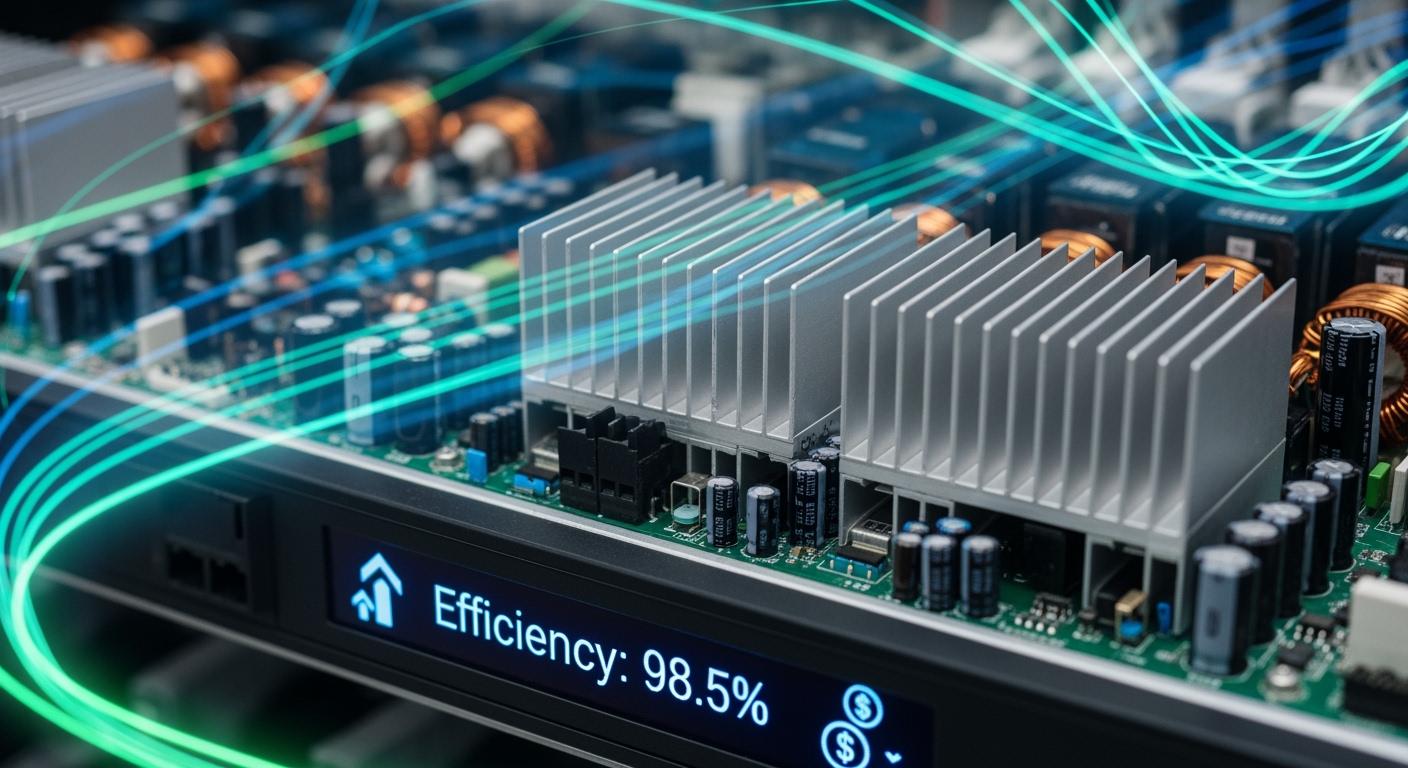
You can cut operational expenses by upgrading to a Telecom Rectifier System with efficiency at or above 98%. Energy efficiency now stands at the core of telecom infrastructure. In 2024, telecom and IT sectors used over 12 million rectifiers for backup and voltage stabilization. Major operators like AT&T and Verizon invested in hundreds of system upgrades, while 95% of new 5G base stations relied on high-reliability rectifiers. Choosing an advanced solution from ESTEL helps you see immediate savings and boosts your network’s reliability.
Key Takeaways
Upgrading to a Telecom Rectifier System with ≥98% efficiency can save you up to $902 annually per rectifier, significantly reducing operational expenses.
Modern rectifiers cut energy waste by up to 75%, leading to lower electricity bills and reduced cooling costs, which enhances your bottom line.
Investing in high-efficiency rectifiers improves network reliability and supports sustainability goals by lowering greenhouse gas emissions.
Utilizing advanced features like AI and IoT in rectifiers can enhance performance, reduce downtime, and lower maintenance costs by up to 40%.
A thorough assessment of your current systems is crucial for a successful upgrade, ensuring compatibility and identifying underperforming units.
How High-Efficiency Telecom Rectifier Systems Cut OPEX

Energy Savings and Cost Reduction
You can achieve significant energy savings by upgrading to a modern Telecom Rectifier System with efficiency at or above 98%. When you replace a legacy system with a high-efficiency model, you reduce wasted energy and lower your electricity bills. Here is how the savings add up:
Upgrading from a 92% efficient rectifier to a 98% efficient model saves about 6,013 kWh per year.
At an average electricity rate of $0.15 per kWh, this translates to $902 saved annually for each rectifier module.
Note: These savings multiply across your network, especially if you operate hundreds or thousands of sites.
You will notice a direct reduction in your operational expenses. Lower energy consumption means less heat generated, which also reduces cooling costs. Over time, these savings can make a major impact on your bottom line.
Efficiency Comparison: Legacy vs. Modern Systems
When you compare legacy rectifier systems to modern high-efficiency models, the difference becomes clear. The table below shows typical efficiency ratings:
System Type | Efficiency Rating |
|---|---|
Legacy Telecom | < 96% |
Modern Telecom | > 96% |
Most older systems operate below 96% efficiency. Modern Telecom Rectifier System models, such as those from ESTEL, reach or exceed 98%. This improvement means less energy lost during conversion and more power delivered to your equipment.
Upgrading from 92% to 96% efficiency saves about $559 per year.
Upgrading from 92% to 98% efficiency increases annual savings to $902.
You benefit from lower electricity bills and reduced energy loss throughout your network.
ESTEL’s Role in Power Optimization
ESTEL helps you optimize power usage with advanced features in their Telecom Rectifier System. These systems achieve energy conversion rates above 96%, which lowers your operational costs. ESTEL uses innovative technologies to maximize efficiency:
Feature | Description |
|---|---|
Predictive maintenance and real-time monitoring improve performance and reduce downtime. | |
Power Conversion Technology | Patented zero-voltage switching hybrid voltage divider boosts energy conversion efficiency. |
Zero Current/Zero Voltage Tech | Minimizes energy loss during AC to DC conversion, supporting sustainable operations. |
You can see the real-world impact in several case studies:
A rural telecom operator in Southeast Asia cut operational costs by 35% and improved service reliability by using ESTEL’s hybrid power systems.
A European telecom provider reduced downtime by 20% and increased energy efficiency during a 5G upgrade with ESTEL’s advanced rectifier systems.
When you choose ESTEL, you gain access to reliable, efficient, and future-ready power solutions that help you control OPEX and support network growth.
Why Rectifier Efficiency Matters in Telecom Networks
Electricity as a Key OPEX Factor
You face high operational expenses in telecom networks, and electricity costs make up a large part of these expenses. Between 20% and 40% of your total OPEX comes from energy consumption. More than half of this energy powers the Radio Access Network (RAN), which is essential for your network’s operation. If you use outdated rectifiers, you lose a lot of electricity as heat. This waste increases your bills and puts extra strain on your cooling systems. High-efficiency rectifiers can cut power loss by up to 75% compared to older models. Less heat means you spend less on cooling, and your equipment lasts longer.
Efficiency Level | Impact on Operational Costs | Additional Benefits |
|---|---|---|
Up to 98% | Reduces energy waste and lowers bills | Less heat generation, less cooling required |
97% or more | Directly reduces operational costs | Supports energy optimization |
Advanced features | Lowers energy losses and heat | Improves network scaling efficiency |
Impact on Network Reliability and Sustainability
Efficient rectifiers do more than save money. They help you keep your network reliable and support your sustainability goals. High efficiency reduces energy waste and ensures steady power delivery. This stability lowers the risk of outages and keeps your services running smoothly. Energy-efficient systems also cut greenhouse gas emissions, helping you meet environmental targets. Studies show that telecom equipment powered by stable DC systems fails less often. This reliability extends the life of your infrastructure and reduces maintenance needs.
Tip: Investing in efficient rectifiers supports both your business and the environment. You get fewer failures, longer equipment life, and a smaller carbon footprint.
ESTEL Telecom Rectifier System Features
ESTEL designs its rectifiers to meet your needs for efficiency and reliability. The advanced design uses materials like Silicon Carbide (SiC), which work well at higher temperatures and reduce the need for extra cooling. This feature saves you money and extends the life of your equipment. ESTEL’s modular systems provide redundancy, so your network keeps running even if one module fails. Maintenance-free batteries and load low voltage disconnects protect your assets during power disturbances.
Feature | Benefit |
|---|---|
High conversion efficiency | Achieves above 95%, reducing energy losses and costs |
Wide temperature range | Works from -25°C to +55°C, suitable for harsh environments |
Advanced protection | Guards against voltage spikes and short circuits |
Modularity | Allows for easy scaling and ensures continuous operation |
You can rely on ESTEL’s Telecom Rectifier System to optimize energy use, lower costs, and keep your network stable in any environment.
Calculating Savings with ESTEL Rectifier Systems

Annual and Network-Wide Savings
You can see real savings when you upgrade your network to high-efficiency rectifiers. Let’s break down the numbers:
If you upgrade from 92% to 96% efficiency, you save about 3,726 kWh and $559 per year for each cabinet.
If you upgrade from 92% to 98% efficiency, you save about 6,013 kWh and $902 per year for each cabinet.
If you manage 100 sites, your annual savings can reach $90,200. These savings grow as your network expands. Lower energy use also means less heat, so you spend less on cooling and maintenance.
Example Scenarios and Payback Period
Many telecom operators recover their investment in ESTEL rectifiers quickly. Here are some real-world examples:
Many operators see a payback period as short as six months.
Major telecom operators in Canada reduced their equipment footprint by 58% and doubled backup time, all while lowering costs.
In the UAE, Etisalat cut generator use by 75% and saved fuel at off-grid sites.
You can use these examples to estimate your own return on investment. Quick payback means you start saving money sooner.
Long-Term Financial and Environmental Benefits
Switching to high-efficiency rectifiers brings lasting benefits. You can save over $7,000 each year for every 1000A at a rate of $0.3 per kWh. Many operators report up to 30% lower operational and maintenance costs after upgrading to advanced systems.
You also help the environment. Solar-powered cell sites can cut CO2 emissions by 55%. As 5G networks grow, this reduction can reach 58%. If you use MPPT controllers, you can cut carbon emissions by up to 70% by using more solar energy.
A Telecom Rectifier System from ESTEL gives you both financial and environmental advantages that last for years.
Additional Benefits of Upgrading Rectifier Systems
Reduced Heat and Maintenance
You notice less heat in your telecom cabinets when you use high-efficiency rectifier systems. Lower heat means your cooling systems work less, which saves energy and reduces wear. Modern rectifiers use active power factor compensation and predictive maintenance features. These upgrades help you cut maintenance costs and boost uptime.
Feature Description | Contribution to Energy Savings |
|---|---|
Reduces electrical energy consumption, leading to less heat | |
Active power factor compensation | Improves energy efficiency with a power factor greater than 0.98 |
Reduced heat generation | Minimizes cooling needs, resulting in extra energy savings |
Predictive maintenance features can lower maintenance costs by up to 40% compared to older systems.
Field studies show a 35% drop in maintenance costs and a 25% rise in system uptime.
Remote monitoring saves up to 25% on maintenance costs and increases operational efficiency by 30%.
Enhanced System Longevity
You extend the life of your telecom equipment when you upgrade to advanced rectifier systems. Less heat and fewer maintenance needs mean your components last longer. ESTEL’s modular design allows you to replace parts easily, which keeps your network running smoothly. You avoid frequent breakdowns and reduce downtime. Your investment pays off with fewer repairs and longer service intervals.
Tip: Upgrading your rectifier system helps you protect your assets and maintain reliable service for your customers.
Environmental Impact and Compliance
You support environmental goals and meet global standards when you choose high-efficiency rectifiers. ESTEL’s systems comply with strict regulations and certifications. You reduce your carbon footprint and help your company meet sustainability targets.
Standard/Guideline | Description |
|---|---|
Sets strict efficiency rules for data centers | |
Power Usage Effectiveness (PUE) | Measures overall data center efficiency |
Renewable Energy Factor (REF) | Tracks renewable energy use in operations |
IT Equipment Energy Efficiency | Benchmarks server energy performance |
Certification | Description |
|---|---|
CE | Meets safety and performance standards |
RoHS | Follows environmental regulations |
You make your network greener and more efficient by upgrading to ESTEL’s rectifier systems.
Practical Steps for Upgrading to ESTEL Solutions
Assessing Current Infrastructure
You should start by understanding your current rectifier setup. Creating a detailed inventory of your rectifier systems is crucial. This inventory helps you see what equipment you have, how old it is, and how well it performs. You can then identify any compatibility gaps between your existing systems and new high-efficiency solutions.
Here is a simple process to follow:
List all rectifier models, installation dates, and technical specifications.
Check for compatibility issues with new rectifier systems.
Review performance data to spot underperforming units.
Note any recurring maintenance problems or high energy use.
Tip: A thorough assessment gives you a clear starting point for your upgrade.
Implementation Tips and Best Practices
When you upgrade to ESTEL’s high-efficiency rectifier systems, you can follow several best practices to ensure success:
Maintain proper cooling by keeping airflow clear and cleaning heat sinks regularly.
Use real-time monitoring tools to track system performance and catch issues early.
Select modular, hot-swappable rectifier modules for easy upgrades and maintenance.
Consider the environment and follow manufacturer guidelines during installation.
Balance your initial investment with long-term savings from lower energy use and reduced maintenance.
You can also address common challenges by modernizing your equipment and using advanced features to optimize energy use. This approach helps you manage operational costs and reduce your carbon footprint.
Evaluating ROI and Next Steps
You can measure the return on investment (ROI) by looking at several key factors. The table below shows what to consider:
Factor | Description |
|---|---|
High efficiency lowers your energy bills. | |
Cost Savings | Ultra-efficient models save thousands each year. |
Modular Design | Scalable upgrades keep installation costs low. |
Maintenance Costs | Durable designs reduce downtime and repair expenses. |
ROI Example | Some operators cut energy costs by 20% and reached full ROI within 3 years. |
After you review these factors, you can plan your upgrade timeline. You should set clear goals for energy savings and reliability. ESTEL’s team can help you with technical support and guidance, making your transition smooth and effective.
Upgrading to a ≥98% efficient Telecom Rectifier System delivers major OPEX savings and boosts operational reliability. You benefit from reduced heat, lower maintenance, and the ability to reuse existing infrastructure. ESTEL’s solutions stand out for proven reliability and measurable cost reductions:
Immediate Gains | Long-Term Gains |
|---|---|
Lower energy bills | Longer equipment lifespan |
Decreased cooling costs | Improved network reliability |
You can access advanced support, smart monitoring, and award-winning technology. Assess your current systems and explore ESTEL’s offerings for immediate and lasting improvements. For more details, contact ESTEL or visit their website.
FAQ
What is a telecom rectifier system and why do you need it?
A telecom rectifier system converts AC power to DC power for your telecom equipment. You need it to ensure stable, reliable power for your network, which helps prevent outages and keeps your services running smoothly.
How does upgrading to a ≥98% efficient rectifier system save you money?
You save money by reducing energy loss. High-efficiency rectifiers use less electricity, which lowers your power bills. You also spend less on cooling and maintenance because the system generates less heat.
Can you install ESTEL rectifier systems in existing telecom cabinets?
Yes, you can.
ESTEL designs its rectifier systems for compatibility with standard 19-inch racks. You can upgrade your current setup without major changes, making installation simple and cost-effective.
What maintenance do ESTEL rectifier systems require?
You benefit from a modular design that makes maintenance easy.
You can replace modules quickly.
Real-time monitoring helps you spot issues early.
The system needs minimal manual intervention.
How quickly can you see a return on investment after upgrading?
Many operators see ROI within one to three years. You start saving on energy costs right away. The payback period depends on your network size and local electricity rates.
See Also
Integrating Solar Inverters and Batteries for Telecom Power Needs
Calculating Power Systems and Battery Needs for Telecom Cabinets
Solar Energy Storage Solutions for Telecom Cabinet Applications
Essential Insights on Features of Telecom Power Supplies
Strategies for Maintaining Reliable Power in Telecom Cabinets
CALL US DIRECTLY
86-13752765943
3A-8, SHUIWAN 1979 SQUARE (PHASE II), NO.111, TAIZI ROAD,SHUIWAN COMMUNITY, ZHAOSHANG STREET, NANSHAN DISTRICT, SHENZHEN, GUANGDONG, CHINA
