Seamless Connection of Telecom Rectifier Systems with Energy Storage: Support for Li-ion/Pb-acid/Flow Batteries

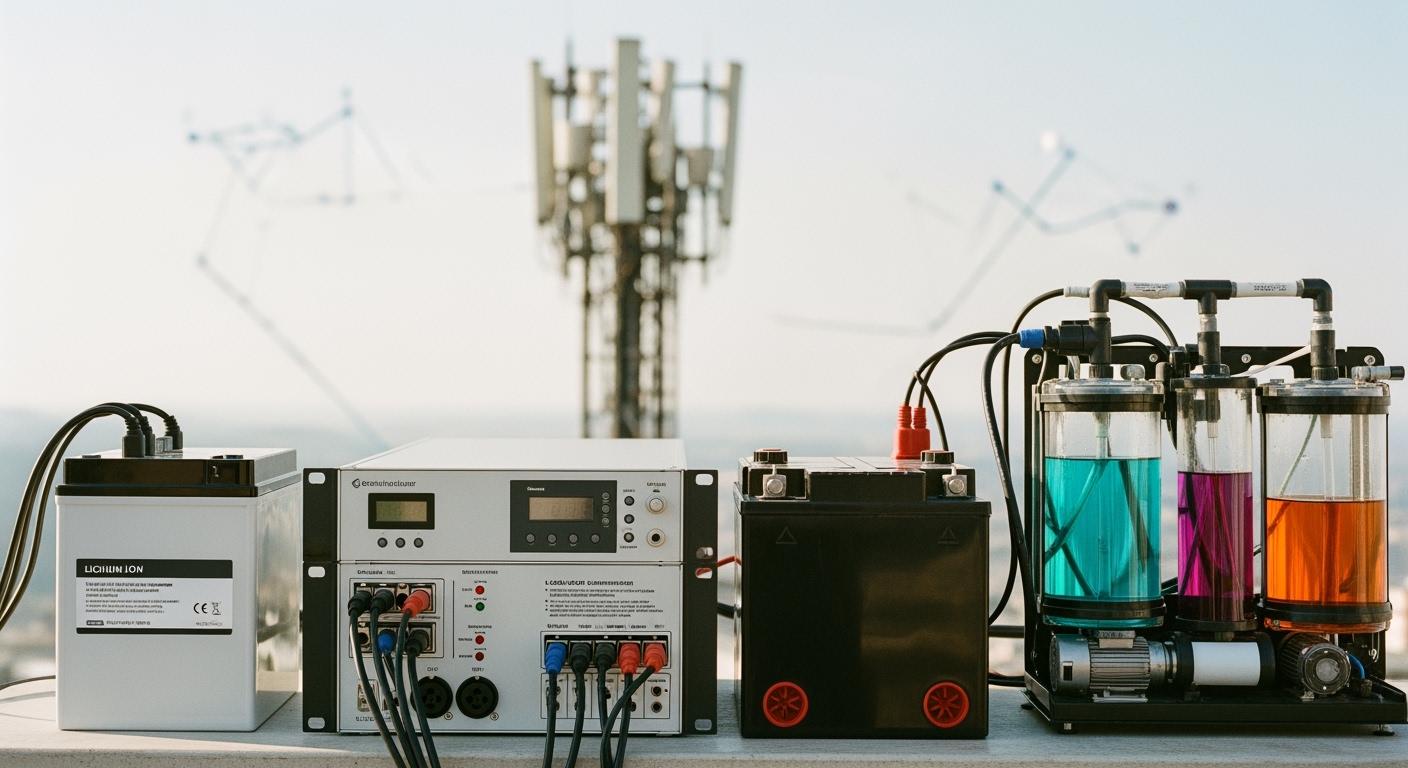
You can maximize network reliability and efficiency when you seamlessly connect your Telecom Rectifier System with advanced energy storage. Supporting multiple battery chemistries—like Li-ion, Pb-acid, and flow batteries—gives you the freedom to choose the best option for your needs. Industry reports show that this flexibility helps you adapt to new technologies and changing energy demands. ESTEL leads the way by delivering integrated telecom power solutions that set the standard for quality and innovation.
Key Takeaways
Integrating telecom rectifier systems with energy storage enhances network reliability and efficiency, ensuring uninterrupted service during power outages.
Choosing the right battery type—Li-ion, Pb-acid, or flow—allows you to tailor your backup strategy to meet specific needs and optimize performance.
A modular design in power systems enables easy scaling, allowing you to add or remove components as your network grows without major disruptions.
Centralized monitoring and predictive maintenance help you quickly identify issues, reducing downtime and improving operational efficiency.
Investing in high-efficiency rectifiers and energy storage can significantly lower energy costs, leading to substantial savings across your telecom network.
Why Energy Storage Matters in Telecom
Backup Power Needs
You rely on stable communication networks every day. Reliable energy storage keeps these networks running, especially during unexpected power outages. As mobile networks expand and 5G technology rolls out, the demand for robust backup power grows even stronger. You need uninterrupted power to maintain service, even when the grid fails.
Note: Uninterrupted power supply (UPS) systems, which use batteries, are essential for keeping telecom networks operational during outages. Without dependable backup, service interruptions can happen instantly.
You can see the importance of backup power in real-world situations. For example, some telecom operators provide up to six hours of battery backup at most mobile sites, ensuring service continuity. Others with minimal backup power experience immediate failures when the main power source goes down.
Requirement Type | Description |
|---|---|
Independent power source requirements | Regulations mandate minimum battery backup duration and geographic coverage for critical components |
Emergency power unit standards | Technical specifications ensure backup systems maintain service during extended outages |
Essential component resilience | Standards require critical infrastructure to withstand disruptions like power loss and cyber incidents |
Battery Types and Their Roles
You have several battery options for telecom energy storage. Each type offers unique advantages and fits different needs. The most common choices include lithium-ion, lead-acid, and flow batteries.
Battery Type | Advantages | Disadvantages |
|---|---|---|
Li-ion | High efficiency, high energy density, suitable for compact installations | Higher cost |
Pb-acid | Cost-effective for short-term applications, widely available | Lower efficiency, shorter lifespan |
Flow | Long cycle life, environmentally friendly, flexible layout | Energy density varies greatly |
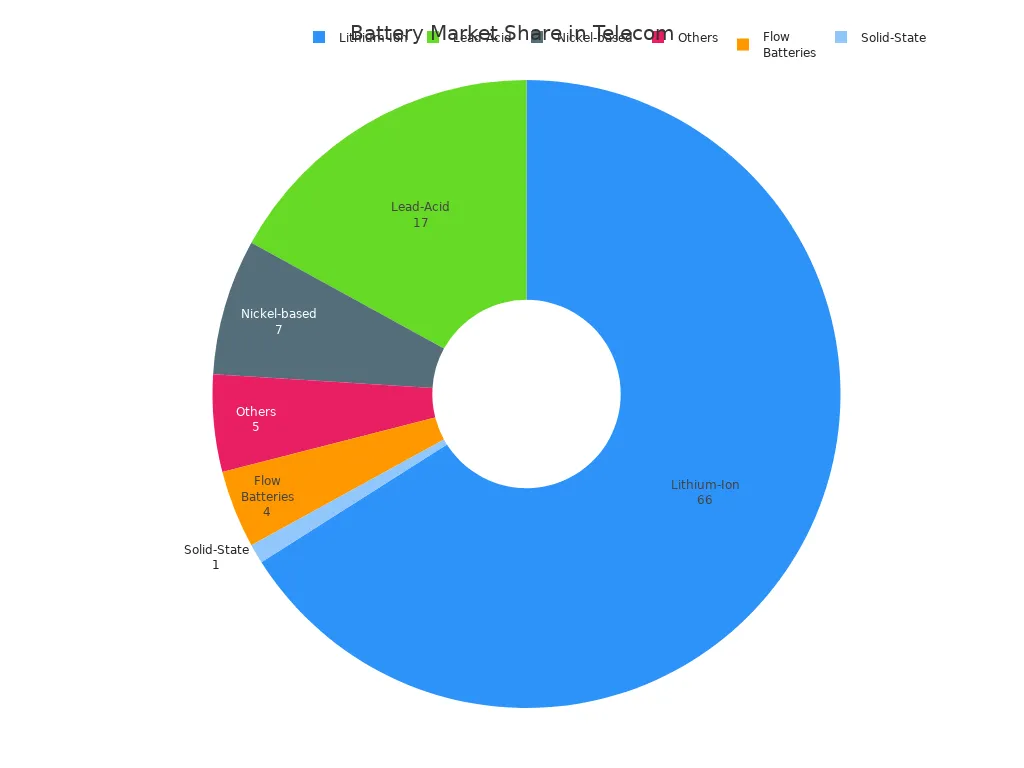
Lithium-ion batteries dominate the market because they deliver high energy density and efficiency. You can use them for quick power delivery and compact installations.
Lead-acid batteries remain popular for their low cost and reliability in short-term backup scenarios.
Flow batteries offer long cycle life and environmental benefits, making them suitable for large-scale storage.
When you connect these batteries with a Telecom Rectifier System, you ensure your network stays resilient and adaptable to future energy needs.
Telecom Rectifier System Integration with Energy Storage
Modular and Bi-directional Design
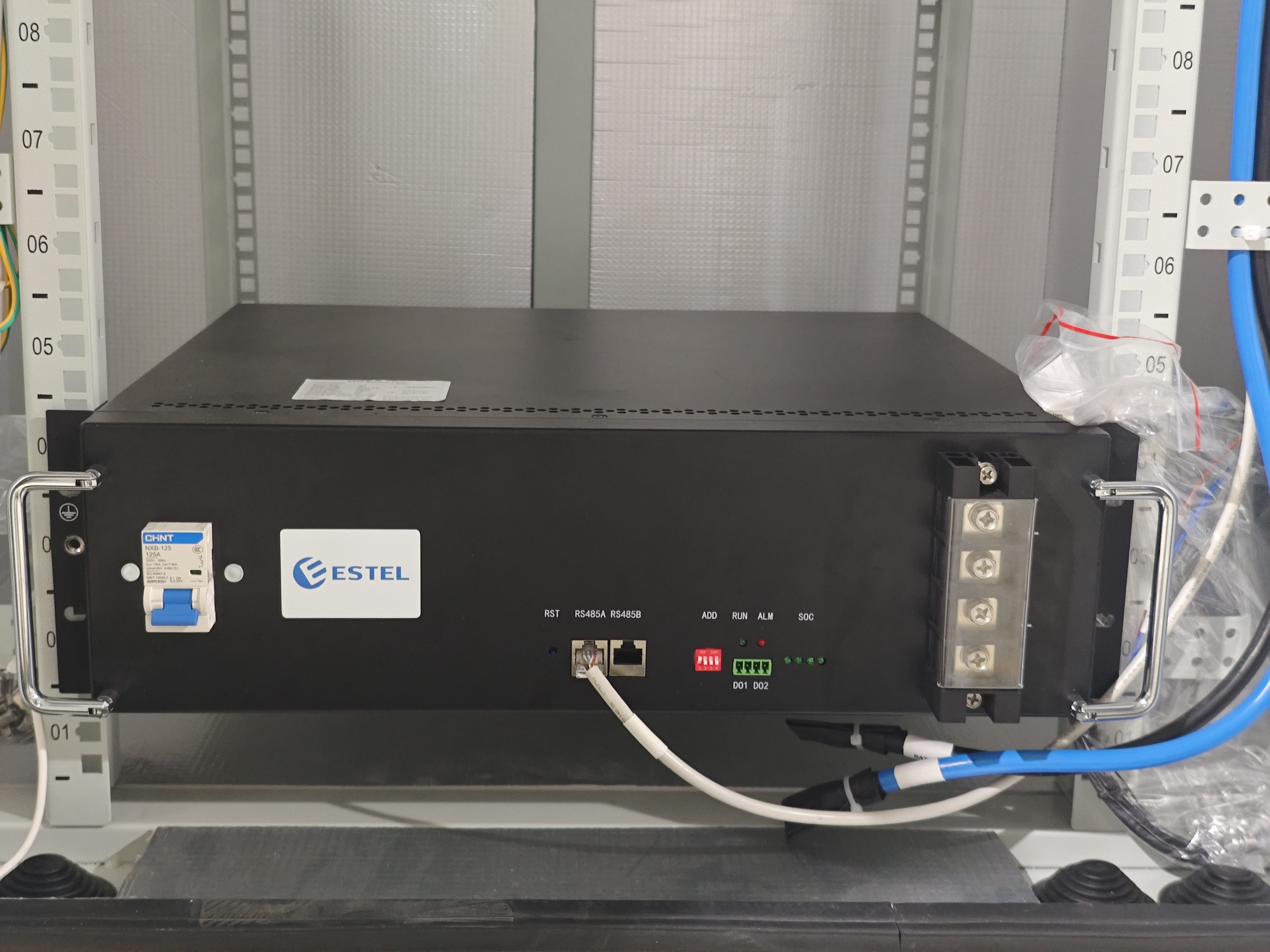
You need a power system that grows with your network. A modular design lets you add or remove rectifier modules based on your current power needs. This flexibility means you do not have to replace the entire system when your requirements change. You save time and resources by upgrading only what you need.
Modular rectifiers allow you to scale up or down as your network expands or contracts.
You can maintain your system easily because you can swap modules without shutting down the whole setup.
Bi-directional design helps manage power flow efficiently. It supports both charging and discharging, which is important for dynamic environments like 5G networks.
This approach ensures your Telecom Rectifier System stays efficient and adaptable. You can respond quickly to new technology or increased demand without major disruptions.
Supporting Li-ion, Pb-acid, and Flow Batteries
You want your Telecom Rectifier System to work with different battery types. Each battery chemistry has unique strengths, so supporting multiple options gives you more control over your backup strategy. The system must meet technical requirements for each battery type to ensure safety and performance.
Battery Type | Capacity (Ah) | Energy Density (Wh/kg) | Longevity (Years) | Cycle Life (Cycles) | Lifecycle Cost (USD) |
|---|---|---|---|---|---|
Lead-Acid | N/A | N/A | 3-5 | 500-800 | Lower Initial Cost |
Lithium-Ion | N/A | N/A | 10-15 | 2000-5000 | Higher Initial Cost |
Nickel-Cadmium | N/A | N/A | 5-7 | 1500-2000 | Moderate Initial Cost |
To support these batteries, your system should include:
A Battery Management System (BMS) to monitor cell voltages and prevent overheating.
Inverters to convert DC power to AC for telecom equipment.
Rectifiers to ensure a stable DC power supply.
With these features, your Telecom Rectifier System can deliver reliable backup power, no matter which battery you choose.
ESTEL’s Integration Solutions
You benefit from ESTEL’s focus on quality and innovation. The company invests in research and development, holding over eighty national patents. Their product range includes more than 200 types, all designed to meet international standards like ISO certification.
Feature | Impact |
|---|---|
Automated Incident Categorization | Reduces manual triage by 58%, speeding up initial response. |
AI-driven Anomaly Detection | Enhances early detection and predictive capabilities in 65% of deployments. |
Mean Time to Repair (MTTR) | Cuts MTTR from 4.8 hours to 3.1 hours, enabling faster incident resolution. |
Real-time Drone Feeds | Improves resource deployment by 18% and reduces response time by 30 minutes during crises. |
You can monitor your Telecom Rectifier System in real time, which helps you detect and fix problems before they cause failures. Automated incident categorization and AI-driven anomaly detection make maintenance faster and more accurate. The modular design lets you manage multiple sensor types from one dashboard, streamlining your operations.
ESTEL’s commitment to quality shows in their customer recognition and ISO-certified products. Their advanced features, like wide bandgap semiconductors and innovative thermal management, keep your system efficient and reliable, even in harsh environments. You get a Telecom Rectifier System that adapts to different input voltages, delivers high efficiency, and supports the latest advancements in energy storage integration.
Tip: Choosing a Telecom Rectifier System with these features helps you future-proof your network and reduce long-term costs.
Deployment and Operational Benefits
Scalability and Installation
You can expand your network easily when you use a modular power system. The modular design lets you add new units as your network grows. You do not need to replace the entire setup. This approach saves time and reduces costs. Quick installation means you can deploy new sites faster than with traditional systems. You also avoid major disruptions during upgrades. The rack-mount design fits standard cabinets, making installation simple and flexible.
Benefit | Description |
|---|---|
Scalability | Modular units allow you to expand power as your needs increase. |
Ease of Installation | Fast setup reduces deployment time and labor costs. |
Minimal Disruption | Upgrades happen without shutting down your network. |
Predictive Maintenance | Smart systems help you save money by preventing problems before they occur. |
Modern systems use natural cooling. This method keeps equipment running efficiently outdoors. You do not need extra fans or air conditioners, which lowers maintenance needs.
Centralized Control and Monitoring
You gain better control over your network with centralized monitoring. Real-time data helps you spot issues quickly. Automated systems can predict maintenance needs, so you avoid unexpected failures. Remote troubleshooting saves you time and resources. You can manage everything from one dashboard, which improves your team’s productivity.
Feature | Benefit to Efficiency |
|---|---|
Real-time data and insights | Faster response and less downtime |
Predictive maintenance | Fewer unexpected failures and lower costs |
Automated maintenance systems | Fewer disruptions and higher productivity |
Continuous visibility | Quick incident response and better reliability |
Remote troubleshooting | Saves time and improves operational efficiency |
Maintenance management systems | Streamlined processes and fewer errors |
Reliability and Longevity
You can trust your Telecom Rectifier System to perform in harsh environments. Operators have seen maintenance costs drop to just 7% of what they paid for older systems. Battery life now reaches up to 10 years, compared to only 2 years for some lead-acid batteries. Sites continue to work reliably in temperatures from 20°F to 110°F. Many operators see payback periods between 6 months and 3 years, which means you save money quickly.
Natural cooling and smart thermal management keep your equipment safe.
Good heat dissipation improves energy efficiency and extends system life.
You get a reliable network that stands up to tough conditions.
Tip: Choose a system with rack-mount design and natural cooling to boost efficiency and reduce maintenance.
Cost Savings and Revenue Opportunities
Reducing Energy Costs
You can lower your telecom network’s energy expenses by using integrated rectifier and energy storage systems. High-efficiency rectifiers, like those from ESTEL, help you save electricity every year. When you upgrade from 92% to 96% efficiency, you save about 3,726 kWh annually. If you reach 98% efficiency, your savings can grow to 6,013 kWh per year. At an average rate of $0.15 per kWh, this means you save between $559 and $902 each year for every site. These savings multiply across your network, leading to significant reductions in operating costs.
You also benefit from several energy management strategies:
Backup power keeps your network running during outages, so you avoid costly downtime.
Peak shaving lets you store energy during off-peak hours and use it when demand is high, which reduces your electricity bills.
Improved efficiency from lithium-ion batteries ensures your system uses less energy and operates reliably.
Distributed generation allows you to produce electricity on-site, helping you avoid high retail rates.
Tip: Smart energy storage systems can even help you predict and manage your energy use, making your operations more efficient.
Leveraging Renewables and Flexibility Markets
You can increase your revenue and support sustainability by integrating renewable energy sources, such as solar panels, at your telecom sites. Advanced energy storage solutions, like lithium-ion and flow batteries, let you store extra solar power for use during peak demand or outages. This approach boosts your energy independence and lowers your carbon footprint.
You can also participate in new energy markets. By joining decentralized energy markets or peer-to-peer trading platforms, you can sell excess stored energy or buy renewable power directly from local producers. Smart grid technologies and microgrids give you real-time control over your energy use and allow you to respond quickly to changes in demand.
Region | Projected CAGR | Key Insights |
|---|---|---|
Vietnam | 12% | Adoption of advanced battery systems is rising in both urban and rural telecom sites. |
China | >15% | Rapid battery deployment supports 5G growth and strong R&D investment. |
Global Market | 7.45% | Market expected to grow from $14.82B in 2025 to $26.34B by 2033. |
You can see that these strategies not only reduce costs but also open new revenue streams for your business.
Sustainability and Future Value
Lowering Carbon Footprint
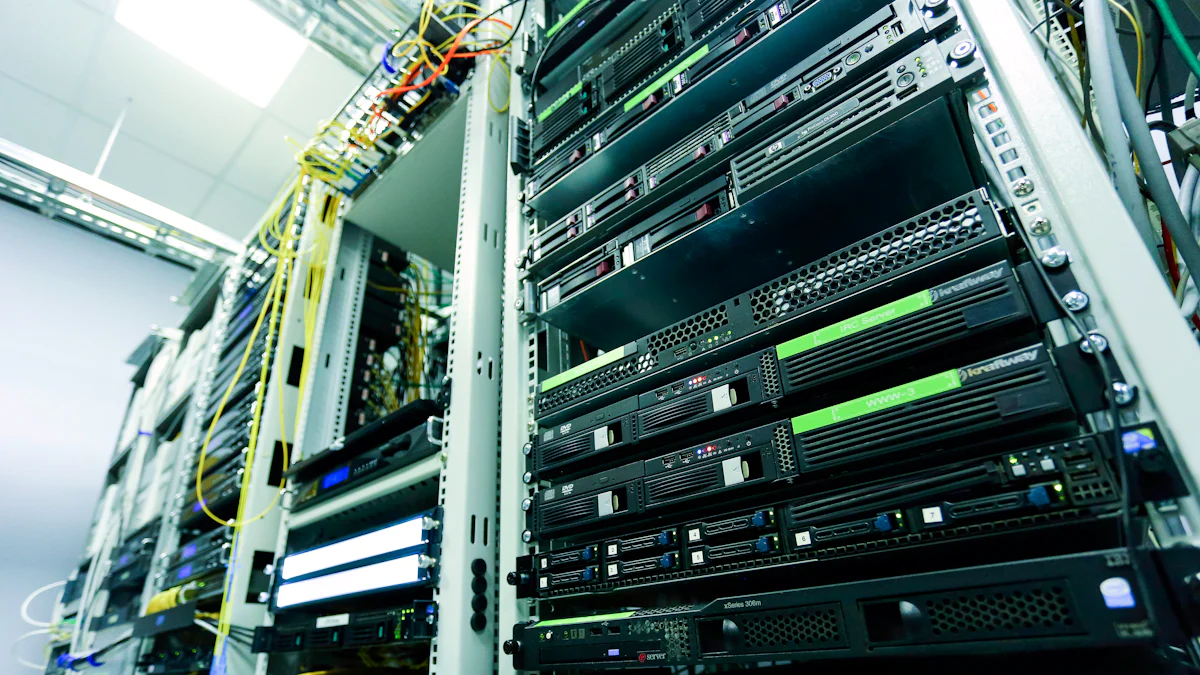
You can make a real difference in reducing your network’s environmental impact by choosing integrated telecom rectifier and energy storage systems. High-efficiency rectifiers, especially those reaching 98% efficiency, cut energy waste and lower your electricity use. When you use advanced controllers like MPPT (Maximum Power Point Tracking), you can reduce CO₂ emissions by up to 70%. Solar-powered telecom sites show a 55% drop in greenhouse gas emissions. These improvements help you meet strict environmental standards and support your company’s sustainability goals.
Here’s how integrated systems impact your carbon footprint:
Impact Description | Measurable Effect |
|---|---|
Energy Efficiency | ≥98% efficiency reduces energy waste |
Operational Cost Savings | Over $7,000 savings per year per 1000A |
Reduction in CO₂ Emissions | Up to 70% reduction with MPPT controllers |
Compliance with Environmental Standards | Supports sustainability goals |
Reduction in Greenhouse Gas Emissions | 55% reduction for solar-powered sites |
Potential for 58% reduction with 5G growth | Significant impact as networks expand |
You also gain more flexibility by supporting multiple battery chemistries. For example, sodium-ion and solid-state batteries use fewer rare materials and have a smaller carbon footprint. Lithium-sulfur batteries use abundant sulfur, which lowers production costs and avoids ethical concerns. Cobalt-free lithium-ion batteries offer safety and stability at high temperatures.
Enhancing Network Resilience
You can keep your network running during power disruptions by integrating energy storage with your telecom rectifier system. These systems provide backup power when the grid fails. They help your network recover quickly and keep critical services online. Energy storage can operate in islanded mode, which means your network stays powered even if the main supply is lost. This feature stabilizes your grid and balances supply and demand during sudden changes.
As the telecom industry grows, you will see more investment in energy storage. For example, a Finnish telecom company received over $4 million to add distributed energy storage, boosting capacity and reliability. This trend shows that economic sustainability and reliable power supply are becoming top priorities for telecom operators worldwide.
You can prepare your network for the future by adopting these advanced solutions. You will lower your carbon footprint, save money, and ensure your network stays resilient as technology evolves.
You gain many advantages when you integrate telecom rectifier systems with energy storage. The table below shows how you improve efficiency, reduce costs, and support sustainability:
Benefit | Description |
|---|---|
Efficiency | Energy storage reduces peak power demand and optimizes energy use. |
Cost Reduction | You avoid high demand charges and shift energy use to cheaper times. |
Enhanced Operational Capabilities | You activate idle assets and create new revenue streams. |
Sustainability | You support green energy and join energy trading markets. |
Supporting multiple battery chemistries increases reliability and lowers costs. You can balance power, operate efficiently, and keep your network stable. ESTEL helps you achieve these goals with flexible, high-quality solutions.
Next steps for you:
Focus on upgrades that deliver clear business value.
Plan for future growth and flexibility.
Address budget limits by prioritizing essential changes.
Choose equipment that matches your network’s needs.
FAQ
What battery types can you connect to ESTEL’s Telecom Rectifier System?
You can connect lithium-ion, lead-acid, and flow batteries. The system supports multiple chemistries, giving you flexibility for different backup needs and future upgrades.
How does modular design help you scale your telecom power system?
You add or remove modules based on your network’s growth. This design lets you expand power capacity without replacing the entire system. You save time and money.
Can you monitor your energy storage and rectifier system remotely?
Yes, you use centralized dashboards for real-time monitoring. Remote access lets you spot issues quickly and manage maintenance from anywhere.
What efficiency rate does ESTEL’s Telecom Rectifier System offer?
You get efficiency rates exceeding 96%. High efficiency reduces energy waste and lowers your operating costs.
See Also
Telecom Cabinets Powered By Photovoltaic Energy Storage Solutions
Telecom Cabinets Utilizing Grid-Connected Inverter And Battery Systems
The Advantages Of Lithium Batteries Over Other Options In Telecom
Storage Battery Solutions For ESTEL Telecom Cabinet Applications
Calculating Power Systems And Battery Needs For Telecom Cabinets
CALL US DIRECTLY
86-13752765943
3A-8, SHUIWAN 1979 SQUARE (PHASE II), NO.111, TAIZI ROAD,SHUIWAN COMMUNITY, ZHAOSHANG STREET, NANSHAN DISTRICT, SHENZHEN, GUANGDONG, CHINA
