ETSI GR-487 UL compliance gaps in telecom rectifier systems

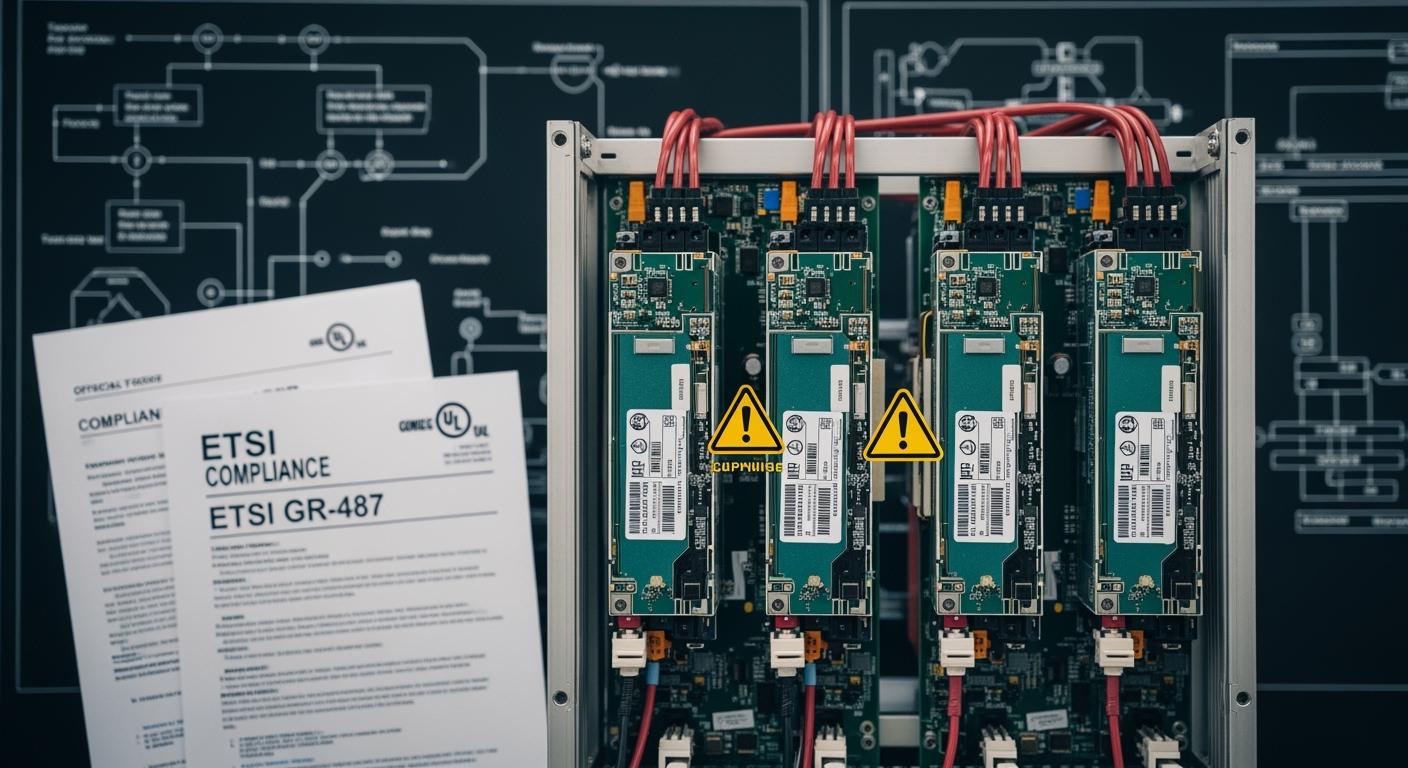
You face significant compliance gaps when working with ETSI GR-487 and UL standards in the Telecom Rectifier System. These differences affect how you design, test, and certify your products. Manufacturers like ESTEL must pay close attention to these gaps to avoid costly delays or safety risks. You should always consider the practical challenges and dangers that come with non-compliance.
Key Takeaways
Understand the differences between ETSI GR-487 and UL standards. ETSI focuses on environmental durability, while UL emphasizes electrical safety.
Ensure your Telecom Rectifier System meets both ETSI and UL requirements. This dual compliance protects your equipment and enhances reliability.
Conduct thorough testing for environmental conditions and electrical hazards. This practice helps prevent failures and ensures stable operation.
Keep all compliance documentation organized and up to date. Proper records support audits and facilitate market access.
Regularly review and update your compliance strategies. Staying informed about changes in standards helps avoid costly redesigns.
ETSI GR-487 and UL Standards Overview
ETSI GR-487 requirements for outdoor telecom equipment
You need to understand ETSI GR-487 if you work with outdoor telecom equipment. This standard sets strict requirements for environmental durability and operational reliability. ETSI GR-487 ensures that your equipment, such as the Telecom Rectifier System from ESTEL, can withstand harsh outdoor conditions. You must consider factors like rain, snow, wind, ice, salt spray, and sand storms. The standard also covers temperature ranges, humidity, vibration resistance, and installation criteria.
Here is a comparison of ETSI GR-487 and UL standards for key requirements:
Requirement Type | ETSI GR-487 Details | UL Standards Focus |
|---|---|---|
Climatic Conditions | Withstand rain, snow, sleet, high winds, ice, salt spray, sand storms | Electrical safety and performance |
Temperature Range | Operate from -40°C to 46°C with solar loading | Reliable operation under electrical hazards |
Humidity Levels | Function in humidity from below 10% to 100% | Prevent electrical hazards |
Vibration Resistance | Resist local environmental loads without malfunction | Not specifically addressed |
Installation | Meet performance criteria when installed as specified | Compliance documentation required |
Condensation | Prevent condensation in 5% to 95% relative humidity | Not specifically addressed |
ESTEL designs its Telecom Rectifier System and Telecom Power System to meet these environmental demands, ensuring reliable performance in challenging locations.
UL safety standards for telecom rectifier systems
UL standards focus on electrical safety and product certification. You must ensure that your Telecom Rectifier System meets requirements for surge protection, lightning resistance, and voltage fluctuation control. UL standards include certifications like NEBS Level 3, CSA/UL, VDE, GR-3108, and the CE Mark. IEC EN 62368-1 is the main safety standard for telecom converters. This standard helps protect sensitive equipment and guarantees stable energy delivery.
Certified power electronics converters protect against surge, lightning, and voltage fluctuations.
UL certification ensures reliable protection and stable operation for telecom systems.
Compliance with IEC EN 62368-1 is essential for safe and efficient telecom power solutions.
Comparing compliance criteria
You will notice clear differences between ETSI GR-487 and UL standards. ETSI GR-487 emphasizes environmental and mechanical resilience, while UL standards prioritize electrical safety and certification. ESTEL’s Telecom Rectifier System must meet both sets of criteria to perform reliably in outdoor telecom sites.
You can see how ETSI GR-487 divides environments into classes:
Class | Description | Temperature Range | Humidity Conditions |
|---|---|---|---|
Class 2 | Harsh Protected Environment | -40°C to 65°C | Partially controlled, with stresses from salt fog, vibration |
Class 3 | Controlled Environment | -40°C to 70°C | Controlled humidity, designed for specific operational conditions |
Class 4 | Exposed Environment | Uncontrolled | Uncontrolled temperature and humidity, exposed to elements like rain and salt fog |
You must evaluate both standards when selecting or designing a Telecom Rectifier System. This approach helps you achieve reliable operation and compliance in every deployment.
Compliance Gaps in Telecom Rectifier System
Electrical safety differences
You must pay close attention to electrical safety when comparing ETSI GR-487 and UL standards. ETSI GR-487 focuses on the ability of your system to operate in harsh outdoor environments. UL standards emphasize electrical safety, including surge protection, insulation, and grounding. You will find that UL requires strict testing for electrical hazards, such as short circuits and overcurrent events. ETSI GR-487 does not always cover these electrical risks in the same way.
ESTEL’s Telecom Rectifier System uses advanced surge protection and grounding features. These features help you meet UL requirements for electrical safety. The system’s modular design also supports easy maintenance, which reduces the risk of electrical accidents during service. You should always check that your system meets both ETSI and UL electrical safety criteria before deployment.
Environmental and mechanical testing gaps
You will notice clear differences in environmental and mechanical testing between ETSI GR-487 and UL standards. ETSI GR-487 requires your equipment to withstand extreme weather, temperature swings, and high humidity. UL standards focus more on electrical performance and less on environmental stress.
If you want your Telecom Rectifier System to perform reliably outdoors, you must test it for:
High humidity and temperature extremes, which can damage internal components and reduce output stability.
Moisture and overheating, which can cause failures if not properly managed.
Voltage and current stress, along with temperature and humidity assessments, to confirm reliability and prevent damage.
Physical and electrical threats, which modern telecom cabinets help prevent, reducing the risk of premature failure.
ESTEL designs its systems to pass triple stress testing. This process identifies weak points and reinforces system durability. You can trust that robust environmental testing will help your system deliver stable power, even in harsh conditions.
Fire and flammability standards
You must consider fire and flammability standards when selecting a rectifier system. UL standards require strict testing for fire resistance and flammability of materials. ETSI GR-487 addresses fire safety but may not use the same test methods or criteria as UL.
ESTEL uses high-quality materials in its Telecom Rectifier System. These materials meet international fire safety standards. You should verify that your system passes both ETSI and UL fire tests to ensure maximum safety at your site.
Certification and documentation variations
You will find differences in certification and documentation between ETSI GR-487 and UL standards. UL certification requires detailed documentation, including test reports and compliance records. ETSI GR-487 focuses more on performance in the field and less on paperwork.
ESTEL provides clear documentation for its Telecom Rectifier System. This includes installation guides, test results, and compliance certificates. You should keep all records up to date to support audits and market access. Proper documentation helps you prove compliance and avoid delays during deployment.
Impact on Product Design and Deployment
Design challenges for dual compliance
You face unique challenges when you design products for dual compliance. ETSI GR-487 and UL standards require different approaches to material selection and component certification. You must choose materials that meet both environmental durability and electrical safety requirements. This process often increases complexity and cost. You need to ensure that every component in your Telecom Rectifier System has the necessary certifications. This guarantees long-term reliability and protects your system from regulatory issues. You can see how dual compliance affects material selection in the table below:
Requirement | Explanation |
|---|---|
Certified materials | Ensure reliability and regulatory protection |
Compliance with IEC 62368 and TIA-569-C | Guarantee safe operation and global interoperability |
Certification and market access for ESTEL
You must secure certifications from both ETSI and UL to access global markets. Each certification process involves rigorous testing and documentation. You need to maintain clear records and certificates for every product. This helps you prove compliance during audits and supports smooth deployment. Dual compliance opens doors to international markets and builds trust with telecom operators. You can expand your business and reach more customers when you meet both standards.
Tip: Keep your certification documents organized and updated. This practice speeds up market entry and reduces delays during deployment.
Operational and safety risks
You must address operational and safety risks that arise from compliance gaps. Failures in telecom cabinets often result from excessive heat, unstable power, and inconsistent maintenance. These risks increase when you overlook dual compliance. A flash burn incident at a Central Valley firm showed that gaps in hazard analysis can lead to safety incidents, even when regulations are met. You need to connect battery work and rectifier maintenance to prevent such failures.
Excessive heat can damage components.
Unstable power may cause outages.
Inconsistent maintenance increases risk.
You reduce operational failures and safety incidents when you follow both ETSI and UL standards. Dual compliance helps you protect your equipment and ensure reliable service.
Best Practices for Dual Compliance
Achieving ETSI GR-487 and UL compliance
You need a clear strategy to achieve dual compliance with ETSI GR-487 and UL standards. Start by reviewing both sets of requirements for every product you design. Select materials that meet fire resistance and environmental durability standards. Test your systems for electrical safety, including surge protection and grounding. Document every step of your process. Keep installation guides, test results, and certificates organized for easy access during audits.
You can follow these steps to streamline compliance:
Identify all relevant standards before starting product development.
Choose certified components that meet both environmental and electrical safety criteria.
Conduct thorough testing for temperature, humidity, and electrical hazards.
Maintain detailed records of all tests and certifications.
Train your team on the latest compliance requirements.
Tip: Regularly update your compliance procedures to match changes in ETSI and UL standards. This practice helps you avoid costly redesigns and ensures your products remain market-ready.
You see clear compliance gaps between ETSI GR-487 and UL standards. These gaps affect safety, certification, and deployment of telecom rectifier systems. Dual compliance helps you protect your network, gain regulatory approval, and improve operational efficiency. You can follow these steps:
Review standards regularly.
Use certified materials.
Keep documentation organized.
Collaborate with industry partners.
Benefit | Description |
|---|---|
Safety | Protects networks from hazards. |
Regulatory Approval | Simplifies approval processes. |
Operational Efficiency | Improves performance and monitoring. |
Cost Reduction | Lowers energy costs and emissions. |
Network Scalability | Supports easy network expansion. |
You build a safer and more reliable telecom infrastructure when you address compliance gaps and work together.
FAQ
What is the main difference between ETSI GR-487 and UL standards?
You will find that ETSI GR-487 focuses on environmental durability for outdoor telecom equipment. UL standards emphasize electrical safety and fire protection. You need to meet both to ensure reliable and safe telecom rectifier systems.
Why do you need dual compliance for telecom rectifier systems?
You need dual compliance to access global markets and protect your network. Meeting both ETSI and UL standards helps you avoid safety risks, pass audits, and ensure your equipment works in harsh environments.
How can you ensure your rectifier system meets both standards?
You should select certified materials, test for both electrical and environmental hazards, and keep detailed documentation. Regularly review updates to both standards to maintain compliance.
What happens if you ignore compliance gaps?
You may face deployment delays.
You risk equipment failure or safety incidents.
You could lose market access or face regulatory penalties.
Always address compliance gaps to protect your business and network.
See Also
A Thorough Overview of Telecom Cabinet Battery Risk Assessment
Essential Requirements for Communication Equipment in Telecom Cabinets
Ensuring Consistent Power Supply for Telecom Cabinet Operations
A Guide to Global Standards for Communication Power Supplies
Design Specifications for ESTEL's Telecommunication Cabinet Structures
CALL US DIRECTLY
86-13752765943
3A-8, SHUIWAN 1979 SQUARE (PHASE II), NO.111, TAIZI ROAD,SHUIWAN COMMUNITY, ZHAOSHANG STREET, NANSHAN DISTRICT, SHENZHEN, GUANGDONG, CHINA
