Wide Temperature Range (-40℃~75℃) Adapted Telecom Rectifier System for Plateau/Extreme Cold Region Deployment

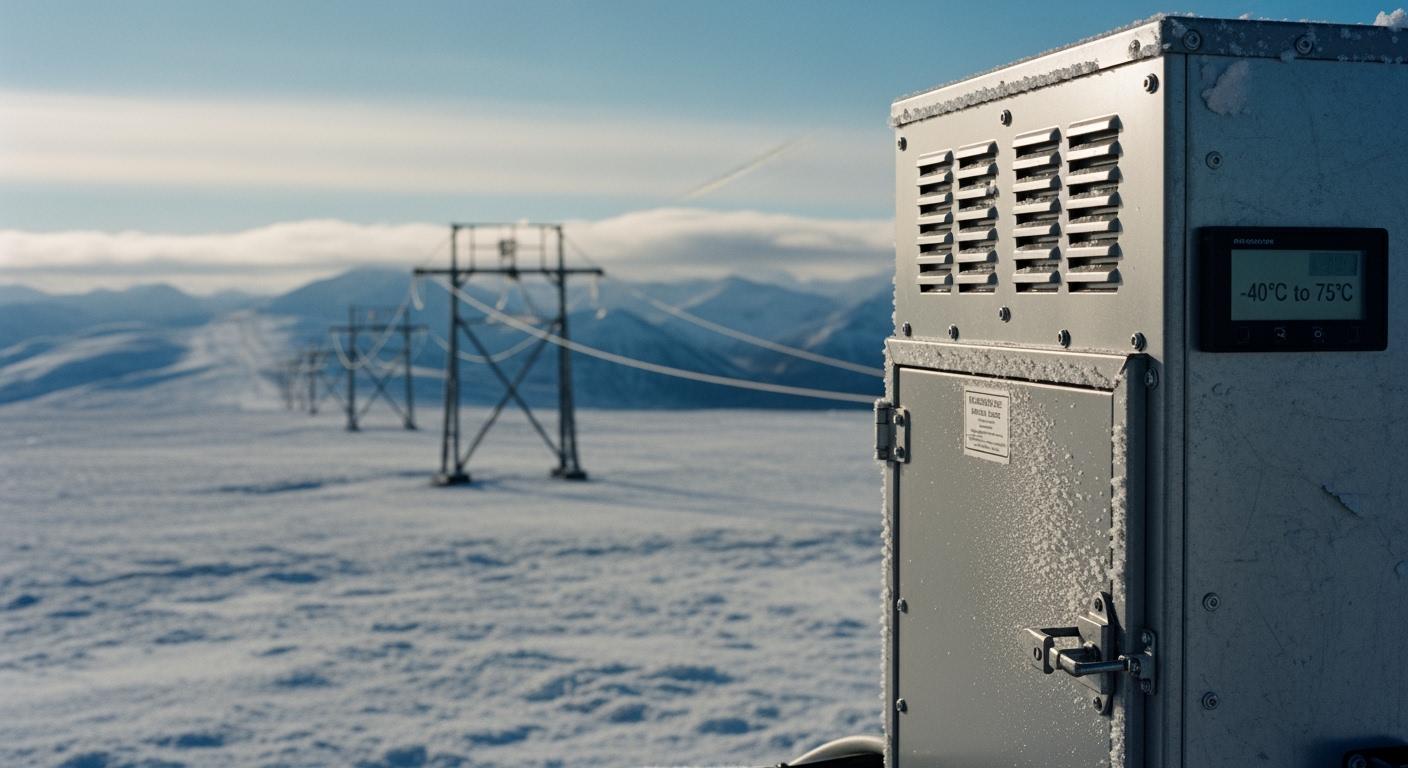
You face tough challenges when you operate telecom networks in extreme cold or on high plateaus. Equipment must withstand wide temperature swings, high humidity, and harsh weather. If you use systems not built for these conditions, you risk service interruptions and higher maintenance costs.
High temperatures can cause overheating and reduce efficiency.
Freezing weather leads to malfunctions and condensation damage.
ESTEL’s Telecom Rectifier System gives you a reliable solution with advanced thermal management, modular expansion, and energy efficiency over 96%. You gain stable performance, lower operational costs, and confidence that your network meets international standards.
Key Takeaways
Choose telecom equipment designed for extreme conditions to avoid service interruptions and high maintenance costs.
The Telecom Rectifier System offers advanced thermal management, ensuring reliable performance from -40℃ to 75℃.
A modular design allows for easy upgrades and maintenance without downtime, enhancing operational efficiency.
High efficiency ratings of over 96% lead to significant energy savings and lower operational costs.
Select systems that meet international safety standards to ensure durability and reliability in harsh environments.
Challenges in Extreme Cold and Plateau Regions

Environmental and Operational Issues
You face many obstacles when you deploy telecom equipment in extreme cold or high-altitude areas. Low temperatures can freeze sensitive components and cause batteries to lose capacity. Snow, ice, and strong winds put extra stress on outdoor cabinets and power systems. High humidity and rapid temperature changes can lead to condensation inside equipment, which may cause short circuits or corrosion. In plateau regions, the thin air reduces cooling efficiency, making it harder for systems to manage heat. You must also consider that strong wind corridors require reinforced structures to keep equipment stable and safe.
Tip: Always check for weatherproofing and insulation when choosing telecom equipment for harsh climates.
Impact on Conventional Power Systems
Traditional power systems often fail to perform well in these tough environments. You may notice frequent malfunctions, reduced efficiency, or even complete system shutdowns. High-altitude sites can lower electrical performance, while extreme cold can make standard batteries and electronics unreliable. Conventional systems usually lack the specialized design needed to handle these stresses.
The table below shows some common technical challenges for conventional power systems in extreme regions:
Technical Challenge | Description |
|---|---|
High-altitude sites affecting electrical performance | High-altitude environments can lead to reduced electrical efficiency in power systems. |
Climate-adapted equipment selection | The need for specialized equipment to withstand extreme conditions. |
Strong wind corridors requiring reinforced structural design | High winds necessitate stronger designs to ensure stability and performance. |
You need a solution that can handle these unique demands. The Telecom Rectifier System from ESTEL offers advanced features that help you overcome these challenges and keep your network running smoothly.
Telecom Rectifier System Features for Wide Temperature Range
Advanced Thermal Management
You need reliable power even when temperatures drop to -40℃ or rise to 75℃. The Telecom Rectifier System uses advanced thermal management to keep your network running in these extreme conditions. Intelligent cooling methods, including AI-driven thermal control, adjust system performance to match the environment. This technology prevents overheating and protects sensitive components from freezing.
The table below highlights the main thermal management features:
Feature | Description |
|---|---|
Thermal Management | Advanced cooling methods, including AI-driven thermal control |
Temperature Performance | Works in -40ºC to +75ºC, with no derating below 55ºC |
Laboratory tests at the high-voltage laboratory of EIMV confirm that the Telecom Rectifier System meets all key requirements for thermal management. These results show that you can trust the system to deliver stable power, even during rapid temperature changes or harsh weather.
Note: Effective thermal management reduces the risk of condensation, which can cause short circuits or corrosion inside your equipment.
Modular and Efficient Design
You want a system that grows with your network and saves energy. The modular design of the Telecom Rectifier System lets you add capacity as your needs change. You can swap modules without shutting down your network, which means less downtime and easier maintenance. High conversion efficiency ensures that you get more usable power with less energy loss.
Here is a comparison of key design features:
Design Feature | Description |
|---|---|
High Conversion Efficiency | Achieves a 98% conversion rate, ensuring reliable power as network demands grow. |
Modular Design | Allows for easy capacity addition without system replacement, facilitating scalability. |
Hot-Swappable Modules | Enables maintenance and upgrades without network downtime, enhancing operational efficiency. |
Advanced Materials | Utilizes silicon carbide (SiC) and gallium nitride (GaN) for higher voltage and temperature operation, reducing energy loss. |
Intelligent Load Balancing | Maintains stable power delivery even with fluctuating demand, improving reliability. |
AI and IoT Integration | Provides predictive maintenance and real-time monitoring, minimizing downtime and enhancing performance. |
You can see how the Telecom Rectifier System outperforms industry standards in the chart below:
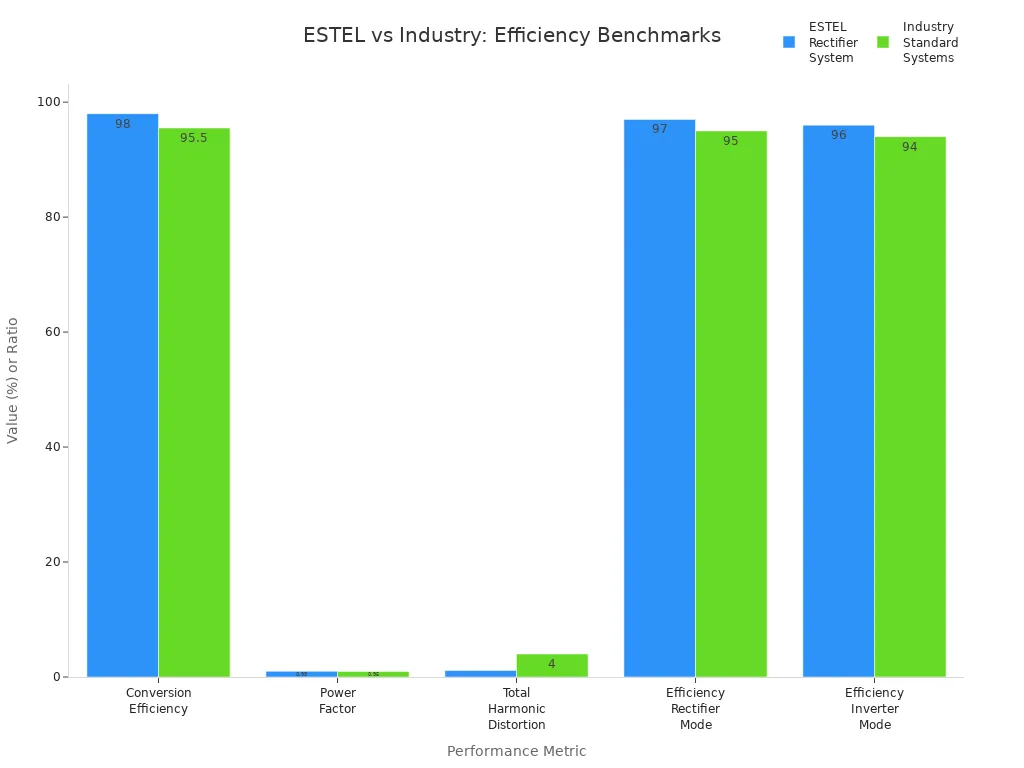
The table below shows how the system compares to typical industry benchmarks:
Metric | ESTEL’s Rectifier System | Industry Standard Systems |
|---|---|---|
Conversion Efficiency | 98% | 95–96% |
Power Factor | 0.99 | 0.95 |
Total Harmonic Distortion | 1.12% | 3–5% |
Efficiency in Rectifier Mode | >97% | 95% |
Efficiency in Inverter Mode | >96% | 94% |
You benefit from lower energy costs and a system that adapts to your needs. The modular approach also means you can maintain and upgrade your power system without interrupting service.
Reliability and Safety in Harsh Environments
You need equipment that works in the toughest conditions. The Telecom Rectifier System meets ETSI GR-487 standards for environmental durability and operational reliability. This means your system can handle rain, snow, wind, ice, salt spray, and sand storms. The system also complies with UL standards for electrical safety and fire protection.
You get extra peace of mind with these built-in protection mechanisms:
The system operates in extreme temperatures from -25°C to +55°C.
Advanced protection guards against voltage spikes and short circuits.
The design ensures uninterrupted power supply, even in high-altitude or cold environments.
Rigorous testing for high humidity, temperature extremes, moisture, and voltage stress confirms the reliability of the Telecom Rectifier System. You can trust your network to stay online, no matter the weather or location.
Tip: Choosing a system with proven safety certifications and robust protection features helps you avoid costly outages and repairs.
Deployment Advantages with ESTEL Solutions
Real-World Application Scenarios
You can see the impact of ESTEL’s solutions in some of the world’s toughest environments. Telecom operators have deployed these systems on remote plateaus, in freezing mountain regions, and across rural areas with limited access. Many customers report that the installation process is quick and easy. They appreciate the compact battery design, which saves space and lowers the structural load on towers. Remote monitoring features let you check battery health in real time, even from far away. During outages, networks with advanced energy storage experience 40% fewer service disruptions than those using traditional power sources. Solar-integrated energy storage systems help restore communication services 50% faster than diesel generators.
Customer Type | Key Benefit Experienced |
|---|---|
Mobile Operator | Increased uptime, reduced downtime |
Rural Provider | Reliable service in harsh climates |
Urban Network | Space-saving, fast recovery |
Maintenance and Longevity Benefits
You want a system that keeps your network running with less effort. ESTEL’s modular design means you can scale up or perform maintenance without shutting down your site. Customers report reduced maintenance costs and improved reliability. Monthly inspections help you spot corrosion or damage early. Quarterly tests check voltage and resistance. Predictive maintenance and smart monitoring features can reduce maintenance costs by up to 40%. A leading mobile operator in Southeast Asia reduced site visits by 38% after installing ESTEL’s smart monitoring. Mean time to repair dropped from 12 hours to just 4 hours, and annual O&M costs fell by $500,000.
Standards and Compliance
You need equipment that meets strict international standards. ESTEL’s Telecom Rectifier System complies with key certifications for safety and durability. The system meets IEC 60529 for dust and water protection, ETSI EN 300 019-2-4 for environmental testing, and ISO 9227 for corrosion resistance. These standards ensure your network stays reliable, even in extreme cold, high humidity, or dusty environments.
Standard | Description |
|---|---|
IEC 60529 | Protection against dust and water (IP Code) |
ETSI EN 300 019-2-4 | Environmental conditions and tests for telecom equipment |
ISO 9227 | Corrosion resistance, including salt spray tests |
Choosing ESTEL means you get a solution that saves money, reduces downtime, and keeps your network compliant with global standards.
Selecting and Implementing the Right System
Key Selection Criteria
You need to consider several factors when choosing a power solution for your telecom site. Start by looking at efficiency benchmarks. High-efficiency systems save energy and reduce costs over time. Cooling methods matter, too. Air cooling works for low to medium power needs, while liquid cooling fits high-power applications. Always match the cooling method to your environment for better reliability.
Environmental suitability is critical. Make sure the system can handle the temperature range and weather conditions at your site. System connectivity helps with real-time monitoring and future upgrades. You should also balance the initial price with long-term savings from energy efficiency and low maintenance. Regular inspections and timely replacements will extend the lifespan of your equipment.
Description | Decision-Making Insight | |
|---|---|---|
Efficiency Benchmarks | Advanced components reduce losses and improve efficiency. | Select rectifiers with high efficiency to save energy. |
Cooling Methods | Air or liquid cooling based on power needs. | Match cooling to environment for reliability. |
Environmental Suitability | Wide temperature range and protective enclosures. | Align specs with site conditions. |
System Connectivity | Real-time monitoring and modular design. | Choose advanced connectivity for expansion. |
Cost Considerations | Balance price, efficiency, and maintenance. | Invest in reliable rectifiers to lower total cost. |
Maintenance & Longevity | Regular inspection and replacement. | Plan maintenance for consistent performance. |
You should also check for compatibility and scalability. A modular design supports easy expansion as your network grows. Energy efficiency ensures optimal power use, which is important for modern telecom demands. Future network support means the system can adapt to new technologies like 5G.
Key Aspect | Description |
|---|---|
Modular Design | Supports easy expansion in network setups, allowing for scalability. |
Energy Efficiency | Ensures optimal power usage, crucial for modern telecom demands. |
Future Network Support | Adapts to current and future network requirements, including 5G. |
Best Practices for Installation
You may face challenges during installation, especially in extreme environments. Freezing temperatures can damage concrete foundations. Heavy rainfall can weaken surfaces. Extreme heat may cause cracks or premature drying. You can avoid these issues by selecting the right materials, planning ahead, and allocating resources efficiently.
Use weather-resistant materials for foundations and enclosures.
Schedule installation during moderate weather when possible.
Train your team to handle site-specific risks, such as ice or high winds.
Set up real-time monitoring to detect problems early.
Plan for regular maintenance checks to keep the system running smoothly.
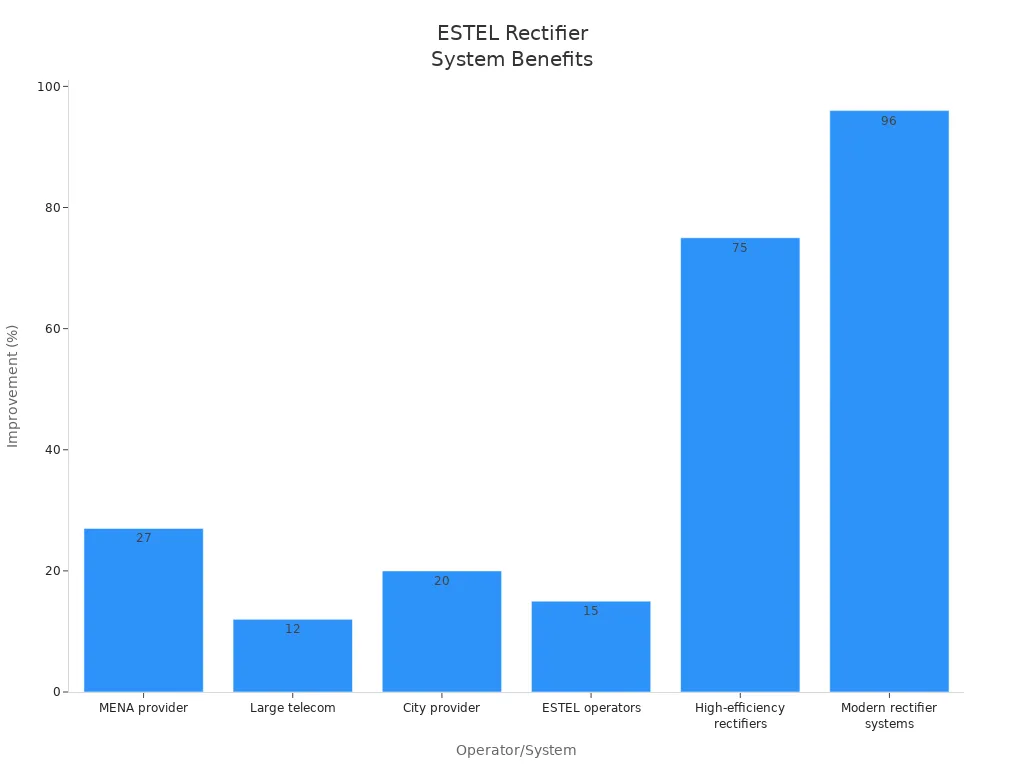
When you implement the Telecom Rectifier System, you can expect major improvements in operational efficiency. Many operators report up to 75% less power loss compared to older models. Energy savings can reach 20%, and operational costs may drop by 25-35%. Upgrading to near 98% efficiency can save thousands of kilowatt-hours each year, which lowers your electricity bills and reduces your carbon footprint.
Tip: Careful planning and regular maintenance help you get the most value from your investment and keep your network reliable in any environment.
You can trust the Telecom Rectifier System to deliver reliable, efficient power in the harshest conditions. Operators worldwide have installed over 2.4 million modules, supporting 500,000 systems with an average efficiency of 97%.
Key Finding | Description |
|---|---|
High Efficiency Ratings | Modern rectifiers achieve over 96% efficiency, reducing energy waste. |
Robust Thermal Management | Advanced cooling ensures stable operation in extreme temperatures. |
Proven Reliability | Rigorous testing confirms durability and performance in real-world settings. |
"ESTEL's rectifier modules have transformed our operations. The energy savings and reliability are unmatched."
To get started, create a technical checklist, schedule staff training, and plan upgrades during low network activity. You will see lower costs, fewer maintenance needs, and scalable growth for your network.
FAQ
What temperature range does the ESTEL Telecom Rectifier System support?
You can operate the system reliably from -40℃ to 75℃. This wide range ensures stable performance in both extreme cold and high heat, making it ideal for plateau and harsh climate deployments.
How does the modular design benefit your network?
You can add or replace modules without shutting down your site. This feature reduces downtime, simplifies maintenance, and allows your network to grow as demand increases.
Is the system compatible with standard telecom racks?
Yes, you can install the system in standard 19-inch racks. This compatibility makes integration with your existing infrastructure easy and efficient.
What certifications does the system meet?
The system meets IEC 60529, ETSI EN 300 019-2-4, and ISO 9227 standards. You get proven protection against dust, water, and corrosion, ensuring long-term reliability.
How does the system help reduce operational costs?
You benefit from high efficiency rates over 96%. This reduces energy loss and lowers electricity bills. Predictive maintenance features also cut down on site visits and repairs.
See Also
Outdoor Communication Solutions: Telecom Cabinet Air Conditioning Explained
Tips for Maintaining Ideal Temperature in Outdoor Telecom Cabinets
Temperature Compensation in Telecom Cabinets: More Than Just Temperature
Selecting the Most Effective Cooling Solution for ESTEL Cabinets
Exploring Various Cooling Techniques for Telecom Cabinet Applications
CALL US DIRECTLY
86-13752765943
3A-8, SHUIWAN 1979 SQUARE (PHASE II), NO.111, TAIZI ROAD,SHUIWAN COMMUNITY, ZHAOSHANG STREET, NANSHAN DISTRICT, SHENZHEN, GUANGDONG, CHINA
