Light-Load High Efficiency (20% Load Efficiency >92%) Telecom Rectifier System for Energy Saving During Low-Traffic Periods

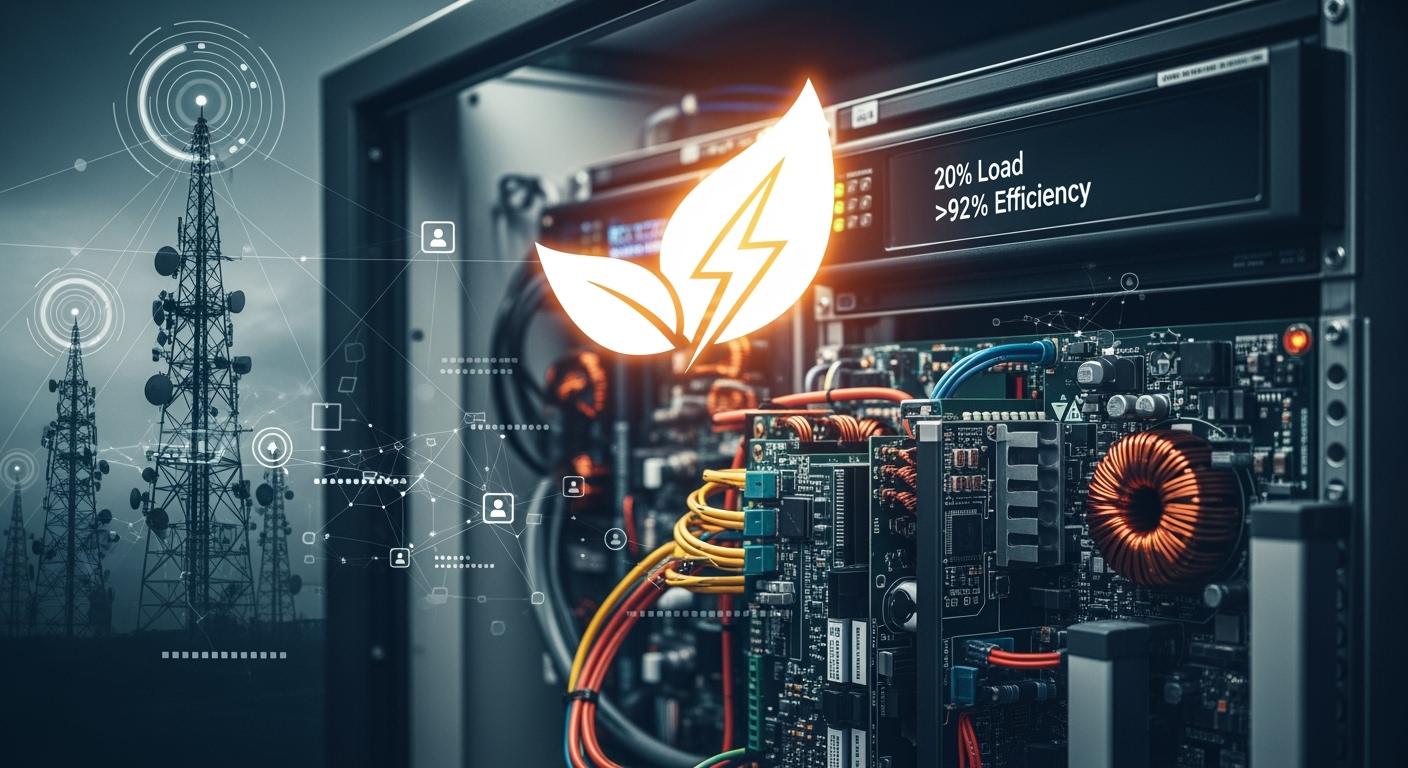
You need high efficiency at light loads because telecom networks often run during low-traffic periods. Around 70% of base stations handle only 20% of the traffic, so most energy is used to keep systems active rather than serving users. Improving light-load efficiency can lead to energy savings of up to 22%, especially if you consider eight hours of low traffic each day. Upgrading your Telecom Rectifier System from 92% to 96% efficiency saves thousands of kilowatt-hours annually. ESTEL delivers solutions that help you reduce waste and cut operational costs.
Key Takeaways
High-efficiency telecom rectifiers can save up to 22% energy during low-traffic periods, significantly lowering operational costs.
Upgrading to a rectifier system with over 96% efficiency reduces energy waste and extends equipment lifespan, leading to long-term savings.
Modular designs allow for easy scaling and maintenance, enabling telecom operators to adapt to changing demands without service interruptions.
Implementing advanced technologies like AI-driven controls enhances system performance, ensuring precise voltage regulation and reduced energy loss.
Regular monitoring and maintenance are crucial for sustaining high efficiency and preventing unexpected failures in telecom power systems.
Light-Load Efficiency Challenges
Traditional Rectifier Limitations
You may notice that traditional rectifiers struggle to maintain high efficiency when operating at low loads. The efficiency curve drops sharply as the load decreases. This means that when your network traffic is low, your rectifier wastes more energy. Several technical challenges make this problem worse:
The efficiency curve of rectifiers drops significantly at lower loads.
High power density and reliability requirements make it harder to keep efficiency high.
Thermal management becomes more complex, which further reduces efficiency.
These challenges mean that your Telecom Rectifier System may not perform as well as you expect during off-peak hours. You need to consider these limitations if you want to reduce energy waste and operational costs.
Impact on Telecom Energy Use
The inefficiency of traditional rectifiers at low loads affects your entire telecom facility. You can see the main impacts in the table below:
Issue | Impact on Telecom Facilities |
|---|---|
Load imbalance | Increases outage probability |
Rectifier inefficiency | Shortens equipment lifespan and raises total cost of ownership (TCO) |
Insufficient visibility | Leads to higher operational risks and costs |
You face higher risks and costs when your rectifiers do not operate efficiently. Load imbalance can cause unexpected outages. Inefficient rectifiers wear out faster and cost more to maintain. Poor visibility into system performance increases your operational risks. By understanding these impacts, you can see why upgrading to a high-efficiency Telecom Rectifier System is important for your network.
High-Efficiency Telecom Rectifier System Features
Advanced Topologies and Digital Control
You can achieve high efficiency at light loads by using advanced circuit topologies and digital control methods. Modern Telecom Rectifier System designs use innovative technologies like half-bridge ICs, inductor-less converters, and AI-driven control systems. These technologies help you reduce energy loss, especially when your network operates below full capacity.
Digital control systems analyze real-time data and adjust power conversion instantly. This means you get precise voltage regulation and dynamic voltage scaling. As a result, your system can tune its power output to match the actual demand, which saves energy and reduces operating costs. AI-driven controls also improve reliability by predicting and responding to changes in load.
Here’s how these advancements impact performance:
Performance Metric | Improvement / Value |
|---|---|
Current Density | |
Transmission Loss Reduction | Up to 85% reduction |
Voltage Regulation | Improved precision |
Dynamic Voltage Scaling | Real-time power tuning |
Power Delivery System Size | Smaller, integrated silicon chips |
Power Delivery Efficiency | Enhanced through reduced losses |
You benefit from quick installation, flexible adaptation to changing power demands, and reduced downtime during repairs. These features make your Telecom Rectifier System more responsive and efficient, especially during low-traffic periods.
Modular Design and Scalability
A modular design gives you the flexibility to scale your power system as your network grows. You can add or remove modules based on your current needs, which helps you manage costs and energy use. Hot-swappable modules allow you to perform upgrades or maintenance without shutting down your network. This keeps your services running smoothly and reduces the risk of outages.
Key advantages of modular systems include:
Easy scaling and maintenance for varying load conditions.
Hot-swappable modules for uninterrupted service.
Lower energy costs due to high efficiency and reduced heat generation.
When you plan for future network expansion, modularity becomes even more valuable. You can quickly add new modules to support 5G or IoT growth. The table below shows how modularity supports your operations:
Advantage | Description |
|---|---|
Add or replace modules easily, reducing downtime and improving reliability. | |
Hot-Swappable Modules | Keep your network running during module changes. |
Plug-and-Play Scalability | Technicians can quickly adjust power as network demands change. |
This approach ensures your Telecom Rectifier System remains efficient and adaptable, no matter how your network evolves.
ESTEL’s Efficiency Innovations
ESTEL leads the way in high-efficiency rectifier technology. You get advanced rectifier topologies that push efficiency above 96%, even at light loads. ESTEL uses bridgeless totem-pole PFC designs to cut conduction losses and single inductor designs to boost power density. These innovations help you minimize energy loss and lower your operational costs.
ESTEL’s commitment to quality means every system undergoes:
Comprehensive functional testing for efficient AC to DC conversion.
Thermal performance checks to manage heat effectively.
Extreme condition stress testing to simulate real-world challenges.
Precision measurement with modern tools for accurate efficiency data.
Transparent reporting for clear documentation of results.
You can trust ESTEL to deliver a Telecom Rectifier System that matches or exceeds industry benchmarks. High efficiency means you save energy, reduce your carbon footprint, and keep your network reliable. ESTEL’s modular designs also make it easy for you to scale your power system as your needs change.
Tip: Choosing a high-efficiency, modular Telecom Rectifier System from ESTEL helps you future-proof your network and maximize energy savings during both peak and low-traffic periods.
Quantifying Energy and Cost Savings

Energy Savings at Low Load
You can see real savings when you use high-efficiency rectifiers during low-traffic periods. Many telecom networks operate at less than full capacity for much of the day. When you switch to a high-efficiency system, you reduce wasted energy and lower your electricity bills. For example, ESTEL’s advanced designs help you cut energy usage by up to 18.2% during off-peak hours. AI algorithms can even deactivate certain cells when traffic drops, which leads to even greater savings.
A 10% reduction in energy consumption can save millions of dollars each year for large telecom operators. The table below shows how energy savings translate into cost reductions over a typical year:
Evidence Type | Description | Impact on Costs |
|---|---|---|
Energy Savings | High-efficiency telecom rectifier systems | |
Case Study 1 | MENA region provider | 27% savings opportunity through resource optimization |
Case Study 2 | Operator renegotiating contracts | Reduced costs to match industry benchmarks |
Case Study 3 | Large telecom company | 12% cost reduction by consolidating services |
You benefit from lower operational costs and improved resource management. These savings make a big difference in your annual budget.
Case Study: ESTEL in Action
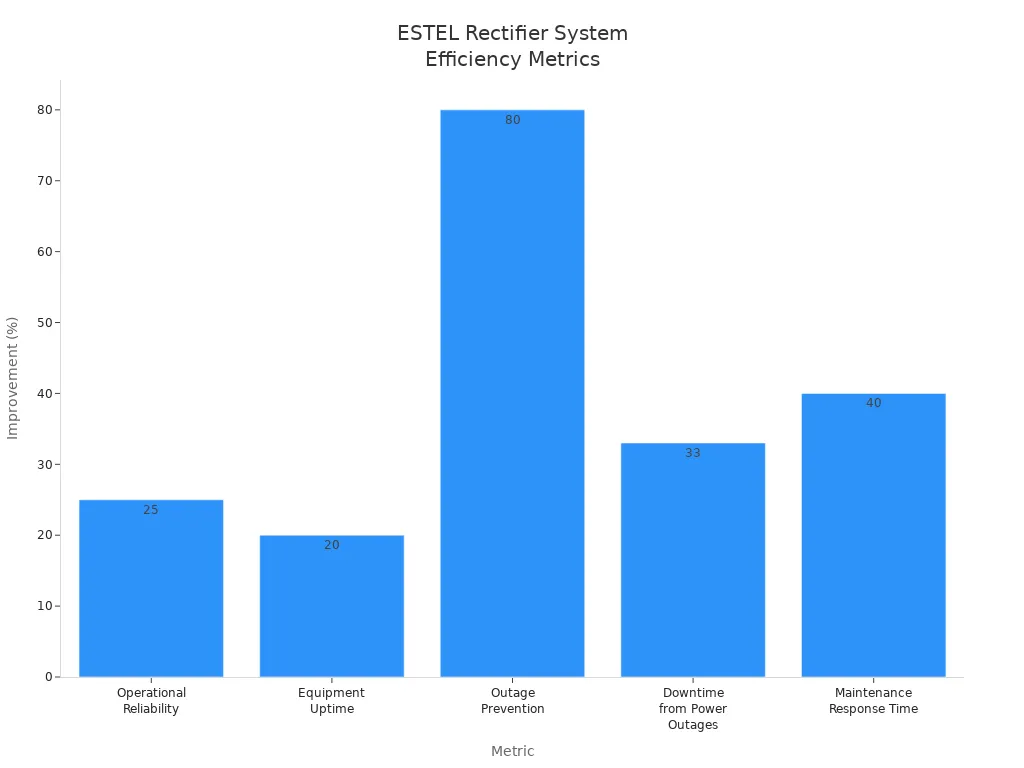
When you deploy ESTEL’s Telecom Rectifier System, you gain more than just energy savings. You also improve reliability and reduce downtime. The following table highlights the improvements seen in real-world deployments:
Metric | Improvement |
|---|---|
Operational Reliability | |
Equipment Uptime | 20% improvement |
Outage Prevention | 80% of outages prevented |
Downtime from Power Outages | 33% reduction |
Maintenance Response Time | 40% faster |
Predictive Analytics | Weeks in advance |
You can see these benefits in action:
A rural telecom operator in Southeast Asia reduced operational costs by 35% after switching to ESTEL’s hybrid power systems.
IBM achieved 30% energy savings in data centers by using ESTEL’s real-time monitoring.
The U.S. General Services Administration saved $13.5 million annually with smart PDUs from ESTEL.
These results show that you can achieve both financial and operational improvements by upgrading your power infrastructure.
Environmental and Operational Benefits
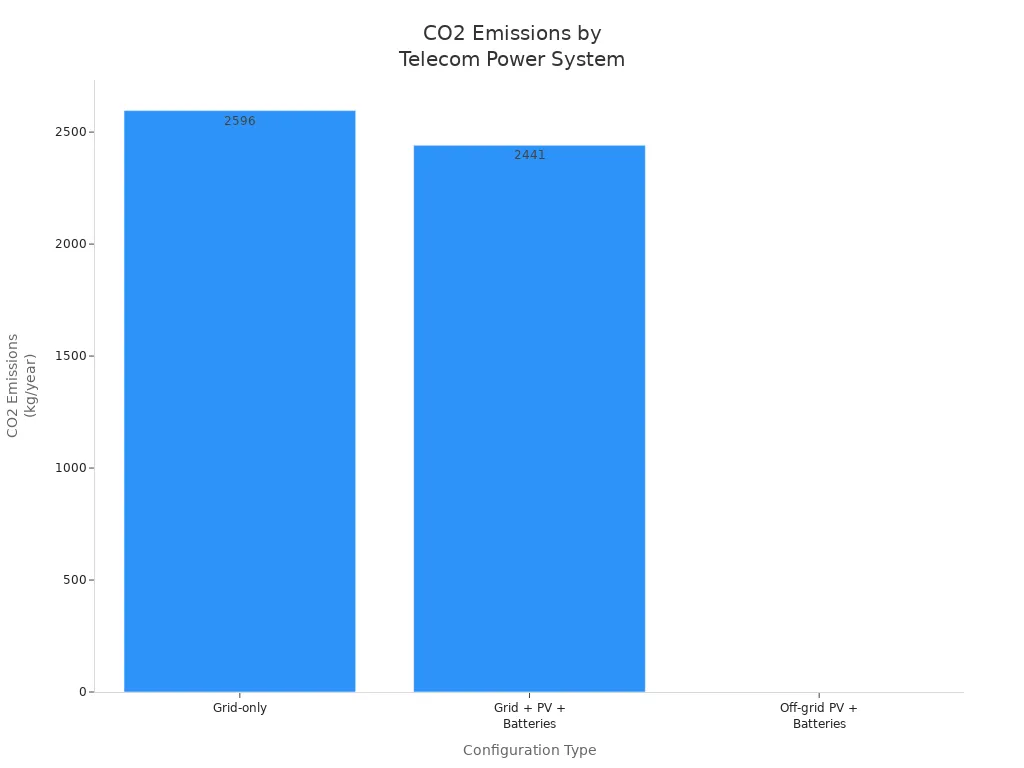
Switching to high-efficiency rectifiers does more than save money. You also help the environment by reducing CO2 emissions. The table below compares different power configurations and their environmental impact:
Configuration Type | CO2 Emissions (kg/year) | Renewable Fraction (%) | Energy Efficiency | Notes on Costs and Operation |
|---|---|---|---|---|
Grid-only | 2593 - 2599 | < 0.3 | Stable electricity | Baseline emissions, zero unmet loads |
Grid + PV + Batteries | 2441 | 6.1 | Improved | Reduced emissions, higher operational costs |
Off-grid PV + Batteries | 0 | 100 | Significantly improved | Zero emissions, higher net present cost |
Telecom operators using high-efficiency rectifiers can achieve significant reductions in CO2 emissions. One configuration demonstrated a lifecycle emission of only 531.7 tons of CO2 and a carbon emission rate of 17.9 gCO2/kWh. By choosing ESTEL’s certified systems, you also meet international environmental standards like IEC 60529, ETSI EN 300 019-2-4, and ISO 9227.
You gain additional operational benefits:
Benefit | Description |
|---|---|
Continuous Availability | Ensures systems remain operational even if individual components fail. |
Disaster Recovery | Protects against localized disruptions by replicating data across locations. |
Load Balancing | Improves performance by distributing workloads during peak usage. |
Reduced Downtime | Minimizes downtime through automatic failover between redundant components. |
Business Continuity | Maintains service levels during disruptions, protecting revenue and customer experience. |
You also reduce maintenance costs. Predictive maintenance features can lower costs by up to 40%. Field studies show a 35% drop in maintenance expenses, and remote monitoring can save up to 25% more. Many operators report a return on investment in as little as 18 months. Energy cost reductions range from 15% to 30%, and smart rectifier modules cut maintenance visits by up to 40%.
Note: High efficiency reduces energy waste, lowers carbon emissions, and supports your sustainability goals. ESTEL’s commitment to quality and compliance ensures you meet both operational and environmental targets.
Implementing ESTEL Power Solutions
Integration with Existing Infrastructure
You can integrate ESTEL Power Solutions into your current network with careful planning. Start by assessing your power needs. This helps you choose the right system capacity. Select solar panels and batteries that match your operational requirements. Make sure your system allows for future growth. You should also set up a maintenance routine to keep everything running smoothly.
Here are some best practices for integration:
Invest in intelligent monitoring tools for real-time data.
Use modular solar solutions that can expand with your network.
Combine solar energy with other power sources for flexibility.
You may face challenges like voltage regulation, environmental sensitivity, or compatibility with existing protocols. To address these, match rectifier specifications to your application and review technical datasheets. Advanced rectifiers with modular designs help you scale easily. Remote monitoring supports predictive maintenance and reduces downtime.
Monitoring and Maintenance
You need to monitor and maintain your power system to ensure long-term performance. Regular inspections and health checks help you spot issues early. Measure battery voltage and internal resistance to predict when replacements are needed. Keep temperatures stable and ensure good airflow to prevent overheating.
Follow these maintenance tips:
Check rectifier module outputs and control units often.
Keep components clean and dry.
Use IoT and data analytics for real-time monitoring and predictive maintenance.
Follow manufacturer guidelines for charging practices.
These steps help you maintain high efficiency and reduce unexpected failures.
Upgrade Steps for Telecom Operators
When you upgrade to ESTEL Power Solutions, follow a clear process. The table below outlines the main steps:
Key Upgrade Steps | Description |
|---|---|
Integration | ESTEL rectifier modules power macrocells and microcells, ensuring a stable DC supply. |
Scalability and Flexibility | Modular design allows easy expansion and adaptation to network changes. |
Energy Efficiency and Cost-Effectiveness | High efficiency over 91% lowers operational costs and reduces energy loss. |
You can also access expert guidance, detailed documentation, and training materials from ESTEL. Ongoing support helps you with setup, troubleshooting, and regular training sessions. This support ensures a smooth transition and reliable operation of your Telecom Rectifier System.
Tip: Plan for risk identification and mitigation during the upgrade. Monitor any remaining risks to keep your network secure and efficient.
You gain significant advantages by adopting light-load high-efficiency telecom rectifier systems from ESTEL. You lower your energy bills, reduce maintenance, and support sustainability goals. The table below shows how ESTEL solutions deliver measurable value:
Benefit | Result |
|---|---|
TCO Reduction | |
Maintenance Savings | Up to 25% savings |
Efficiency Improvement | Up to 98% efficiency, 75% less power loss |
Return on Investment | Payback in less than two years |
You can upgrade easily with reserved interfaces for new technologies.
You prepare your network for innovations like Digital Twin integration.
Choose ESTEL to future-proof your telecom infrastructure and maximize energy savings.
FAQ
What efficiency can you expect from ESTEL Telecom Rectifier Systems?
You get efficiency rates above 96% at typical loads. At 20% load, you still achieve over 92% efficiency. This helps you save energy during low-traffic periods.
How does modular design benefit your telecom network?
You can add or remove modules as your network grows. Hot-swappable modules let you maintain or upgrade your system without shutting down service. This keeps your network reliable.
Can you integrate ESTEL rectifiers with existing infrastructure?
You can install ESTEL rectifiers in standard 19-inch racks. Flexible input voltage options make integration easy. You do not need major changes to your current setup.
What maintenance steps should you follow for high efficiency?
You should check module outputs and battery health regularly. Keep components clean and dry. Use real-time monitoring tools to spot issues early and maintain peak efficiency.
See Also
Telecom Cabinets Powered by Photovoltaic Energy Storage Solutions
Telecom Cabinets Featuring Grid-Connected Inverter and Battery Systems
Smart Energy Storage System for Telecom Cabinets with Microgrid Integration
CALL US DIRECTLY
86-13752765943
3A-8, SHUIWAN 1979 SQUARE (PHASE II), NO.111, TAIZI ROAD,SHUIWAN COMMUNITY, ZHAOSHANG STREET, NANSHAN DISTRICT, SHENZHEN, GUANGDONG, CHINA
