Low Electromagnetic Radiation of Telecom Rectifier Systems: Reassuring Choice Meeting Medical Device Coexistence Standards

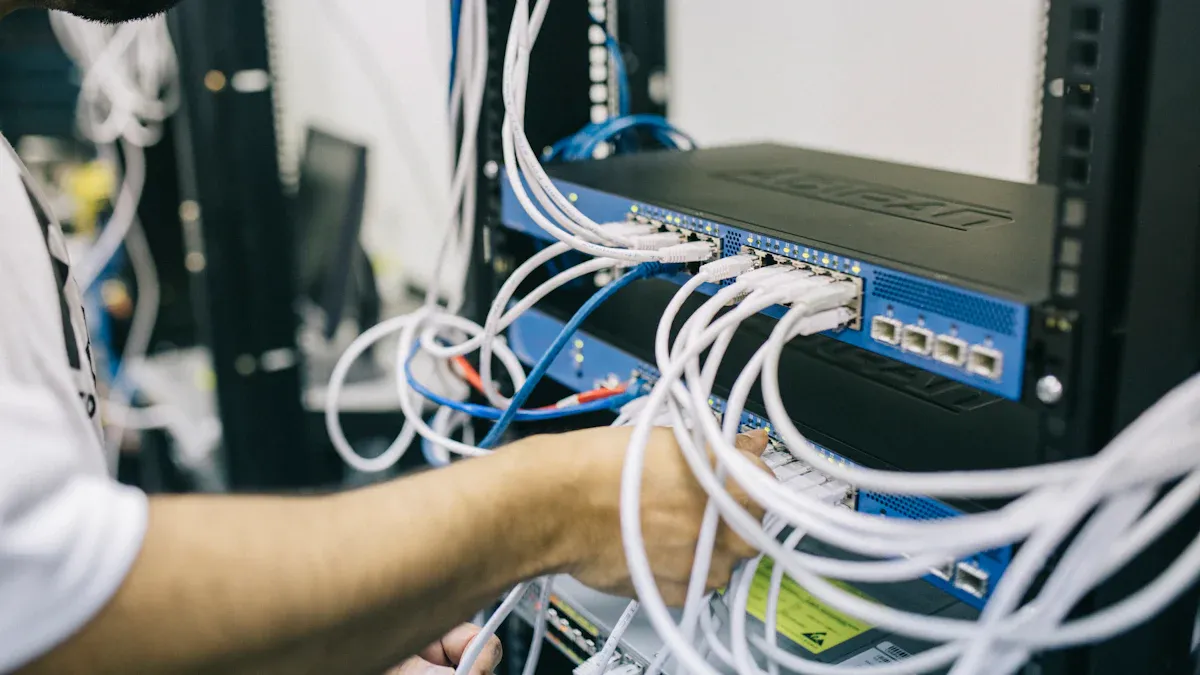
Healthcare facilities rely on equipment that must operate safely in sensitive environments. ESTEL’s Telecom Rectifier System demonstrates low electromagnetic radiation, making it suitable for use near medical devices. The system complies with international standards such as IEC 60601-1-2, which ensures electromagnetic compatibility. Medical staff and facility managers can trust certified power solutions to protect both patient safety and device performance.
Key Takeaways
Telecom rectifier systems with low electromagnetic radiation are safe for medical environments.
Compliance with IEC 60601-1-2 ensures safe operation near medical devices.
Electromagnetic interference can disrupt medical devices, affecting patient safety.
Hospitals should choose EMC-compliant systems to prevent device malfunctions.
ESTEL's rectifier systems offer reliable, low-emission power solutions for healthcare.
Electromagnetic Radiation in Telecom Rectifier Systems
What Is Electromagnetic Radiation
Electromagnetic radiation refers to energy that travels through space in the form of waves. These waves include radio waves, microwaves, and visible light. Every electrical device, including a Telecom Rectifier System, emits some level of electromagnetic radiation during operation. The amount and type of radiation depend on the device’s design and function. In telecom environments, rectifier systems convert alternating current (AC) to direct current (DC) to power network equipment. This process can generate electromagnetic fields, which may interact with nearby electronic devices.
Engineers measure electromagnetic radiation using specialized instruments. They assess both the intensity and frequency of the waves. Regulatory bodies set limits to ensure that devices do not emit harmful levels of radiation. Manufacturers design modern rectifier systems to minimize emissions and comply with strict standards.
Note: Low electromagnetic radiation is essential for maintaining safe and reliable operation in environments with sensitive equipment.
Impact on Medical Environments
Medical facilities contain devices that perform critical functions, such as monitoring heart rates or delivering medication. These devices can be sensitive to electromagnetic interference. If a power system emits excessive radiation, it may disrupt the operation of nearby medical equipment. Such interference can lead to inaccurate readings or device malfunctions, which may compromise patient safety.
A recent study in Rwanda district hospitals examined the awareness and impact of electromagnetic compatibility and interference among biomedical engineers and technicians. The findings highlight the importance of continuous monitoring and training:
Key Findings | Details |
|---|---|
Study Focus | Awareness of electromagnetic compatibility (EMC) and interference (EMI) among biomedical engineers and technicians in hospitals. |
Sample Size | 35 biomedical personnel from Rwanda district hospitals. |
Methodology | Anonymous questionnaire and face-to-face interviews for data collection. |
Statistical Analysis | SPSS used for descriptive analyses and regression model evaluation. |
Significance Level | 0.009 based on ANOVA values. |
Correlation Results | Inverse relationship of -0.470 for EMI against medical device management (MDM) and -0.469 for EMC against MDM. |
Awareness Levels | 68.6% unaware of EMC/EMI issues; 31.4% familiar. |
Recommendations | Continuous monitoring of EMC and training for biomedical staff to improve device performance and safety. |
Healthcare providers must select power solutions that meet international standards for electromagnetic compatibility. The Telecom Rectifier System from ESTEL offers low electromagnetic radiation, supporting safe coexistence with medical devices. This approach helps protect patient health and ensures accurate device performance.
Risks of Electromagnetic Interference in Healthcare
Medical Device Vulnerabilities
Medical devices in hospitals perform vital functions, from monitoring heart rates to delivering precise doses of medication. These devices often operate in close proximity to various electronic systems, including telecom rectifier systems. Electromagnetic interference (EMI) can disrupt their normal operation. Even a small amount of interference may cause a device to malfunction or display incorrect readings. For example, a robotic surgical system could experience alignment errors due to EMI, which may lead to serious consequences during surgery. In more severe cases, EMI can cause critical devices like ventilators or cardiac monitors to fail completely. Imaging equipment, such as MRI or CT scanners, may also suffer from screen flickering or color distortions, making it difficult for clinicians to detect subtle abnormalities. As medical technology becomes more advanced and interconnected, the risk of EMI grows. Reliable device performance is essential for patient safety, and any disruption can have a direct impact on health outcomes.
Importance of EMC Compliance
Hospitals must ensure that all electronic equipment, including telecom rectifier systems, meets strict electromagnetic compatibility (EMC) standards. EMC compliance protects sensitive medical devices from electromagnetic disturbances. This protection is crucial for several reasons:
Electromagnetic disturbances can threaten the operation of essential hospital equipment.
EMC compliance helps prevent unexpected interruptions in medical services caused by EMI.
Shielding medical devices from both accidental and intentional electromagnetic disturbances safeguards patient care and safety.
By selecting EMC-compliant power systems, healthcare facilities reduce the risk of device malfunctions and service interruptions. EMC compliance not only supports the reliable operation of medical devices but also upholds the highest standards of patient safety. Hospitals that prioritize EMC compliance demonstrate a commitment to quality care and operational excellence.
Medical Device Coexistence Standards
IEC 60601-1-2 Overview
IEC 60601-1-2 stands as the primary international standard for electromagnetic compatibility in medical devices. This standard sets strict requirements to ensure that medical equipment operates safely in environments with potential electromagnetic disturbances. Hospitals and clinics rely on this standard to protect sensitive devices from interference caused by nearby electronic systems, including power supplies and communication equipment.
IEC 60601-1-2 differs from other EMC standards in several important ways:
IEC 60601-1-2 focuses specifically on electromagnetic compatibility for medical devices.
Other EMC standards often address broader requirements, sometimes including biological effects of radiation, which IEC 60601-1-2 does not cover.
Devices that must comply with the Radio Equipment Directive (RED) require additional standards from ETSI, as IEC 60601-1-2 alone is not sufficient.
Manufacturers use IEC 60601-1-2 as a benchmark during product development and testing. This approach ensures that devices such as the Telecom Rectifier System can operate safely alongside critical medical equipment. By adhering to this standard, healthcare facilities reduce the risk of electromagnetic interference and maintain a safe environment for both patients and staff.
Compliance Requirements for Telecom Rectifier Systems
Compliance with IEC 60601-1-2 and related standards plays a crucial role in the selection and deployment of power systems in medical settings. Hospitals must evaluate each Telecom Rectifier System for its ability to meet these requirements. The following table highlights how compliance influences product selection and patient safety:
Aspect | Influence on Selection |
|---|---|
Safety and Reliability | Ensures telecom rectifier systems meet safety standards. |
Isolation | Emphasizes the need for proper isolation in design. |
Critical Distances | Guides the evaluation of creepage and clearance distances. |
Performance Requirements | Aligns rectifier systems with medical equipment standards. |
A compliant Telecom Rectifier System provides more than just reliable power. It ensures that electromagnetic emissions remain within safe limits, protecting nearby medical devices from disruption. Proper isolation and attention to critical distances in design help prevent unintended interactions between systems. Hospitals that prioritize compliance can trust that their infrastructure supports both operational efficiency and patient safety.
Tip: Always verify that a Telecom Rectifier System carries certification for IEC 60601-1-2 or equivalent EMC standards before installation in a medical environment.
By understanding and applying these standards, healthcare decision-makers can confidently select power solutions that support the highest levels of safety and performance.
ESTEL Telecom Rectifier System Compliance
Low Radiation Design Features
ESTEL engineers design each Telecom Rectifier System with advanced electromagnetic shielding. The system uses high-quality materials that block unwanted emissions. Careful circuit layout and component selection help minimize electromagnetic fields. The modular design allows for precise control over internal power flows, reducing the risk of stray radiation. Each unit features robust grounding and isolation barriers. These features ensure that the system operates safely near sensitive medical equipment.
The system’s rack-mount structure supports efficient airflow and heat dissipation. This design prevents hotspots that could increase electromagnetic emissions. Flexible cable inlets and copper grounding bars further enhance safety. By focusing on these details, ESTEL delivers a Telecom Rectifier System that meets strict electromagnetic compatibility requirements.
Note: Hospitals can trust ESTEL’s power solutions to maintain low electromagnetic radiation, supporting safe coexistence with medical devices.
Testing and Certification Process
ESTEL subjects every Telecom Rectifier System to rigorous testing before release. The process includes electromagnetic compatibility assessments, safety checks, and performance evaluations. Engineers use specialized instruments to measure emissions and ensure compliance with IEC 60601-1-2 and other international standards. The company also tests for compliance with UL ratings, FCC regulations, and EN 55032 requirements. These certifications confirm that the system will not disrupt nearby electronic devices.
The following table summarizes key quality control and compliance measures:
Quality Control Measure | Description |
|---|---|
UL Ratings | Compliance with UL standards ensures safety and performance for power supplies. |
IEC 62368-1:2023 | A safety standard for communication technology equipment, emphasizing hazard-based safety. |
FCC Compliance | Ensures devices do not cause electromagnetic interference, critical for legal market entry. |
EN 55032 | Regulates electromagnetic interference emissions in the EU, ensuring devices do not disrupt others. |
RoHS Compliance | Restricts hazardous materials in manufacturing, essential for market access in the EU and UK. |
ESTEL integrates advanced monitoring tools into its systems. These tools track temperature, humidity, and airflow in real time. Smoke and fire suppression systems receive continuous monitoring to maintain fire safety compliance. Adherence to NEMA and IP ratings ensures that each unit withstands harsh environmental conditions.
ESTEL’s Commitment to Quality
ESTEL maintains a strong commitment to quality and innovation. The company follows strict quality control protocols throughout the production process. Teams monitor every stage, from material selection to final assembly. Real-time data from monitoring tools helps identify and resolve issues quickly. This approach ensures that each Telecom Rectifier System meets or exceeds international standards.
ESTEL invests in research and development to improve product performance and safety. The company regularly updates its designs to align with the latest industry standards. Customer feedback guides ongoing improvements. By prioritizing quality, ESTEL builds trust with healthcare providers and telecom operators.
Adherence to NEMA and IP ratings protects equipment in challenging environments.
Advanced monitoring tools support continuous compliance.
Real-time fire safety monitoring enhances operational security.
ESTEL’s dedication to excellence ensures that hospitals receive reliable, safe, and compliant power solutions. The Telecom Rectifier System stands as a reassuring choice for medical environments that demand the highest standards.
Real-World Applications and Selection Tips
Case Studies in Medical Settings
Hospitals and clinics have adopted advanced power solutions to support critical operations. In a large metropolitan hospital, engineers installed a Telecom Rectifier System to power essential communication networks. The system operated near sensitive medical devices, such as infusion pumps and cardiac monitors. Staff reported stable device performance and no incidents of electromagnetic interference. This outcome demonstrated the importance of low-radiation design in maintaining a safe environment.
A regional healthcare center faced frequent power fluctuations. Facility managers selected a rectifier system with high efficiency and robust grounding. After installation, the center observed improved reliability in both telecom and medical equipment. The system’s modular design allowed for quick maintenance, reducing downtime during emergencies. These real-world examples highlight the value of choosing certified, low-emission power solutions in healthcare settings.
Hospitals benefit from systems that combine reliability, safety, and compliance with international standards.
How to Choose the Right System
Selecting the best rectifier system for a healthcare facility requires careful evaluation. Decision-makers should focus on several key criteria to ensure optimal performance and safety. The following table outlines important factors to consider:
Criteria | Description |
|---|---|
Thermal performance | Assess how well the rectifier module manages heat to ensure longevity and reliability. |
Compliance with standards | Ensure the module meets industry standards for safety and reliability, indicated by certifications. |
Manufacturer consultation | Engage with manufacturers for insights on product features and performance. |
Efficiency | Higher efficiency reduces energy waste and operational costs. |
System compatibility | Verify that the module matches the system's voltage requirements to prevent issues. |
Reliability and durability | Look for modules with high Mean Time Between Failures (MTBF) ratings for long-term performance. |
Cost considerations | Compare prices while considering efficiency and longevity to make a cost-effective choice. |
Facility managers should consult with manufacturers to understand product features and certifications. They should verify that the system matches voltage requirements and offers high efficiency. Reliability and durability remain essential for continuous operation in medical environments. By considering these factors, healthcare providers can select a Telecom Rectifier System that supports both patient safety and operational excellence.
ESTEL’s Telecom Rectifier System delivers safe and compliant power for medical environments. Healthcare facilities benefit from uninterrupted power supply, high efficiency, reliability, and integration with renewable energy. The system’s durability and eco-friendly materials support sustainability. Industry trends show advancements in power conversion, smart monitoring, and solid-state electronics, which reduce electromagnetic interference. Hospitals should prioritize certified solutions to ensure patient safety and operational excellence.
Uninterrupted power supply
High efficiency and reliability
Eco-friendly and durable design
FAQ
What makes ESTEL’s Telecom Rectifier Systems suitable for medical environments?
ESTEL designs its rectifier systems with advanced electromagnetic shielding and robust grounding. These features help minimize electromagnetic emissions. Hospitals can trust these systems to operate safely near sensitive medical devices.
Do ESTEL Telecom Rectifier Systems comply with international EMC standards?
Yes. ESTEL’s systems meet IEC 60601-1-2 and other key EMC standards. Certification ensures safe coexistence with medical equipment in healthcare settings.
How does the modular design benefit healthcare facilities?
The modular design allows for easy scalability and quick maintenance. Facility managers can replace or upgrade modules without disrupting critical operations. This approach supports continuous power delivery.
Can ESTEL’s rectifier systems be installed in existing hospital infrastructure?
Yes, the systems fit standard 19-inch racks.
Flexible cable inlets and compact designs simplify integration.
Installation teams can quickly deploy these systems in most healthcare environments.
See Also
The Superiority Of Lithium Batteries In Telecom Applications
A Guide To Global Standards For Power Supplies In Telecom
Ensuring Consistent Power Supply For Telecom Cabinet Reliability
How ESTEL Maintains Optimal Voltage In Communication Systems
Key Features Of Power Supplies In Telecommunications Explained
CALL US DIRECTLY
86-13752765943
3A-8, SHUIWAN 1979 SQUARE (PHASE II), NO.111, TAIZI ROAD,SHUIWAN COMMUNITY, ZHAOSHANG STREET, NANSHAN DISTRICT, SHENZHEN, GUANGDONG, CHINA
