How Telecom Rectifier Systems Enable Power Adaptation for Edge Computing Nodes with Low Power and High Reliability

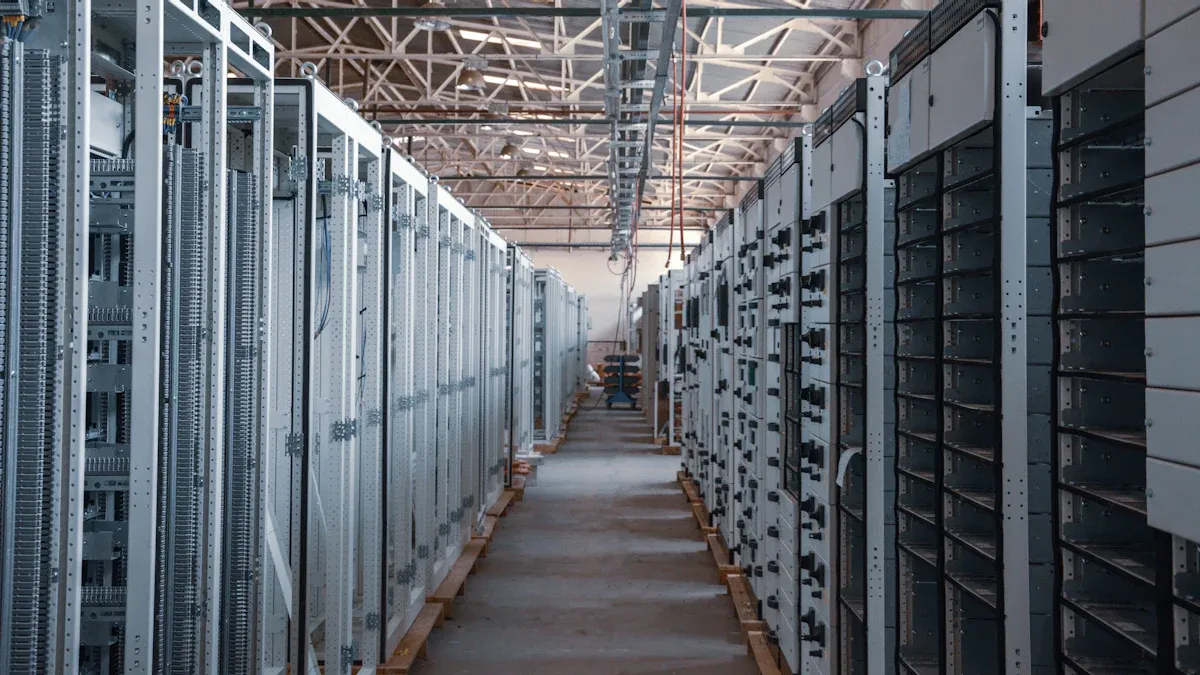
Telecom rectifier systems enable power adaptation for edge nodes through efficient AC-DC conversion, modular design, and intelligent management. You need specialized power solutions for edge computing because these sites sit in remote locations with limited maintenance access. Their loads fluctuate constantly. They demand low latency and high reliability.
The rectifier converts AC input to a stable DC voltage output. This conversion supports reliable power delivery. You gain efficiency and consistent performance. ESTEL's outdoor cabinet and power solutions demonstrate this approach for edge computing infrastructure. These systems handle power management across diverse telecom infrastructure setups. They adapt to changing conditions automatically.
Key Takeaways
Telecom rectifier systems convert AC power to stable DC48V output for reliable edge computing.
Modular design allows you to add capacity without downtime as your edge nodes grow.
Intelligent monitoring enables remote management and predictive maintenance for high uptime.
High efficiency above 96% reduces energy waste and lowers cooling costs.
These systems adapt to fluctuating loads and harsh environments, ensuring low power and high reliability.
Telecom Rectifier Systems: Core Power Conversion
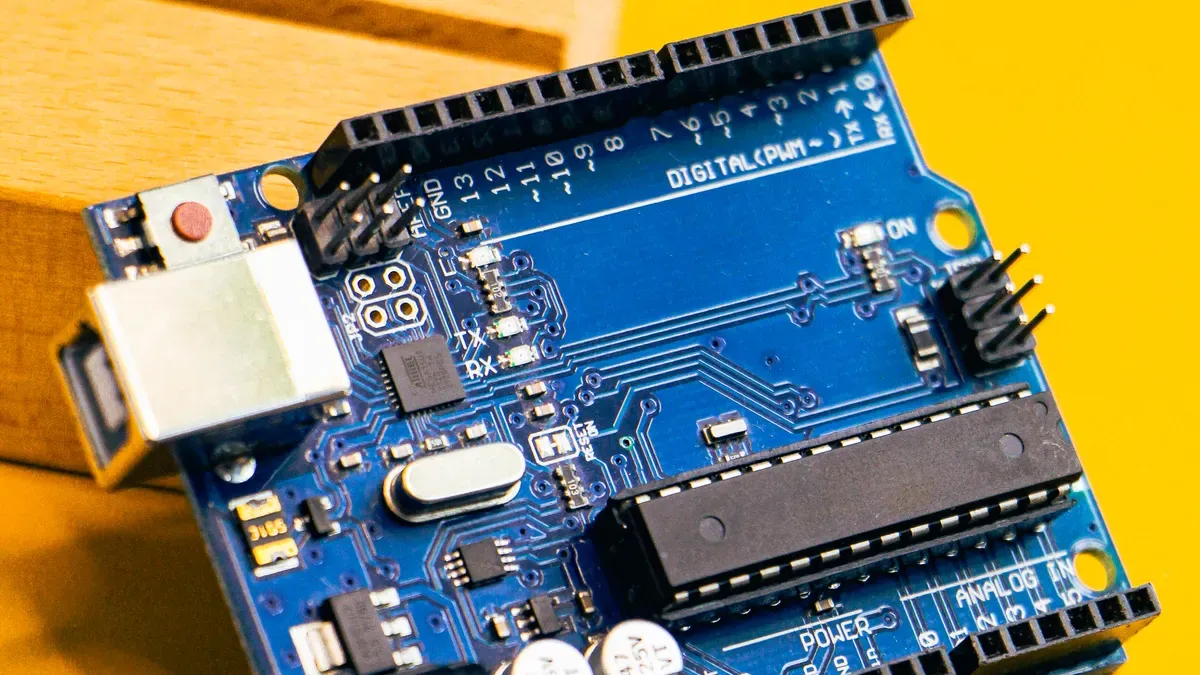
AC Input to DC48V Output
You feed AC power into the rectifier system. The system accepts a wide input range of 85V to 300V AC at 45 to 65 Hz. This flexibility matters for edge computing sites where grid quality varies. The rectification process follows clear steps. First, AC input filtering and protection clean the incoming power. Second, high-efficiency power electronics convert AC to DC. Third, voltage regulation produces a stable DC48V output. Fourth, the DC output splits between your loads and battery charging.
The nominal output sits at 53.5V DC. You can adjust this voltage from 43.2V to 58V. This adjustable range lets you fine-tune the stable DC48V output for different edge nodes. Modern telecom rectifier systems reach power conversion efficiency above 95%. Some designs achieve up to 96%. This high efficiency means less wasted heat. Your edge computing equipment receives clean, steady power.
Key Components and Functions
Several components work together inside these systems. Rectifier modules perform the main AC-DC conversion. Transformers provide isolation and step voltage up or down. Filters smooth the output and remove ripple. Control circuits manage voltage regulation and protect against faults. A power management unit coordinates all these parts. The power management unit also handles communication with remote monitoring systems.
You benefit from modular designs. Each system can hold up to three 1KW rectifier modules for 3KW total capacity. The rectifier modules share load current automatically. If one module fails, others continue supplying power. This redundancy supports a reliable power supply. Industry benchmarks show mean time between failures ranging from 100,000 to 200,000 hours for these modules. A dc-dc converter circuit may provide additional voltage adjustment when needed. ESTEL's telecom rectifier systems apply these principles for durable, efficient conversion in edge computing deployments.
Power Adaptation for Edge Computing
Telecom rectifier systems adapt their output to match fluctuating edge computing loads. They read current demand in real time. They adjust voltage and current accordingly. This adaptive power behavior prevents waste. Edge computing demands change by the second. You cannot afford over-provisioning. You cannot risk brownouts. For edge computing deployments, this behavior matters. The system adjusts its power output with continuous control. The rectification process responds instantly. That rectification maintains bus voltage stability. The result is high efficiency across a broad operating range.
Remote Management and Monitoring
Remote management begins with the power management unit. This unit connects to your network through SNMPv2/v3. It sends syslog messages and SNMP traps. These alerts integrate with legacy OSS/NMS tools. You can monitor every site's power status from one dashboard. You can view network-wide equipment status in real time. You can analyze performance trends and anomalies. Power alarms work even when no technician is present.
A single remote terminal unit can report into a central master. For a few sites, the web interface of each unit can serve as the whole system. Add a master when your site count grows. Modern units execute local control logic without central intervention. If cabinet temperature rises beyond a limit, the unit triggers backup cooling automatically. This edge-based autonomy reduces dependency on central connectivity and human intervention.
The integration of digital signal processors and microcontrollers has enhanced control functionality, enabling real-time monitoring, predictive maintenance, and adaptive control strategies.
This digital intelligence lets you schedule preventive maintenance based on data-driven insights. You can manage alarms and notifications from your desk. Unmanned edge computing infrastructure remains dependable because the system self-corrects.
Modular Scalability for Variable Loads
Modular design is the backbone of power adaptation. A chassis holds rectifier modules that share the load. You can start with one module. You can add another when edge nodes grow. This expansion does not require downtime. Hot-swap design allows replacement while the system runs. Capacity growth becomes as simple as sliding in a new module. This modular design also makes maintenance predictable.
N+1 redundancy is common. One extra module supports the full load if another fails. Your remaining modules continue serving the load. Power fault alarms identify failed modules faster. Automatic load sharing distributes output evenly. The effect on total efficiency depends on the efficiency curve. Managed platforms can keep only required modules active. Another module comes online after a fault or load increase.
Capability | Practical Value |
|---|---|
N+1 redundancy | One module can fail without stopping the whole system |
Load sharing | Multiple modules distribute output load evenly |
Hot-swap design | Maintenance can be performed without system shutdown |
Fault alarm | Failed modules can be identified faster |
Modular expansion | Capacity can be increased by adding modules |
This architecture suits edge computing nodes because loads change with network traffic. Rectifier modules operate in parallel. They share current according to demand. The power management unit coordinates their behavior. It also verifies that remaining modules can carry the load after a failure. ESTEL's power distribution cabinets and rectifier systems use this scalable approach. The dc48v output remains stable while capacity adjusts. Efficiency stays high across a wide operating range. You gain a power solution that grows with your deployment. Reliable power delivery becomes a design feature, not an accident.
Low Power and High Reliability Features
Low power and high reliability come from the same engineering choices. Telecom rectifier systems achieve both through efficiency and intelligence. Edge computing sites need reliable power because they often run unattended. You reduce wasted energy and prevent small faults from becoming outages.
High Efficiency and Energy Savings
The power conversion efficiency of modern rectifier circuits sets the foundation. Typical values exceed 96%, and most systems operate between 96% and 97%. Peak efficiency can reach 97.8%. Less energy becomes heat. That lowers utility bills and reduces cooling load. For an edge computing site, every kilowatt-hour saved supports the low power budget.
During rectification, wide-bandgap semiconductors improve the result. SiC and GaN modules reach up to 99% efficiency. GaN suits medium-voltage, compact designs with up to 450 V and delivers around 160 W/in³ power density. GaN provides about 20% higher power density than SiC and can reduce solution size by 50%. SiC handles voltages above 500 V. For edge computing nodes, this means more computing power in less space.
Operating temperatures from -40°C to 75°C keep modules reliable in harsh edge environments. Thermal management with substrates such as AlN and BeO, thermal vias, heat sinks, and liquid cooling prevents overheating. Integration methods include 3D stacking, heterogeneous integration, and hybrid bonding. Certifications such as NEMA, UL 60950-1, California Prop 65, and China RoHS confirm durability. You can trust these rectifier modules in demanding edge deployments.
All this efficiency contributes to a stable power supply. This power conversion efficiency supports sustainable growth and low power operation.
Intelligent Monitoring and Fault Detection
Dependability also comes from intelligence. The power management unit tracks every parameter in real time. It monitors voltage, current, power quality, cabinet temperature, and battery health. Automated fault detection sends alarms immediately. A remote dashboard shows the status of every site.
Predictive maintenance elevates this capability. The power management unit also schedules preventive maintenance based on data. Machine learning models identify abnormal patterns. One field deployment achieved 43% lower network downtime, with 92.7% failure prediction accuracy. Potential risks can be detected up to 72 hours in advance. This approach reduces downtime and extends equipment life. At an edge computing node, this proactive approach prevents most outages.
Power management also extends to surge protection. Four layers shield the DC system: main DC distribution panels, rectifier outputs, remote radio units, and battery strings. Devices must match -48V DC voltage levels. They need high surge current capacity and low clamping voltage. The rectification process responds to load changes instantly. That response keeps the dc48v output stable under variable edge workloads.
IP55 or IP65 sealing protects internal parts from dust and rain. A heat exchanger rated DC 48V 150 W/K regulates the battery zone. Fireproof silver insulation and corrosion-resistant construction handle harsh environments. Anti-theft doors secure remote installations. These design features support stable operation. Rectifier modules share load current automatically. The modular design lets you add capacity without downtime.
ESTEL's outdoor cabinets combine these protections with efficient cooling. The integrated power management unit coordinates local control. Good power management reduces downtime further. Efficient rectification lowers thermal stress. For expanding edge computing networks, this dependable and enduring power supply becomes your foundation for low latency and lower operating costs.
Edge Node Deployment Examples
Telecom and Remote Site Applications
You find telecom rectifier systems powering edge computing nodes across diverse remote locations. Telecom base stations along remote roads and mountain sites rely on these systems daily. A local Packetized Energy Management controller at each base station treats rectifiers as controllable assets. This controller manages rectifiers alongside inverters, battery storage, HVAC, and on-site renewables. Rectifier staging becomes a flexible, deferrable load. The controller can admit, defer, or reshape energy requests while protecting mission-critical real-time radio processing.
Deployment scenario | Rectifier and power-system role | Edge-node support under limited grid |
|---|---|---|
On-grid with backup storage | High-efficiency rectifiers paired with lithium or VRLA batteries, typically 1–3 hours of backup, plus smart cabinets | Bridges short grid disturbances so edge workloads maintain continuous DC power |
Hybrid solar / rural high-cost electricity | Rectifier integrated with solar PV, wind microturbines, diesel gensets, lithium storage, and hybrid charge controllers | Reduces diesel consumption and OPEX, allowing scarce grid power to be reserved for continuous edge loads |
Full off-grid / remote areas | Large battery banks, high-efficiency solar arrays, rectifier-based AC/DC conversion, and occasional diesel genset support | Provides stable DC power where grid power is unavailable or highly unreliable |
ESTEL's outdoor battery cabinets, lithium iron phosphate batteries, and rectifier systems serve these deployments directly. The power management unit coordinates battery charging and discharging. It enforces state-of-charge, thermal, and DC-bus safety constraints. This deployment model lets remote sites adapt rectifier and battery operation to variable renewable and grid power. Your edge computing workloads continue without compromising communication reliability. The outcome is low latency, low power consumption, and reliable edge operations.
Industrial and Harsh Environment Use
Industrial edge computing deployments face ambient temperatures that swing from below freezing to above 45°C seasonally. Dust, humidity, and contamination accumulate on cooling surfaces and filter media. IP ratings and sealed enclosures protect electronics from the environment. These enclosures can restrict airflow. That restriction increases the thermal load your cooling system must manage within a constrained space.
IP Rating | Protection Level | Recommended Deployment Conditions |
|---|---|---|
IP55 | Limited dust ingress protection; resists low-pressure water jets from any direction | Baseline for most outdoor telecom use; suitable for short-term, low-power, or sheltered deployments |
IP65 | Fully dust-tight; resists stronger water jets | Critical for coastal areas, roadside installations, or sites exposed to wind-driven rain, sandstorms, and road spray |
For long-term reliability in thermally demanding or publicly exposed environments, choose a modular aluminum telecom cabin with IP65, IK10, and a certified heat exchanger—regardless of initial price.
ESTEL's IP55-rated outdoor cabinets and energy-efficient cooling systems support reliable operation in these harsh conditions. The power management unit monitors voltage, current, and cabinet temperature in real time. This intelligent monitoring maintains high efficiency across your edge computing deployments. Your telecom infrastructure gains a dependable foundation for reliable edge operations.
Telecom rectifier systems enable power adaptation through efficient AC-DC conversion, modular design, and intelligent management. You gain lower costs and higher uptime for edge computing. These systems deliver reliable power at remote sites with varying power grid quality.
The power management unit coordinates voltage and load sharing. Power efficiency above 96% reduces heat and energy waste. Power management within ESTEL's cabinets ensures steady power for edge computing. This design scales capacity as edge computing grows.
5G and IoT expand edge computing, raising rectifier power demand. A 5G massive-MIMO radio draws 3–4 kW at peak. Your power infrastructure must adapt for edge computing uptime. Reliable systems provide power, boosting reliability and efficiency.
FAQ
Why do edge computing nodes depend on telecom rectifier systems?
Telecom rectifier systems convert AC input to stable DC48V output. They maintain steady voltage even when grid quality varies. Modular modules support capacity expansion. Remote monitoring reduces site visits. These features provide reliable power for edge computing in remote locations.
How do telecom rectifier systems adapt to fluctuating edge computing power loads?
The power management unit reads power demand in real time. It adjusts output voltage and current continuously. Rectifier modules share power load automatically. N+1 redundancy activates spare capacity if one module fails. You add hot-swap modules without downtime as workloads grow.
How do rectifier systems lower power consumption and improve efficiency?
High conversion efficiency exceeds 96%. This efficiency cuts wasted energy and cooling loads. Intelligent monitoring matches power output to actual power demand. This approach lowers operational costs. Edge computing sites gain low power operation without sacrificing reliability.
What reliability features support unattended edge computing nodes?
IP55 or IP65 enclosures shield components from dust and rain. Real-time fault detection sends SNMP alarms. Predictive maintenance identifies failures up to 72 hours in advance. A failed rectifier module does not stop the power supply. This design supports high uptime.
How do ESTEL rectifier solutions support edge deployments?
ESTEL combines telecom rectifier systems with outdoor battery cabinets and lithium iron phosphate batteries. IP55-rated cabinets withstand harsh environments. Energy-efficient cooling maintains component temperatures while reducing power draw. This integrated approach delivers dependable power for edge computing at remote sites.
CALL US DIRECTLY
86-13752765943
3A-8, SHUIWAN 1979 SQUARE (PHASE II), NO.111, TAIZI ROAD,SHUIWAN COMMUNITY, ZHAOSHANG STREET, NANSHAN DISTRICT, SHENZHEN, GUANGDONG, CHINA
