UAV Power Supply Support of Telecom Rectifier Systems: Rapid Deployment for Temporary Power in Field Operations

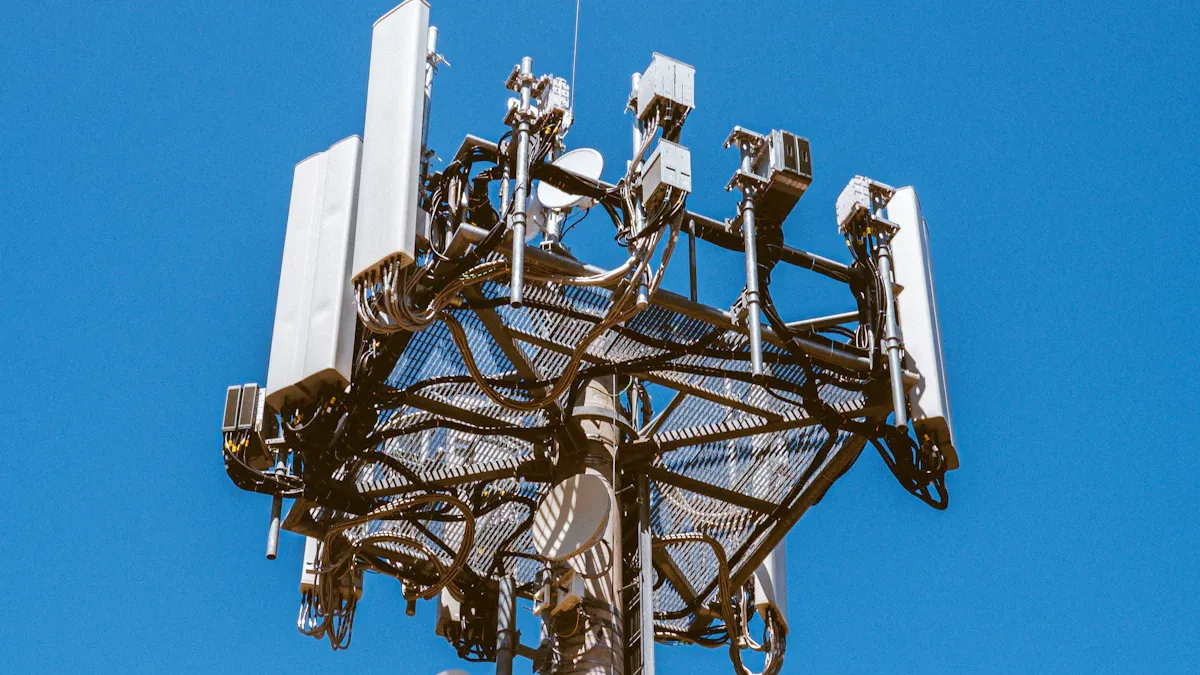
Yes, unmanned aerial vehicles can deliver temporary power to telecom rectifier systems in the field. Success depends on matching three things: the payload, the connection method, and your deployment protocol. You gain rapid restoration and capacity augmentation. You do not replace permanent site power infrastructure.
Field teams face damaged roads, failed generators, and urgent coverage demands. A properly equipped UAV bridges that gap. You will learn practical UAV power configurations, essential equipment, ESTEL compatibility, step-by-step deployment, load-sharing integration, real-world scenarios, and safety considerations. This knowledge helps you restore service faster when conventional logistics stall.
Key Takeaways
UAVs can deliver temporary power to telecom rectifier systems during emergencies.
Battery-powered UAVs work for short missions, while tethered systems provide continuous power.
You need a converter payload, cables, and connectors to match the rectifier's voltage.
Follow a step-by-step process: check equipment, connect safely, and monitor power.
Always get flight permits and keep the UAV away from antennas and bad weather.
Why Telecom Rectifier Systems Need Temporary Power Support
Role in Telecom Sites
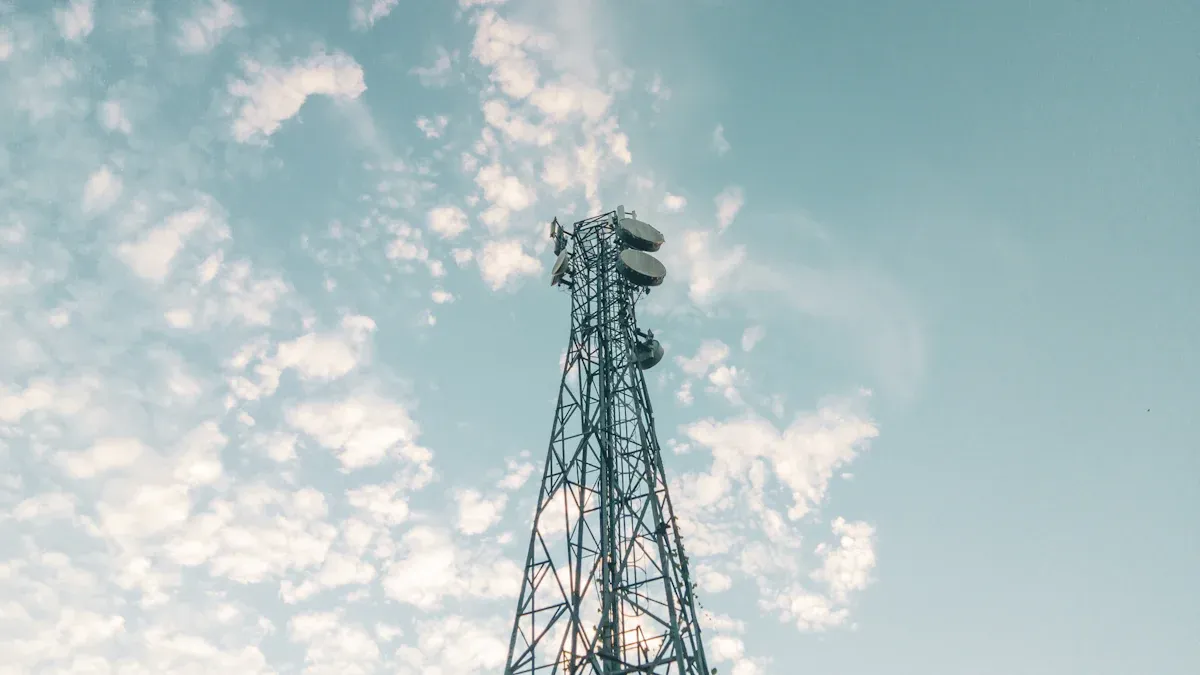
Telecom rectifier systems form the power conversion core of every cell site. They take AC input from the grid or a generator and convert it to a stable DC output. That output typically sits at -48 VDC, the standard voltage for radio access network equipment. This single power layer feeds radios, routers, and backup batteries at the same time.
You can think of the rectifier as the heart of the site. When it stops working, everything downstream loses power. Radios go silent. Routers drop traffic. Batteries drain within hours. A temporary power source keeps that heart beating until permanent repairs finish.
Rapid Deployment Scenarios
Four field situations demand temporary power most often. Natural disasters top the list. Floods, earthquakes, and storms cut grid power and block roads. A UAV flies over damaged terrain and reaches the site in minutes. Generator failure creates the second scenario. A site may have a backup generator, but that unit can fail without warning. Scheduled maintenance forces the third case. Technicians need to shut down primary power for upgrades or repairs. Rapid network expansion drives the fourth need. You may need to bring a new site online before the grid connection is ready.
Each scenario shares one common thread. Conventional logistics take too long. A truck cannot cross a washed-out bridge. A fuel delivery may wait hours behind debris. A UAV bypasses those obstacles entirely. It carries a power payload straight to the rectifier input or DC bus.
Temporary UAV power bridges the gap. It does not replace permanent infrastructure. You restore service now and complete the permanent fix later.
UAV Power Supply Configurations
Two power configurations dominate field deployments. Battery systems suit short missions. Tethered systems provide continuous operation.
Battery and Wireless Power Transfer
A battery-powered UAV carries a conversion payload. That payload feeds the rectifier or its DC bus. The onboard battery supplies every watt. You match output voltage to the DC48V bus and set a current limit. Flight time restrains the mission window. A heavier pack extends endurance but reduces available payload. You balance energy against converter mass before launch.
Battery chemistry determines how long the UAV stays airborne.
Battery Type | Energy Density (Wh/kg) | Typical Application | Weight Efficiency |
|---|---|---|---|
Standard LiPo | 150 – 180 | Recreational Drones | Moderate |
Advanced Li-ion | 240 – 280 | Professional Mapping | High |
Long Sing Custom | 290+ | Long-Endurance UAVs | Excellent |
Standard LiPo packs deliver 150–180 Wh/kg. Advanced lithium-ion cells reach 240–280 Wh/kg. Custom cells exceed 290 Wh/kg. The best cells push past 250–300 Wh/kg. They extend flight time by 30% to 50% compared with consumer-grade packs.
Wireless power transfer extends the mission further. A ground transmitter sends energy to the hovering UAV. The aircraft never lands for battery swaps. Transfer efficiency limits practical distance. You position the UAV close to the ground unit. Wireless links suit sites where landing zones are unsafe or debris covers the ground.
Tethered and Hybrid Systems
A tethered UAV receives power through a cable from a ground station. The station runs on a generator or a battery bank. This setup yields effectively unlimited endurance. Power flows continuously while the generator operates. Ground crews deploy the cable carefully to avoid antennas and guy wires.
Operators report days to weeks of continuous flight. A battery drone works just 25–30 minutes before recharge. A 45-minute conventional flight leaves about 16 hours of gaps each day. A tethered system eliminates those gaps.
Hybrid systems blend both designs. A small onboard battery powers takeoff and landing. Ground power sustains hover and delivery. A tether failure still allows a controlled descent. The battery also handles peak loads when demand spikes.
Equipment and Payload Requirements
Core Components for Field Deployment
You need six essential components for a UAV power mission. First, an AC/DC or DC/DC conversion payload changes the UAV's power to a voltage the rectifier accepts. Second, output cables carry that power to the connection point. Third, connectors must match the rectifier's input or DC bus terminals. Fourth, voltage regulation keeps output steady under load changes. Fifth, overcurrent protection prevents damage from faults. Sixth, a ground reference provides a safe return path where applicable.
Compact converter payloads now exist for drone-based power support. A tethered UAV converter can deliver 7 kW from a 400V DC input and produce a regulated 50V DC output. The Vicor BCM6123 configuration achieves a total power converter weight under 200 grams. That low mass preserves valuable payload capacity for the mission.
Parameter | Specification |
|---|---|
Power | 7 kW |
Input | 400V DC |
Output | 50V DC (regulated) |
Application | Tethered UAV / drone power systems |
ESTEL Telecom Rectifier System Compatibility
ESTEL Telecom Rectifier Systems interface cleanly with UAV power payloads. The system accepts AC220V or AC380V input. It delivers a steady DC48V output. Output current ranges from 6A to 125A depending on the model. The regulation range spans -43V to -58V, with a typical set point of -53.5V.
The system draws from an AC source rated at 220V or 380VAC and converts it to a steady DC48V output. The regulation range spans from -43V to -58V, with a typical set point of -53.5V. Output current ranges from 6A to 125A depending on the model chosen.
Specific models illustrate this flexibility. The GPE4890A provides 90A output at DC48V. The GPE48120C delivers 6400W in the 120A class. The GPE48150G reaches 150A output. The GPE48350G produces 18725W. The GPE4890J offers 4800W output with ISO9001, CE, 3C, FCC, and TLC certifications.
You must frame UAV support as temporary augmentation. Do not treat it as permanent infrastructure replacement. Match your payload capacity to the load and plan for a defined mission window.
Step-by-Step Field Deployment Process
Pre-Deployment Checks and Flight Positioning
A disciplined pre-flight routine prevents most field failures. Complete these checks before the UAV leaves the ground.
Confirm the UAV payload charge or fuel level. A battery-powered UAV needs a full pack. A tethered system needs a fueled generator or a charged ground battery bank.
Verify the rectifier input or DC bus voltage. Check that the rectifier accepts your payload output. ESTEL systems take AC220V or AC380V input and deliver DC48V output. The regulation range spans -43V to -58V with a typical set point of -53.5V.
Inspect every cable and connector. Look for frayed insulation, bent pins, and loose housings. Replace damaged parts before launch.
Select a stable hover or landing position. Keep the UAV away from antennas, guy wires, and moving equipment. RF fields near tower antennas can disrupt control links.
Weather limits deserve a hard stop. High winds, rain, and lightning ground the mission. Document your go or no-go thresholds in advance.
Cable and Rectifier Interface Setup
The connection sequence determines whether power flows safely. Follow this order every time.
Route the UAV cable to the rectifier's AC input or DC bus. Keep the cable clear of tower structures and rotating machinery. Secure each connector firmly. Verify polarity before you energize anything. A reversed connection can damage the rectifier, the payload, or both.
Bring the UAV power source online only after all connections pass inspection. Watch the rectifier's voltage and current readings during the first few seconds. A steady DC48V output with current inside the 6A to 125A range confirms a healthy interface. A compact converter payload can deliver 7 kW from a 400V DC input and produce a regulated 50V DC output while weighing under 200 grams. That low mass preserves payload capacity for the mission.
Rehearse this process until your crew performs it from memory. Document every step in a field checklist. Speed matters during a disaster recovery window. Safety matters more. A rehearsed team connects power in minutes without skipping a verification step.
Integrating UAV Power with Telecom Rectifier Systems
Voltage Matching and Current Limits
Voltage matching is the first requirement for safe integration. Your UAV payload output must align with the rectifier's DC bus or AC input. A mismatch causes poor regulation, equipment stress, or complete failure to deliver power. ESTEL Telecom Rectifier Systems accept AC220V or AC380V input and produce a steady DC48V output. The regulation range spans -43V to -58V with a typical set point of -53.5V. You must confirm your payload falls inside this window before connection.
Current limits protect both the UAV and the rectifier. Set a ceiling that stays below the rectifier's maximum rating. ESTEL models offer output currents from 6A to 125A depending on configuration. A 90A model like the GPE4890A tolerates less headroom than a 150A unit. Exceeding the limit risks overload, overheating, or backfeed into the UAV system. Backfeed occurs when current flows backward through the connection. That condition can damage converters and confuse protection circuits. You prevent it with a properly sized blocking diode or an isolated converter stage.
A compact converter payload illustrates practical matching. One tethered UAV converter delivers 7 kW from a 400V DC input and produces a regulated 50V DC output. The unit weighs under 200 grams. That output sits close to the DC48V bus, so minor adjustment brings it into the acceptable range. You verify the match with a multimeter before energizing the connection.
Protection, Monitoring, and Transfer Control
Protection devices form your second layer of defense. Overcurrent protection trips the circuit when current exceeds your set limit. Overvoltage protection clamps spikes that could damage the rectifier. Ground fault protection detects leakage current and isolates the fault. You install these devices between the UAV payload and the rectifier input.
Monitoring keeps you informed during the mission. Watch voltage and current readings continuously. A steady DC48V output with current inside the 6A to 125A range confirms healthy operation. Any drift outside the -43V to -58V window signals a problem. You then adjust the payload or disconnect before damage occurs.
Automatic transfer control enables smooth handover. The system switches between UAV power and permanent grid or generator power without interrupting the telecom load. A static transfer switch performs this function in milliseconds. The rectifier never sees a gap in input power. Radios and routers stay online throughout the transition. You test this handover during a scheduled drill before relying on it in an emergency.
ESTEL Telecom Rectifier Systems support modular input and output configurations. That design makes voltage and current limits easier to set. You can add or remove rectifier modules to match the temporary load. Stability improves because each module shares the load evenly. The modular approach also simplifies maintenance after the UAV mission ends. You restore the permanent configuration without replacing the entire system.
Real-World Field Scenarios
Disaster Recovery and Remote Site Maintenance
A hurricane or earthquake cuts grid power. You face a race against time. Roads wash out. Debris blocks truck access. A generator cannot reach the site. A UAV flies over the damage and delivers power within minutes. You bypass the logistics bottleneck entirely.
Published demonstrations confirm this approach. IEEE Spectrum documents two disaster-response drills. Each drill used a drone carrying a GreenCell temporary base station. A separate onboard battery powered the station. At 120 meters altitude and 250 mW transmit power, the drone covered users within 2 kilometers.
Demonstration | Documented Result |
|---|---|
First drill | Drone carried a GreenCell base station; onboard battery powered it; 120 m altitude, 250 mW transmit power covered users within 2 km |
Second drill | Same UAV-powered configuration; wearable sensors sent heart rate, GPS, and air temperature data to emergency coordinators |
These drills show a proven pattern. A UAV can carry both a base station and its power source. You can also use this concept to feed an existing tower rectifier. The remote site stays online while you repair permanent power.
Remote tower maintenance follows the same logic. You shut down primary power for a rectifier upgrade. A tethered UAV supplies temporary DC48V power. The site keeps serving subscribers while you work.
Emergency Network Expansion and Temporary Coverage
Emergency events create sudden demand for coverage. A festival, a military operation, or a field hospital all need connectivity fast. Permanent infrastructure takes weeks to deploy. A UAV delivers power and coverage in hours.
Match the UAV payload to the rectifier input. ESTEL Telecom Rectifier Systems accept AC220V or AC380V input and deliver DC48V output. The second drill tested more than voice. Wearable sensors streamed heart rate, GPS, and air temperature data to coordinators. You can support medical monitoring over a UAV-powered link.
Temporary network expansion becomes practical with proper load planning. A small cell site draws modest current. A compact converter payload supplies that load within the rectifier's 6A to 125A output range. You set the current limit, verify polarity, and bring the UAV online.
The value is speed and flexibility. You cover a disaster zone, a command post, or a remote medical team with one equipment set. When permanent power arrives, you hand over smoothly and recover the UAV. The operation ends cleanly.
Safety, Regulatory, and Operational Considerations
Operating Near Telecom Infrastructure
RF exposure near tower antennas poses a real hazard. High-power transmitters can interfere with UAV control links. You must keep the aircraft and its cable clear of active antenna sectors. Maintain a safe standoff distance from tower structures and guy wires. Moving equipment such as elevators or rotating antennas also demands attention. A cable that contacts a live conductor can damage the UAV, the rectifier, or both.
Weather limits deserve a hard stop. High winds, rain, lightning, and icing ground the mission. You set go or no-go thresholds before launch and document them in your field checklist. A tethered UAV adds cable management to the risk list. The tether can snag on tower hardware or wrap around a guy wire. You route the cable along a clear path and assign a crew member to monitor it continuously.
Compliance and Crew Coordination
Flight permits and airspace rules come first. You must secure approval from the relevant aviation authority before any UAV leaves the ground. Restricted airspace near airports or military zones requires special clearance. Local regulations may also limit flight altitude, payload weight, or operating hours. You verify these requirements during mission planning, not on the day of deployment.
Ground crew roles must be established before deployment. A typical team includes a pilot, a spotter, a cable handler, and a power technician. Each person knows their task and communicates clearly. You also coordinate with the site owner or network operator. They control access to the tower and the rectifier room. Their approval ensures your UAV power connection does not conflict with existing site operations or safety systems. A pre-deployment briefing aligns everyone on timing, emergency procedures, and handover signals.
UAV power support for telecom rectifier systems works as a practical, viable option for temporary field power when you plan properly. Battery and wireless power transfer configurations suit shorter missions. Tethered and hybrid systems handle extended deployments. Safe integration depends on voltage matching, current limits, protection, and rehearsed deployment procedures.
ESTEL Telecom Rectifier Systems offer a compatible platform for integrating UAV temporary power. You still face real constraints. Flight time limits battery missions. Weather grounds operations. Regulatory approval takes time. Plan around these factors, and you restore service faster when conventional logistics stall.
FAQ
Can a single UAV power an entire telecom rectifier system?
Yes, within limits. A compact converter delivers 7 kW and weighs under 200 grams. ESTEL rectifier output ranges from 6A to 125A depending on model. Match your payload amperage to the site load. For heavy draws, use the UAV to augment the rectifier rather than replace it.
How long can a tethered UAV provide power compared with a battery drone?
A battery-powered UAV flies roughly 25–30 minutes before recharge. A tethered system runs continuously while the ground generator operates. Some operators sustain flight for days or weeks. Hybrid designs use a small onboard battery for takeoff, landing, and peak loads, with ground power for steady hover.
How do I match UAV output voltage to an ESTEL rectifier?
ESTEL rectifiers accept AC220V or AC380V input and deliver DC48V output. The regulation range spans -43V to -58V with a typical set point of -53.5V. Set your UAV payload output within that window. For a DC bus connection, use a converter that produces a regulated DC48V signal.
How do I prevent backfeed when connecting a UAV to a rectifier?
Backfeed occurs when current flows backward into the UAV payload. Install a blocking diode or use an isolated converter stage. Set current limits below the rectifier's maximum rating. Verify polarity before energizing. Use monitoring to watch for current drift outside the safe range.
Do I need a flight permit for this kind of UAV operation?
Yes. Secure approval from the relevant aviation authority before any launch. Restricted airspace near airports or military zones needs special clearance. Coordinate with the site owner or network operator. Establish ground crew roles for pilot, spotter, cable handler, and power technician. Document all thresholds in advance.
See Also
Proven Strategies For Ensuring Reliable Power In Telecom Cabinets
Solar Photovoltaic Battery Storage System Designed For Telecom Cabinets
Key Points To Know About Telecom Power Supply Features
Grid-Tied Photovoltaic Inverter And Battery System For Telecom Cabinets
Approaches To Calculating Telecom Cabinet Power And Battery Needs
CALL US DIRECTLY
86-13752765943
3A-8, SHUIWAN 1979 SQUARE (PHASE II), NO.111, TAIZI ROAD,SHUIWAN COMMUNITY, ZHAOSHANG STREET, NANSHAN DISTRICT, SHENZHEN, GUANGDONG, CHINA
