AI Anomaly Detection of Smart PDUs in Telecom Cabinets: Identify Minor Fluctuations to Prevent Failures

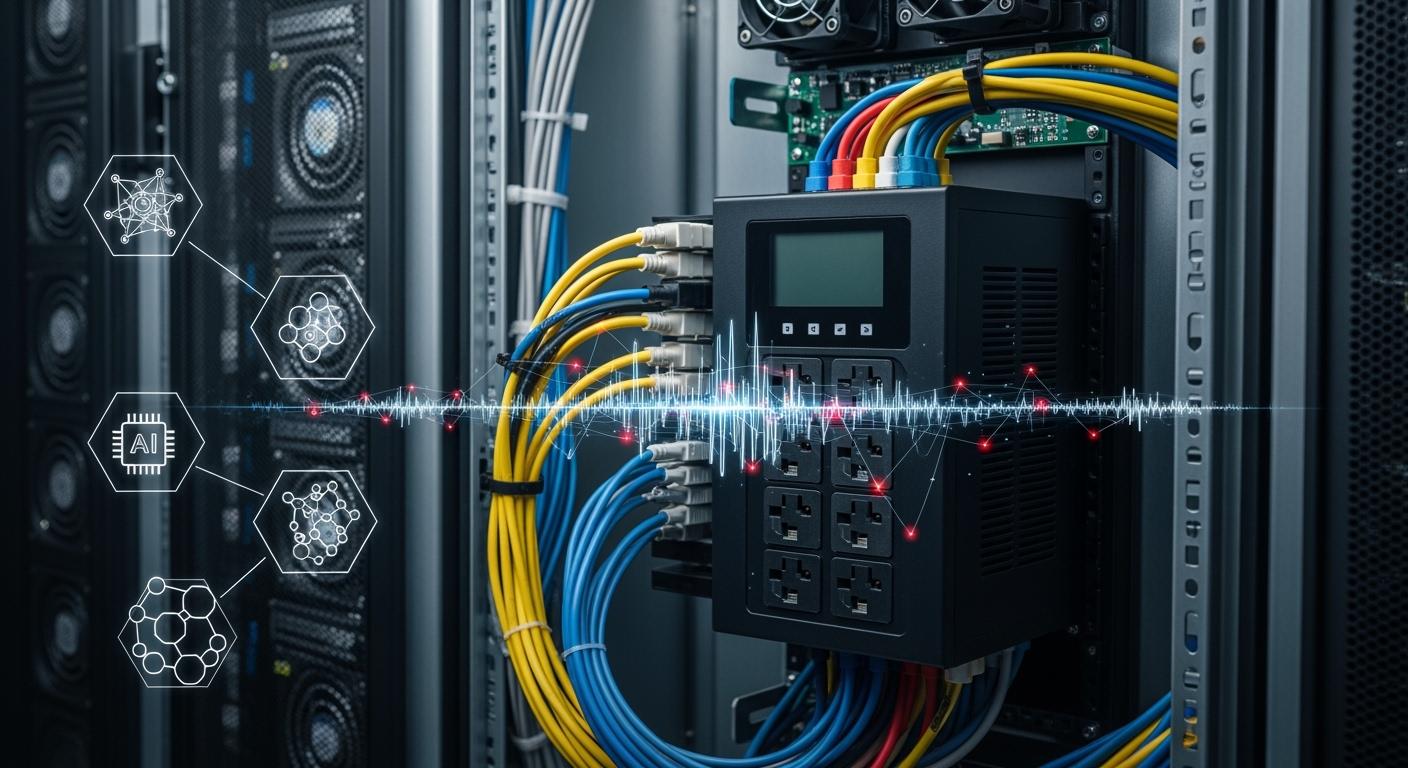
You can use AI anomaly detection in a Smart Power Distribution Unit to spot minor power fluctuations in telecom cabinets before they cause major problems. These early warnings help you prevent network downtime, reduce maintenance costs, and boost equipment uptime. ESTEL delivers advanced Smart Power Distribution Units trusted by telecom operators worldwide.
Power failures cause almost one-third of network downtime.
Voltage fluctuations are the most frequent reliability issue.
Early anomaly detection increases uptime by 20% and reduces outages by 15%.
Improvement Type | Description | Impact |
|---|---|---|
Automation Benefits | Optimize load balancing and power distribution | |
Remote Monitoring | Cloud-based AI enhances maintenance response | Improves operational efficiency |
Predictive Maintenance | AI lowers maintenance costs by up to 40% | Significant cost savings |
Key Takeaways
AI anomaly detection helps identify minor power fluctuations early, preventing major outages and reducing downtime.
Using Smart Power Distribution Units can lower maintenance costs by up to 40% and improve equipment uptime by 20%.
Real-time monitoring and predictive maintenance extend equipment lifespan and reduce troubleshooting time by 30%.
Remote management capabilities allow for quick responses to issues, enhancing operational efficiency and reliability.
Implementing AI-driven solutions transforms telecom cabinet management, ensuring proactive failure prevention and cost savings.
AI Anomaly Detection in Smart Power Distribution Units
Real-Time Monitoring and Early Fluctuation Detection
You gain a powerful advantage when you use real-time monitoring in a Smart Power Distribution Unit. This technology lets you track electrical parameters instantly, so you can spot minor fluctuations before they become major issues. IoT-enabled systems and sensor networks work together to measure voltage and current, giving you a clear picture of power quality. Machine learning forecasts critical conditions, helping you plan maintenance and avoid unexpected failures. Integrated web dashboards allow you to access data remotely and make decisions quickly.
Technology Type | Description |
|---|---|
IoT-enabled systems | Integrates real-time data analytics and assessment for power quality monitoring. |
Sensor networks | Utilizes voltage and current sensors to measure power quality parameters for quick assessments. |
Machine Learning | Forecasts critical conditions or fluctuations, aiding in predictive maintenance and anomaly detection. |
Integrated web dashboard | Provides bidirectional communication and remote access for monitoring and decision-making. |
Modern Smart Power Distribution Units often include built-in monitors, sensors, and meters. You can monitor devices at the facility, room, rack, or outlet level. Automated incident categorization reduces manual triage by 58%, which speeds up your response. AI-driven anomaly detection enhances early detection in 65% of deployments. Mean Time to Repair drops from 4.8 hours to 3.1 hours, so you resolve issues faster.
Feature | Impact |
|---|---|
Automated Incident Categorization | Reduces manual triage by 58%, speeding up response |
AI-driven Anomaly Detection | Enhances early detection in 65% of deployments |
Mean Time to Repair (MTTR) | Decreases MTTR from 4.8 hours to 3.1 hours |
Real-time Drone Feeds | Cuts response time by 30 minutes during crises |
Tip: Real-time monitoring lets you act quickly, preventing downtime and protecting your telecom cabinet equipment.
Machine Learning and Predictive Analysis
You can use machine learning to analyze power data and predict future anomalies. Algorithms like Random Forest, XGBoost, Extra Trees Regressor, and Gradient Boosting excel at forecasting energy consumption and spotting unusual patterns. Long Short-Term Memory networks (LSTM) and LSTM-NDT focus on local time series patterns, making them ideal for dynamic power systems. MAD-GAN and DAGMM use generative adversarial networks and autoencoders to reconstruct data and highlight anomalies.
Algorithm | Description |
|---|---|
Random Forest | Outperformed Logistic Regression and XG-Boost in accuracy for energy consumption predictions. |
XGBoost | Effective but slightly less accurate than Random Forest. |
Extra Trees Regressor | Superior effectiveness in capturing non-linear patterns. |
Gradient Boosting | Strong predictive results, adept at capturing data complexities. |
Long Short-Term Memory | Predictive capabilities in energy consumption. |
LSTM-NDT | Focuses on local patterns in time series. |
MAD-GAN | Spots anomalies in multivariate time series. |
DAGMM | Extracts latent features for anomaly detection. |
Gated Recurrent Units + VAE | Applies complex neural architectures for multivariate time series. |
Transformer + K-Means | Integrates deep learning and clustering for prediction and detection. |
Transformer | Adapted for power consumption analysis. |
You benefit from advanced techniques like LSTM, autoencoders, CNN, ensemble learning, and Transformer-GAN. These models predict dynamic changes, reconstruct input data to highlight subtle issues, and combine multiple approaches for robust detection.
Technique | Description |
|---|---|
LSTM | Predicts dynamic changes in power systems. |
Autoencoders | Reconstruct input data to highlight anomalies. |
CNN | High accuracy for time series analysis. |
Ensemble Learning | Combines models for enhanced accuracy and robustness. |
Transformer-GAN | Improves detection and predicts future abnormalities. |
AI agents classify fault types and severity, helping you prioritize responses. Automated dispatch confirms faults and triggers work orders, improving response times. Self-healing grid response combines detection with automated reconfiguration, boosting reliability.
Capability | Description |
|---|---|
Predictive Fault Classification | AI agents classify fault types and severity, aiding dispatchers in prioritization. |
Confirms faults and triggers work orders or automation, improving response times. | |
Self-Healing Grid Response | Combines detection with automated reconfiguration, leading to significant improvements in reliability. |
Note: Machine learning and predictive analysis transform your Smart Power Distribution Unit into a proactive tool. You can prevent failures, optimize maintenance, and ensure reliable telecom cabinet operation.
Benefits for Telecom Cabinets and Operators
Proactive Failure Prevention
You can prevent costly failures before they happen by using AI-powered monitoring in your telecom cabinets. The Smart Power Distribution Unit gives you real-time data and predictive alerts. This means you can address minor power fluctuations early, stopping them from causing major outages. You reduce the risk of equipment failure by up to 30%. Troubleshooting time drops by 30%. Battery failure rates decrease by 98% from 2018 to 2024. Regular monitoring and analytics extend the lifespan of your equipment.
Evidence Description | Impact |
|---|---|
Equipment failure risk reduction | Up to 30% |
Troubleshooting time reduction | 30% |
Decrease in battery failure rates | 98% (2018-2024) |
Early detection of potential issues | Enabled by predictive maintenance tools |
Extended equipment lifespan | Through regular monitoring and analytics |
You also see a 25% reduction in unplanned downtime. Power outages decrease by 15%. Network reliability improves by 20%. These improvements help you maintain consistent service for your customers.
Tip: Early detection and intervention keep your network running smoothly and protect your investment.
Enhanced Reliability and Cost Efficiency
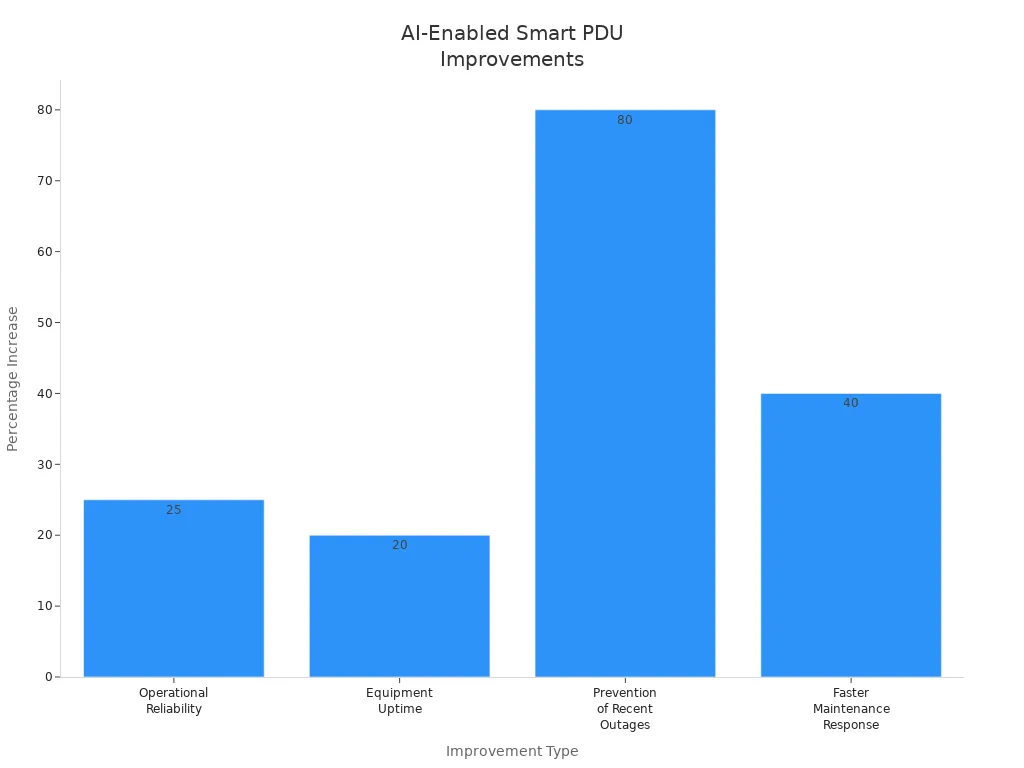
You gain more than just uptime. AI-enabled systems improve operational reliability by 25% and increase equipment uptime by 20%. You prevent 80% of recent outages and respond to maintenance needs 40% faster. The Smart Power Distribution Unit supports these gains with remote management and real-time alerts.
Real-time monitoring gives you detailed power usage metrics. You can spot trends and act quickly. Immediate alerts allow you to prevent equipment failures before they disrupt service.
Aspect | Impact on Cost Savings |
|---|---|
Energy Efficiency | Significant operational cost reductions |
Downtime Reduction | Lower operational costs |
Predictive Maintenance | Maintenance costs lowered by up to 40% |
Remote Management | Saves time and resources |
You save money through energy efficiency and reduced downtime. Predictive maintenance lowers your maintenance costs by up to 40%. Remote management saves time and resources, making your operations more efficient.
ESTEL Smart Power Distribution Unit Features
Remote Management and Intelligent Protocols
You gain full control over your telecom cabinet when you use ESTEL’s Smart Power Distribution Unit. Remote management lets you monitor and manage power distribution from anywhere. You can track electrical parameters in real time and oversee individual circuits. Intelligent protocols help you optimize energy usage and adapt to changing needs. Smart circuit breakers use sensors to detect faults quickly. Intelligent monitoring modules analyze data with AI, supporting predictive maintenance and energy optimization. You make decisions based on accurate, up-to-date information.
Core Technology | Description |
|---|---|
Tracks electrical parameters in real time | |
Branch Circuit Management | Oversees individual circuits for optimal performance |
Flexible Scalability | Adapts to changing power distribution needs |
Precision Energy Optimization | Improves efficiency by monitoring power usage |
Smart Circuit Breakers | Detects faults with sensors and communication |
Intelligent Monitoring Modules | Uses AI for predictive maintenance and optimization |
Remote Management Capabilities | Enables centralized control from remote locations |
Data-Driven Decision Making | Uses collected data for informed energy management |
Tip: Remote management and intelligent protocols help you respond faster to anomalies and prevent failures before they impact your network.
Safety, Surge Protection, and Environmental Control
You protect your telecom equipment with ESTEL’s advanced safety features. Surge protection devices shield your equipment from lightning strikes and electrical disturbances. Built-in safety features guard against overload and short circuits. Environmental controls regulate temperature and humidity, preventing overheating and corrosion. Energy-efficient cooling maintains optimal conditions, reducing the risk of equipment failure. International certifications ensure safety and compliance worldwide.
Feature | Benefit |
|---|---|
Surge Protection Devices | Protects equipment from electrical disturbances |
Environmental Controls | Prevents overheating and moisture-related failures |
Maintains optimal operating conditions | |
International Certifications | Ensures safety and compliance worldwide |
Built-in Safety Features | Guards against overload and short circuits |
Power outages cause 33% of downtime in telecom cabinets.
You can prevent 80% of outages with proactive safety and environmental controls.
Note: Safety, surge protection, and environmental control features in the Smart Power Distribution Unit support AI anomaly detection by providing stable conditions and reliable data for analysis.
Overcoming Traditional Monitoring Challenges
Limitations of Manual Detection
You face many obstacles when you rely on manual monitoring in telecom cabinets. Manual checks often miss subtle power fluctuations. Human error can lead to missed warning signs or delayed responses. You may only discover problems after they have already caused damage. Manual logs and visual inspections take time and do not provide real-time insights. This approach makes it hard to keep up with the fast pace of modern telecom operations.
You also struggle with inconsistent data collection. Different technicians may record information in different ways. This inconsistency makes it difficult to spot trends or predict failures. Manual detection cannot keep up with the volume of data generated by smart devices and sensors. You need a faster, more reliable way to monitor your power systems.
Tip: Manual monitoring leaves gaps in your network’s defense. Automated systems close these gaps and help you act before small issues become big problems.
Transition to AI-Driven Solutions
You can overcome these challenges by adopting AI-driven anomaly detection. AI systems analyze data from your Smart Power Distribution Units in real time. You receive instant alerts about unusual patterns or potential faults. This proactive approach helps you prevent outages and extend equipment life.
When you move to AI-driven solutions, you face several key challenges:
You must collect high-quality data and prepare it for analysis.
You need to choose the right AI model for your specific needs.
Real-time monitoring requires robust data pipelines.
AI systems must learn and adapt as new data arrives.
Integration with existing systems, such as CRM and billing, is essential for smooth operations.
To ensure a successful transition, you should follow best practices:
Integrate AI with your current infrastructure through careful planning.
Use intelligent PDUs with remote monitoring for better energy management.
Upgrade to modular PDUs to allow for future expansion.
Employ real-time monitoring and load balancing to optimize performance.
Add IoT sensors and cloud dashboards for centralized control.
Keep documentation updated for all configuration changes.
Schedule regular maintenance and use AI diagnostics for early fault detection.
Train your staff to use new AI tools and interpret data.
Prioritize cybersecurity to protect your data and systems.
Note: AI-driven monitoring transforms your telecom cabinet management. You gain speed, accuracy, and peace of mind as you protect your network from unexpected failures.
Real-World Applications and Implementation Steps
Case Studies with ESTEL Solutions
You can see the impact of ESTEL solutions through real-world results. Many telecom operators have improved their network reliability and reduced costs by using ESTEL’s Smart Power Distribution Unit and related products. The following tables show how different companies achieved measurable improvements:
Client / Case Study | Performance Metrics and Cost Savings Reported |
|---|---|
Leading Telecom Provider | Energy efficiency up to 97.8%; early issue detection; seamless network expansion |
GreenConnect | 30% reduction in energy use; 25% reduction in downtime; 40% reduction in CO2 emissions |
Case Study | Key Results | Impact on Energy Consumption |
|---|---|---|
Southeast Asia Mobile Operator | Reduced site visits by 38%, mean time to repair dropped from 12 hours to 4 hours, annual O&M costs fell by $500,000 | Significant energy savings through reduced maintenance and improved operational efficiency |
European Tower Company | Improved system uptime by 22%, cut emergency maintenance trips by half | Enhanced reliability and reduced energy waste during outages |
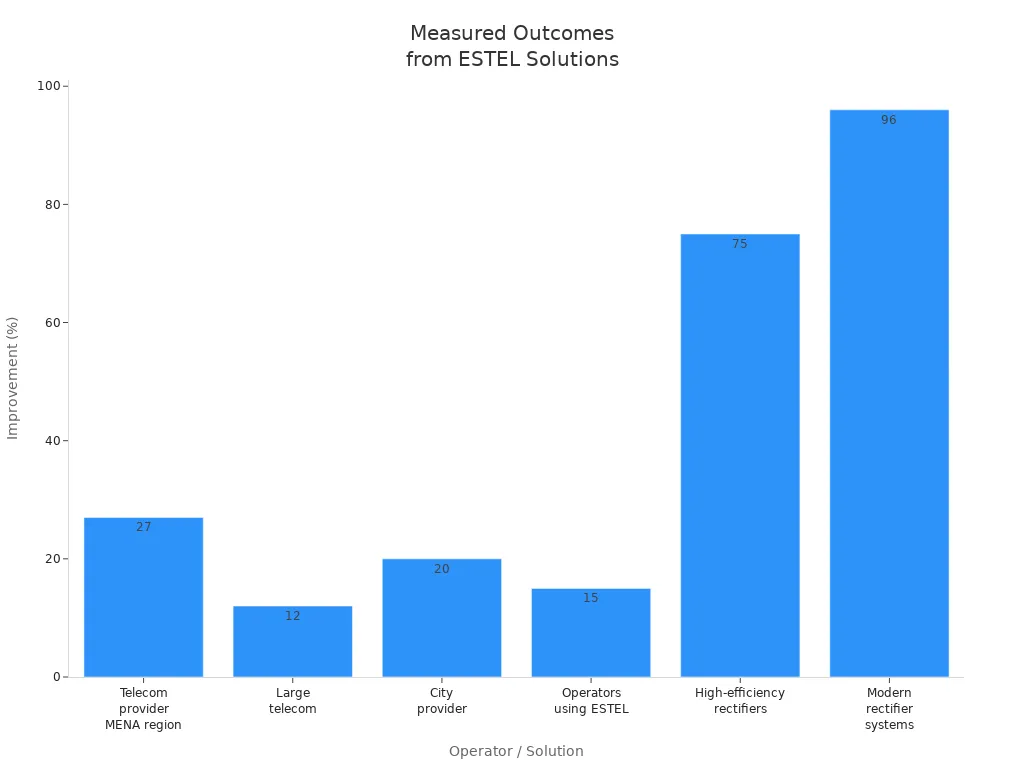
You can also look at other operators who reported up to 35% lower O&M costs, 40% fewer maintenance visits, and a 25% increase in system uptime. The chart below shows percentage improvements from ESTEL solutions across different operators:
Steps for Integrating AI Anomaly Detection
You can follow a clear process to integrate AI anomaly detection into your telecom cabinet infrastructure using ESTEL products. Start by making a list of all devices in your telecom cabinet. Check that each device supports the required network protocols. Connect the Smart Power Distribution Unit to your network using standard cables. Configure the API settings on both the unit and your O&M platform. Test the connection by sending a command and checking for feedback. Monitor the system for any errors or communication issues.
For best results, select technologies that support open communication and reliable performance. Look for devices that use standard network protocols like SNMP or Modbus. Choose hardware that supports remote management and real-time monitoring. These steps help you build a robust, future-ready telecom cabinet.
Tip: Address challenges such as real-time data needs, scalability, and interoperability by choosing solutions designed for growth and resilience.
You gain a powerful advantage when you use AI anomaly detection in Smart Power Distribution Units. Continuous monitoring lets you spot electrical deviations instantly. AI-driven models help you forecast failures and optimize power use. Intelligent PDUs adjust thresholds to prevent overloads and keep your network stable.
Recommendation | Description |
|---|---|
Energy Efficiency | ESTEL PDUs lower your carbon footprint and cut operational costs. |
Reliability | You minimize downtime and protect equipment from power fluctuations. |
Scalability | ESTEL PDUs adapt to your growing infrastructure needs. |
Compliance | You meet industry standards and avoid regulatory penalties. |
AI Integration | Predictive power management optimizes energy allocation and reduces downtime. |
Sustainability | Green technology enhances energy efficiency and supports global sustainability goals. |
Cybersecurity | Enhanced security features protect your critical systems from threats. |
Future-proof your telecom network with ESTEL’s advanced solutions. You ensure reliable service, save costs, and support sustainable growth.
FAQ
What is AI anomaly detection in Smart PDUs?
AI anomaly detection uses machine learning to monitor power data. You spot unusual patterns and minor fluctuations before they cause failures. This helps you keep your telecom cabinet reliable.
How does remote management improve telecom cabinet reliability?
Remote management lets you monitor and control power distribution from anywhere. You respond quickly to issues and prevent downtime. You save time and resources with real-time alerts.
Why should you choose ESTEL Smart Power Distribution Units?
You get advanced features like surge protection, intelligent protocols, and environmental controls. ESTEL units support AI monitoring and remote management. You improve reliability and reduce maintenance costs.
Can you integrate AI anomaly detection with existing telecom infrastructure?
Yes, you can connect ESTEL Smart PDUs to your current systems. Use standard protocols like SNMP or Modbus. You enable real-time monitoring and predictive maintenance without major upgrades.
What are the main benefits of AI-powered monitoring?
You prevent failures, reduce downtime, and optimize energy use.
You extend equipment lifespan and lower operational costs.
You gain peace of mind with reliable, automated protection.
See Also
Ensuring Consistent Power Supply for Telecom Equipment Cabinets
Achieving Effective Monitoring Solutions for Outdoor Telecom Cabinets
Understanding ESTEL PDUs and Their Importance in Data Centers
A Complete Overview of Risk Assessment for Telecom Batteries
Solar Energy Storage Solutions for Telecom Cabinet Applications
CALL US DIRECTLY
86-13752765943
3A-8, SHUIWAN 1979 SQUARE (PHASE II), NO.111, TAIZI ROAD,SHUIWAN COMMUNITY, ZHAOSHANG STREET, NANSHAN DISTRICT, SHENZHEN, GUANGDONG, CHINA
