Open API of Smart PDUs in Telecom Cabinets: Data Interconnection with Third-Party O&M Platforms


You can achieve seamless data interconnection in your telecom cabinets by using Open API-enabled Smart Power Distribution Unit solutions from ESTEL. This technology lets you connect your equipment to third-party O&M platforms for real-time monitoring and control. Interoperability matters because it helps you manage your network efficiently and reduces downtime. Real-time data sharing gives you a clear view of your operations and supports fast decision-making.
Key Takeaways
Open APIs enable seamless data interconnection between Smart Power Distribution Units and third-party O&M platforms, improving operational visibility.
Real-time monitoring allows for quick decision-making, helping to prevent downtime and respond to issues as they arise.
Using standardized protocols like Modbus and SNMP ensures reliable communication and easy integration with existing systems.
Centralized management reduces the need for onsite visits, saving time and resources while enhancing energy efficiency.
Predictive maintenance helps identify potential issues before they escalate, ensuring network reliability and minimizing service interruptions.
Open API Role in Smart Power Distribution Unit Integration
Seamless Data Interconnection with O&M Platforms
You can achieve seamless data interconnection in your telecom cabinets by using Open APIs. These interfaces allow your Smart Power Distribution Unit to communicate directly with third-party O&M platforms. You gain operational visibility and can manage your power systems from a single dashboard. Open APIs eliminate compatibility issues between different systems. You send commands, receive status updates, and monitor real-time power usage without switching between multiple platforms.
Open APIs act as a bridge, connecting your Smart Power Distribution Unit to various O&M platforms. This connection improves efficiency and reduces manual work.
Here is a table that shows the main functions of Open APIs in Smart Power Distribution Unit integration:
Function Description | Details |
|---|---|
Seamless Integration | Open APIs facilitate the integration of Smart Power Distribution Units with third-party O&M platforms, improving operational visibility. |
Real-time Data Exchange | They enable immediate monitoring and control, allowing quick responses to changes in the telecom environment. |
Interoperability | The API serves as a bridge for different systems to communicate, eliminating compatibility issues and enabling command sending, status updates, and real-time power usage monitoring. |
Centralized Control | Users can manage their Smart Power Distribution Units from a single platform, overseeing power and cabinet data efficiently. |
You can see how Open APIs simplify your workflow and help you maintain control over your telecom infrastructure.
Real-Time Monitoring and Control
You benefit from real-time monitoring and control when you use Open APIs with your Smart Power Distribution Unit. Immediate access to operational data lets you make quick decisions. You track power usage, environmental conditions, and equipment status as events happen. This level of visibility helps you prevent downtime and respond to issues before they escalate.
Open APIs support various communication protocols, such as Modbus RTU, Modbus TCP/IP, SNMP, and MQTT. These protocols ensure that your Smart Power Distribution Unit integrates smoothly with different O&M platforms. You gain centralized monitoring, automation, and analytics in one place. Predictive insights transform your operational data into actionable information, helping you optimize performance and plan maintenance.
Here is a table that highlights how Open APIs facilitate real-time monitoring and control:
Feature | Description |
|---|---|
Centralized Monitoring | Integrates monitoring, automation, and analytics into one platform for efficient management. |
Real-time Data Access | Enables immediate access to operational data for timely decision-making. |
Communication Protocols | Supports various protocols (Modbus RTU, Modbus TCP/IP, SNMP, MQTT) for seamless integration. |
Predictive Insights | Transforms operational data into actionable insights through advanced analytics. |
Closed-loop Framework | Facilitates full telecom tower monitoring and orchestration of both intelligent and non-intelligent equipment. |
You gain the ability to monitor and control your Smart Power Distribution Unit remotely. This capability improves reliability and helps you maintain optimal conditions in your telecom cabinets.
API Architecture and Data Flow in ESTEL Solutions
Open API Standards and Protocols
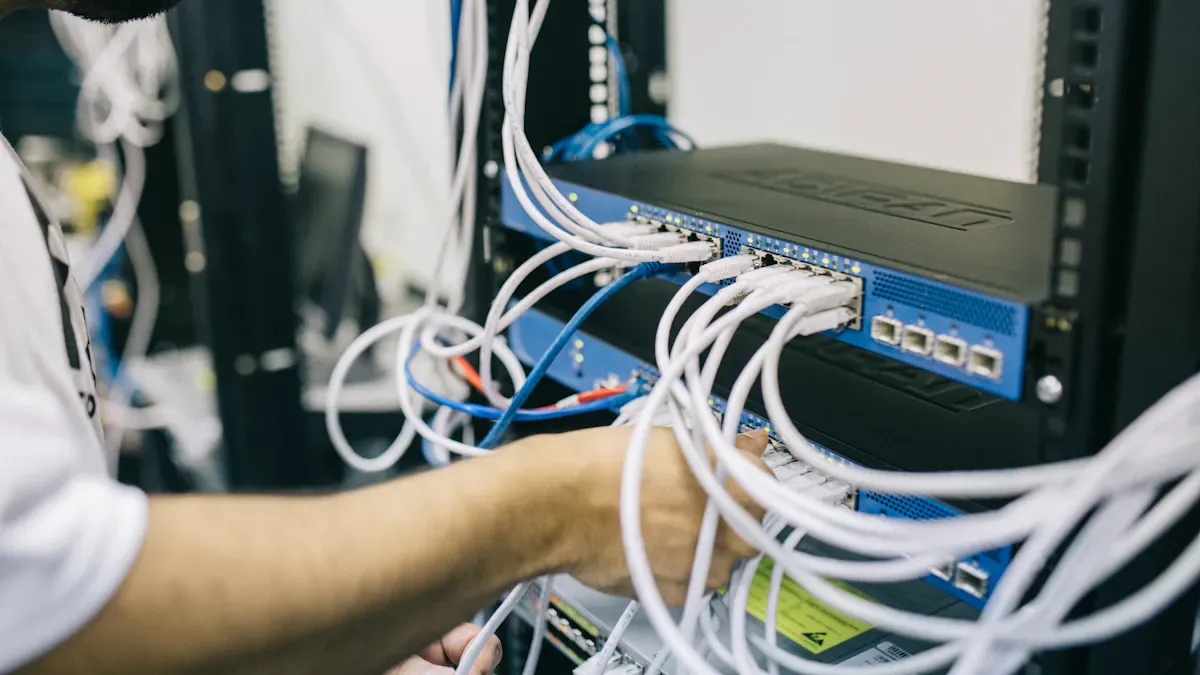
You interact with ESTEL’s Open API using industry-recognized standards. ESTEL follows protocols such as Modbus RTU, Modbus TCP/IP, SNMP, and MQTT. These protocols help you connect your Smart Power Distribution Unit to third-party O&M platforms without compatibility issues. You benefit from reliable communication and easy integration. ESTEL’s commitment to international standards, including ISO9001, ensures that you receive a solution that meets global requirements.
Tip: When you select a Smart Power Distribution Unit, check for support of multiple protocols. This feature gives you flexibility and future-proofing for your telecom infrastructure.
Data Flow Between Smart PDUs and O&M Platforms
You see data flow smoothly between your Smart Power Distribution Unit and O&M platforms. The unit collects real-time information, such as power usage, environmental conditions, and equipment status. The Open API transmits this data to your O&M platform, where you can monitor and control operations. You send commands from your dashboard, and the Smart Power Distribution Unit responds instantly. This process creates a closed-loop system for efficient management.
Here is a simple table showing the data flow steps:
Step | Action |
|---|---|
Data Collection | Smart Power Distribution Unit gathers data |
Data Transmission | API sends data to O&M platform |
Command Execution | O&M platform sends instructions back |
Feedback | Unit updates status and confirms actions |
Security and Access Control
You protect your telecom infrastructure with ESTEL’s robust security features. The Open API uses encryption and authentication to secure data exchanges. You control access by setting user permissions and roles. Only authorized users can manage the Smart Power Distribution Unit or view sensitive information. ESTEL’s solutions help you comply with industry regulations and prevent unauthorized access.
Note: Always update your access control settings and monitor API activity. This practice keeps your system safe and reliable.
You gain peace of mind knowing that ESTEL’s Smart Power Distribution Unit offers secure, standards-based integration with third-party platforms.
Integration Challenges and Solutions
Compatibility with Legacy Systems
You may face challenges when connecting Smart Power Distribution Units to older telecom systems. Many legacy systems use different protocols or hardware. ESTEL addresses these issues with flexible and modular designs. You can integrate new units without replacing your entire setup. This approach saves time and money.
Here is a table that shows how ESTEL solutions help you connect with legacy systems:
Feature | Description |
|---|---|
Modular Designs | ESTEL solutions offer modular designs that allow for easy integration with existing systems. |
Flexible Input Options | Supports various input configurations, enabling connection to both new and legacy systems. |
Communication Protocol Support | Compatible with a wide range of communication protocols, facilitating seamless integration. |
Backward Compatibility | Allows upgrades without the need to replace entire systems, protecting existing investments. |
Hybrid Operation | Supports hybrid operation for smoother and cost-effective upgrades. |
Customizable and Scalable Systems | Systems can be tailored to specific needs and scaled as the network grows. |
You can upgrade your network step by step. This method protects your investment and keeps your operations running smoothly.
Security Risks and Mitigation
You must protect your telecom infrastructure from security threats. Common risks include unauthorized access, data breaches, and network attacks. ESTEL uses several security measures to keep your system safe.
Security Measure | Purpose |
|---|---|
Data Protection through Encryption | Keeps your data private and safe from unauthorized users. |
Authentication Protocols | Ensures only authorized users can access and control the smart power distribution units. |
Network Segmentation | Limits access points, reducing the risk of unauthorized control over your power grid. |
Intrusion Detection Systems | Monitors for suspicious activity, increasing overall security and reliability. |
You should also update firmware regularly and use access controls. These steps help you meet industry standards and prevent attacks.
Tip: Always monitor your system for unusual activity. Quick action can stop threats before they cause damage.
Reliable Data Synchronization
You need accurate and timely data for effective management. Data synchronization ensures that your Smart Power Distribution Unit and O&M platform share the same information. ESTEL’s Open API supports real-time data exchange. This feature helps you avoid errors and delays.
You can trust the system to update status, alarms, and control commands instantly. Reliable synchronization improves decision-making and keeps your network stable. Regular checks and system updates further enhance data accuracy.
Reliable data means you can respond faster and keep your telecom operations efficient.
Operational Benefits for Telecom Operators
Efficiency and Centralized Management with ESTEL
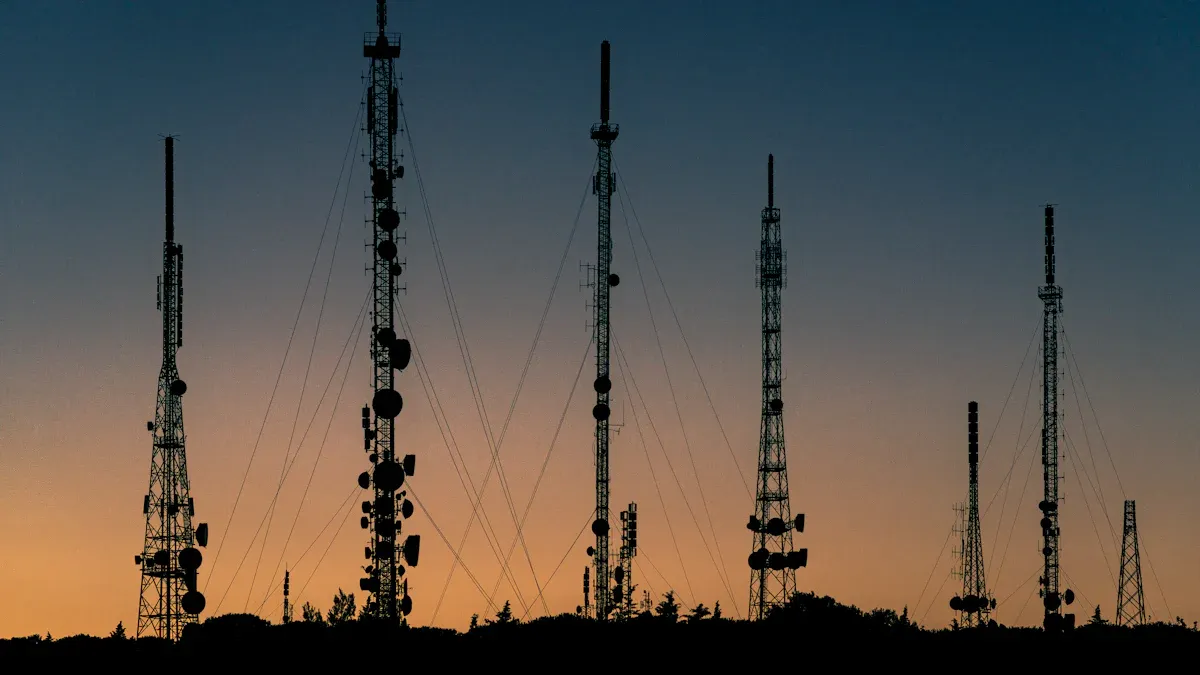
You gain significant efficiency when you use centralized management for your telecom cabinets. ESTEL’s solutions let you control and monitor power devices from any location. You do not need to send technicians to each site, which saves time and resources. You can turn equipment on or off remotely, reducing energy waste. Real-time alerts notify you about power or environmental issues, so you can act quickly and prevent downtime. As your network grows, you can add more modules to your setup. This modular approach supports high-density environments and helps you meet sustainability goals.
Remote management reduces onsite visits.
Individual outlet control cuts energy waste.
Real-time alerts extend equipment lifespan.
Modular design supports network expansion.
Enhanced Monitoring and Predictive Maintenance
You improve network reliability with enhanced monitoring and predictive maintenance. Power-related failures cause almost one-third of telecom network downtime. Real-time monitoring tracks voltage and temperature, so you can spot problems early. AI-enabled predictive maintenance uses sensor data to forecast faults. This approach helps you fix issues before they cause service interruptions. You keep your network running smoothly and avoid unexpected outages.
Real-time monitoring detects issues early.
Predictive maintenance forecasts faults.
Early action minimizes service interruptions.
Simplified O&M Workflows
You save money and time with simplified operations and maintenance workflows. ESTEL’s Smart Power Distribution Unit helps you cut average O&M costs by 25-35%. Upgrading to higher efficiency can save over $600 per cabinet each year. These savings add up across your entire network, reaching millions of dollars. The table below shows how these improvements benefit your operations:
Metric | Statistic | Explanation |
|---|---|---|
Average O&M Cost Reduction | Energy savings and hybrid power integration | |
Annual Energy Savings per Cabinet | Over $600 saved | Higher efficiency cuts nearly 4,000 kWh yearly |
Network-wide Savings | Millions of dollars | Savings scale across large telecom networks |
You gain reduced downtime, lower maintenance costs, improved energy efficiency, and enhanced equipment safety when you integrate these solutions into your telecom infrastructure.
Implementation Guide for Smart Power Distribution Unit Integration
Recommended Technologies and Steps
You can integrate ESTEL Smart Power Distribution Units into your telecom cabinets by following a clear process. Start by preparing your cabinet. Remove any debris and check that the cabinet size matches the PDU specifications. Next, position the PDU securely in the designated spot. If you use a rackmount model, align it with the rack’s mounting holes for stability. Connect the PDU to the main power source, making sure the voltage and current ratings match the unit’s capacity. Distribute power by connecting your telecom equipment to the PDU outlets. Use labeled cables for easy identification. Finally, test the system. Power on the PDU and confirm that all devices receive consistent power. Watch for any signs of overheating or irregularities.
Prepare the cabinet and verify dimensions.
Mount the PDU securely.
Connect to the primary power source.
Attach telecom equipment to PDU outlets.
Test functionality and monitor for issues.
Best Practices for Deployment
You can ensure a safe and efficient deployment by following industry best practices. Invest in quality cable management tools to extend equipment lifespan. Route power cords along cabinet side braces for better organization. Inspect cables regularly for wear and replace them as needed. Always ground the power unit to prevent electrical hazards. Keep your workspace clean during installation. Wear insulated gloves and safety goggles for protection. Verify compliance with local electrical codes. Keep a fire extinguisher nearby. Install the PDU at eye level for convenience. Use mounting brackets or toolless methods for secure installation. Label each power cord for easy maintenance. Prioritize security by updating firmware and using access controls. Monitor for unauthorized access or unusual activity.
ESTEL Case Example
You can learn from a real-world ESTEL integration. The team established a governance model before starting, which ensured accountability. They educated staff about new technologies, building confidence. Standardizing protocols and data schemes made device communication easier. ESTEL used modular designs for easy upgrades and real-time monitoring to boost efficiency. Intelligent power management optimized energy use.
Approach | Key Benefit |
|---|---|
Modular designs | Easy upgrades and IoT integration |
Real-time monitoring | Improved efficiency, less downtime |
Intelligent power management | Optimized load and energy consumption |
You reduce on-site visits, resolve issues quickly, and lower maintenance costs with this approach.
You unlock seamless data interconnection and operational improvements with Open API-enabled Smart Power Distribution Units from ESTEL. Centralized management, real-time monitoring, and energy efficiency help you support critical systems and simplify troubleshooting. The table below shows how ESTEL maximizes your telecom operations:
Feature | Benefit |
|---|---|
Real-time monitoring | Quick response to power issues |
Load balancing | Stable operation for multiple devices |
Energy efficiency | Lower costs and sustainable performance |
You overcome integration challenges by using clear standards, AI-driven energy management, and IoT technologies. Future trends include remote monitoring, predictive analytics, and eco-friendly solutions.
FAQ
How do you connect ESTEL Smart PDUs to third-party O&M platforms?
You use the Open API with supported protocols like Modbus TCP/IP or SNMP. The API lets you link your PDU to your O&M platform for real-time monitoring and control.
What security features protect your data during integration?
You get encryption and authentication for all API communications. You set user permissions to control access. Regular firmware updates help keep your system secure.
Can you monitor environmental conditions with ESTEL Smart PDUs?
Yes. You track temperature, humidity, and other environmental factors. The PDU sends real-time data to your O&M platform, helping you maintain optimal cabinet conditions.
What are the main benefits of using ESTEL’s Open API-enabled PDUs?
You gain centralized management, real-time monitoring, and predictive maintenance. You reduce downtime, save energy, and simplify your O&M workflows.
See Also
Exploring ESTEL PDUs And Their Importance In Data Centers
Ensuring Consistent Power Supply For Telecom Cabinet Operations
Exploring Various Applications Of Telecom Cabinets Today
Solar Energy Storage Solutions For Telecom Cabinet Efficiency
CALL US DIRECTLY
86-13752765943
3A-8, SHUIWAN 1979 SQUARE (PHASE II), NO.111, TAIZI ROAD,SHUIWAN COMMUNITY, ZHAOSHANG STREET, NANSHAN DISTRICT, SHENZHEN, GUANGDONG, CHINA
