Best battery backup for 48V telecom power systems

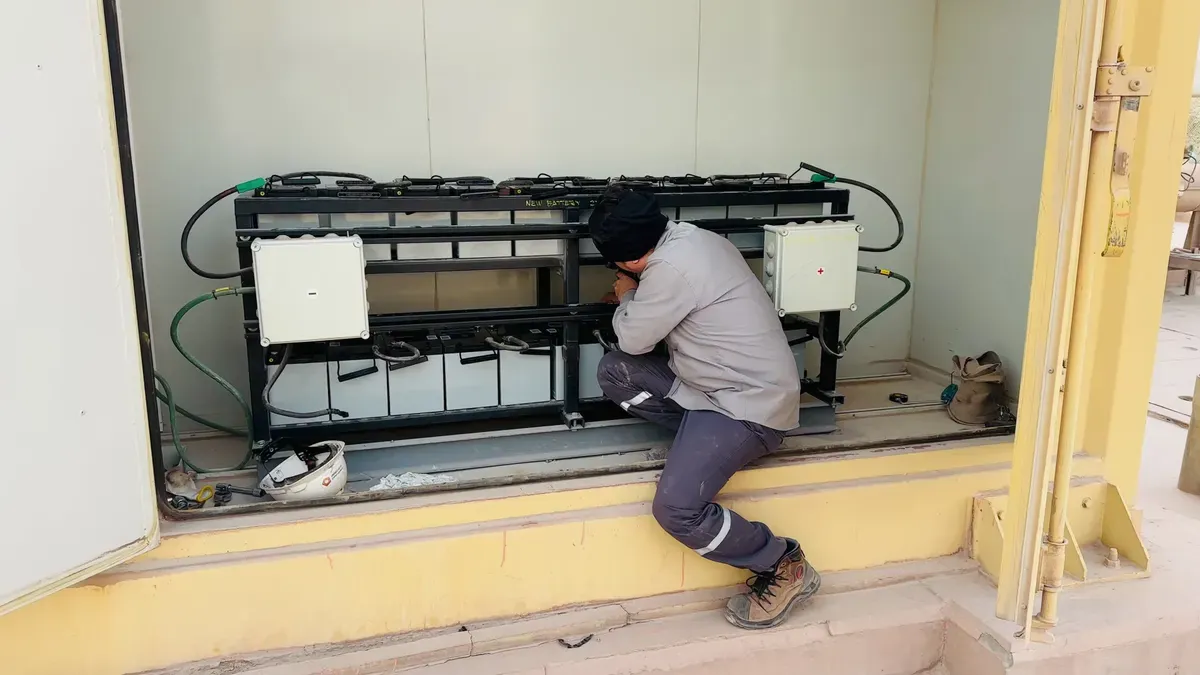
Lithium-ion batteries, specifically LiFePO4, now rank as the best overall battery backup for 48V telecom power systems. You get long cycle life, low maintenance, and a compact footprint. VRLA batteries remain a cost-effective fit for some sites. NiCd still suits harsh-temperature or high-reliability niches. Site conditions decide the best choice.
This guide compares technologies and shows where each fits. You also get a step-by-step selection method. ESTEL's Telecom Power System and 48V battery options support that decision. Reliable 48V backup keeps critical telecom equipment running. A well-matched battery backup system protects power continuity during outages. Choose your 48V backup power source with care. That 48V backup power source protects every 48V DC power link. Good 48V DC power design starts with the right battery. Every 48V DC power site needs a proven backup.
Key Takeaways
Lithium-ion (LiFePO4) batteries are the best overall choice for 48V telecom backup because they last longer and need less maintenance.
VRLA batteries cost less upfront and work well for short backup times, while NiCd batteries handle extreme temperatures and heavy use.
Consider total cost over the battery's life, not just the purchase price, because lithium batteries save money in the long run.
Size your battery bank by calculating your load and desired backup hours, and follow standards like IEEE 485.
Check for certifications like UL 2271, UN38.3, and IEC 62133 to ensure safety and reliability.
Comparing 48V Telecom Power Systems
Three chemistries dominate 48V telecom power systems today: VRLA, lithium-ion (LiFePO4), and NiCd. Each one earns its place at different telecom sites. Chemistry choice drives cycle life, footprint, and service cost. The comparison below focuses on the metrics that matter most when you specify a 48V DC power supply system.
Performance and Lifespan
Cycle life separates these chemistries most clearly. A LiFePO4 module rated for 48V service typically delivers 3,000 to 6,000 cycles at 80% depth of discharge. VRLA manages roughly 500 to 1,500 cycles at the same depth. NiCd tolerates deep cycling well, yet published cycle figures vary widely by cell design, so treat vendor data as your reference. That gap matters at a busy telecom site, where every discharge event counts against the battery.
Metric | VRLA (lead-acid) | LiFePO4 |
|---|---|---|
Cycle life (80% DoD) | ~500–1,500 cycles | ~3,000–6,000 cycles |
Design / float life | 3–5 years (shorter when hot) | ~10 years under proper settings |
Usable capacity | Often limited to 50–80% to protect life | ~90–100% usable routinely |
Usable capacity shapes real autonomy. VRLA users often cap depth of discharge at 50–80% to protect life. LiFePO4 routinely uses 90–100% of rated capacity. A 48V 100Ah LiFePO4 module also drops into a 19-inch rack at about one-third the weight of an equivalent lead-acid block. Recharge speed favors lithium too, though vendors quantify it differently, so check the datasheet for your 48V DC power design.
Cost, Maintenance, and Compliance
Upfront price favors VRLA. Total cost of ownership tells a different story. Lead-acid batteries cost less at purchase, yet their weight, shorter lifespan, and maintenance needs erode that advantage against 48V lithium batteries. Industry sources report 30–50% TCO savings for LiFePO4 versus VRLA across a 10-year site lifespan. Replacement intervals reinforce the point: VRLA often needs unplanned swaps every 2–3 years, while LiFePO4 runs 10+ years on a planned schedule.
Maintenance burden differs just as sharply. VRLA strings require quarterly maintenance cycles. LiFePO4 needs virtually zero maintenance, which cuts truck rolls and labor at remote 48V sites. NiCd sits between the two on upkeep and shines where temperatures swing hard. Plan your spare-parts stock around the chemistry you choose, because swap logistics differ.
Compliance anchors every choice. Sizing for a telecom DC power system commonly follows IEEE 485 methodology, which applies load profiles, temperature correction, and a 1.25 aging factor. Look for ISO 9001-aligned manufacturing, plus NEBS Level 3, UL, CE, UN38.3, and IEC 62133 certifications where your telecom operator requires them. Outdoor 48V battery backup configurations often carry IP65 ratings and operate from -20°C to 60°C. Match certifications to your telecom contract before you commit.
Legacy huts still run traditional –48V lead-acid battery stacks, and that familiarity has value for field teams. Modern telecom power supply systems increasingly pair a 48V DC power supply with lithium strings on the same 48 volt dc power bus. Either path can deliver reliable backup power when you size it correctly. A reliable 48V battery backup keeps backup ready through long outages, and the right telecom cabinets protect that investment outdoors. Compare telecom network deployments on total cost, not sticker price, and let telecom standards guide the final call.
Strengths of 48V Battery Backup Systems
VRLA and NiCd Use Cases
VRLA earns its place through low upfront cost, an established supply chain, and maintenance practices your field teams already know. A 48V string typically uses 24 two-volt VRLA cells, a familiar layout for technicians who service 48V DC power sites.
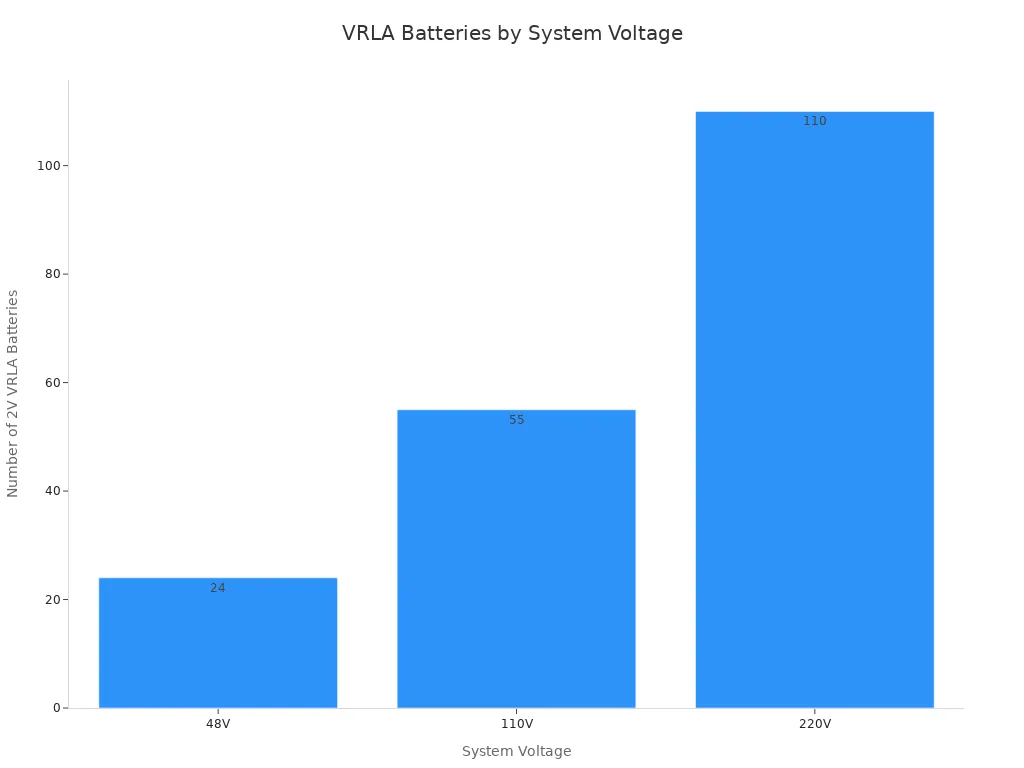
These batteries fit cell towers and base stations in storm-prone regions, central offices that need short- to medium-duration backup while generators start, and remote sites paired with solar or hybrid energy. Keep in mind that VRLA degrades invisibly. A string can pass a voltage check yet lose 30–40% of rated runtime, and only a full discharge test confirms real capacity. Rated service life runs 3–5 years, so a 10-year site may replace the string two to three times. Plan maintenance access accordingly.
NiCd suits harsher ground. It tolerates extreme temperatures, vibration, and frequent cycling, which is why railway lighting in remote areas and telecom base stations with heavy charge/discharge patterns still rely on it. Where access is difficult and reliability matters more than price, NiCd remains a sound fit for your 48V battery backup systems.
Lithium-Ion for Modern Sites
Lithium-ion batteries bring compact design, strong system intelligence, and low maintenance to modern telecom sites. A 48V 200Ah lithium pack stores 9,600Wh in a footprint far smaller than equivalent lead-acid battery stacks, which helps at space-constrained or data-center-adjacent locations. A 48V 200Ah configuration paired with a roughly 600W UPS unit is a common reference point for edge and small-cell deployments.
The built-in BMS monitors status in real time and supports remote monitoring workflows. That intelligence reduces on-site testing pressure across distributed portfolios. One remote base station case shows the payoff: switching from lead-acid to 48V lithium extended the maintenance cycle from every 6 months to over 2 years. Cycle life above 6,000 cycles and fast charging restore backup readiness quickly after a discharge. For modern 48V DC power designs, lithium keeps backup power predictable across the service life.
Key Criteria for 48V Battery Backup
Load, Autonomy, and Environment
Start with your load profile. Read the average and peak draw of every piece of equipment on the 48V DC bus, then set an autonomy target in hours. A worked example keeps this concrete: roughly 3 hours of runtime at ~400W requires two external 48V battery modules. Telecom and network applications also use 12V, 24V, and 48V DC backup configurations, so confirm your bus voltage before you size anything. Older sites running 12V lead-acid batteries may need a different module count than a modern 48V DC power supply system.
Environment decides enclosure and thermal design. Use the table below as a checklist for outdoor 48V backup power.
Consideration | Recommendation |
|---|---|
Enclosure rating | NEMA 3R or IP65 cabinet for 12V–48V LiFePO4/AGM batteries at remote sites |
Temperature range | Passive ventilation suits most climates; add fans or heaters only above 40°C or below −10°C |
Ventilation | Downward-angled passive vents with mesh filters; at least two cable knockouts with grommets |
High ambient temperatures above 35°C warrant extra attention. A temperature-compensated charging sensor belongs in any outdoor cabinet or uncontrolled indoor space.
Standards, Footprint, and Total Cost
Certification expectations vary by contract. UL 2271 covers fire and electrical risk containment. UN38.3 covers transport safety. IEC 62133 covers portable use safety. Together these certifications cut field failure risk, which protects your battery backup uptime.
UL 2271: crush, overcharge, thermal runaway, submersion, extreme temperature
UN38.3: vibration, altitude, external short circuit
IEC 62133: overcharge, forced discharge, temperature cycling
Footprint and total cost complete the picture. Per-cycle cost analysis shows a ~$1,200 lithium battery lasting 3,000 cycles costs about $0.40/cycle, versus a ~$600 lead-acid battery lasting 800 cycles at about $0.75/cycle. Lithium also needs roughly 90% less maintenance. ESTEL's Telecom Power System (90–300 Vac input, natural cooling, 19-inch rack or cabinet mounting, up to 150A output) pairs with 48V battery banks in outdoor cabinets, so your 48V DC power supply fits the same footprint as your backup power source.
Step-by-Step Selection for Battery Backup With 48V
Assess Site and Load
Start with the site itself. Note the temperature range, enclosure rating, access for service crews, and power quality at the 48V DC power bus. A remote mountain site with poor grid quality needs more autonomy than a city cabinet with a reliable feed.
Next, calculate load and autonomy. Use the standard sizing relation: required capacity in Ah = (load power in W × backup time in h) / (system voltage in V × inverter efficiency × depth of discharge × aging factor). A worked example makes this concrete. Take a 3,000 W load, 2 hours of backup, a 48V system, 92% inverter efficiency, 80% depth of discharge, and an 80% aging factor. DC current draw is 3,000 / (48 × 0.92) = 67.9 A. Required capacity is (67.9 × 2) / (0.80 × 0.80) = 212 Ah.
Quantity | Formula |
|---|---|
Required capacity (Ah) | (P_load × t_backup) / (V_system × η_inv × DoD × k_aging) |
DC current draw (A) | P_load / (V_system × η_inv) |
Batteries in series | V_system / V_battery, rounded up |
Finally, define maintenance capability. A site your team visits quarterly suits VRLA. A remote site with long truck rolls favors lithium-ion batteries and their low upkeep.
Shortlist and Validate
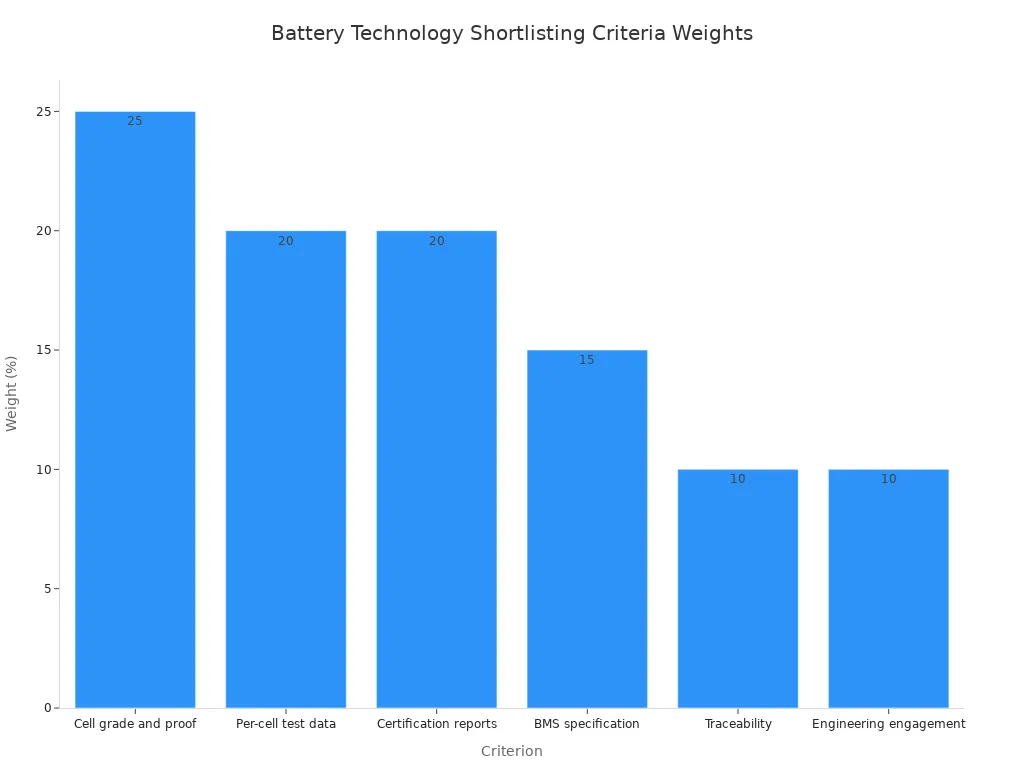
Score each candidate against weighted criteria. Cell grade and proof carry 25%, per-cell test data 20%, certification reports 20%, BMS specification 15%, traceability 10%, and engineering engagement 10%.
Verify compliance at the model level, not the brand level. Record the exact model number, the standard (such as IEC 62619 for lithium safety), the certificate number, and the expiry date. Confirm warranty terms per component, including cycle limits and end-of-warranty capacity.
Watch for red flags: refusal to share per-cell test data, vague certification, no traceability, or pressure to skip UN38.3. Validate the shortlist with a pilot or reference site before you commit. ESTEL supplies lithium iron phosphate batteries for telecom applications alongside its Telecom Power System and outdoor battery cabinets, and its team can support sizing and specification for your battery backup with 48V.
Lithium-ion remains the best overall choice for 48V telecom power systems. VRLA and NiCd still fit specific sites. Load profile, autonomy, environment, maintenance capability, and standards compliance decide your pick. Apply the step-by-step guide at every 48V DC power site.
Weigh total cost of ownership, not sticker price. Cycle cost shows the real value of battery backup systems. ESTEL supports specification and procurement for reliable 48V backup. Match each 48V DC power design to a proven backup power source. Telecom operators reward careful 48V planning. Your 48V telecom deployment deserves a tested battery backup. Choose 48V batteries with confidence. Telecom cabinets protect that 48V investment. Telecom teams value clear 48V specs. Telecom networks depend on it. Telecom standards guide the call. 48V telecom sites stay online. Telecom buyers and telecom planners win.
FAQ
Which battery chemistry works best for a 48V telecom site?
Lithium-ion (LiFePO4) suits most 48V telecom sites for backup power. A 48V LiFePO4 string delivers 3,000 to 6,000 cycles and saves rack space. Pick VRLA for sites with short autonomy. Pick NiCd for telecom sites in extreme temperatures. Site conditions decide every 48V telecom choice.
How long do 48V batteries last?
A 48V LiFePO4 battery runs 10+ years under proper settings. A 48V VRLA string lasts 3 to 5 years, and heat shortens that span. Plan telecom backup capacity around that span. Schedule 48V telecom replacements in advance, and keep 48V spares on hand.
How do I size a 48V battery bank for backup power?
Read your 48V load profile and set a telecom autonomy target. Roughly 3 hours at ~400W needs two external 48V modules. Apply IEEE 485 sizing to your 48V DC power design. Confirm the 48V telecom bus voltage first.
Which certifications should a 48V battery carry?
Check UL 2271, UN38.3, and IEC 62133 at the model level. Confirm IEC 62619 for 48V lithium safety. Record each telecom certificate number and expiry date. These certificates protect telecom backup uptime. Match every certificate to your 48V telecom contract before you commit.
Can I pair lithium packs with an existing 48V DC power system?
Yes. A 48V 200Ah lithium battery pack stores 9,600Wh and pairs with a roughly 600W UPS unit for backup power. ESTEL's Telecom Power System accepts 90–300 Vac input and delivers up to 150A on the 48V bus. It mounts in a 19-inch telecom rack or outdoor telecom cabinet.
See Also
Methods For Calculating Power Systems And Batteries In Telecom Cabinets
Grid-Tied Solar Inverter And Battery Systems For Telecom Cabinet Applications
Solar Energy Storage Power Systems Designed For Telecom Cabinet Use
Energy Storage Battery Solutions Specifically For ESTEL Telecom Cabinets
Ensuring Reliable Power Supply For Telecom Cabinet Operations
CALL US DIRECTLY
86-13752765943
3A-8, SHUIWAN 1979 SQUARE (PHASE II), NO.111, TAIZI ROAD,SHUIWAN COMMUNITY, ZHAOSHANG STREET, NANSHAN DISTRICT, SHENZHEN, GUANGDONG, CHINA
