BMS-Linked Telecom Power System for Energy Storage Cooperative Power Supply


You rely on BMS-linked telecom power systems to achieve stable energy storage and continuous power for your telecom operations. Many telecom towers, especially in regions like the Middle East and Africa, now integrate Battery Management Systems to boost backup reliability. ESTEL stands out as a leader in the telecom cabinet sensor market, offering advanced automation and real-time monitoring. By integrating BMS, EMS, and PCS, you ensure seamless operation. ESTEL’s Telecom Power System and Rectifier System support your need for efficient and resilient infrastructure.
Key Takeaways
BMS enhances battery life and efficiency by monitoring voltage, current, and temperature in real time.
Integrating EMS and PCS with BMS optimizes energy management and ensures reliable power operations.
ESTEL's modular design allows for easy maintenance and scalability without downtime.
Real-time monitoring and predictive maintenance reduce costs and improve system reliability.
Advanced safety features protect equipment and staff, ensuring high network availability.
System Integration and Key Components
BMS Role in Telecom Power System
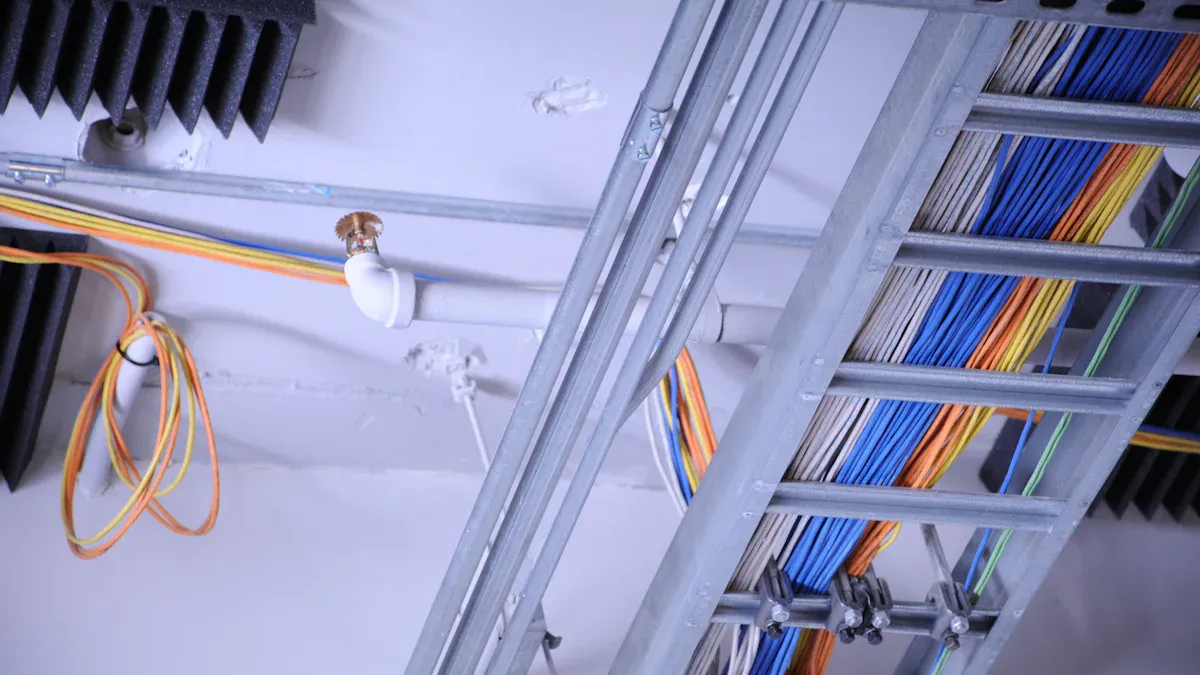
You depend on the Battery Management System (BMS) to monitor and control your energy storage. The BMS acts as the foundation for safe and efficient battery operation. It tracks battery voltage, current, temperature, and state of charge in real time. You gain protection from overcharging and overdischarging, which extends battery life and boosts efficiency. The BMS also ensures that your batteries operate within safe limits, reducing risks and maintenance needs.
The BMS provides three main functions that help you maintain cooperative energy storage:
Function | Description |
|---|---|
Monitoring | Real-time tracking of battery voltage, current, temperature, and SOC. |
Control | Manages battery status for safety and longevity. |
Protection | Prevents overcharging and overdischarging, improving battery performance. |
You benefit from advanced testing and monitoring features. Environmental and accelerated life testing help you predict battery durability. Real-time monitoring captures electrical and mechanical performance, giving you a comprehensive view of battery health.
Evidence Description | Key Insights |
|---|---|
Environmental Testing | Shows how temperature and mechanical stress affect BMS durability. |
Accelerated Life Testing | Predicts long-term battery performance using statistical methods. |
Real-time Monitoring | Tracks electrical and mechanical response during vibration exposure. |
EMS and PCS Functions
You rely on the Energy Management System (EMS) and Power Conversion System (PCS) to optimize your telecom power operations. The EMS acts as the brain, making decisions based on grid needs and market signals. It sends instructions to both the BMS and PCS, ensuring that your energy storage operates efficiently.
EMS oversees scheduling, data collection, and network monitoring.
PCS manages charging and discharging, converting AC to DC power for your equipment.
Function | EMS (Energy Management System) | PCS (Power Conversion System) |
|---|---|---|
Role | Decision-making, energy scheduling, monitoring | Controls charging/discharging, AC/DC conversion |
The EMS and PCS interact with the BMS to maintain efficiency and safety. The EMS schedules battery operations, while the PCS handles the actual charge and discharge processes. This teamwork keeps your system reliable and responsive.
Advanced communication technologies now enhance integration between BMS, EMS, and PCS. Real-time data management improves operational efficiency and reliability. You see these systems working together as a cohesive infrastructure.
ESTEL Product Integration
You experience seamless integration when you use ESTEL’s Telecom Power System and Rectifier System. These products support your need for reliability and adaptability. The Telecom Power System offers high energy efficiency, advanced protection, and modular design. You can easily maintain and scale your setup with hot-swappable modules.
Feature | Description |
|---|---|
Energy Efficiency | Efficiency rating over 91%, reducing energy loss and cooling needs. |
Advanced Protection | Safeguards against voltage fluctuations and short circuits. |
Modular Design | Allows easy maintenance and scalability with hot-swappable modules. |
Operating Conditions | Functions in extreme environments, ensuring reliability. |
The Rectifier System delivers adjustable output voltages and hot-pluggable systems for high-performance environments. You can quickly replace modules without disrupting operations, which is ideal for critical telecom infrastructure.
Feature | Description |
|---|---|
Adjustable Output Voltage | Rack-mounted rectifiers deliver -43 to -58VDC for diverse needs. |
Hot-Pluggable Systems | Capacities up to 18kW, designed for demanding telecom applications. |
Hot-Swappable Modules | Quick replacements keep your system running without interruption. |
You benefit from the latest trends in system integration. Advanced communication and real-time data management help you achieve efficient and reliable operations. ESTEL’s solutions bring these technologies together, giving you a robust and flexible telecom power infrastructure.
Communication and Operation Workflow
Data Exchange and Monitoring
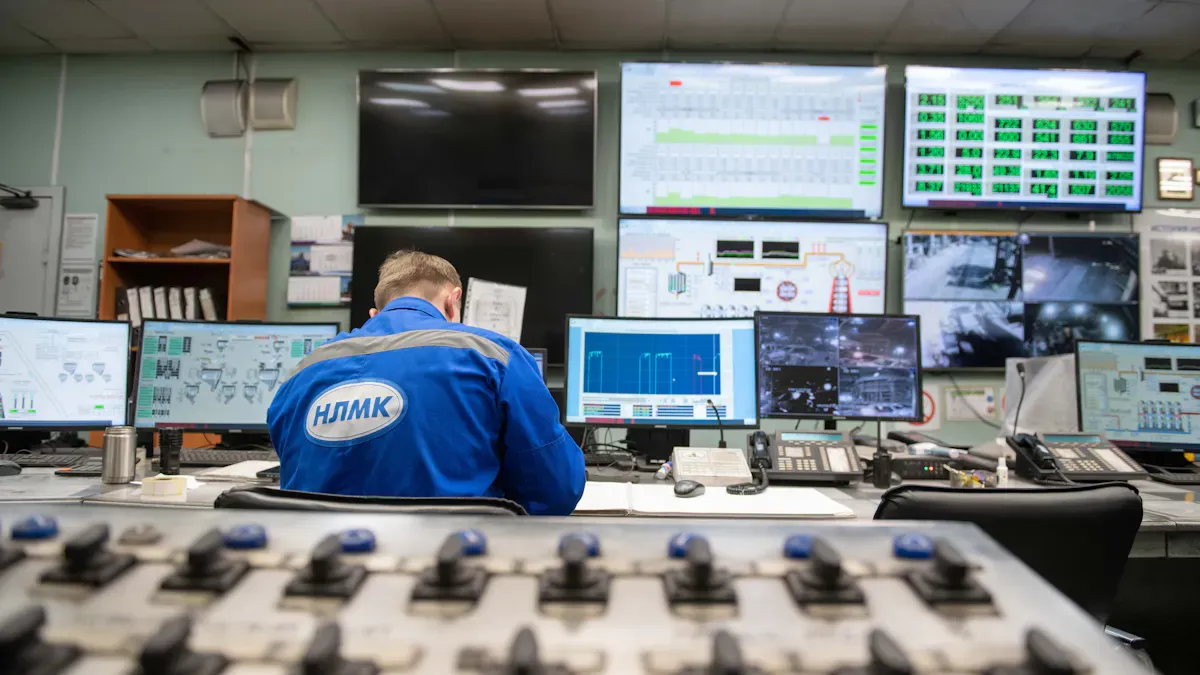
You see how communication among BMS, EMS, and PCS forms the backbone of your power system. Each system uses standard protocols to share information and keep operations smooth. The BMS and PCS rely on CAN for internal communication, while EMS and all systems use TCP/IP for external communication. This setup lets you monitor and control your equipment from anywhere.
System Type | Internal Communication | External Communication |
|---|---|---|
BMS | CAN | TCP/IP |
EMS | N/A | TCP/IP |
PCS | CAN | TCP/IP |
Power Battery System | CAN | N/A |
You depend on real-time data exchange to enhance monitoring and efficiency. The BMS acts as a sensor, tracking battery health. The EMS makes decisions based on this data, and the PCS executes charging and discharging. This teamwork ensures your Telecom Power System operates reliably.
System | Role | Function |
|---|---|---|
BMS | Sensor | Monitors battery health and status |
EMS | Decision-maker | Makes intelligent scheduling decisions |
PCS | Executor | Handles charging and discharging |
Real-Time Control Steps
You follow clear steps to maintain real-time control. The PCS manages charging and discharging, converting AC to DC power. The BMS monitors battery status and detects faults. The EMS oversees all equipment, optimizing battery use and ensuring efficient operation.
PCS controls charging and discharging, communicates with BMS.
BMS monitors battery status, manages temperature, detects faults.
EMS manages equipment, optimizes battery operations.
You set monitoring goals, choose intelligent controllers, and use reliable software dashboards. You organize cables for safety and test your system regularly. You also track electrical metrics, environmental factors, security, and battery health.
Integration with ESTEL Solutions
You benefit from ESTEL’s hybrid power solutions, which combine renewable energy with conventional sources. This integration reduces carbon footprints and ensures reliable power in diverse environments. You experience seamless switching among mains, generators, and PV, which keeps your power supply uninterrupted. Real-time monitoring lets you track power usage and prioritize energy sources. Automatic transfer switches boost safety by switching to backup sources instantly.
You can monitor power sources using ESTEL’s advanced control systems. Real-time data shows you which source is active. Remote management tools help you respond quickly to any issue.
Real-time monitoring impacts your system’s performance and reliability. Early detection of issues keeps your network stable. Predictive maintenance helps you plan repairs and minimize downtime. Intelligent alert systems improve response times and reduce unnecessary maintenance visits. Sensors give you immediate insights into abnormal conditions, which prolongs equipment life and ensures customer satisfaction.
Challenges and Solutions
Monitoring and Data Reliability
You face challenges in monitoring and maintaining reliable data in your telecom network. Gaps in data collection can lead to missed alarms or delayed responses. You need tools that provide real-time insights and historical analysis. Modern solutions give you comprehensive energy management, predictive maintenance, and remote monitoring. These tools help you track equipment health and spot issues before they cause downtime.
Solution | Key Features |
|---|---|
Comprehensive Energy Management | Real-time usage monitoring, customized reporting, root-cause analysis, historical data logging |
Nexus® 1500+ meter | Critical load monitoring, SNMP alarms |
Shark® 250 meter | Cyber secure power and energy monitoring |
MP200™ multipoint metering | Monitoring smaller loads |
HMIPQA+™ SCADA Solution | Customizable application with multi-protocol support |
EnergyPQA.com® | AI-driven energy analytics and predictions |
You also benefit from predictive maintenance and remote monitoring. These approaches let you dispatch technicians only when needed, saving time and resources.
Network Redundancy
You want your Telecom Power System to keep running even if one part fails. Network redundancy ensures continuous operation and reduces downtime. You achieve this by using N+1 redundancy, which allows automatic switching between primary and backup power sources. This setup includes multiple power inputs and monitoring circuits. You maintain service for your customers, even during maintenance or unexpected disruptions.
Ensures continuous operation if a component fails
Reduces downtime in critical applications
Enhances overall reliability
Achieves high uptime levels, such as 99.982% in data centers
Limits annual downtime to about 1.6 hours
ESTEL Advanced Features
You gain extra reliability and flexibility with ESTEL’s advanced features. The modular design lets you expand your power system as your network grows, without shutting down operations. Hot-swap redundancy allows you to replace faulty modules while the system stays online. Advanced monitoring tools help you catch problems early, reducing maintenance time. High efficiency rates save energy and lower your operational costs. Compliance with safety standards ensures quality and reliability for your telecom applications.
Feature | Description |
|---|---|
Modular Design | Easy expansion without downtime |
Hot-Swap Redundancy | Replace modules without shutting down the system |
Advanced Monitoring Tools | Track performance and catch issues early |
High Efficiency Rates | Up to 98% efficiency, saving energy and costs |
Compliance with Safety Standards | Quality and reliability for telecom applications |
You can trust ESTEL to deliver solutions that address your biggest challenges in telecom power management.
User Benefits and Value
Efficiency and Reliability
You gain measurable improvements in both efficiency and reliability when you use a BMS-linked telecom power system. These systems help you save on electricity costs and improve network performance. The table below shows how these improvements can impact your operations:
Category | Measurable Improvement |
|---|---|
Economic Benefits | Annual electricity cost savings exceeded RMB 8 million in a rollout of 1,000 sites. |
Reduced payback period to under four years due to additional revenue from grid services. | |
Technical Value | Improved overall energy efficiency by nearly 20% for 5G networks. |
Supports grid peak shaving and system stability when aggregated into VPP models. |
You also benefit from reduced downtime and lower maintenance costs. Preventive maintenance can cut your total maintenance costs by 12–18%. Predictive maintenance can reduce downtime by up to 50% and maintenance costs by 30–40%. AI-driven models can further decrease downtime by 40% and save you about 30% in costs.
Safety and Cost Savings
You protect your equipment and staff with advanced safety features. The BMS monitors cell voltage, current, temperature, and state of charge. This ensures your batteries operate within safe limits and prevents hazardous situations. Key safety features include:
Temperature measurement with NTC thermistors
Inrush current suppression
Overvoltage, undervoltage, and overcurrent protection
High network availability (over 99.999%)
ASIL D compliance for robust error detection
You also see significant cost savings. When you switch from lead-acid to lithium batteries, you can reduce your total cost of ownership by 35% over five years. Fewer truck rolls and less frequent battery replacements help you save even more.
Telecom Power System Value
You get a power system designed for seamless integration with your telecom equipment. The Telecom Power System manages DC power distribution and works in both urban and remote sites. It offers high efficiency (over 98%) and proven reliability in harsh environments. Advanced technology, like Lifepo4 cell technology, extends battery life and reduces maintenance. You ensure continuous operation of your telecom network, even in challenging conditions. This system helps you lower energy costs and supports your energy storage needs.
You gain adaptive charging, demand-responsive discharge, and fault mitigation with BMS-linked telecom power systems. The table below shows these advantages:
Advantage | Description |
|---|---|
Adaptive charging | MPPT directs surplus energy to batteries at optimal rates. BMS prevents overcharge. |
Demand-responsive discharge | BMS coordinates discharge cycles with grid needs. Battery health stays a priority. |
Fault mitigation | Cross-communication enables rapid shutdown during overheating or output drops. |
You see fewer emergency repairs and improved energy efficiency after using ESTEL’s integrated solutions. Remote monitoring and real-time maintenance scheduling help you extend equipment lifespan. ESTEL delivers reliable, flexible power systems that support your telecom network and energy storage needs.
FAQ
What is a BMS-linked telecom power system?
A BMS-linked telecom power system connects your battery management system to your telecom power equipment. You get real-time monitoring, improved safety, and longer battery life. This setup helps you maintain reliable power for your telecom network.
How does ESTEL’s Telecom Power System improve reliability?
You benefit from modular design, hot-swappable modules, and advanced monitoring. These features let you replace parts without downtime. You can also track system health and respond quickly to issues.
Tip: Regular monitoring helps you prevent unexpected failures.
Can you integrate renewable energy with ESTEL’s power systems?
Yes, you can. ESTEL’s hybrid solutions support solar and other renewable sources. You can switch between mains, generators, and PV automatically. This flexibility helps you reduce energy costs and carbon footprint.
What maintenance does a BMS-linked system require?
You should check battery health, monitor system alerts, and schedule preventive maintenance. Remote monitoring tools help you spot issues early. You can reduce downtime and extend equipment life with regular checks.
Task | Frequency |
|---|---|
Battery inspection | Monthly |
System updates | Quarterly |
Alert review | Weekly |
See Also
Telecom Cabinets Powered By Photovoltaic Energy Storage Solutions
Methods for Calculating Power Systems and Batteries in Telecom Cabinets
Smart Energy Storage Solutions for ESTEL Telecom Microgrid Cabinets
Telecom Cabinets Featuring Grid-Connected Inverters and Battery Systems
Batteries for Energy Storage in ESTEL Telecom Cabinet Systems
CALL US DIRECTLY
86-13752765943
3A-8, SHUIWAN 1979 SQUARE (PHASE II), NO.111, TAIZI ROAD,SHUIWAN COMMUNITY, ZHAOSHANG STREET, NANSHAN DISTRICT, SHENZHEN, GUANGDONG, CHINA
