How to Optimize Passive Heat Dissipation of Smart PDUs in Telecom Cabinets for Noise Reduction in Low-Noise Data Centers


You can cut noise in a low-noise data center by optimizing passive heat dissipation of smart PDU equipment through five levers: cabinet airflow design, PDU placement and orientation, thermal interface materials, passive cooling enhancements, and monitoring and maintenance practices. Each lever shapes how heat leaves the enclosure without a fan.
The core trade-off is simple. Active fans push 30–45 dBA under normal load, and that noise climbs with thermal load. Passive dissipation removes that acoustic penalty, yet it demands careful thermal management to protect reliability. Low-noise designs succeed when airflow, conduction paths, and load balance work together.
This guide gives you actionable steps and technical considerations for each strategy, so you can tune PDUs and enclosures to your facility's acoustic limits.
Key Takeaways
Design cabinet airflow with low inlets and high outlets to let natural convection remove heat without fans.
Place smart PDUs in cool intake air with enough clearance to avoid hot spots and blockages.
Apply thermal interface materials between the PDU and mounting surface to improve heat conduction.
Add passive cooling aids like heat sinks or phase-change materials to handle concentrated heat.
Monitor power and temperature data regularly and clean vents to keep passive cooling effective.
Cabinet Airflow Design for Passive Cooling
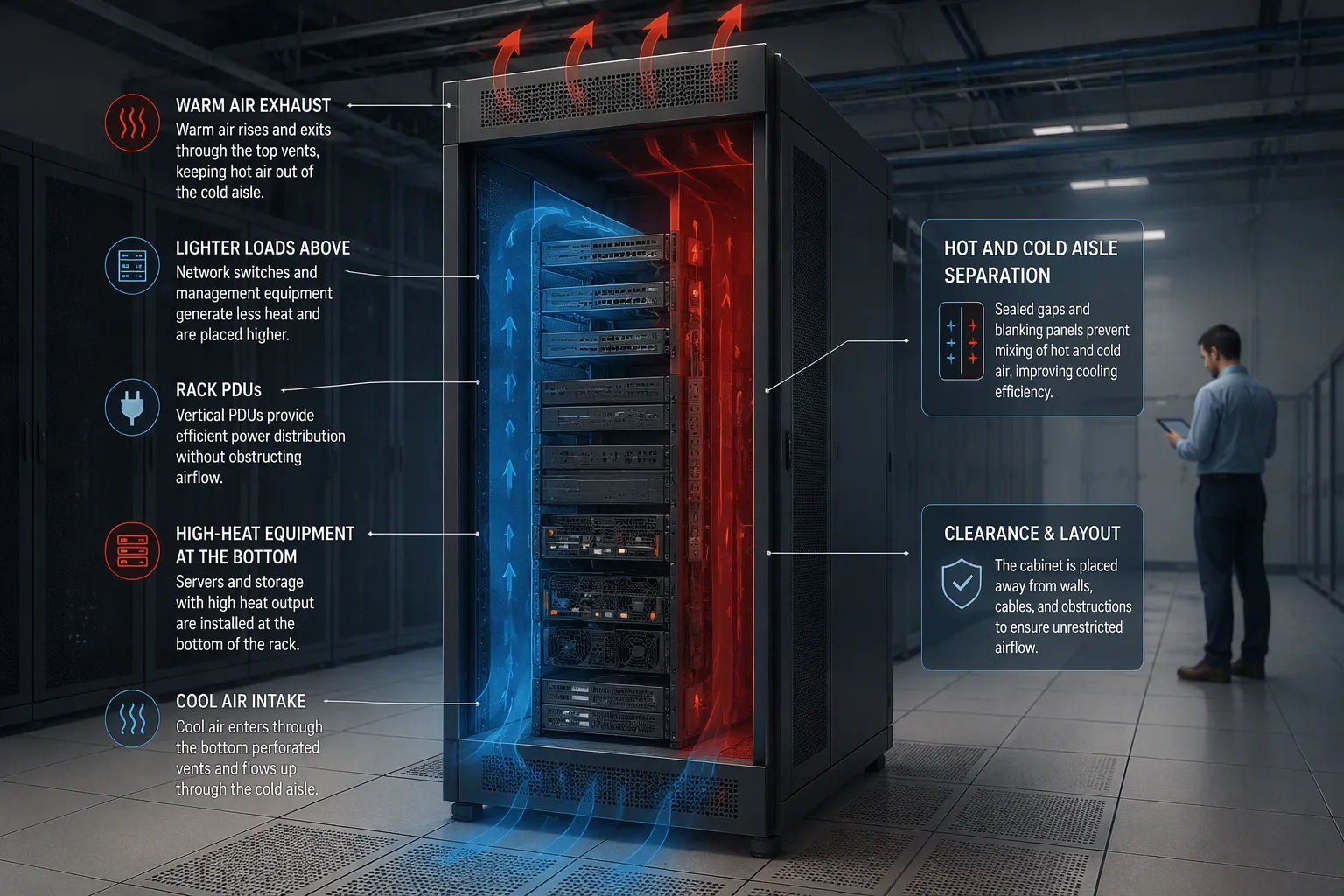
Passive cooling in an electrical enclosure relies on two heat-transfer methods. Natural convection moves heat as warm air rises and cooler air replaces it. Conduction transfers heat through direct contact between solid surfaces. Both methods work without a fan, so your cabinet design must give them a clear path.
Ventilation Paths and Perforation Patterns
Perforation patterns determine how much air enters and leaves the enclosure. Place inlet vents low on the cabinet and outlet vents high. This arrangement lets cool air enter near the floor and warm air exit near the top. Keep clearance around the enclosure so intake air stays cool. A cabinet pushed against a wall or crowded by cable bundles chokes its own supply.
Vent hole size and open area ratio matter too. Larger open areas reduce resistance to airflow, yet they must still block dust and moisture to the enclosure's IP rating. Balance open area against ingress protection for your site conditions. Front-to-rear and bottom-to-top paths both work well. Choose the path that matches your room layout and cable routing.
Chimney Effect and Rack PDU Zoning
The chimney effect describes stack-driven convection inside a tall enclosure. Warm air rises through the cabinet and pulls cooler air in behind it. You can strengthen this effect by zoning the cabinet according to heat load. Place high-draw equipment low and lighter loads high. This zoning supports steady stack-driven flow and improves heat dissipation efficiency.
Load balancing across rack PDUs matters just as much. Concentrating power draw on one strip creates a localized hot spot. Spread the load across rack pdus so waste heat distributes evenly. Balanced pdus reduce peak temperatures inside the enclosure and lower overall cooling demand. This step supports thermal management at the facility level.
Effective airflow management also depends on separating hot and cold air circulation channels. Seal gaps around blanking panels and cable entries. Leakage lets hot exhaust mix with cool intake and undermines proper ventilation. Treat airflow management as a system: vents, zoning, and sealing all interact.
Compare airflow options on technical performance, application fit, and cost. Bottom-to-top paths suit tall cabinets with strong stack effect. Front-to-rear paths fit shallow enclosures and dense cable layouts. Each option carries different installation effort and hardware cost. Match the choice to your telecom cabinet model and room constraints.
Good dissipation starts with layout discipline. Every gap you seal and every load you balance improves dissipation without adding a single fan.
Smart PDU Placement and Thermal Interfacing
Mounting Position and Clearance for the PDU
Placement decides whether your smart PDU sits in cool intake air or in its own exhaust. Map the airflow path before you mount anything. This pre-install step confirms the unit sits in the coolest, unobstructed path inside the cabinet.
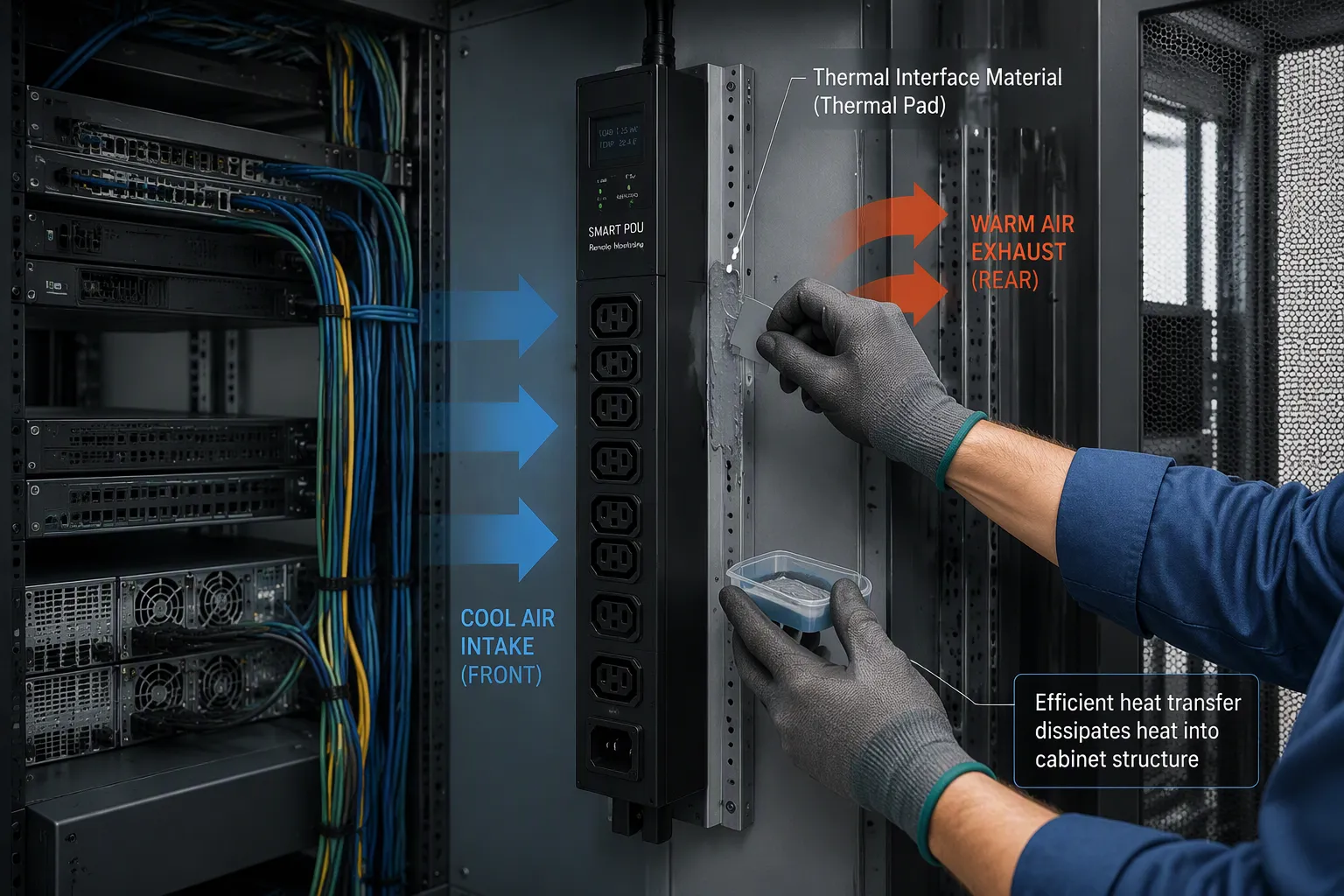
Keep at least a few inches of free space around the unit. Uninterrupted airflow around the chassis carries heat away by natural convection. Mount the unit at the rear or middle-rear of the rack. This position keeps power cables from blocking the exhaust path and prevents heat buildup. Never mount a PDU directly in front of fans or vents. That blocks cool air from reaching servers and overheats power supplies and components.
Orientation offers two workable choices. Vertical mounting along the left or right rear side keeps rear space clean and manages cords top to bottom. A floor-standing vertical rack PDU follows the cabinet frame height and avoids consuming 1U–3U of equipment space in 22U–42U cabinets. Horizontal mounting at the middle, rear, or bottom aids fixation and cable access. Each option fits a different rack layout, so match the choice to your cable plan and service access needs.
ESTEL's Smart Power Distribution Unit shows how form factor shapes placement. The compact 600×450×185 mm chassis and 8–19 outlet configurations let you position the unit without crowding adjacent equipment. Fewer outlets suit a single dense load; more outlets spread power distribution across many devices. Plan outlet count against your load map before you fix the mounting height.
Thermal Interface Materials and Contact Resistance
Thermal interface materials (TIMs) fill microscopic air gaps between the PDU chassis and the mounting surface. Air is a poor conductor, so those gaps trap heat at the contact point. Contact resistance describes how much heat flow that junction resists. A thin, even TIM layer lowers contact resistance and moves heat by conduction into cabinet surfaces and frame members.
Apply TIMs where the chassis meets structural metal. Clean both surfaces first, then spread a thin layer. Excess material adds resistance instead of removing it. Inspect the interface during service visits and replace dried or cracked pads. Good conduction paths complement convection and complete your thermal management strategy.
Treat placement and interfacing as one system. A well-placed unit with a poor contact path still runs warm. A good TIM joint cannot rescue a unit buried behind cables. Together, they cut localized heat and support quieter, fan-free operation.
Passive Cooling Enhancements for the Cabinet
Heat Sinks, Phase-Change Materials, and Coatings
You can add passive hardware to the enclosure when airflow alone cannot carry the load. Heat sinks increase surface area and let convection and radiation remove more heat from hot components. Phase-change materials (PCMs) absorb heat as they melt and release it later as they solidify. A PCM buffer smooths temperature spikes without a fan. High-emissivity coatings raise the radiative share of heat loss from the cabinet skin.
Each add-on fits a different situation. Heat sinks suit concentrated hot spots near the PDU. PCMs help where loads cycle and peak temperatures matter. Coatings work best on large, exposed surfaces. Compare them on technical performance, application fit, regulatory compliance, and cost before you specify.
ESTEL's outdoor telecom cabinet portfolio shows how enclosure treatments support passive thermal performance. Anti-corrosion powder coating protects the shell, heat insulation limits solar gain, and high IP ratings keep dust and water out of the airflow path. These treatments preserve efficient heat dissipation over years of outdoor service.
Free cooling complements these measures at the facility level. Cool outside air reduces compressor-based cooling and its associated noise. Pair free cooling with a well-treated cabinet to lower both energy use and acoustic output.
Emissivity and Radiation Performance
Surface emissivity describes how efficiently a surface radiates heat. A high-emissivity finish releases more energy from the cabinet walls at a given temperature. Bare, shiny metal radiates poorly. A matte coating or a dark finish raises the radiative contribution and supports dissipation without moving parts.
Radiation works alongside convection, so treat the two as partners. Keep outer surfaces clean and unobstructed. Dust films and stacked equipment block radiative exchange. For pdus mounted inside, the enclosure skin becomes the final radiator, so its finish and condition directly affect thermal management results.
Smart PDU Monitoring and Maintenance Practices
Telemetry, Load Balancing, and ESTEL Integration
Telemetry turns passive cooling into a managed process. Power draw and heat output rise together, so an unexpected spike in rack or circuit consumption usually comes before a hot spot forms. You can set alerts to fire before temperatures reach damaging levels. Watch for one diagnostic pattern in particular: IT power draw holds steady while ambient temperature climbs. That signature points to failing cooling infrastructure, and catching it requires power and environmental data in one platform. Phase imbalance across a three-phase feed is another early warning, because uneven load reduces efficiency and can trip a single phase breaker.
ESTEL's Smart Power Distribution Unit puts these signals within reach. Remote management, an LCD display, a dehumidifying function, and surge protection let you run a cabinet without fans while still watching conditions closely. The unit's 8–19 outlet configurations also let you spread power distribution across many devices instead of concentrating it.
Cleaning, Inspection, and Fan-Free Operation
Passive systems reward routine care. Clean vents and fins on a fixed schedule, because dust films block convection and radiation alike. Inspect thermal interface materials for drying or cracking, and verify clearances around the unit. Confirm that cables have not crept into the exhaust path since your last visit.
Verify acoustic goals with A-weighted (dBA) measurements. Under OSHA 1910.95, use a Type 2 or better sound level meter set to A-weighting and slow response, and record location, date, time, instrument serial number, and calibration date for each reading. Calibrate before and after each use and document drift at 1 dB or less. Re-monitor whenever equipment changes could raise exposure.
Facility-level controls finish the job. Layout optimization and sound barriers complement passive PDU cooling, and they reduce the need for low-noise fan models or low-noise cooling fan units.
Apply these best practices together:
Design airflow paths and zone the cabinet by heat load.
Mount pdus in cool intake air with generous clearance.
Use thermal interface materials to lower contact resistance.
Add heat sinks, phase-change materials, or high-emissivity coatings.
Clean vents and verify clearances on a fixed schedule.
Match each passive strategy to your cabinet heat load and acoustic limits. A-weighted monitoring confirms your results and keeps thermal management honest.
Prioritize natural convection and radiation first, because both deliver dissipation without noise. Reserve active cooling only where telemetry shows it is unavoidable. This balance keeps thermal management effective, heat dissipation steady, and power distribution quiet in any low-noise room.
FAQ
How much noise does passive cooling actually remove?
Passive cooling removes the fan noise entirely, so the cabinet adds no acoustic output of its own. Your remaining noise comes from facility cooling equipment and other active systems. Measure with an A-weighted meter to confirm the result against your target.
Can a smart PDU stay reliable without a fan?
Yes, when you give convection and conduction a clear path. Mount the unit in cool intake air, keep clearance around the chassis, and use thermal interface materials at the mounting surface. Telemetry then confirms that temperatures stay within limits during normal operation.
Which cabinet changes give the biggest thermal gain?
Start with airflow. Low inlets, high outlets, sealed gaps, and load zoning by heat output deliver the largest improvement at the lowest cost. Add heat sinks or high-emissivity coatings only after airflow and placement are optimized.
How often should I clean vents and inspect interfaces?
Set a fixed schedule based on site dust levels, and inspect thermal interface materials at every service visit. Clean vents and fins whenever a visible dust film forms. Verify clearances each time, because cables drift into exhaust paths over time.
Does passive cooling change my maintenance workload?
It shifts the work from fan replacement to inspection. You clean vents, check contact surfaces, and review telemetry trends instead of swapping failed fans. This routine keeps thermal management predictable and supports quieter operation over the cabinet's service life.
See Also
Exploring Uses and Analysis of Various Cooling Methods for Telecom Cabinets
Effective Ways to Reduce Noise Levels Inside Server Enclosures
Ensuring Ideal Temperature Conditions for Outdoor Telecom Cabinet Systems
Guaranteeing Dependable Power Supply for Telecom Cabinet Operations
Selecting the Optimal Cooling Approach for ESTEL Telecom Cabinet Models
CALL US DIRECTLY
86-13752765943
3A-8, SHUIWAN 1979 SQUARE (PHASE II), NO.111, TAIZI ROAD,SHUIWAN COMMUNITY, ZHAOSHANG STREET, NANSHAN DISTRICT, SHENZHEN, GUANGDONG, CHINA
