How Smart PDUs with Dehumidifying Features Boost Safety in Underground Telecom Cabinets

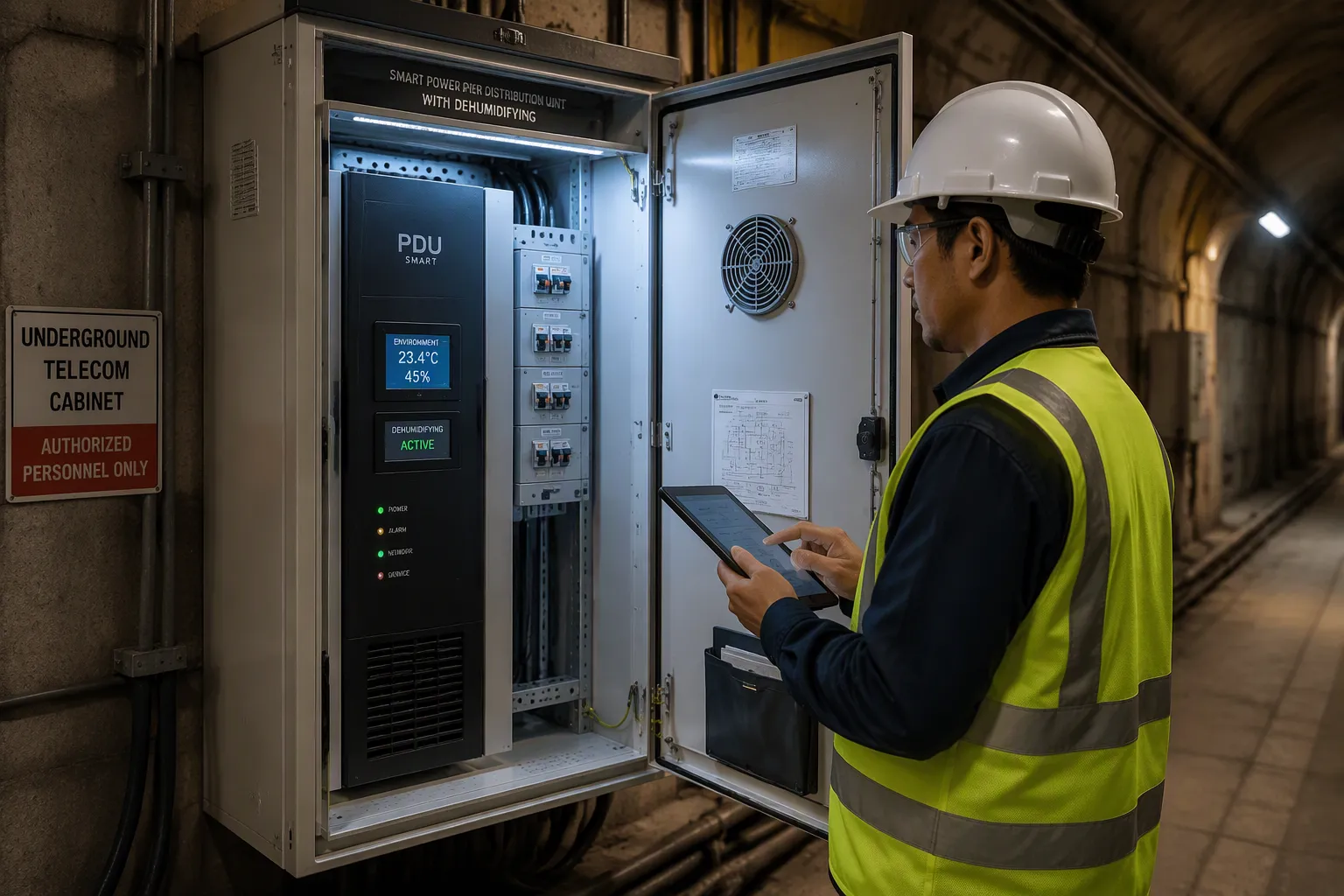
A smart pdu with dehumidifying features boosts safety by actively removing moisture before it causes short circuits, corrosion, or fire. It does not simply report conditions. Three mechanisms deliver this protection: active moisture removal, fault prevention, and continuous remote visibility. This article serves telecom engineers, facility managers, and safety officers who maintain underground sites. You will examine humidity risks inside telecom cabinets, the working principles of these pdus, equipment protection benefits, and a comparison of dehumidifying approaches. Implementation guidance follows, covering sizing, placement, commissioning, and maintenance for any telecom cabinet. No pdu fits every site, so match each unit to local conditions and treat each pdu as part of a wider safety plan.
Key Takeaways
Smart PDUs remove moisture actively, stopping short circuits and corrosion before they start.
These PDUs prevent faults by keeping connections dry, which lowers fire risk and extends equipment life.
Remote monitoring lets you check humidity and get alerts without opening the cabinet.
Use a smart PDU as one part of a safety plan that includes sealing, ventilation, and grounding.
Match the PDU to your site by counting outlets, checking power needs, and planning regular maintenance.
How Humidity Threatens Telecom Cabinets Underground
Underground telecom cabinets trap moisture. Steel and galvanized enclosures with spray-painted surfaces resist corrosion but cannot stop internal condensation alone.
How it leads to condensation | |
|---|---|
Dew point reached | Humid air touching a colder surface deposits droplets; sealed enclosures are prone to this during temperature swings. |
Trapped warm, moist air | Warm moist air sealed inside cools as ambient temperature falls, pushing the air to its dew point and forming liquid water. |
Rapid cooling after operation | After equipment warms the internal air, a fast ambient drop cools that trapped air, causing condensation. |
Temperature swings plus sun heating raise internal pressure in a sealed outdoor telecom cabinet. This cycling stresses seals and can cause leaks. When the enclosure cools, the escaping air creates a partial vacuum that can suck in water near the seal line.
Condensation and Short Circuits
Condensation inside telecom cabinets bridges insulation, degrades terminals, and combines with dust to create tracking and short-circuit pathways. Proper grounding is essential for safe pdu operation. Damp conditions undermine the pdu grounding integrity over time. A pdu mounted low in the telecom cabinet faces the wettest air. Treat sealing and insulation as the first line of defense, yet condensation can still form inside a sealed unit.
Corrosion and Fire Risk
Water entry into a telecom cabinet introduces damp air to components. Damp conditions corrode terminals and connectors. Corrosion raises electrical resistance at the affected joints. The increased resistance generates excess heat, leading to terminal overheating — a recognized fire-initiating condition. Water-contaminated connectors develop undetected and can progress to fault or fire. These environmental hazards raise electrical damage risk.
Outdoor cabinet ratings such as IP55, IP65, NEMA 3R, or NEMA 4X address environmental exposure, but they do not independently guarantee protection from condensation, overheating, electrical arcs, or internal fire.
Good cabinet design supports dust and water resistance, yet ratings alone do not remove internal water. A weather-resistant design handles water, wind, and dust ingress from outside, not the water that forms inside. That gap is where a dehumidifying pdu earns its place in your environmental protection strategy for telecom cabinets. The pdu enclosure can also collect condensation at unmanned telecommunications sites.
How Smart PDU Dehumidifying Features Work
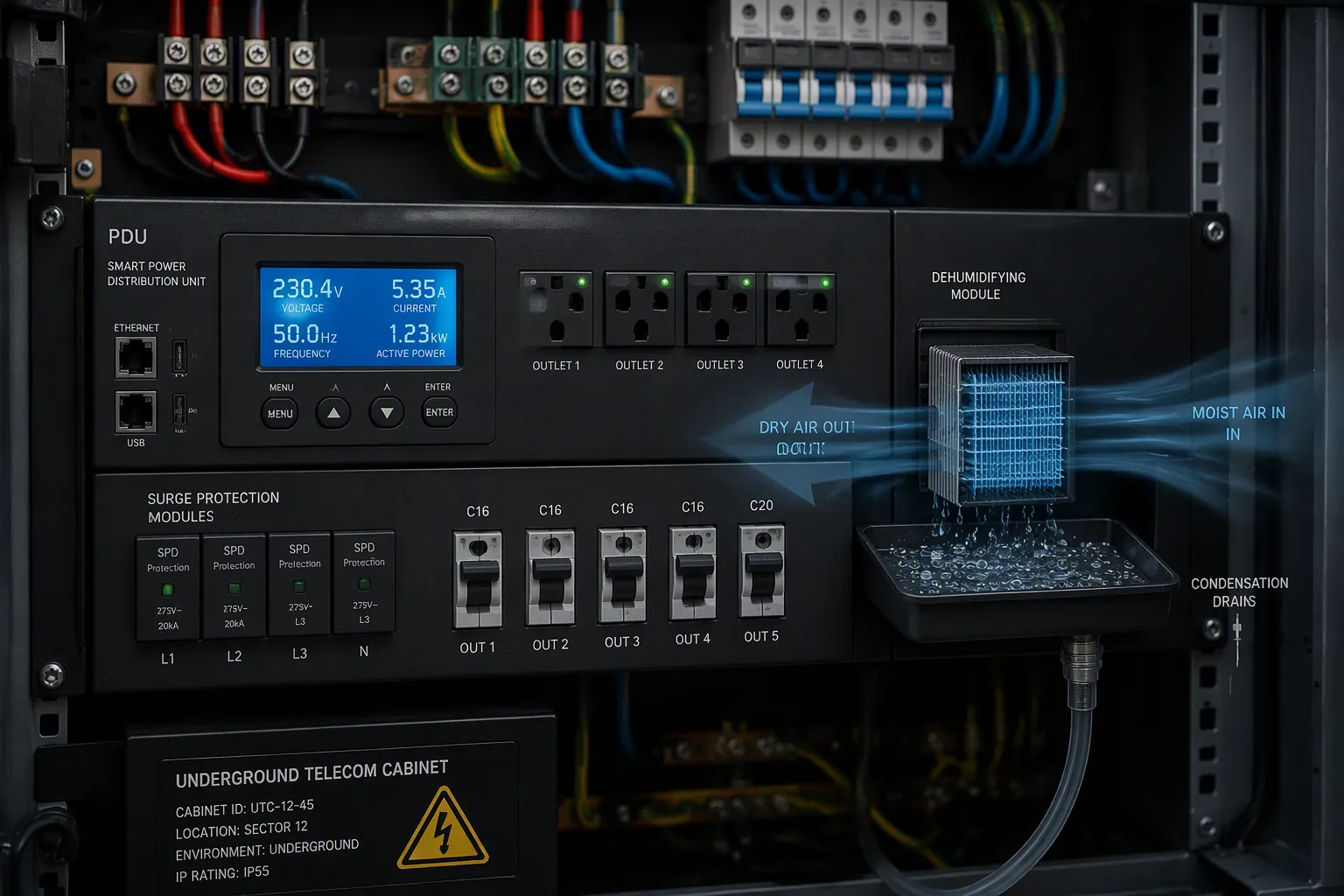
A dehumidifying smart pdu removes moisture as an integrated function of the power distribution unit itself. You do not add a separate appliance beside the rack. The unit combines power delivery, surge protection, and moisture control in one chassis. This design saves space inside crowded telecom cabinets and simplifies wiring.
Active Moisture Removal
The dehumidifying element draws moist air across a cold surface. Water condenses there and drains away before it can settle on terminals or busbars. Thermoelectric (Peltier) modules suit this role well in enclosed spaces. They have no compressor, so they run near-silent and need little maintenance. Their moisture removal rate is limited, typically around 0.3–1 L/day, which fits the small air volume of a sealed cabinet. A compressor unit removes far more water, roughly 10–50 L/day, but it is larger, heavier, and noisier.
Attribute | Peltier dehumidifier | Compressor dehumidifier |
|---|---|---|
Moisture removal rate | Limited (~0.3–1 L/day) | High (~10–50 L/day) |
Operating temperature | Effective at 15–30°C | Works above ~10°C |
Noise level | Near-silent | Moderate |
Size | Compact, lightweight | Larger, heavier |
Maintenance | Minimal | Filter and refrigerant care |
A thermo-electric (Peltier) unit will definitely raise the temperature in an enclosed cabinet. For dehumidifying the larger space surrounding the cabinet, a standard compressor-based unit is recommended instead.
ESTEL's Smart Power Distribution Unit shows how this integration works in practice. It carries a built-in dehumidifying function, an LCD display for real-time monitoring, surge protection, and remote management. The unit accepts a 16A maximum input, offers 8–19 outlet configurations, uses an IEC60309-compliant plug, and measures 600×450×185mm. Its surge protection devices guard connected equipment against power surges, while integrated surge protection modules sit inside the same enclosure.
Sensing and Remote Control
A temperature and humidity sensor feeds the control logic. The sensor reports relative humidity as a percentage alongside temperature readings. When humidity crosses your set threshold, the pdu starts dehumidifying automatically. You set that threshold during commissioning and adjust it as site conditions change.
Remote protocols let your team monitor and adjust the unit without opening the telecom cabinet. SNMP traps, a secure web interface, APIs, and DCIM platforms all carry readings and alarms to your management station. SNMP support matters when you deploy multiple units, because most alarm systems rely on it. Staff see humidity trends, receive out-of-threshold alerts, and change settings from a desk.
This active removal complements cabinet sealing, ventilation, and grounding practices. It does not replace them. Treat the dehumidifying power distribution unit for telecom cabinet installations as one layer in a broader environmental strategy. A well-sealed telecom cabinet slows moisture ingress, and the pdu handles what still forms inside.
Safety Benefits for Equipment Protection
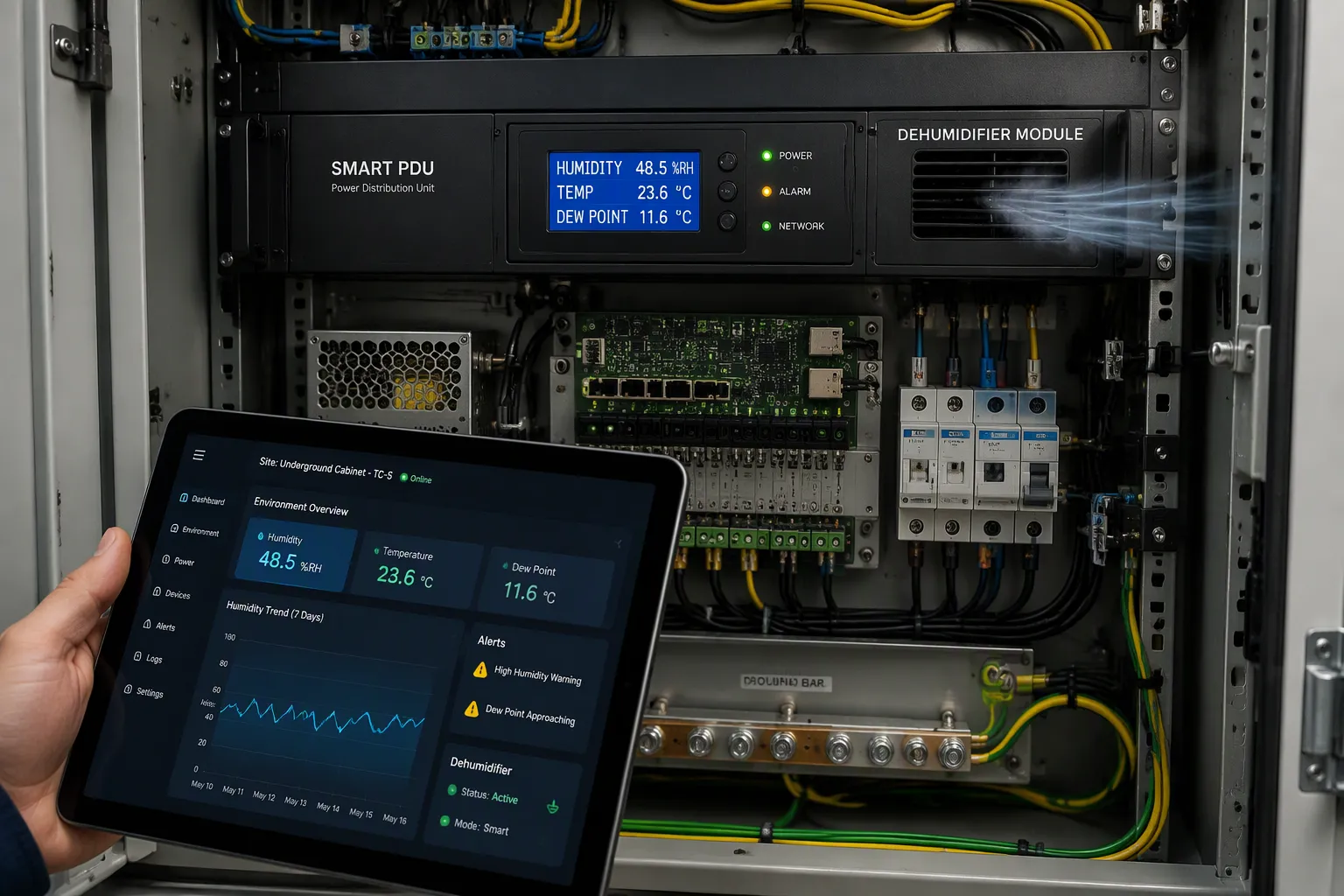
Active dehumidification changes the failure chain at its source. You remove the water that would otherwise bridge insulation, feed corrosion, and raise joint resistance. Each of those mechanisms leads to electrical damage, and each one slows when the air inside the enclosure stays dry. The payoff shows up as fewer short circuits, slower corrosion, and lower fire risk.
Fewer Faults, Longer Life
Humidity in telecom cabinets can cause short circuits in power supplies and circuit boards. Active dehumidification systems, alongside desiccants such as silica gel, are recommended for sensitive areas. They reduce the moisture that leads to short-circuit incidents. Two mechanisms explain the gain:
High humidity lowers dielectric strength, which increases the risk of partial discharge and short circuits. Localized dehumidification helps you avoid this insulation breakdown.
Rapid temperature changes cause condensation on components. Localized dehumidification removes moisture before condensation can form, which reduces condensation-related short-circuit risks.
Corrosion follows the same logic. Dry terminals oxidize slowly, so joint resistance stays low and excess heat does not build at connectors. A dry telecom cabinet also keeps its grounding path intact. That matters for both physical and electrical protection, because a corroded ground connection weakens every safety measure downstream.
Controlled humidity also pays back in maintenance budgets. A documented humidity-control program for stored equipment projected total cost savings above $1.6 billion over 10 years, with an expected return on investment over 9 to 1. You can read the same pattern in your own maintenance logs: fewer corroded terminals, fewer replaced boards, fewer emergency callouts.
Early Warning and Remote Response
Continuous monitoring turns humidity from a hidden hazard into a visible trend. Your pdu reports readings on a schedule, so you see a slow rise long before damage appears. The unit can raise several alert types:
Alert type | Description | Delivery method |
|---|---|---|
Threshold-based humidity alerts | Sends an alert when humidity exceeds safe or predefined levels | SNMP-based alerts |
Early warnings | Alerts users to potential problems to prevent downtime | System notifications |
Proactive notifications | Informs users of issues before they escalate so they can act quickly | Email or text message |
These alerts give you time to act. You can lower the threshold, schedule a site check, or dispatch a technician before a fault occurs. Remote response cuts the need for site visits in hard-to-reach underground locations. Your team adjusts settings and confirms recovery from a desk. That saves travel time and reduces exposure for staff who would otherwise enter a confined space.
Keep the claims tied to mechanism. A dry enclosure slows corrosion, protects insulation, and reduces the heat that follows resistance rise. Surge protection guards against power surges, and the dehumidifying function guards against moisture. Together they extend service life and support reliable power protection for every connected load.
Comparing Dehumidifying Approaches for the Telecom Cabinet
Performance, Fit, and Compliance
Each approach suits a different site. Passive ventilation works well in mild climates with steady temperatures and low dust. Cabinet heaters raise the internal temperature above the dew point, so they fit cold sites where condensation forms on cold surfaces. An external temperature and humidity controller with a heater and blower subsystem handles larger air volumes and gives you independent control. Integrated smart pdu dehumidification fits sealed enclosures where you want moisture removed at the source without extra wiring.
Enclosure ratings matter for every option. You should specify IP55 for dust and low-pressure water jet protection, or IP65 where dust and high-pressure water are present. These ratings apply to the enclosure housing the equipment, not to the dehumidifier alone.
IP Rating | Protection Level Described | Relevance to Dehumidifying Equipment |
|---|---|---|
IP55 | Dust and low-pressure water jets | Suggested enclosure rating to keep out dust and moisture |
IP65 | Dust and high-pressure water | Higher rating recommended for mounting smart PDU equipment |
Integrated units simplify compliance paperwork. One datasheet covers power distribution, surge protection, and dehumidification. An IEC60309-compliant plug and ISO9001-style quality control records sit in the same document set. That reduces the number of certificates you track for a telecom cabinet.
Cost and Deployment
Compare four cost lines: equipment, installation, energy, and maintenance access. Passive ventilation carries the lowest equipment cost and no energy draw. Heaters cost little to buy but run continuously in cold weather. External controller subsystems cost more upfront and need separate mounting, cabling, and commissioning. An integrated unit bundles the functions, so you buy one item and wire one feed.
Underground sites raise the maintenance factor. Every extra device means another access trip into a confined space. Integrated designs cut that count. ESTEL's Smart Power Distribution Unit combines power distribution, telecom-grade surge protection, and dehumidification in a single chassis, with 8–19 outlets and a 16A maximum input. It gives you one power distribution unit for telecom cabinet deployments that also carries high-performance spds and surge protection devices inside the same enclosure. For surge-protected telecom cabinets in damp vaults, that consolidation keeps ingress points low and keeps your pdu count manageable.
Selecting and Implementing a Smart PDU
Sizing, Placement, and Integration
Match the outlet count to your load list first. The unit offers 8–19 outlet configurations, so count every powered device in the telecom cabinet and leave spare capacity for future cards. Confirm the 16A maximum input covers your total draw. Check the 600×450×185mm form factor against the rack depth and door swing before you order.
Place the pdu where air moves freely around it. Keep it clear of the coldest wall, where condensation forms first. Grounding deserves equal attention. Run a 6 AWG copper grounding conductor from the unit to the cabinet grounding busbar, and fit paint-piercing grounding washers for solid metal-to-metal contact. Bond the busbar to the facility grounding grid. Never rely on the ground conductor inside the input whip alone. Good cabinet design pairs this grounding discipline with tight sealing, so moisture has fewer entry points.
Commissioning and Maintenance
Commissioning follows a fixed sequence. Set the humidity threshold, then configure remote monitoring, then test each alarm path. Verify grounding and protective bonding as part of the safety checks. Confirm fault ratings and selective coordination. Inspect wiring torque, insulation, and labeling. Measure ground resistance with a dedicated meter and confirm it sits below the manufacturer's specified threshold.
Build a maintenance routine around three checks. Inspect filters and vents for dust. Compare LCD readings against remote values to catch sensor drift. Schedule periodic grounding inspections, because damp conditions erode bonding over time. Record each visit, and note how any field modification affects the original verification.
ESTEL supplies integrated outdoor cabinets and smart PDU solutions for these deployments. Its smart pdu combines power distribution, surge protection, and dehumidification in one chassis. You can review the power distribution unit for telecom cabinet projects at https://www.outdoortelecomcabinet.com/supplier-151193-smart-power-distribution-unit. Pair every pdu with sound surge protection practice, and treat surge protection as a checked item at each maintenance visit.
Active dehumidification in smart PDUs prevents moisture-driven electrical faults. It does not merely report them. You have traced the full chain: condensation, corrosion, and fire risk inside underground telecom cabinets; active moisture removal plus remote monitoring as the mechanism; and safer, more reliable sites as the outcome.
Match the approach to your own site conditions. Treat a dehumidifying pdu as one layer of a broader safety strategy, alongside sealing, ventilation, and grounding. Every pdu you deploy should earn its place in that plan. ESTEL supports your selection with integrated outdoor telecom cabinet and smart pdu solutions. Choose a pdu that removes moisture before it becomes a fault.
FAQ
How does a dehumidifying pdu differ from a monitoring-only unit?
A monitoring-only unit reports humidity. A dehumidifying pdu removes the moisture itself. The built-in element pulls water from the air before it settles on terminals. You get prevention instead of a warning after damage starts. Pair this pdu with sound surge protection for full electrical defense.
Does dehumidification replace cabinet sealing or heaters?
No. Active removal complements sealing, ventilation, and grounding. Sealing slows moisture entry, and the pdu handles what still forms inside. Heaters raise internal temperature above the dew point in cold sites. Choose the layer that fits your climate, and keep surge protection in place regardless.
How do I size a smart pdu for my enclosure?
Count every powered device, then pick from the 8–19 outlet configurations. Confirm the 16A maximum input covers your total draw. Check the 600×450×185mm form factor against rack depth and door swing. Verify the IEC60309-compliant plug matches your feed. Add surge protection at commissioning.
Can I monitor humidity without opening the telecom cabinet?
Yes. The sensor reports relative humidity and temperature to your management station through remote protocols. You set the threshold, receive alerts, and adjust settings from a desk. This cuts site visits to hard-to-reach telecom cabinets. Keep surge protection checks on the same remote schedule.
What maintenance does the unit need?
Inspect filters and vents for dust. Compare LCD readings against remote values to catch sensor drift. Schedule periodic grounding inspections, because damp conditions erode bonding. Record each visit. Confirm surge protection status at every check, and log any change that affects the original verification.
See Also
Understanding ESTEL PDUs And Their Function In Data Center Cabinets
Latest Emerging Trends Shaping Outdoor Telecom Cabinet Designs
Ensuring Reliable Power Supply Within Telecom Cabinets Effectively
Protecting Equipment Using Outdoor Telecom Cabinets Effectively
Why Outdoor Communication Cabinets Are Essential For Modern Telecom Networks
CALL US DIRECTLY
86-13752765943
3A-8, SHUIWAN 1979 SQUARE (PHASE II), NO.111, TAIZI ROAD,SHUIWAN COMMUNITY, ZHAOSHANG STREET, NANSHAN DISTRICT, SHENZHEN, GUANGDONG, CHINA
