How Smart PDU Time-of-Use Price Auto-Switching in Telecom Cabinets Reduces Costs via Peak-Valley Differences

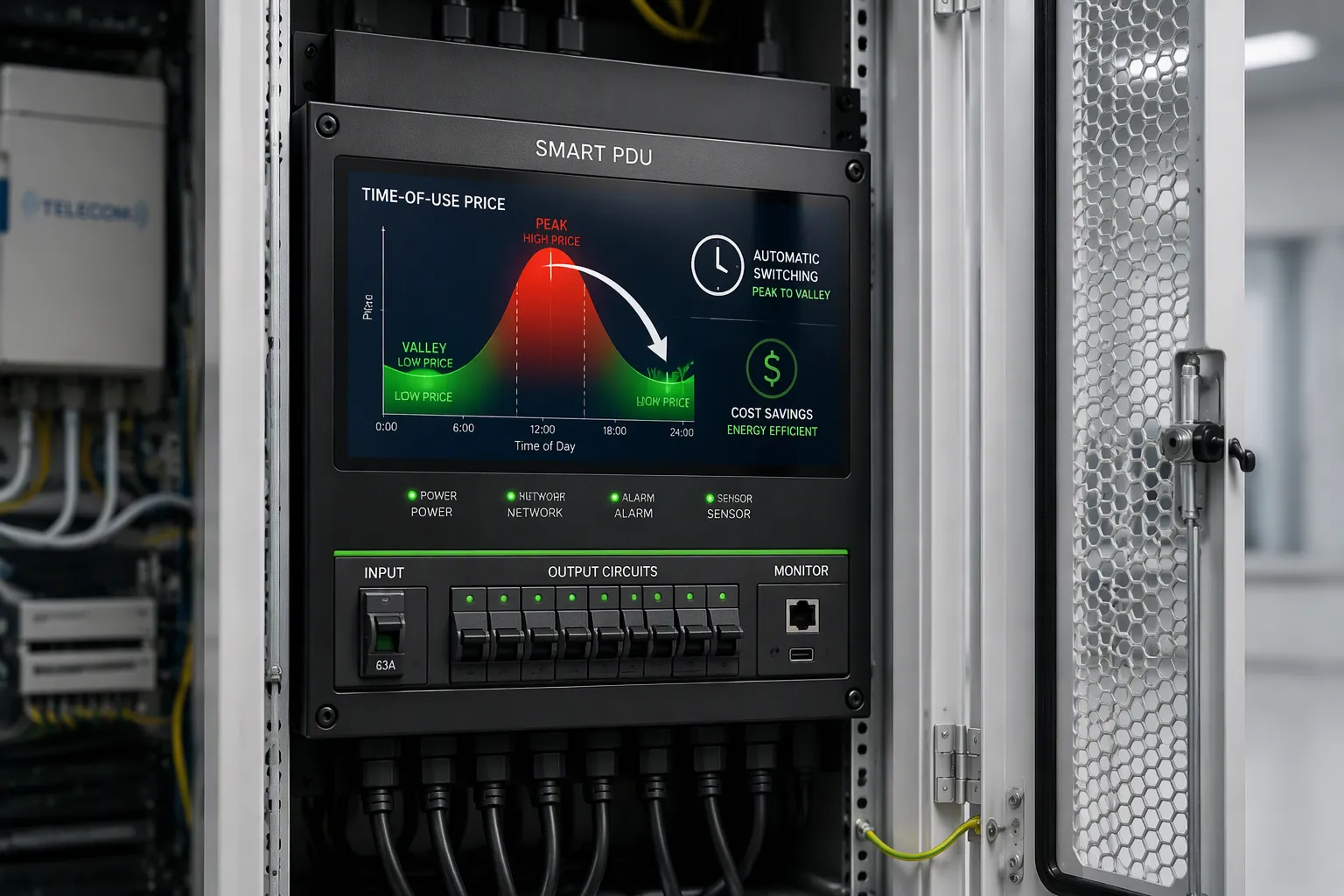
Smart PDU time-of-use price auto-switching cuts electricity costs in telecom cabinets. It shifts consumption from expensive peak hours to cheaper valley periods. This mechanism, tariff-aware scheduling, turns a static power strip into an active energy management tool. You gain real savings without touching the load. Your utility publishes those rates. The PDU reads that schedule and moves deferrable loads to low-price windows. Telecom sites run on tight budgets, so every avoided peak-hour kilowatt matters. These PDUs also flatten demand, which trims transmission and capacity charges. Telecom operators see the difference on monthly bills. Auto-switching does the work, and your team monitors remotely. Peak-valley gaps become a cost advantage, and energy savings lower costs monthly.
Key Takeaways
Smart PDUs automatically move flexible power loads to cheaper off-peak hours.
This load shifting cuts electricity bills and reduces demand charges.
Remote management lets you fix issues without traveling to the site.
Smart PDUs improve uptime and reliability while lowering maintenance costs.
Match smart PDUs to sites with variable rates and remote locations for best results.
Peak-Valley Price Differences and Auto-Switching
How Time-of-Use Rates Create Price Gaps
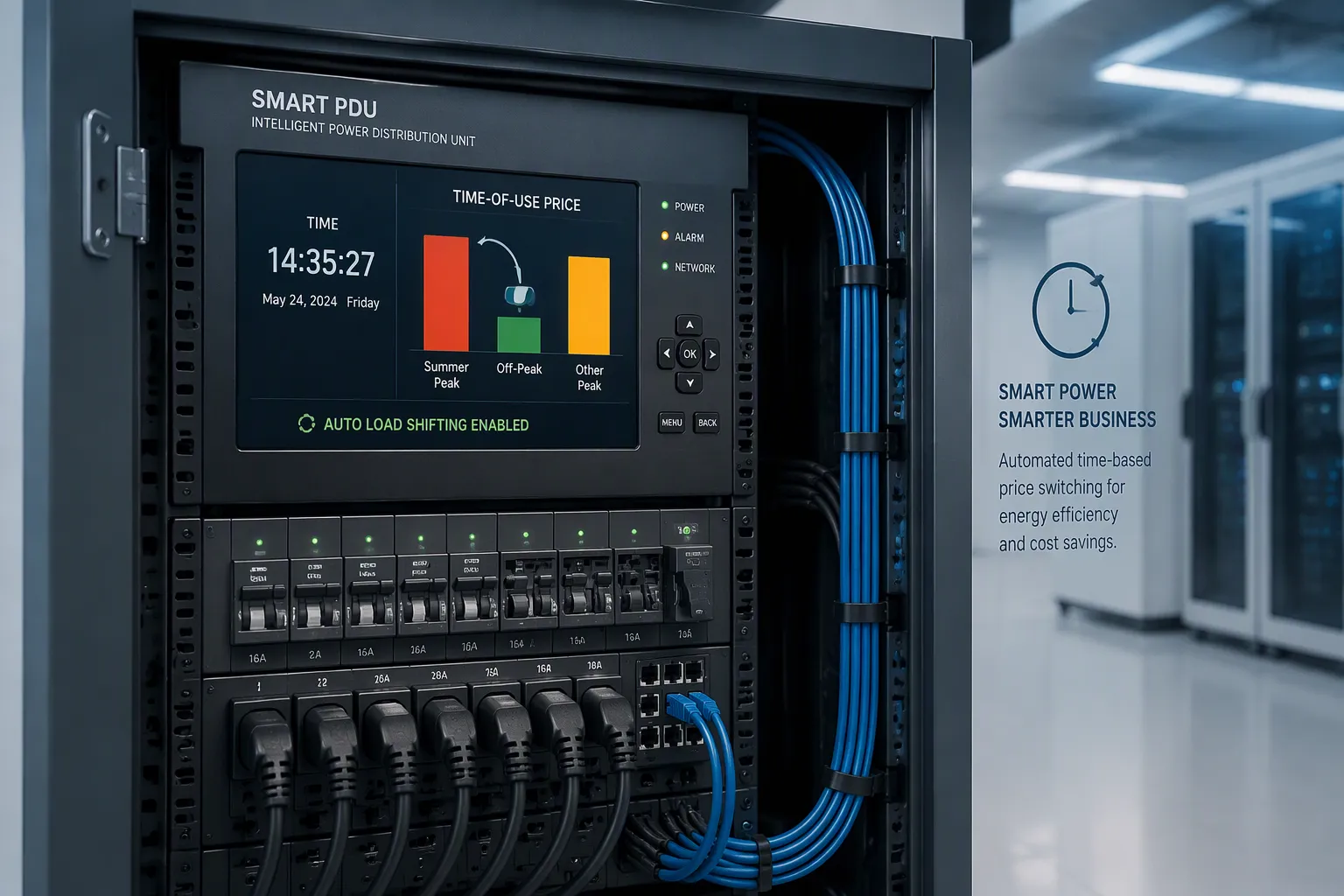
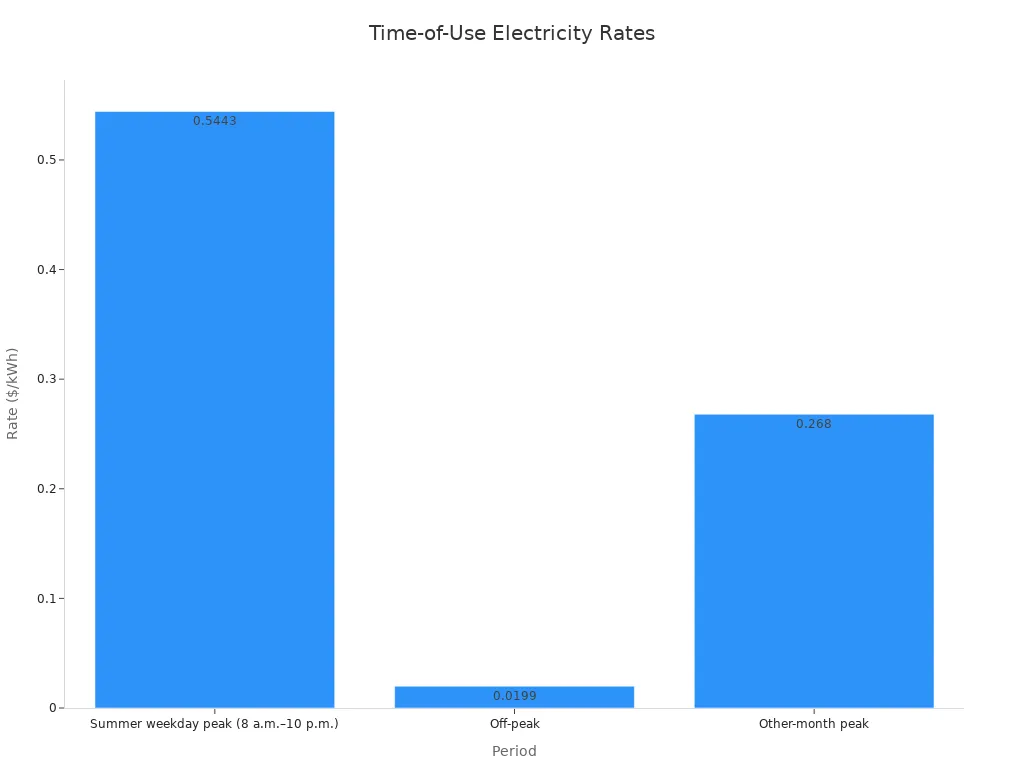
Time-of-use pricing means the cost per kWh changes by time of day. Utilities charge more at peak and less off-peak. This design mirrors actual generation costs. Power is cheap to produce at night and expensive during hot summer afternoons. The result is a wide gap between the two windows.
Period | Rate ($/kWh) | Notes |
|---|---|---|
Summer weekday peak (8 a.m.–10 p.m.) | 0.5443 | Excludes surcharges and $34.00 monthly customer charge |
Off-peak | 0.0199 | Late night to early morning; midday may qualify in high-solar regions |
Other-month peak | 0.2680 | Excludes surcharges and monthly customer charge |
The peak-to-off-peak spread exceeds $0.50/kWh during summer months. That gap is the lever behind peak-valley price differences. You pay roughly twenty-seven times more per kWh at summer peak than off-peak. Telecom sites run around the clock, so every hour of load placement matters.
The Auto-Switching Logic Explained
A smart PDU reads the tariff schedule and shifts cabinet loads to cheaper valley periods automatically. The time-of-use price auto-switching routine compares the clock against the published rate table. Deferrable loads, such as battery charging and non-critical cooling cycles, move to low-price windows. The auto-switching mechanism runs without an operator on site.
This is where time-of-use price auto-switching earns its place in telecom cabinets. The PDU holds the schedule locally, so it keeps working when the network link drops. Real-time pricing data can update the plan when your utility changes rates. The auto-switching logic then re-plans the day.
Flattening the load also reduces transmission and capacity costs. Utilities bill demand charges on your highest interval. Spreading consumption across the day lowers that peak. Your electricity bills reflect both the energy shift and the demand reduction. The savings compound across a cabinet cluster.
Battery reserve storage strengthens the case. Operators charge batteries during cheaper valley periods and discharge during expensive peak hours. The break-even spread depends on round-trip efficiency and battery degradation. A spread above $0.50/kWh in summer makes arbitrage favorable even after efficiency losses and battery wear. Peak-valley pricing turns existing hardware into a revenue tool.
The cost of the shift is mostly configuration time. The power stays reliable because the PDU sequences outlets and protects circuits. Intelligent energy optimization does not mean risky load shedding. It means moving flexible load to windows where energy is cheap. That is the core of energy management with PDUs in telecom.
Smart PDU Technology in Telecom Cabinets
Core Capabilities of a Smart PDU
You meet three tiers of rack power hardware in the field. Monitored PDUs add a network interface for remote tracking of voltage, current, and load levels through a web portal. Switched PDUs go further. They let you toggle individual outlets on or off remotely, schedule outlet events, and sequence power-up order. Intelligent PDUs merge both functions and often include ports for environmental sensors that track temperature, humidity, and airflow.
Remote access is a must-have for telecom deployments in isolated locations. A smart PDU with SNMP support integrates with your existing monitoring tools, so alarms and reports flow into one dashboard. You can power-cycle frozen equipment without a site visit. That capability cuts maintenance trips and protects service uptime.
ESTEL Smart Power Distribution Unit Features
The ESTEL Smart Power Distribution Unit brings remote management, surge protection, and a dehumidifying function into one chassis. An LCD screen shows real-time monitoring data at the rack. You choose from 8 to 19 outlet configurations, with a 16A maximum input and an IEC60309-compliant plug. Automated power sequencing brings devices online in a set order to keep the system stable.
Load balancing across circuits spreads demand evenly and prevents overloads. Alarm notifications reach your team the moment a threshold trips. These smart power distribution units also support role-based access control and encrypted web login, so only authorized staff change settings. For operators comparing smart power distribution units, the built-in dehumidifier adds environmental control that protects sensitive electronics from moisture.
Traditional vs. Smart Energy Management
Limits of Fixed-Schedule and Manual Control
Fixed schedules and manual switching cannot respond to changing time-of-use rates or real-time load. A technician sets a timer once, and the timer keeps that pattern through rate changes, seasonal shifts, and demand spikes. When your utility moves the peak window, the old schedule keeps running. Manual switching depends on a person driving to the site, so it reacts slowly and inconsistently.
Basic pdus also lack real-time monitoring. You learn about an overload after equipment fails, not before. That gap raises maintenance costs and stretches downtime. A conventional unit offers limited overload protection and surge suppression, so connected gear carries more risk.
Where Each Approach Fits Best
Smart pdus fit best where tariffs vary and remote management is valued. Telecom cabinets in regions with wide peak-valley gaps gain the most from auto-switching. Remote sites also benefit, because you can troubleshoot without a truck roll. The table below shows the typical gap between the two approaches.
Feature | Conventional PDU | Smart PDU |
|---|---|---|
Real-time monitoring | No | Yes |
Remote management | No | Yes |
Intelligent energy optimization | No | Yes |
Advanced safety (overload protection, surge suppression) | Limited | Yes |
Energy savings potential | — | 30%–50% |
Equipment uptime | Baseline | +20% |
Operational reliability | Baseline | +25% |
Maintenance cost | Baseline | −30% |
Downtime | Baseline | −50% |
Maintenance response time | Baseline | 40% faster |
Simple sites may still suit basic pdus. A small cabinet with a flat tariff and frequent on-site staff needs little automation. The smart power distribution unit earns its place when rates shift and staff are far away. Match the hardware to the site, and the energy management plan stays balanced.
Implementing ESTEL Smart PDUs in Telecom Cabinets
Assessment and Tariff Mapping
Start with a site assessment. Define your objectives and analyze the computing and transmission requirements of each cabinet. Design the supporting infrastructure holistically, covering IT hardware, power, connectivity, cooling, and security together. Then map the local time-of-use tariff periods against your actual load profile. Identify which loads are deferrable, such as battery charging and non-critical cooling, and which must run continuously.
Sizing comes next. The ESTEL smart power distribution unit offers 8 to 19 outlet configurations with a 16A maximum input, so match the outlet count and current rating to the equipment you plan to connect. Confirm the PDU supports remote communication, since this may require extra IP addresses and ports. Add bus cabling and sensors for cabinet condition monitoring. Inspect the cabinet for dust and moisture, and clean the area before installation.
Configuration and System Integration
Mount the unit securely with the provided hardware, and connect the input power cable to match voltage and current ratings. Attach devices to outlets and label each connection. Power on and verify the LCD startup information, then test each outlet to confirm surge protection and monitoring features. Minimize downtime during these changes.
Configure switching schedules around your mapped tariff windows, so auto-switching moves flexible load into valley periods. Integrate the PDU with existing cabinet monitoring and network management systems. Update firmware regularly, apply access controls, and monitor for unauthorized activity. Route cords along side braces, mount at eye level, and use toolless brackets to keep cabling organized. A tailored maintenance plan with proactive monitoring keeps these smart power distribution units running efficiently and protects your energy management savings.
Reducing Costs via Peak-Valley Price Differences
Operational Savings and Reliability
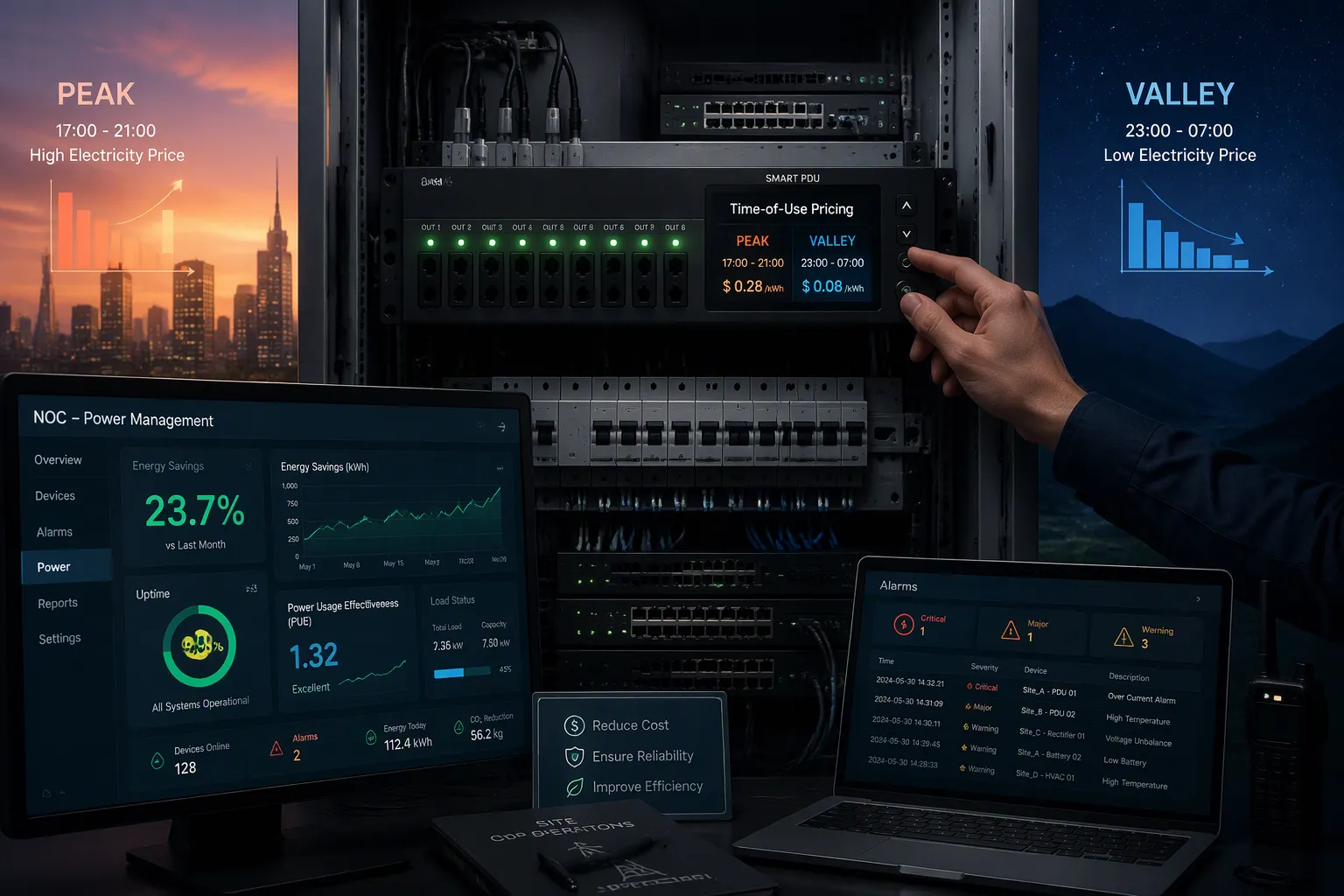
You can measure the payoff of time-of-use price auto-switching on two lines of the budget sheet. The first line is the electricity bill. Shifting flexible load into cheaper valley periods produces up to 25% annual energy savings for operators who run this schedule. Remote management and outlet-level monitoring add up to 30% energy savings on their own. Together, these levers help you reduce costs via peak-valley price differences across a cabinet cluster.
The second line is reliability. Remote outlet control lets you reboot a frozen radio without a site visit, and that capability shows up in the numbers.
Metric | Reported Improvement |
|---|---|
Operational reliability | +25% |
Equipment uptime | +20% |
Recent outage prevention | 80% |
Maintenance response time | 40% faster |
Downtime reduction | 50% |
Maintenance cost reduction | 30% |
These gains matter in remote telecom cabinets, where a truck roll eats the savings from a whole month of load shifting. A smart pdu with alarm notifications warns you before a circuit trips. You fix the issue from the network operations center. Downtime falls, and so do the labor costs tied to emergency visits.
Energy Efficiency and Sustainability Gains
Peak-valley pricing rewards you for using less power when the grid is strained. Lower peak demand means fewer peaking plants run on your behalf, and that cuts greenhouse gas emissions. Operators using smart pdus report energy consumption reductions of 15%, with some deployments reaching up to 41%. Power waste drops by up to 30%. Those figures translate into a smaller carbon footprint for every site you manage.
Cooling is the second front. The dehumidifying function on the ESTEL smart power distribution unit keeps cabinet humidity in check, so the cooling system works less to remove moisture. Documented cooling cost reductions run 10–15%. Efficient cooling also extends equipment life, which lowers replacement costs over time.
The financial picture is clear. Energy cost reduction reaches up to 20%, and a mid-sized data center can save roughly $50,000 annually. Energy efficiency rises about 20%, which improves Power Usage Effectiveness. You gain lower electricity bills and a cleaner operation at the same time. That combination makes energy savings with smart management a practical goal, not a slogan.
The broader case for intelligent energy optimization rests on three pillars. First, tariff-aware auto-switching captures the peak-valley gap. Second, remote monitoring trims maintenance costs. Third, efficient cooling protects hardware. Each pillar supports the others. Your energy management plan becomes a system, and the savings compound month after month. For telecom operators facing wide rate spreads, the peak-valley gap is the largest single lever available. Smart pdus let you pull that lever automatically, and the results show up in both the budget and the sustainability report.
Tariff-aware scheduling turns peak-valley pricing into measurable savings. Your smart PDU reads the tariff schedule and moves flexible power load into cheaper valley periods. Electricity bills fall while cabinet reliability holds steady. These devices complement existing practice and do not replace every option; simple sites still suit basic pdus. Next, pilot ESTEL Smart Power Distribution Units in a representative cabinet cluster. Track energy savings across telecom cabinets for one billing cycle. Compare costs and cost per site before and after the pilot. This time-of-use price auto-switching lowers costs at telecom sites. A smart power distribution unit also trims maintenance trips. Each pdu logs load. These pdus give your telecom team a path forward.
FAQ
How does a smart PDU shift load to cheaper hours?
You load the local tariff schedule into the unit. The PDU compares the clock against that table. It then moves flexible loads, such as battery charging, into valley windows. The schedule stays on the device, so switching continues when the network link drops.
What outlet and current options does the ESTEL unit offer?
The ESTEL smart power distribution unit comes in 8 to 19 outlet configurations. Maximum input current is 16A, and the plug meets IEC60309. An LCD shows real-time data, and a dehumidifying function protects electronics from moisture.
Can I manage a cabinet without visiting the site?
Yes. Remote management lets you toggle outlets and reboot frozen equipment from your network operations center. Alarm notifications warn you before a circuit trips. This capability cuts truck rolls across remote telecom cabinets and protects uptime.
How do I measure savings from auto-switching?
Track your electricity bill for one billing cycle before and after the pilot. Compare cost per site. Operators report up to 25% annual energy savings from load shifting, and remote management adds up to 30% more. Cooling cost reductions run 10–15%.
Do all sites need a smart PDU?
No. Simple sites with flat tariffs and frequent on-site staff still suit basic pdus. Smart power distribution units fit best where rates vary and staff are far away. Match the hardware to the site, and your energy plan stays balanced.
See Also
Solar Energy Storage Power System Designed for Telecom Cabinets
Understanding ESTEL PDUs and Their Function in Data Center Cabinets
Ways to Guarantee Reliable Power Supply for Telecom Cabinets
ESTEL Smart Microgrid Integrated Energy Storage System for Telecom Cabinets
CALL US DIRECTLY
86-13752765943
3A-8, SHUIWAN 1979 SQUARE (PHASE II), NO.111, TAIZI ROAD,SHUIWAN COMMUNITY, ZHAOSHANG STREET, NANSHAN DISTRICT, SHENZHEN, GUANGDONG, CHINA
