How to Adapt Smart PDUs for Unattended Operation in Remote Telecom Cabinets Using Solar Power and Remote Monitoring

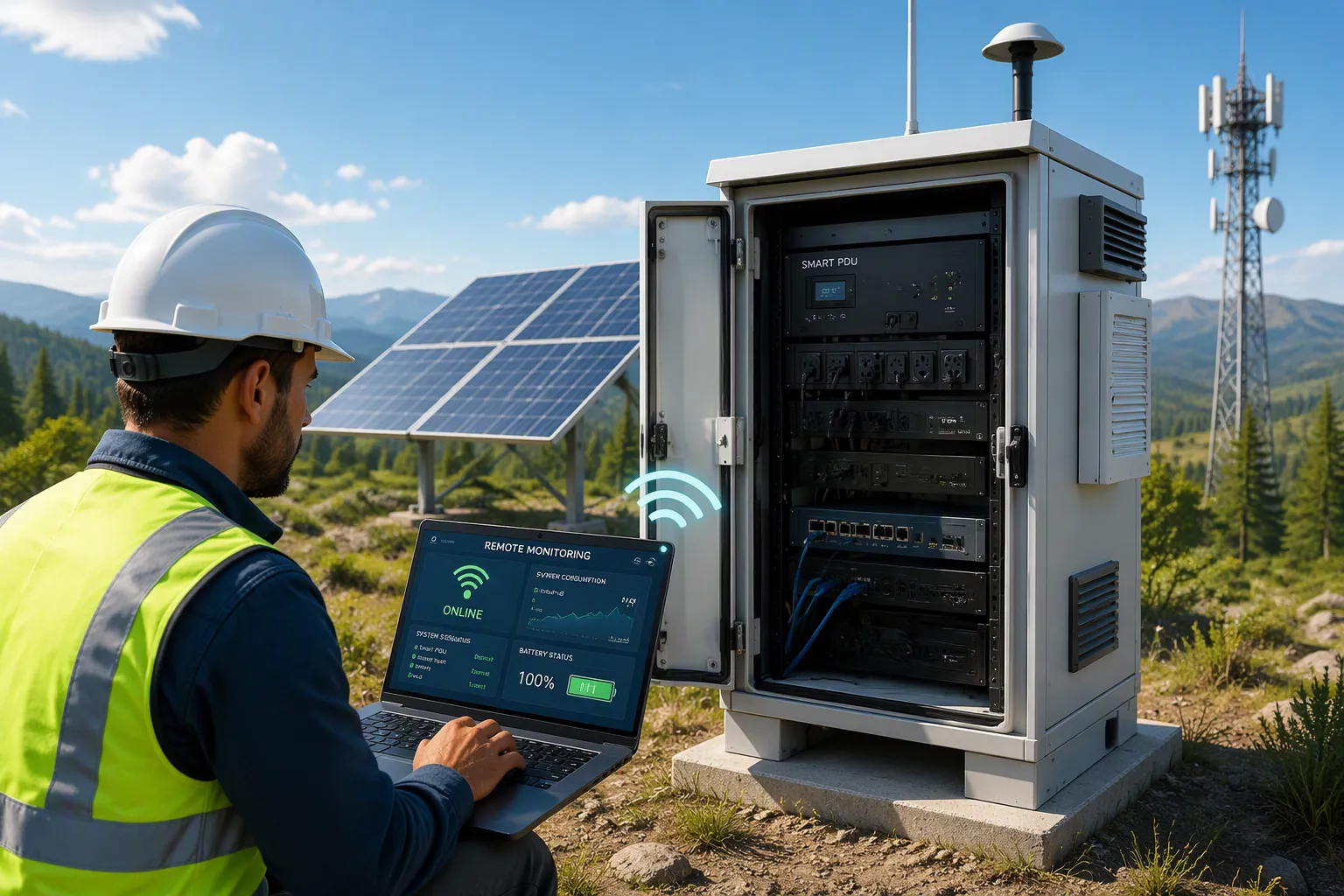
You can run remote telecom cabinets without staff on site. The key lies in adaptation for solar power and remote monitoring and control. A smart PDU turns this goal into reality. It manages loads, reports status, and responds to faults on its own.
This guide gives you four practical levers. You will learn smart PDU feature selection, solar and battery sizing for your load, monitoring setup, and step-by-step implementation. Each step targets measurable outcomes. You will see how smart PDUs support unattended operation across a fleet of telecom cabinets. Expect an engineer-focused walkthrough, not theory. Solar power and remote monitoring make the difference.
Key Takeaways
Choose a smart PDU with remote power control and environmental sensors to manage equipment without site visits.
Size your solar array and battery bank based on daily energy use and worst-case sunlight conditions.
Set up real-time monitoring with alerts to catch faults early and reduce downtime.
Follow a step-by-step installation plan to ensure safety and reliable operation.
Unattended operation cuts costs by reducing site visits and improving energy efficiency.
Smart PDU Features for Unattended Cabinets
Remote Power Control and Automation
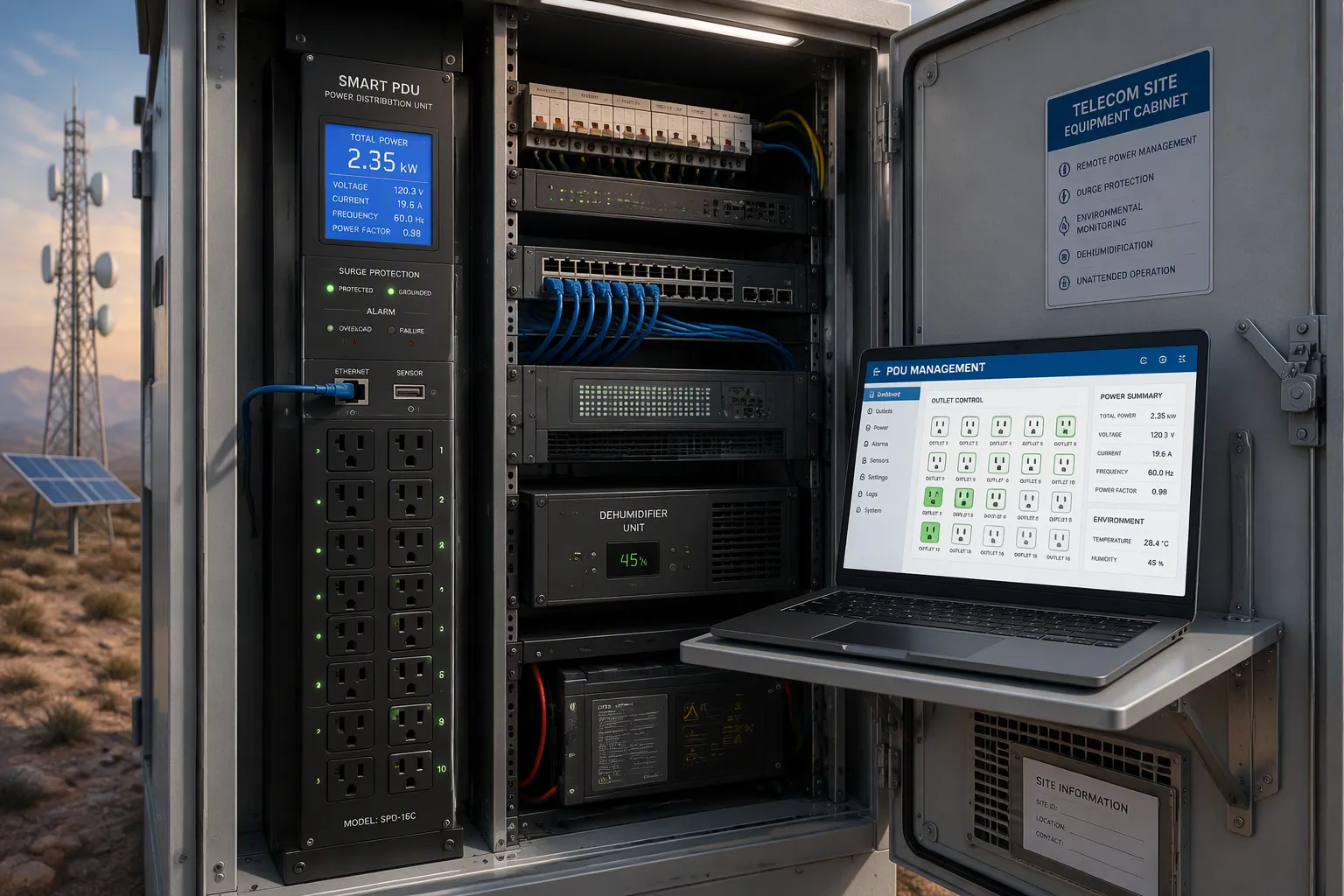
You need a smart power distribution unit that acts on your behalf at a site with no staff. ESTEL's Smart Power Distribution Unit gives you a concrete starting point. It offers outlet-level control, environmental monitoring, hot-swappable components, and remote monitoring and access. These features let you deploy one device that distributes, protects, and reports power.
Modular design keeps maintenance simple. Hot-swappable components let you replace or upgrade modules without shutting down the system. Precision power management ensures each device receives the exact power it needs. Scalability options let the system grow with evolving network demands.
Remote power control is the core capability of a smart PDU. Outlet-level switching lets you power cycle a frozen router or schedule a reboot without sending a technician. Power sequencing supports safe startup order at remote facilities. Scheduled reboots maintain infrastructure on a fixed cadence. Out-of-band management through a serial console or secondary network path keeps control alive during a network outage.
PDU types differ in what they deliver. The table below shows where each fits.
PDU Type | Remote Control | Best Fit in a Remote Cabinet |
|---|---|---|
Network-based outlet on/off and reboot | Sites where you must remediate hung devices remotely | |
None; local and network power readings | Sites where load visibility and capacity planning matter most | |
Monitored | None; networked power reporting | Sites where centralized visibility and alerts are the priority |
Choose switched units where you must intervene remotely. Choose metered units where you need billing-grade energy data. Choose monitored units where reporting alone meets your need.
SNMP and Modbus integration ties these smart power distribution units into your management platform. IP aggregation of 2–50 PDUs simplifies deployment further. SNMP v2/v3, Redfish RESTful API, JSON-RPC, and Modbus/TCP connect each unit to DCIM or BMS platforms. That scale matters when your fleet spans many telecom cabinets.
Environmental Sensing and Security
A smart PDU with environmental sensors extends your awareness beyond power. External sensors track temperature, humidity, airflow, differential pressure, and water leaks. Threshold alerts arrive through SNMP traps, email, SMS, or syslog. You set the limits, and the system notifies you before a hot spot becomes a failure. Airflow and air pressure monitoring catch hot spots autonomously.
Deployment stays simple. Sensors are plug-and-play and retrofit-friendly, so you add them to existing cabinets without disrupting operations. A single bus or string cascades many sensors per PDU over Cat5/6 cable. One device then covers both power and environment.
Security features protect the cabinet itself. Anti-theft locks and door sensors report unauthorized access. Real-time monitoring of these inputs supports unattended operation because you learn about threats without being on site. Continuous awareness of environmental and security hazards replaces periodic site visits. Outlet-level monitoring and control completes the picture: you see per-outlet consumption and act on it remotely.
ESTEL's outdoor cabinet range adds an enclosure layer with IP55 protection, anti-corrosion coating, and anti-theft locks. The PDU sits inside this shell, and the two work together. Remote monitoring data flows from PDU to platform, and your team responds from anywhere. This pairing keeps remote telecom cabinets running without staff on site.
Solar Power for Remote Telecom Cabinets
Off-Grid Design with Battery Storage
You size the array around the load, not the other way around. Sum each device's draw with power in watts = current in amps × voltage in volts, then total the rack and add a safety margin for future upgrades. A worked example shows the method: 1,500 Wh per day, 5 hours of sunlight, and a 2x margin give a 600 W array. Size for the worst-case month, not the summer peak. MPPT charge controllers track each panel's maximum power point as sunlight and temperature shift, so batteries charge faster and lose less energy. Multiple trackers handle shading and panel orientation differences.
Storage and conversion complete the off-grid design. Lithium iron phosphate batteries offer 80–90% usable capacity, 4,000–6,000 cycles, and roughly 95% efficiency. Those figures let you build a smaller bank with a longer service life. ESTEL's rectifier systems convert and regulate power for the load. Together they support solar power integration in remote telecom cabinets. Intelligent energy management schedules the flow of energy from solar, batteries, and grid sources to maximize utilization and reliability.
Low-Power Standby Mode and Energy Savings
Unattended sites waste energy when every subsystem runs at full draw around the clock. Low-power standby mode cuts power when equipment does not need full operation and keeps only critical functions alive. Selective shutdown powers down non-essential components while communications stay active. Burst mode operation reduces consumption during low-load periods. These techniques turn solar power adaptation into real savings.
The numbers support the case. ESTEL's GreenLine series reports up to 30% energy savings. Real-time monitoring lets you spot anomalies and shut down inactive devices remotely. That combination supports sustainability goals and stretches every watt your array produces. Solar and hybrid energy integration then becomes a repeatable pattern across your telecom cabinets, and integrating solar power into new sites follows the same steps.
Source | Reported Energy Savings |
|---|---|
ESTEL GreenLine series | Up to 30% |
Enabling Unattended Operation of Smart Power Distribution Units
Smart PDU Remote Monitoring and Control
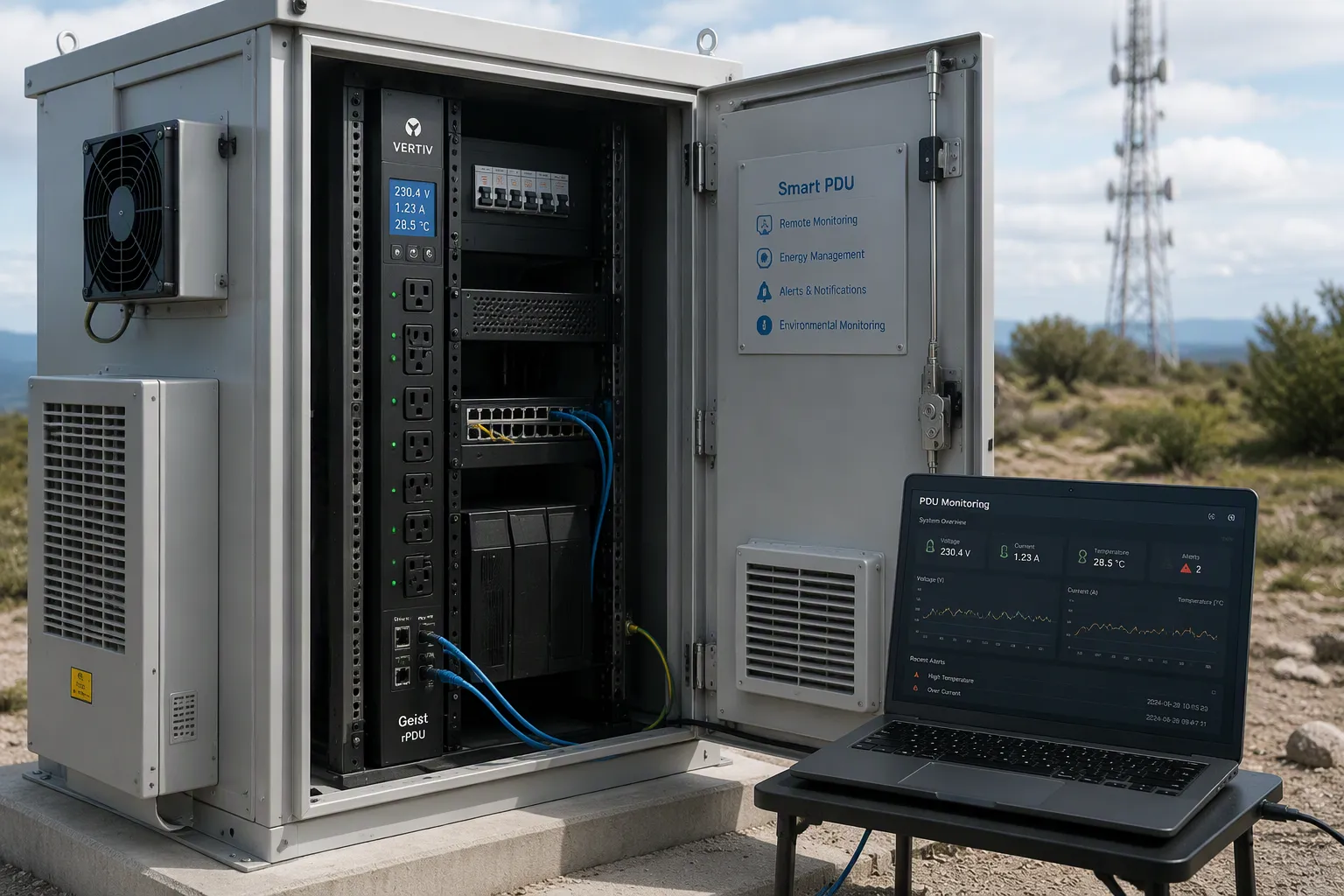
Real-time energy metering turns a smart PDU into your eyes at the site. The unit samples voltage, current, power, and temperature, then pushes that data over Ethernet through SNMP polling. No agents or proprietary protocols are needed. Modbus support adds a second path into building and DCIM platforms. Together they deliver a centralized view of the power infrastructure and simplify monitoring and control. Remote probes extend that view across distributed sites through one web interface, so you skip on-site checks. Polling intervals stay short enough to catch a fault before it spreads.
Set thresholds per sensor. A current overload or an abnormal temperature reading triggers an email, SMS, or SNMP trap before the circuit shuts down. Historical data reveals gradual load growth, so you plan capacity before it becomes an emergency. Outlet-level metrics show exactly where power is allocated across the rack. This real-time power consumption monitoring supports remote management of telecom cabinets without a site visit. Adopt clear naming conventions for PDUs and outlets, and document configuration settings and test results. Both steps simplify future troubleshooting.
The enclosure matters as much as the electronics. ESTEL's outdoor telecom cabinets provide IP55 protection, anti-corrosion coating, and anti-theft locks. A 20U cabinet houses the PDU internally, and galvanized steel resists weather and corrosion. The cabinet shields your equipment from dust, water, and extreme conditions. Heat exchangers and fans hold a stable internal climate, and IK10 mechanical protection guards against impact. Certifications include Telcordia GR-487, UL, and NEMA 4X. The PDU and the shell form one monitored layer around remote telecom cabinets.
Alerts, Diagnostics, and Cloud Platforms
Unattended operation depends on fast, accurate alerts. System alarms watch current overloads, abnormal temperatures, and environmental conditions. Built-in LCD or OLED displays give on-site visibility into power usage and system health. Real-time monitoring of load balance, voltage, and fault indicators removes the need for external diagnostic tools. Remote power control lets you reboot an unresponsive device through SNMP, HTTP, or Telnet access. Schedule regular load-balancing checks to prevent downtime. Confirm each smart power distribution unit complies with IEC 62368 and carries FCC Part 15 Class A and TUVus certification. Upgrade to intelligent PDUs where feasible, and integrate each unit with the telecom management system for unified control.
Cloud platforms extend real-time monitoring and control. Software collects sensor data from temperature, humidity, and PDU sensors across telecom cabinets at every site. A unified dashboard aggregates environmental, power, and security data, with historical trends and instant alert routing. RTUs connect with IoT sensors to feed these cloud systems. Modular PDU design with AI-driven predictive power management scales this control across distributed cabinets.
Integration Benefit | Description |
|---|---|
Real-time monitoring | Immediate insight into power usage and potential issues |
Predictive maintenance | Proactive repairs reduce unexpected failures |
Automated alerts | Quick notifications help prevent outages |
Cloud management | Oversee all cabinets from a single dashboard |
These remote monitoring capabilities make unattended operation of smart power distribution units practical. Your team watches a dashboard, not a driveway.
Implementation Steps and Measurable Outcomes
Planning, Installation, and Configuration
Start with the cabinet. Clear debris and unused equipment, then verify the cabinet dimensions match your smart power distribution unit specifications. Mount the unit securely, and align rackmount models with the rack mounting holes for stability. Connect the PDU to its primary power source, and confirm the voltage and current ratings match the unit's capacity. Label every cable at both ends, and connect telecom equipment to the outlets in a planned order. Power on the unit, verify consistent power to each device, and check for overheating or irregularities.
Cable discipline protects the installation. Bundle cables with ties or Velcro, route them away from heat sources and sharp edges, and leave space for airflow. Wear gloves, goggles, and insulated tools. Inspect the PDU and cables for damage before you start, and never overload a unit. Choose capacity above current needs so the site can grow. Follow the manufacturer guidelines for every step.
Cost Savings, ROI, and Business Value
Unattended operation pays back through avoided site visits and faster fault response. Real-time monitoring shows power usage instantly, and predictive maintenance flags issues before they cause outages. Peak-valley regulation controls costs and cuts waste. Seamless solar power integration lets panels and batteries connect directly, and the unit balances loads during outages. Remote diagnostics let you reboot devices over SNMP without travel.
These gains compound across a fleet. Apply real-time monitoring to track energy use, adopt tailored maintenance with regular inspections, and keep firmware current for security and compliance. Combine hybrid sources for continuous supply. The table below summarizes the value you can expect.
Feature/Benefit | Description |
|---|---|
Real-time Monitoring | Instant updates on power usage; enhances energy efficiency and power management. |
Predictive Maintenance | Identifies issues before outages; reduces downtime and maintenance costs. |
Peak-Valley Regulation | Controls costs and minimizes waste, supporting environmental goals. |
Seamless Solar Integration | Solar panels and battery storage connect directly; unit manages energy flow and balances loads during outages. |
Remote Diagnostics & Control | Reboot devices or cycle power remotely; SNMP support for device management. |
Safety & Environmental Protection | Surge protection and dehumidifying maintain optimal cabinet conditions. |
You now have a clear adaptation path. Select the right smart power distribution unit features, size solar power and battery capacity for your load, and set up remote monitoring with reliable alerts. These steps make unattended operation of remote telecom cabinets achievable.
The business value follows quickly. Fewer site visits, faster fault response, and lower operating costs add up across every site. Real-time monitoring also supports sustainability gains.
Scale this approach across your fleet of telecom cabinets. Standardize configurations, reuse proven monitoring thresholds, and grow with confidence. ESTEL supplies both the outdoor cabinet and the PDU, so you can build the full solution with one partner.
FAQ
What input current and outlet count should you plan for?
ESTEL's smart power distribution unit offers outlet-level control, environmental monitoring, and hot-swappable components. Match the outlet count to your rack devices and keep spare capacity for growth. Check cabinet space before you mount it.
How do you size solar power for a remote cabinet?
Add up the daily energy draw of every device, then size the array for the worst-case month. Use an MPPT controller to capture more energy as sunlight shifts. Pair the array with lithium iron phosphate batteries, which offer 80–90% usable capacity and roughly 95% efficiency.
Which PDU type suits an unattended site?
Pick a switched unit when you must reboot hung devices remotely. Choose a metered unit when energy data drives your capacity planning. Choose a monitored unit when reporting alone meets your need. All three types support SNMP and Modbus integration into your management platform.
How does remote monitoring reduce site visits?
Real-time monitoring reports voltage, current, power, and temperature over SNMP. You set thresholds, and the system sends alerts before a fault spreads. Outlet-level data shows where power goes. Your team acts from a dashboard instead of driving to the site. This monitoring approach keeps telecom cabinets running without staff.
Can you manage many PDUs from one console?
Yes. IP aggregation of 2–50 PDUs simplifies deployment further. Cloud platforms add a unified dashboard with historical trends and instant alert routing. Monitoring at this scale makes fleet-wide unattended operation practical.
See Also
Ensuring Best Monitoring Practices for Outdoor Telecom Cabinet Systems
Solar Energy Storage Power Systems Designed for Telecom Cabinets
Guaranteeing Consistent and Reliable Power Supply for Telecom Cabinets
Grid-Tied Solar Inverter and Battery Systems for Telecom Cabinets
Understanding ESTEL PDUs and Their Functions in Data Center Cabinets
CALL US DIRECTLY
86-13752765943
3A-8, SHUIWAN 1979 SQUARE (PHASE II), NO.111, TAIZI ROAD,SHUIWAN COMMUNITY, ZHAOSHANG STREET, NANSHAN DISTRICT, SHENZHEN, GUANGDONG, CHINA
