How Smart PDUs and 5G Private Networks Enable Low-Latency Command Transmission for Critical Device Power

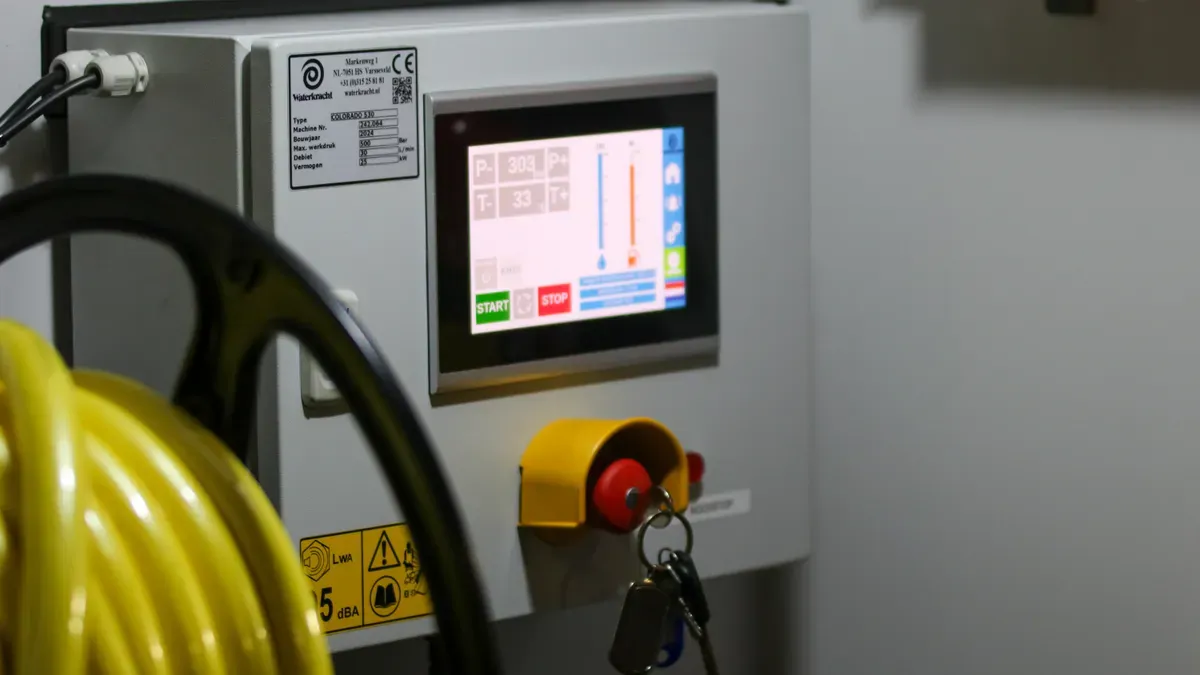
Pairing smart PDUs with private 5G networks creates an end-to-end low-latency path for power commands to critical devices. Two mechanisms drive this result: outlet-level intelligent switching inside the PDU, and URLLC with network slicing in 5G. Smart PDUs act at the outlet, so commands reach the device without intermediate delay. URLLC holds latency below 1 millisecond, and slicing reserves deterministic bandwidth for control traffic. These layers support low-latency communication across the chain. 5G TSN integration adds time-sensitive networking priority and precise time synchronisation, which tightens latency further. 5G-tsn coordination aligns radio scheduling with TSN queues, and a second 5G-tsn stage handles edge prioritization. Data centers and remote telecom sites show where this architecture fits best.
Key Takeaways
Smart PDUs switch power at each outlet, so commands reach devices quickly without extra delay.
Private 5G networks use URLLC and network slicing to keep latency below 1 millisecond and ensure reliable command delivery.
5G-TSN integration adds time-sensitive networking priority and precise time synchronization, making latency even tighter and more predictable.
Place control logic at the edge and prioritize power commands to achieve end-to-end latency as low as 1 millisecond.
This setup works best in data centers, remote telecom sites, and industrial automation where fast, reliable power control is critical.
Smart PDUs: Low-Latency Power Control
Outlet-Level Switching and Remote Management
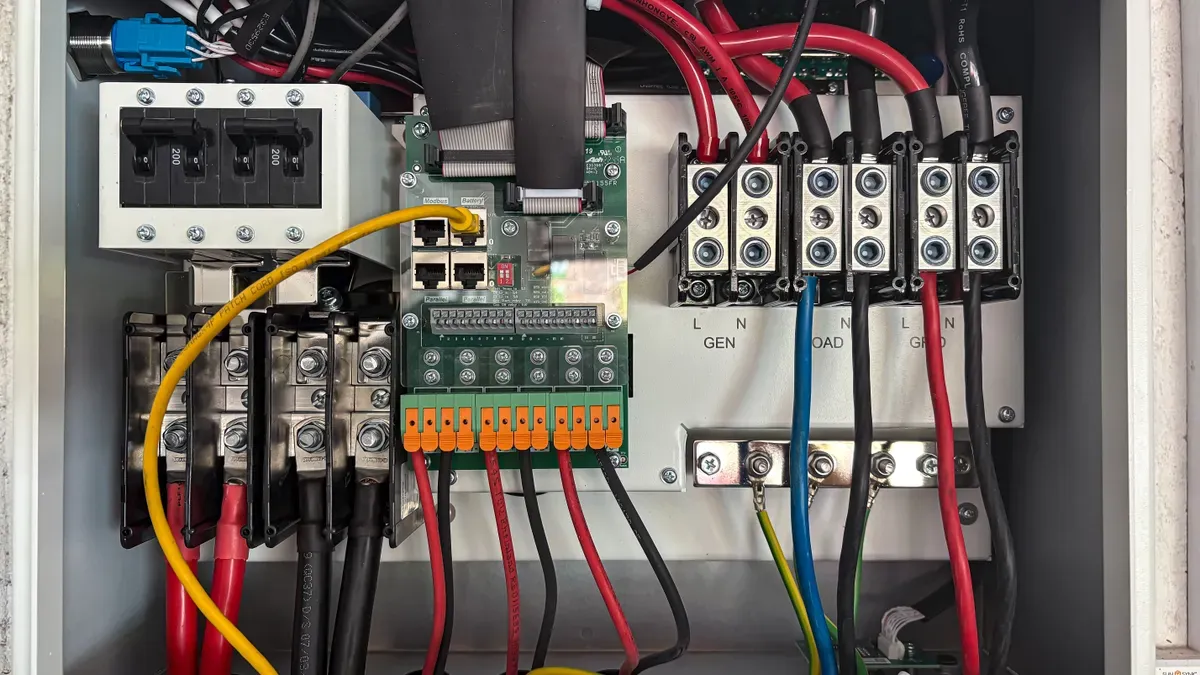
ESTEL's Smart Power Distribution Unit gives you a practical reference point for outlet-level control. The unit supports remote control and intelligent protocols, so you can issue commands from a management platform instead of walking to the rack. An LCD screen shows live status, surge protection guards connected equipment, and a dehumidifying function keeps operating conditions stable. You can choose configurations with 8 to 19 outlets, and the unit accepts a maximum input current of 16A through an IEC60309-compliant plug system. These features matter because device power demands vary across racks, and you need granular control over each outlet.
Outlet-level switching shortens the command path in a direct way. A command targets one outlet, not a whole branch circuit, so the PDU actuates the relay at that socket and the device sees the change almost immediately. Programmable response adds another layer. You can define rules that trigger switching actions on a schedule or on a signal from the management system. The PDU executes the rule locally, which removes a round trip to a remote controller. This design supports real-time control of critical loads and keeps low latency at the device itself.
Remote management completes the picture. You monitor current draw, switch outlets, and receive status updates over the network. When you pair this capability with a private 5G link, the transport layer adds little delay. The PDU handles the last meter of the path, and the network handles the rest. Together they form a chain that carries commands to the device with minimal delay. Time synchronisation across the PDU and the network keeps each action aligned to a common clock, which matters when several outlets must switch in sequence.
5G Private Networks and URLLC
Network Slicing for Deterministic Traffic
Ultra-reliable low-latency communication (URLLC) is the service class that makes 5G suitable for power commands. URLLC targets latency below 1 millisecond on the radio link, and it pairs that speed with very high reliability. A private 5G network dedicates its own bandwidth to your site, so time-sensitive use cases do not compete with consumer traffic. You gain low latency on a link you control, and you gain low-latency communication that stays stable under load. This matters when a command must reach a PDU outlet without waiting behind other packets.
Network slicing turns that dedicated bandwidth into a reserved lane. A slice sets aside radio, transport, and core resources for one traffic type, so power-control traffic keeps deterministic performance even when other applications run on the same 5G infrastructure. You can size a slice for command and telemetry traffic alone, and the slice holds its share of resources regardless of what else the network carries. This design supports deterministic communication for critical device power. Slicing also supports deterministic networks at scale, because each slice behaves like an isolated logical network with its own guarantees.
5G Standalone (SA) makes this architecture practical. SA uses a 5G core with no dependency on an LTE anchor, so the network delivers near-instant, low-latency communication from end to end. SA also enables slicing natively, which means your power-control slice exists as a first-class part of the network. You can then extend the design toward 5G-tsn integration, where 5G-tsn coordination aligns radio scheduling with wired time-sensitive networking queues. The result is a transport layer that carries power commands with low latency and predictable timing.
5G TSN Integration Architecture
Time-Sensitive Networking and Time Synchronisation
Time-sensitive networking gives time-critical packets priority treatment. Under the TSN gate mechanism, a frame leaves its queue only when the gate opens. If several gates open at once, the highest-priority queue transmits first. Frame preemption (IEEE 802.1Qbu / IEEE 802.3br) lets express frames interrupt lower-priority frames mid-transmission. At 1 Gbps, a maximum-size 1500-byte frame can block a port for about 12.5 µs; preemption cuts that blocking time to roughly 1 µs. This mechanism complements 5G for deterministic communication. Together, 5G and TSN form a bridge that carries power commands with low latency and near-zero loss. That bridge is the foundation of 5G-TSN integration, and it delivers low-latency communication across the plant floor. A 5G-TSN bridge also keeps jitter small, and 5G-TSN scheduling holds that jitter steady.
Time synchronisation keeps command timing precise across PDU endpoints and the 5G network. The 5G system adopts the IEEE 802.1AS generalized Precision Time Protocol (gPTP), and it acts as a time-aware logical bridge. TSN translators sit at both ends: the DS-TT at the device side and the NW-TT at the 5G core side. These TSN translators measure residence time and add it to sync correction fields. The DS-TT computes resident time as egress timestamp minus ingress timestamp, then derives the corrected time for the endpoint. This design makes the 5G system behave as a transparent bridge, so master and slave clocks stay aligned. Precise time synchronisation therefore supports bounded latency for every outlet command. A second layer of time synchronisation aligns the PDU clock with the 5G-TSN slice scheduler, and that alignment protects bounded end-to-end latency. Time-sensitive networking depends on this shared clock, and 5G and TSN together keep it stable. You gain a 5G-TSN time domain that spans the rack and the radio.
Edge computing and command prioritization complete the end-to-end latency budget. Edge architectures integrated with TSN and real-time operating environments can reach budgets as low as about 1 ms for servo control loops. Machine vision tasks achieve 6–12 ms in such edge-based 5G TSN setups. Cloud-only architectures cannot meet these strict timing requirements. You should therefore place control logic at the edge and prioritize power commands above bulk traffic. This combination produces low and predictable end-to-end latencies and strengthens deterministic communication. A 5G-TSN edge node also shortens the path to the PDU, which improves deterministic performance. The 5G-TSN edge layer therefore trims the last segment of the budget.
5G-Advanced and 6G will extend these gains. Release 18 (5G-Advanced) extends ultra-reliable and low-latency communication with Deterministic Networking (DetNet) for industrial IoT. It targets reliability up to 99.999% and latency in the low single-digit millisecond range. Low-layer Triggered Mobility shortens handover interruption times. AI/ML mobility prediction in Release 19 may cut end-to-end delay further. In 6G, AI/ML becomes a core foundation of a data-driven architecture. Each step moves 5G TSN integration closer to full end-to-end determinism. The 5G-TSN roadmap therefore points toward tighter timing, and future 5G-TSN releases will refine time-sensitive networking further. Time synchronisation will remain the anchor of that work. A mature 5G-TSN stack will make power commands predictable at every site.
Applications, Performance, and Deployment
Critical Scenarios and Performance Comparison
Data centers, remote telecom sites, and industrial automation each place different demands on the command path. A data center needs fast outlet switching across dense racks. A remote telecom site needs reliable power commands where cabling is hard to run. Industrial automation needs tight timing for safety systems and robotics. The table below compares the transport options.
Network Type | Latency | Reliability | Device Density | Bandwidth |
|---|---|---|---|---|
Wi-Fi / 4G LTE | 50–100 ms | 95–98% | 100/sq km | Variable |
5G Private Network | 1–10 ms | 99.999% | 1M+/sq km | Guaranteed QoS |
5G URLLC achieves 1–10 ms latency comparable to industrial Ethernet but without physical cabling constraints. Wired connections remain preferred for the most time-critical applications (sub-millisecond requirements), while 5G enables wireless control for roughly 95% of industrial use cases where 10 ms latency is acceptable.
Wired links fit sub-millisecond loops best. Wi-Fi fits general monitoring where load stays light. A private 5g network fits sites that need low latency without cables. 5G holds latency steady under load, and that predictability supports deterministic communication. Wi-Fi peak speeds stay competitive, yet jitter rises with network load. A 5G path also scales to high device density. Choose the path that matches your timing budget.
Regulatory Compliance and Cost Factors
Spectrum access shapes deployment. Germany's BNetzA issues local licenses in 3.7–3.8 GHz blocks of 10 MHz, up to 100 MHz, for terms up to 10 years. The 26 GHz band serves local private networks with assignments in multiples of 200 MHz. The United States uses CBRS, the United Kingdom runs its Shared Access License system, and Japan and South Korea operate dedicated local 5G programs. Each framework differs in band, licensing economics, and device ecosystem maturity.
Costs extend beyond hardware. Implementation covers deployment, operations, maintenance, software, and skilled staff. Spectrum procurement adds capital expense, and standalone builds suit large enterprises best. Plan your 5G budget around spectrum, talent, and lifecycle operations. Edge placement and 5g-tsn scheduling then protect end-to-end latency. A 5g-tsn bridge keeps timing aligned, and time synchronisation holds deterministic performance across the site.
Smart PDUs deliver granular, programmable power control at each outlet, and smart PDUs execute commands locally. Private 5G networks carry those commands with deterministic, ultra-low latency transport. Neither layer captures the full gain alone. A 5G TSN integration architecture adds time-sensitive networking priority, edge computing, and time synchronisation. Together they shrink end-to-end latency beyond what 5G and TSN achieve separately. This 5G-tsn design holds latency steady under load and protects deterministic performance. Adoption pays off most at data centers, remote telecom sites, and industrial automation, where 5G-tsn scheduling and low latency command paths guard critical loads. As 5G matures, 5G TSN integration will reward early adopters.
FAQ
How does a smart PDU cut command delay at the outlet?
A smart PDU switches the relay at a single outlet, so the device reacts at once. ESTEL's unit supports remote control and programmable rules that run locally. You skip a round trip to a remote controller. Pair it with a private 5g link and 5g transport adds little delay.
Why does a private 5g network suit power commands better than shared wireless?
A private 5g network dedicates bandwidth to your site. URLLC holds radio latency below 1 millisecond, and a slice reserves resources for power-control traffic. Shared wireless lets other traffic compete for airtime. A private 5g build keeps timing steady under load, and 5g slicing isolates that traffic.
What does 5g-tsn add to the command path?
Time-sensitive networking gives time-critical frames priority and near-zero loss. A 5g-tsn bridge aligns radio scheduling with wired queues, so commands keep a bounded delay. Frame preemption cuts port blocking to roughly 1 µs. This 5g-tsn layer tightens the path, and 5g carries the command onward.
How does time synchronisation keep outlet switching precise?
The 5g system adopts IEEE 802.1AS gPTP and acts as a time-aware 5g bridge. TSN translators at the device and core sides correct residence time. A 5g-tsn time domain keeps the PDU clock aligned with the slice scheduler. Precise timing protects bounded latency for every outlet command.
Where does this setup deliver the most value?
Data centers, remote telecom sites, and industrial automation gain the most. A 5g-tsn edge node shortens the path to the PDU. Wired links still fit sub-millisecond loops. A private 5g network fits sites that need cable-free control, and edge prioritization guards critical loads.
See Also
Understanding ESTEL PDUs And Their Function In Data Center Cabinets
Methods To Guarantee Reliable Power Supply For Telecom Cabinet Systems
Reasons Why 2025 Requires Improved Telecom Cabinet Solutions
Key Information About Essential Telecom Power Supply Features
Solar Energy Storage Power Systems Designed For Telecom Cabinets
CALL US DIRECTLY
86-13752765943
3A-8, SHUIWAN 1979 SQUARE (PHASE II), NO.111, TAIZI ROAD,SHUIWAN COMMUNITY, ZHAOSHANG STREET, NANSHAN DISTRICT, SHENZHEN, GUANGDONG, CHINA
