How Smart PDUs and 5G Private Networks Enable Low-Latency Command Transmission for Critical Device Power

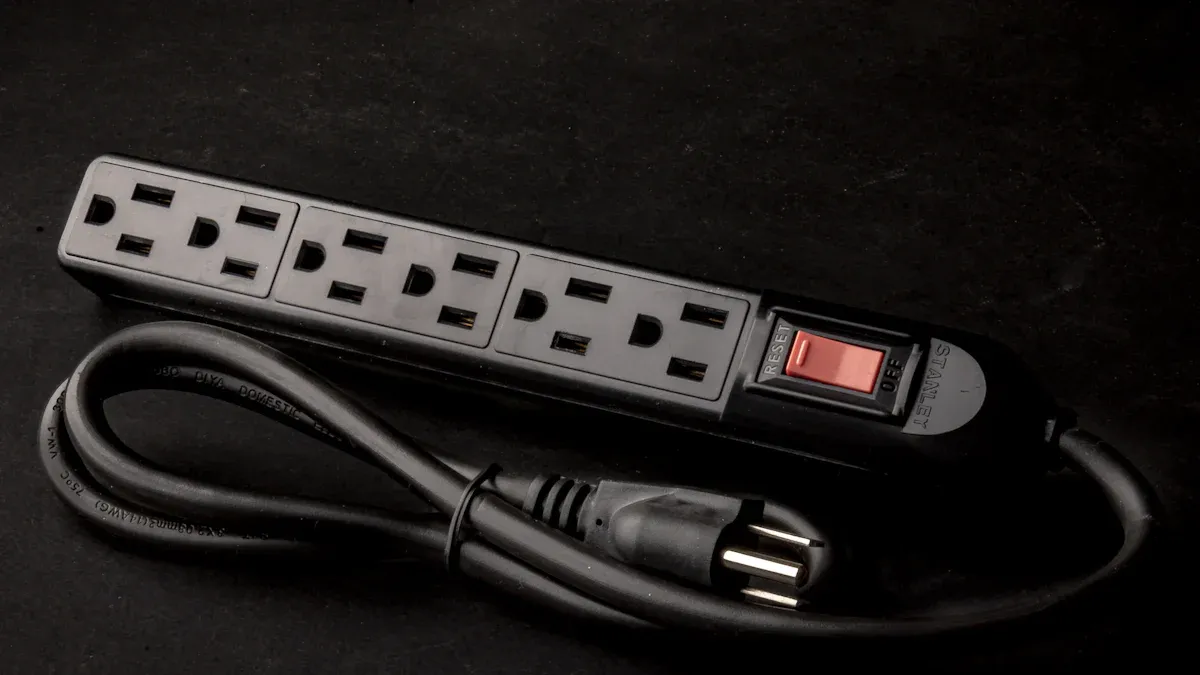
Smart PDUs deliver intelligent, outlet-level switching and telemetry. Private 5G networks provide deterministic, ultra-low latency transport. Together they compress the command-to-action gap for critical device power.
Two mechanisms drive this result. At the PDU, intelligent switching and remote management shorten the path from command to device. Across the network, prioritized, localized 5G transport with time-sensitive networking support carries each command without queuing delay. The outcome is faster, more reliable power commands.
Engineers, IT managers, and facility operators will find this guide useful. It explains the mechanisms behind low-latency communication, the benefits of low latency and time synchronisation, and where 5G-TSN integration fits. You will also learn how 5G and end-to-end latency shape real deployments, and why latency budgets matter when every second counts.
Key Takeaways
Smart PDUs let you control each outlet remotely. This speeds up power commands to critical devices.
Private 5G networks with TSN deliver fast, reliable commands. They keep latency low and predictable.
Time synchronization keeps commands on schedule. It ensures devices act at the right moment.
This setup works best in data centers, telecom sites, and control rooms. It recovers devices quickly and reduces site visits.
Plan for spectrum licenses and equipment costs. These expenses often pay off through faster recovery and fewer manual trips.
Smart PDUs and Low-Latency Power Control
Intelligent Switching at the Outlet Level
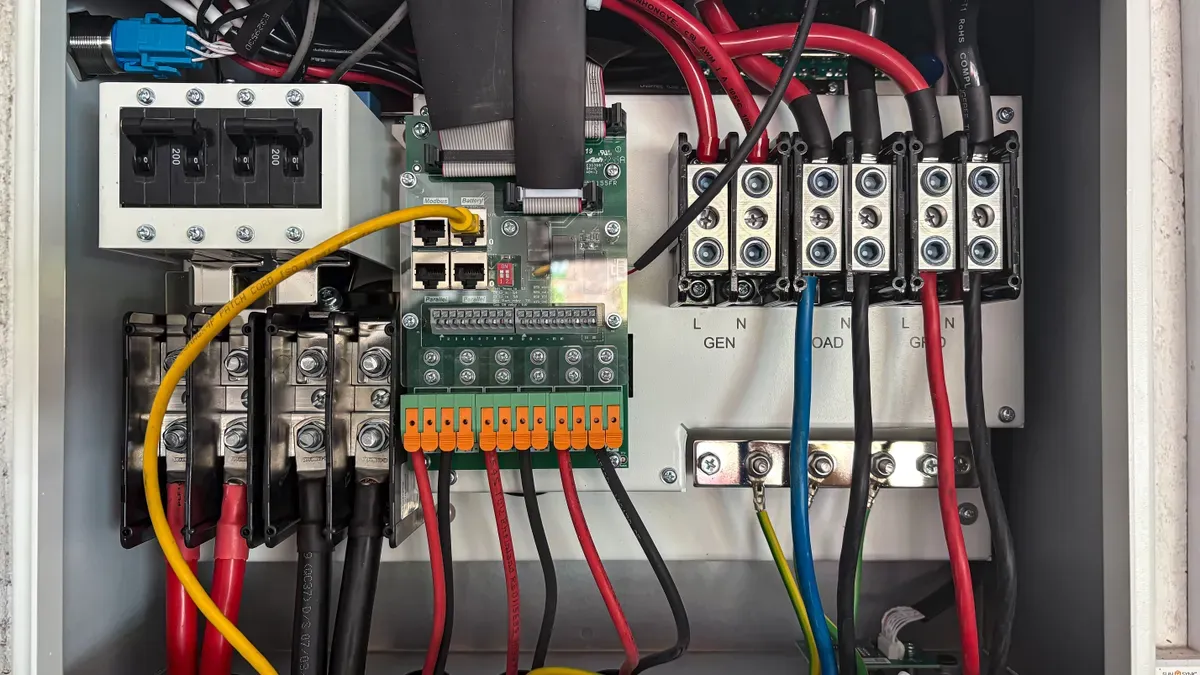
You can trace every fast command back to a switch. Smart PDUs place that switch at the individual outlet. ESTEL's Smart Power Distribution Unit shows how this works in practice. It comes in configurations with 8 to 19 outlets, draws a maximum input current of 16A, and supports a rated voltage current of 230VAC 32A. Each outlet can be addressed on its own, so a command targets one device instead of a whole branch circuit.
Parameter | Value |
|---|---|
Outlet configurations | 8 to 19 outlets |
Maximum input current | 16A |
Rated voltage current | 230VAC 32A |
Monitoring | LCD real-time display |
Protection | Surge protection |
Environmental control | Dehumidifying function |
Management | Remote control |
This outlet-level design shortens the command path in a direct way. A controller sends a switching instruction over an intelligent protocol. The PDU acts on that instruction at the outlet, and the device sees the change. No intermediate relay panel, no manual breaker operation, no technician walking to the rack. The instruction travels a short, defined route, and the device responds in kind. The protocol carries the command as a discrete message, so the PDU does not wait for a polling cycle to notice a change.
Surge protection and a dehumidifying function support the same goal. They keep the connected equipment in a stable condition, so a switching command lands on hardware that is ready to accept it. A stable enclosure environment protects the electronics that execute each command. An LCD panel gives you real-time monitoring at the unit itself. You can confirm state changes on the spot.
Remote Management and Telemetry
Remote control capability turns the PDU into a managed endpoint. You issue commands from a distance, and the unit executes them without local hands. This matters when a device sits in an outdoor cabinet, a remote site, or a locked rack room. You keep full authority over each outlet from your desk.
Telemetry closes the feedback loop. Smart PDUs report outlet status and environmental readings back to your management system. Typical readings include per-outlet current draw, on or off state, and cabinet temperature and humidity. You see whether a command took effect, and you see the condition of the load. That confirmation step removes guesswork. A restart becomes a verified action, not an assumption.
Consider a routine reboot. You send the off command from your console. The PDU switches the outlet, and the telemetry stream confirms the load dropped. You send the on command, and the stream confirms the device returned. Each step carries a timestamp, so you can measure the round trip and compare it against your target. You can then tune the sequence, for example by shortening the off interval, without risking the device.
The combination of remote control and telemetry also supports low latency operation at the outlet layer. You learn the outcome quickly, and you can issue the next command with confidence. When you pair this switching layer with 5g transport, the command and its confirmation travel over a prioritized link. A 5g-tsn architecture can then hold end-to-end latency within a defined budget. The PDU handles the switching, and the network handles the delivery. Each latency contributor stays small and measurable.
5G Private Networks, Time-Sensitive Networking, and Time Synchronisation
Deterministic Latency in Private 5G
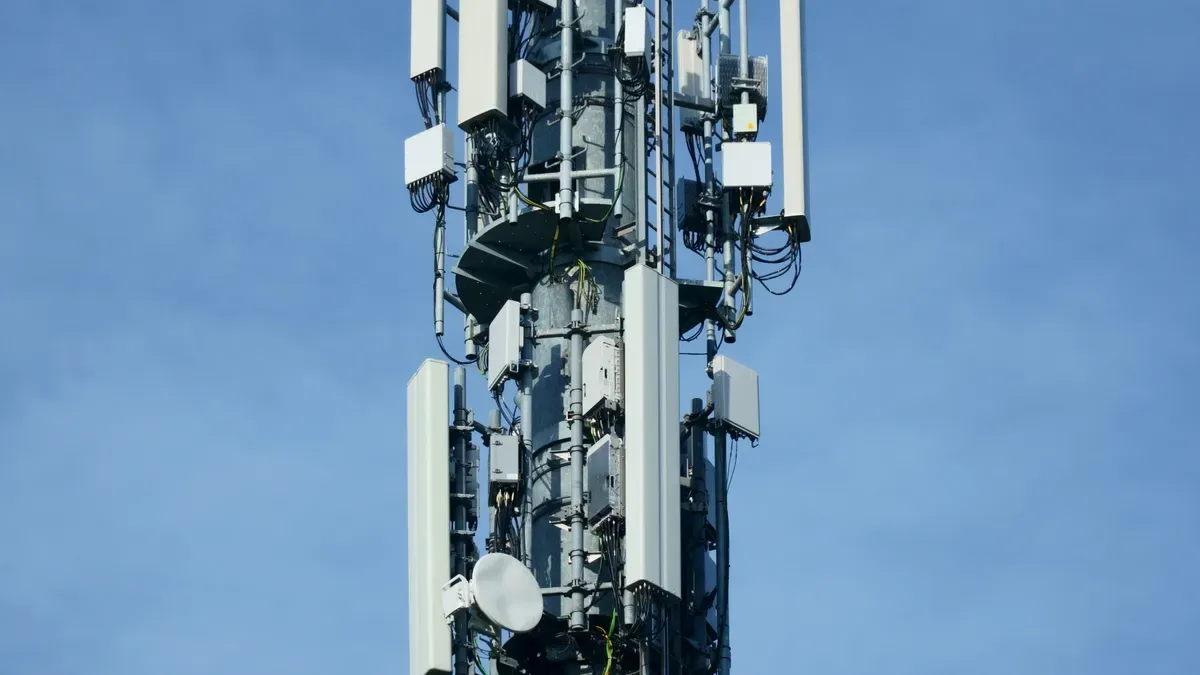
A private 5g network gives you control over every layer that adds delay. You can apply three practical steps to cut that delay. Network slicing carves an isolated logical network for your critical traffic. Kalem et al. showed that per-service slices can be instantiated dynamically by latency class and service priority. Multi-access Edge Computing (MEC) moves compute close to the devices. Peng et al. found that edge-based task partitioning reduced control-loop latency in industrial networks. URLLC tuning adjusts the radio itself. Flexible numerology and mini-slot scheduling shorten symbol duration, and grant-free uplink avoids scheduling delay.
These steps support low-latency communication across the whole path. A private 5g network keeps traffic on site, so packets avoid public routing. MEC pairs with an optimized RAN to reach sub-10 ms user-plane latency. URLLC tuning targets the ITU-R benchmark of 1 ms one-way user-plane latency. Together they deliver low and predictable end-to-end latencies for control traffic.
Time Synchronisation and TSN Guarantees
Time synchronisation anchors every guarantee. IEEE 802.1AS (gPTP over IEEE 1588v2) provides microsecond-level sync, which enables low, predictable end-to-end latency. A 5g-tsn design uses DS-TT and NW-TT translators to correct sync messages despite variable wireless delay. A live demo measured average time synchronization accuracy of 122 ns.
Time-sensitive networking adds three guarantees on top of that clock. IEEE 802.1Qbv schedules time-critical traffic through scheduled gates. IEEE 802.1CB frame redundancy duplicates frames across paths and discards copies at the receiver, which eliminates packet loss without retransmission. IEEE 802.1Qci polices each stream. Jitter control matters most here, because a network can absorb stable delay but not large variation.
TSN Mechanism | Standard | Guarantee |
|---|---|---|
Time synchronization | IEEE 802.1AS | Microsecond-level sync |
Frame redundancy | IEEE 802.1CB | No packet loss |
Time-triggered scheduling | IEEE 802.1Qbv | Priority for critical traffic |
5g and tsn together turn these mechanisms into bounded latency. 5g-tsn integration maps TSN streams onto 5G QoS flows through the TSN AF and CNC. Configured grants and semi-persistent scheduling pre-allocate radio resources, which removes dynamic scheduling delays. A 5g-tsn deployment with IEEE 802.1CB FRER held latency below 10 ms for 99.99% of packets. Baseline 5g without TSN enhancements averages 11.36 ms round-trip latency, so the enhancements push it under the industrial threshold. This is what ultra-reliable low-latency communication requires in practice.
Private 5g networks also secure the links between control rooms, field personnel, and mobile generation units during grid operations. On-site MEC keeps operational data local. Deterministic networks of this kind give you bounded end-to-end latency you can plan around. The result is deterministic communication and deterministic performance across the 5g-tsn path. For ultra-reliable and low-latency communication, 5g-tsn integration is the practical route.
5G TSN Integration Architecture and Command Flow
5G TSN Integration Architecture
You can picture the 5g tsn integration architecture as a chain of layers. A smart PDU sits at the power layer. A local network edge aggregates its traffic. The private 5g RAN and core carry the flow. A MEC and TSN bridge stage sits between the radio and the plant network. The target device receives the command at the end.
The 5g tsn integration architecture treats the 5g system as a virtual TSN bridge. A Centralized User Configuration (CUC) registers each node's service demands. A Centralized Network Configuration (CNC) then configures bridges, routing, and traffic shaping. An Application Function in the 5g core connects to the CNC and reports infrastructure capability. The CNC maps that capability to TSN QoS settings, which builds a QoS mapping table between the virtual bridge and the TSN side. TSN translators at the device side and network side correct timing across the wireless hop.
Component | Role |
|---|---|
Node/device | Endpoint that sends and receives data |
Bridges | Route packets and control QoS priority |
CUC | Registers node capabilities and demands |
CNC | Configures bridges and traffic shaping |
5g system as virtual TSN bridge | Represents 5g infrastructure as a TSN bridge |
AF–CNC interface | Maps 5g capability to TSN QoS |
Efficient PDU processing keeps this chain fast. Packet processing in the gNB-CU and UPF runs independently per stream, so the data path stays simple. Run-to-completion mode cuts context switches and raises cache hit rate, which lowers packet processing delay. PDCP reordering timers, SDU discard timers, and redundant transmission each bound delay for latency-sensitive flows. Industrial control loops need 10 ms or less, and 5g URLLC targets under 1 ms with 99.999% reliability. This is where 5g and tsn earn their place.
End-to-End Command Path
A power cycle shows how the layers cooperate. Follow the steps below and note where each latency contributor shrinks.
You issue the command from your console. The smart PDU accepts it over an intelligent protocol, and outlet-level switching removes any relay or manual step.
The local edge forwards the frame. A data-flow translation mechanism converts it between TSN and 5g formats at the boundary.
The private 5g RAN and core carry it. Configured Grant scheduling aligns 5g decisions with TSN schedules, and QoS mapping keeps the flow in the right class.
The MEC and TSN bridge stage applies time-sensitive networking gates. TSN translators keep time synchronisation intact across the radio hop.
The target device acts, and telemetry confirms the change back through the same path.
Each step trims a specific contributor. Outlet switching removes mechanical delay. Edge translation removes protocol conversion lag. Configured Grant scheduling removes dynamic grant waits. TSN gating removes queuing jitter. The result is low latency and end-to-end determinism you can measure. ESTEL's Smart Power Distribution Unit serves as the power-layer endpoint in this chain, and its remote control and telemetry close the loop. For ultra-reliable and low-latency communication, this 5g-tsn path delivers deterministic communication and deterministic performance. The 5g-tsn design also keeps end-to-end delay within budget, so every command lands on time.
Benefits, Application Fit, and Cost Considerations
Reliability and Responsiveness for Critical Devices
You gain three concrete reliability benefits from this pairing. First, you remove human-intervention delay. A technician no longer walks to a rack or drives to a remote site to flip a breaker. Second, you get deterministic command delivery. The 5g-tsn path holds each command within a bounded latency budget, so the device acts on schedule. Third, you recover critical devices faster. A verified power cycle restores a frozen server or radio unit in seconds, and telemetry confirms the outcome.
These gains fit several environments well. Data centers and server racks benefit from outlet-level switching and real-time control of individual loads. Outdoor telecom sites suit the combined approach, and ESTEL's outdoor telecom cabinet and power portfolio supports deployments in remote or harsh locations. Industrial control rooms gain from deterministic communication across the plant floor. Each setting has different device power demands, so size the PDU and the network slice to match.
Compliance, Fit, and Cost Tradeoffs
Plan for regulatory work before you deploy private 5g networks. Secure spectrum licenses early, and confirm compliance with regional rules, data privacy laws, and RF exposure standards. Germany's BNetzA framework illustrates the scope: it opened 100 MHz in the 3.7–3.8 GHz band for local licenses, assigns blocks of up to 100 MHz in 10 MHz steps, and grants terms of up to 10 years. Fees depend on bandwidth, coverage area, and duration. Budget for spectrum, antennas, base stations, and long-term maintenance.
Weigh each option against its best fit. Public 5g suits wide-area coverage and lower upfront cost. Wi-Fi fits non-critical, high-throughput office traffic. Traditional PDUs serve stable racks with no remote switching need. Private 5g with 5g-tsn earns its cost where low latency and time synchronisation matter most. The operational savings from fewer site visits and faster recovery often offset the capital outlay.
Smart PDUs give you intelligent power control. Private 5G networks, strengthened by time-sensitive networking and time synchronisation, deliver deterministic low latency transport. 5G and TSN together close the loop for critical device power.
Outlet-level switching and telemetry shorten the command path. Prioritized local 5G transport and the 5G TSN integration architecture keep commands on schedule. 5G slicing, 5G edge computing, and 5G URLLC tuning cut end-to-end latency. Time synchronisation and deterministic communication deliver deterministic performance. This 5G-tsn design fits data centers, telecom sites, and control rooms. A second 5G-tsn link covers remote sites. Weigh 5G spectrum compliance and cost first. ESTEL's Smart Power Distribution Unit is a practical power-layer building block.
FAQ
What makes a smart PDU faster than a traditional power strip?
A smart PDU switches each outlet on its own and accepts commands over an intelligent protocol. You skip the relay panel and the manual breaker trip. ESTEL's unit offers 8 to 19 outlets, a 16A maximum input current, and 230VAC 32A rated voltage current, with remote control and LCD monitoring.
How does a private 5g network cut command delay?
A private 5g network keeps traffic on site and applies network slicing, edge computing, and URLLC tuning. You reach sub-10 ms user-plane figures, and URLLC targets 1 ms one-way. The 5g core also supports 5g-tsn mapping, so critical flows keep priority end to end.
Where does time synchronization fit into a 5g deployment?
Time synchronization anchors every guarantee. IEEE 802.1AS provides microsecond-level sync, and a live demo measured 122 ns average accuracy. A 5g-tsn design uses translators to correct sync across the wireless hop. You then hold latency within a defined budget.
Which sites benefit most from this combined approach?
Data centers, outdoor telecom sites, and industrial control rooms gain the most. Remote and harsh locations also fit, and ESTEL's outdoor telecom cabinet and power portfolio supports them. You size the PDU and the 5g slice to match each site's device load.
What should you budget for before deploying private 5g?
Plan for spectrum licenses, base stations, antennas, and maintenance. Germany's BNetzA framework shows the scope: 100 MHz in the 3.7–3.8 GHz band, blocks up to 100 MHz in 10 MHz steps, and terms up to 10 years. Weigh those costs against fewer site visits and faster recovery.
See Also
Understanding ESTEL PDUs And Their Function In Data Center Cabinets
Methods To Guarantee Reliable Power Supply Within Telecom Cabinets
Reasons Why 2025 Requires Improved Telecom Cabinet Solutions
Key Information Regarding Essential Telecom Power Supply Features
Solar Energy Storage Power Systems Designed For Telecom Cabinets
CALL US DIRECTLY
86-13752765943
3A-8, SHUIWAN 1979 SQUARE (PHASE II), NO.111, TAIZI ROAD,SHUIWAN COMMUNITY, ZHAOSHANG STREET, NANSHAN DISTRICT, SHENZHEN, GUANGDONG, CHINA
