Edge Computing-Driven Adaptive Load Scheduling Smart PDU Solution for Telecom Cabinet Energy Efficiency Optimization


You can transform telecom cabinet energy efficiency by using edge computing and adaptive load scheduling with ESTEL’s Smart Power Distribution Unit. Real-time data, predictive analytics, and automated load balancing drive up to 30% lower energy consumption and 40% less carbon emissions. You gain nearly 98% energy efficiency and a 25% reduction in downtime. These smart tools help you cut cooling costs, reduce power waste, and keep equipment running longer. ESTEL’s focus on innovation and reliability ensures you achieve these results with confidence.
Key Takeaways
Implement edge computing to enhance telecom cabinet performance. This technology reduces latency and improves service reliability, leading to up to 25% less downtime.
Utilize real-time data for energy optimization. Monitoring energy usage allows precise power allocation, reducing costs and improving efficiency.
Adopt adaptive load scheduling with smart PDUs. This approach can lower energy consumption by up to 41% and significantly reduce maintenance visits.
Leverage remote management capabilities. Monitor energy consumption and adjust loads from anywhere, minimizing unnecessary trips and lowering your carbon footprint.
Follow best practices for deployment and maintenance. Regular assessments and proactive management ensure optimal performance and energy savings.
Edge Computing and Energy Efficiency
Edge Technology in Telecom Cabinets
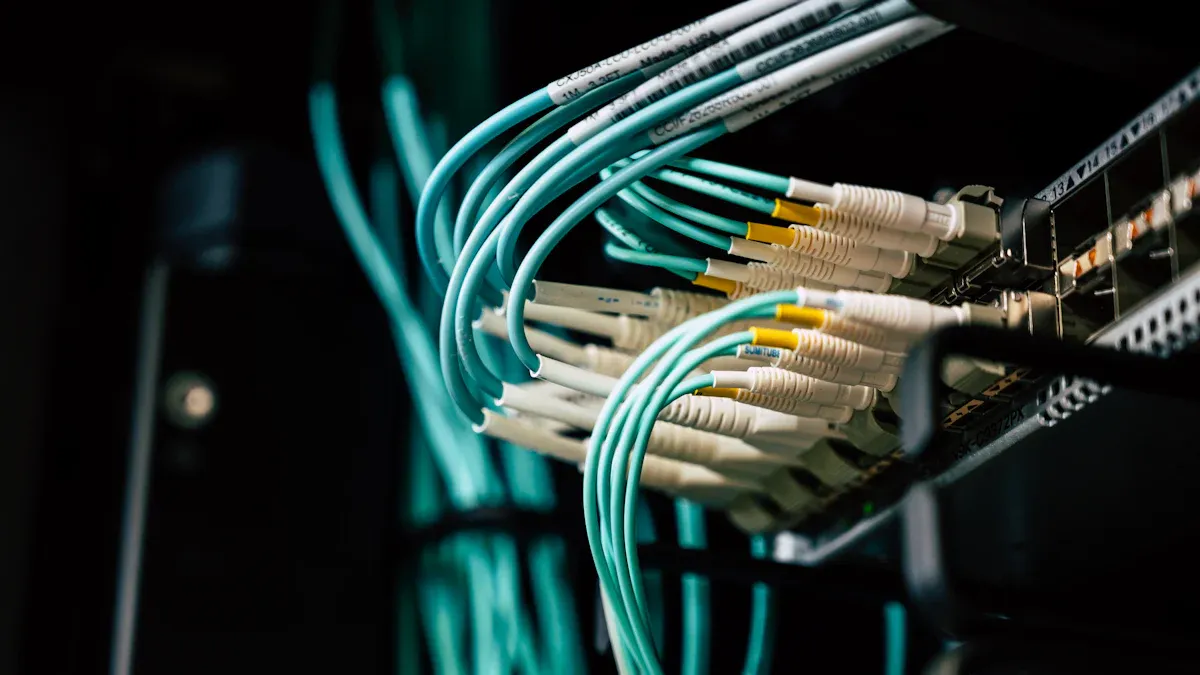
You can boost telecom cabinet performance by using edge technology. Edge computing brings data processing closer to your equipment. This reduces latency and improves service reliability. You see less downtime—up to 25% less. You also cut energy costs by as much as 30%.
Edge computing in telecom cabinets enhances local data processing.
You gain faster response times and better operational efficiency.
Smart Power Distribution Units use edge capabilities to monitor and control power.
Right-sizing power systems with edge intelligence helps you avoid waste and lower costs.
Real-Time Data for Optimization
Edge solutions give you access to real-time data. This data is critical for optimizing energy use in your telecom cabinets.
Real-time monitoring keeps you aware of your energy status.
You can allocate power precisely, matching supply with demand.
Demand response strategies help you use power more efficiently and reduce costs.
Feature/Metric | Description/Impact on Response Time and Performance |
|---|---|
Real-time alerting | Immediate detection of issues, improving response times |
Auto ticketing/alarms | Automated incident reporting, reducing manual delays |
Embedded analytics | Detects flawed asset patterns, supporting proactive maintenance |
KPI tracking | Monitors key metrics in real time, improving performance |
Remote management | Ensures reliable visibility and control over assets |
You can use these edge features to keep your network running smoothly and efficiently.
ESTEL’s Role in Energy Solutions
ESTEL leads the way in edge-enabled energy solutions for telecom cabinets. The company’s products offer dual-mode operation, intelligent load balancing, and real-time monitoring. You benefit from renewable energy integration, which lowers your environmental impact.
ESTEL has transformed the telecom power system market with innovative solutions. Their systems deliver high energy efficiency rates—over 96%. Modular designs let you scale power as your needs grow. Advanced thermal management keeps your equipment safe in extreme conditions.
You get advanced automation and predictive maintenance.
Real-time monitoring and modular designs support evolving network demands.
Robust protection ensures reliability for outdoor deployments.
You can trust ESTEL to provide edge solutions that keep your telecom cabinets efficient, reliable, and ready for the future.
Smart Power Distribution Unit Integration
Adaptive Load Scheduling
You can optimize telecom cabinet energy efficiency by using adaptive load scheduling with a smart power distribution unit. This technology uses distributed scheduling algorithms to manage power loads. You prevent overload in individual cabinets by shifting non-critical loads to other cabinets before issues arise. Real-time monitoring and automated load shifting help you maintain reliable operations.
The smart power distribution unit uses AI and machine learning to predict power needs. Optimization algorithms improve energy efficiency and throughput. Real-time monitoring measures energy usage and reduces waste.
Mechanism Type | Description |
|---|---|
AI and Machine Learning | Predicts power needs based on real-time data analysis. |
Optimization Algorithms | Uses convex optimization to improve energy efficiency and throughput. |
Real-time Monitoring | Measures and manages energy usage, optimizing consumption and reducing waste. |
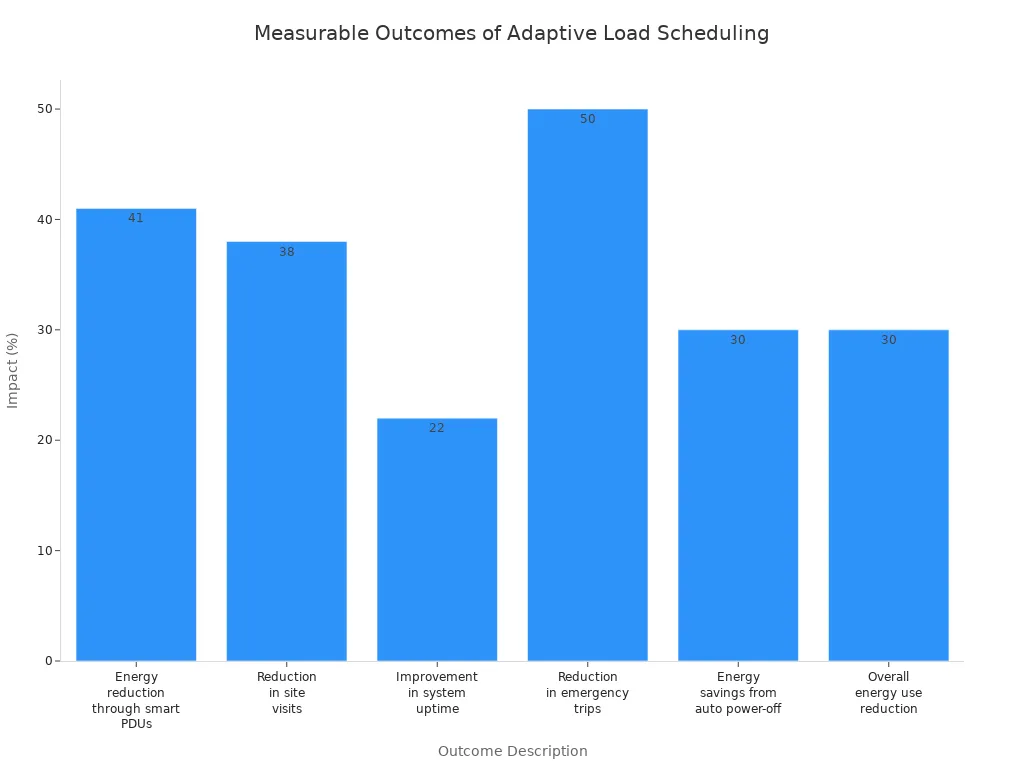
You see measurable outcomes from adaptive load scheduling. Energy use drops by up to 41%. Site visits decrease by 38%. System uptime rises by 22%. Emergency trips fall by 50%. Auto power-off technology reduces energy consumption by up to 30%. Overall, telecom power systems experience a 25–30% decrease in energy use.
Outcome Description | Measurable Impact |
|---|---|
Energy reduction through smart power distribution units | Up to 41% reduction in energy use |
Reduction in site visits by telecom operators | 38% decrease in site visits |
Improvement in system uptime | 22% increase in uptime |
Reduction in emergency trips | 50% decrease in emergency trips |
Energy savings from auto power-off technology | Up to 30% reduction in energy consumption |
Overall energy use reduction in telecom power systems | 25-30% decrease in energy use |
You gain a proactive approach to power load balancing. The smart power distribution unit adapts to real-time demands, keeping your telecom cabinets efficient and reliable.
Remote Management and Control
You can manage and control your smart power distribution unit remotely. This capability lets you monitor real-time energy consumption and adjust load distribution to optimize energy use. Inactive components shut down automatically, saving energy. You analyze energy trends and identify inefficiencies. Remote monitoring reduces unnecessary maintenance trips, lowering your carbon footprint.
Efficiency Level | Annual Energy Savings (kWh) | Cumulative Savings Over 5 Years (£) |
|---|---|---|
92% | 3,726 | N/A |
98% | 6,013 | 9,000,000 |
Modern Rectifiers | Up to 20% reduction | N/A |
Smart PDUs monitor real-time energy consumption.
They adjust load distribution to optimize energy use.
Inactive components can be automatically shut down.
You can analyze energy trends and identify inefficiencies.
Remote monitoring minimizes unnecessary maintenance trips, reducing your overall carbon footprint.
Remote management improves operational efficiency. IoT-enabled PDUs provide real-time data access from any location. Predictive analytics forecast power needs and optimize distribution. Automation adjusts power settings dynamically to match system demands. Enhanced reliability prevents power interruptions and ensures consistent performance. Energy efficiency reduces waste and lowers operational costs. Scalability supports infrastructure growth without disruptions.
Description | |
|---|---|
Remote Monitoring | IoT-enabled PDUs provide real-time data access from any location. |
Predictive Analytics | AI systems forecast power needs and optimize distribution. |
Automation | Intelligent PDUs adjust power settings dynamically to match system demands. |
Enhanced Reliability | Prevents power interruptions and ensures consistent performance. |
Energy Efficiency | Reduces energy waste, lowering operational costs. |
Scalability | Supports infrastructure growth without disruptions. |
Real-time monitoring provides instant updates on cabinet status, enabling faster fault detection and reduced downtime. Predictive maintenance allows you to address issues before they escalate, minimizing disruptions.
Security is essential for remote management. Protect smart PDUs from unauthorized access. Use advanced authentication methods. Encrypt all data transmitted to and from the PDU. Implement role-based access controls. Embedded firewalls guard against DDoS attacks. Set limits on login credentials and enforce timeouts for inactive sessions. Consider zero-trust network architecture and multifactor authentication. Use network segmentation to isolate PDUs. Establish secure firmware update mechanisms. Conduct regular security audits and vulnerability assessments. Address physical security concerns, including outlet locking mechanisms.
Set up user permissions to limit access based on necessity.
Use strong passwords and change them frequently.
Enable role-based access control to restrict user capabilities.
Utilize HTTPS or SSH for remote sessions to encrypt data.
ESTEL Smart PDU Features
You benefit from advanced features in ESTEL’s smart power distribution unit. Surge protection blocks incorrect connections and reduces the risk of fire or equipment failure. The dehumidifying function removes moisture and prevents condensation, vital in high-humidity environments. Anti-misinsertion protects against incorrect plug insertion, preventing electrical faults. Moisture-resistant design keeps out water and dust, ensuring safe operation.
Feature | Benefit |
|---|---|
Surge Protection | Blocks incorrect connections and reduces the risk of fire or equipment failure. |
Dehumidifying Function | Removes moisture and prevents condensation, vital in high-humidity environments. |
Anti-Misinsertion | Protects against incorrect plug insertion, preventing electrical faults. |
Moisture-Resistant Design | Keeps out water and dust, ensuring safe operation. |
The Smart Power Distribution Unit includes environmental monitoring to track temperature and humidity. Sensors watch for airflow problems, vibration, and leaks.
You see energy efficiency rise to nearly 98%. Downtime drops by 25–30%. Site visits decrease by 38%. Annual maintenance costs fall by hundreds of thousands of dollars.
The smart power distribution unit provides remote management and ensures consistent performance in demanding conditions. Advanced power monitoring enables real-time tracking of power usage. You identify inefficiencies and reduce energy waste. This monitoring allows you to make informed decisions about balancing and equipment usage. You lower operational costs and minimize environmental impact.
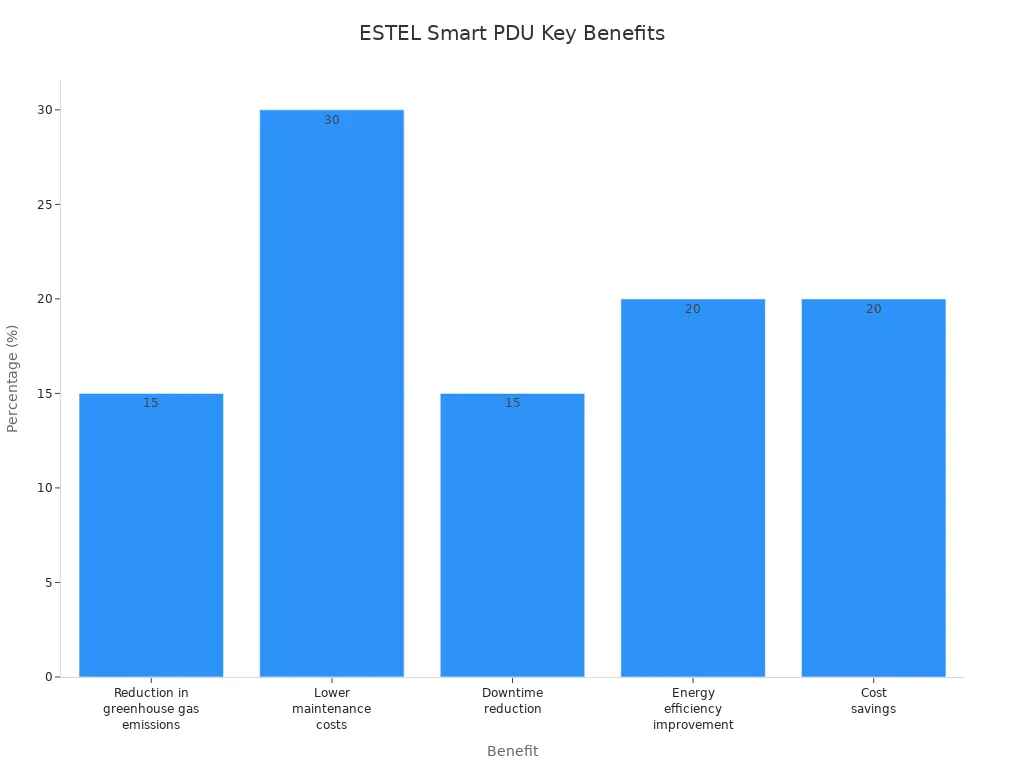
You achieve up to 20% improvement in energy efficiency. Greenhouse gas emissions drop by 15%. Maintenance costs fall by 30%. Downtime reduces by 15%. Cost savings reach up to 20%. The smart power distribution unit supports power load balancing and keeps your telecom cabinets running efficiently.
Optimization Strategies for Telecom Cabinets
Predictive Analytics and AI
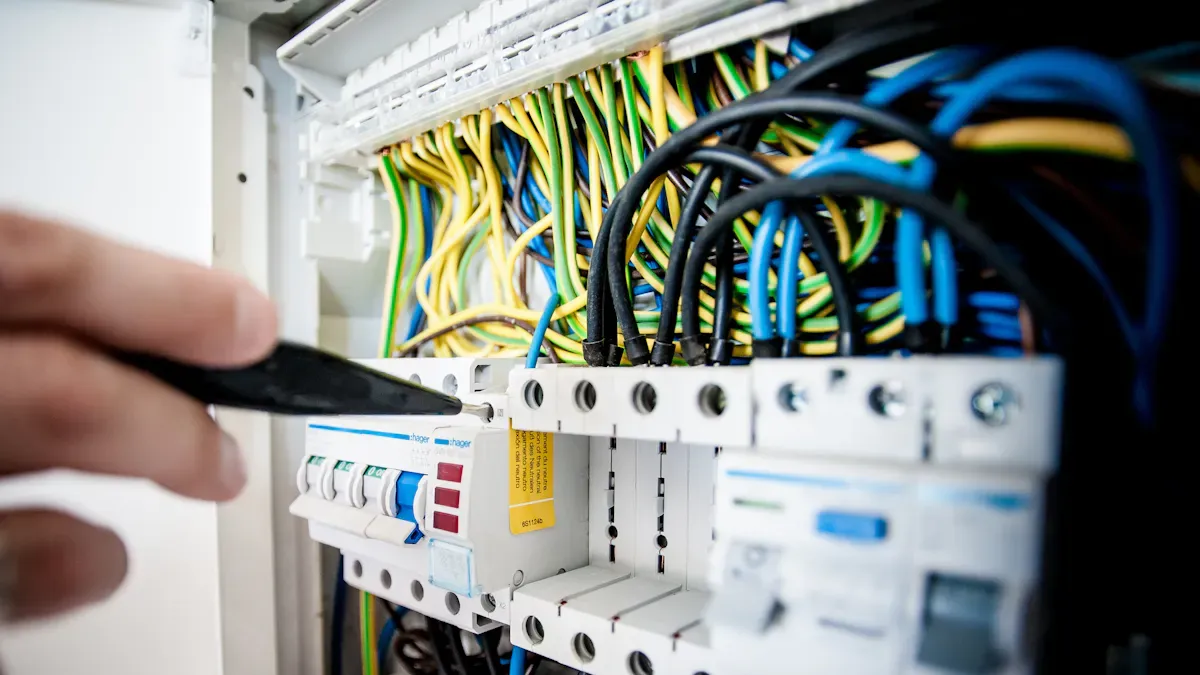
You can achieve significant energy savings in your telecom cabinets by using predictive analytics and AI. These technologies help you forecast power demand and adjust your systems before problems occur. AI-driven algorithms identify patterns in your power usage data. The system adapts to new information, which keeps your operations efficient and reliable. Convex optimization methods distribute power effectively across your network.
Predictive analytics allow you to manage dynamic load prediction. You can see when your cabinets will need more or less power. Automated power allocation ensures that energy is distributed based on real-time data. This approach minimizes waste and improves performance, especially in high-density environments.
AI-driven predictive maintenance leads to a 25% reduction in unplanned downtime and a 15% decrease in power outages. Automation increases productivity by up to 30%, which means you get continuous service and fewer disruptions.
Benefit Area | Documented Impact |
|---|---|
Cost Savings vs Reactive | Up to 40% reduction in maintenance costs |
Cost Savings vs Preventive | Additional 8% to 12% savings |
Overall Cost Savings | Approximately 20% total cost reduction |
Energy Savings | Up to 30% reduction in energy consumption |
Downtime Reduction | 15% decrease in downtime |
Maintenance Response Time | 40% faster response |
Equipment Uptime | 20% improvement |
Power Outages | 15% reduction in unintentional outages |
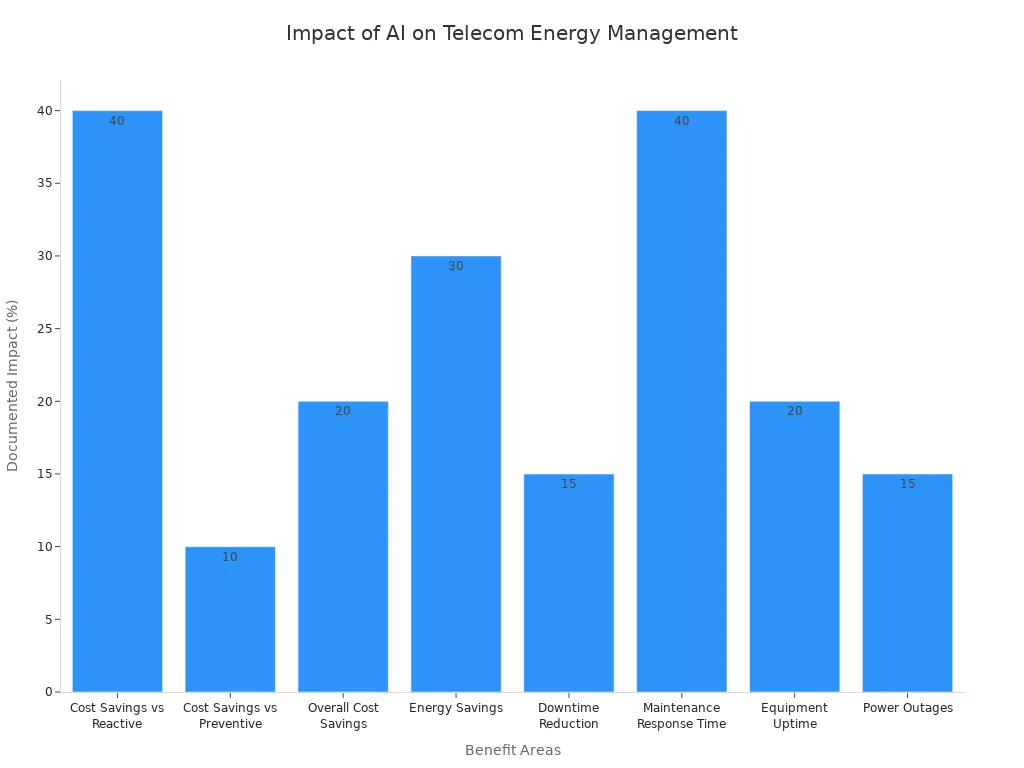
You benefit from enhanced monitoring, improved energy efficiency, better capacity planning, and increased system reliability. Partnering with ESTEL for a tailored maintenance plan ensures your cabinets operate at peak performance.
Distributed Load Balancing
Distributed load balancing is a core optimization strategy for telecom cabinets. You can distribute devices evenly across outlets to prevent overloads and extend equipment life. This method reduces energy consumption and supports energy savings by ensuring that no single outlet or device works harder than necessary.
Use these best practices for distributed load balancing:
Distribute devices evenly across all available outlets.
Avoid overly long power cables to reduce clutter and improve airflow.
Use PDUs with built-in surge suppression for added protection.
Monitor current usage to prevent overloads and maintain efficiency.
Key Considerations | Description |
|---|---|
Proper Planning | Assess equipment and space requirements to support current and future needs. |
Effective Cooling | Ensure proper airflow to prevent overheating and maintain performance. |
Security Measures | Implement security protocols to protect equipment from unauthorized access. |
Monitoring Tools | Use tools to track cabinet conditions and respond to issues promptly. |
Distributed load balancing also delivers measurable results. For example, node lifetime increases, control message overhead drops, and energy consumption falls by 32%. You see more devices stay operational for longer periods, which means fewer interruptions and lower costs.
Metric | EDCC-RPL | OF0 | MRHOF |
|---|---|---|---|
Node Lifetime (after 70 hrs) | >80% | <30% | N/A |
Control Message Overhead Red. | 45% | N/A | N/A |
Packet Delivery Latency | 90% <100ms | N/A | N/A |
Energy Consumption Reduction | 32% | N/A | N/A |
Implementation Steps with ESTEL Solutions
You can follow a clear process to integrate ESTEL’s smart PDU, telecom power system, and rectifier system for maximum optimization and energy savings. Start with a thorough site assessment. Choose the right model based on your power needs and compliance requirements. Install the unit safely and securely, making sure to optimize airflow and accessibility.
Here are the recommended steps:
Conduct a thorough site assessment to ensure readiness for the Smart Power Distribution Unit.
Select the appropriate model based on power capacity, connector types, and compliance with standards.
Follow best practices for installation, ensuring safety and optimal performance.
Configure and test the unit to guarantee optimal operation.
Actively manage the unit to maintain performance and prevent outages.
You should also organize your workspace, secure the PDU, and avoid overcrowding in the cabinet. Consider vertical installation to save space. Replace worn or damaged components promptly to maintain efficiency.
For ongoing optimization, use adaptive power modes such as Random Sleep Mode, Load Adaptive Sleep Mode, and Deep Sleep Mode. These modes help you reduce energy consumption during low-traffic periods. AI and automation forecast energy use and manage real-time distribution. Load-based adjustments match energy use to actual network demand, which leads to further energy savings and lower maintenance costs.
Tip: Implement advanced techniques like multicell PSU structures and fiber optic connectivity for even greater energy efficiency. Use modular architecture and real-time monitoring tools to keep your system optimized.
By following these strategies, you ensure that your telecom cabinets deliver reliable performance, maximize energy savings, and remain ready for future growth.
Benefits and Best Practices
Reliability and Overload Prevention
You gain reliability and overload prevention with ESTEL’s smart PDU solutions. The system monitors power loads and provides alerts when thresholds are exceeded. Real-time data collection helps you detect overload risks before they cause equipment damage. Advanced surge and overcurrent protection extend equipment life and prevent failures. Efficient power distribution keeps your network stable. Overload protection ensures uninterrupted energy performance and reduces downtime.
ESTEL PDUs deliver consistent power and advanced monitoring. You maintain system uptime even during unexpected challenges.
Benefit | Description |
|---|---|
Reliability | Increases uptime and avoids outages with redundant power and fast response. |
Equipment Safety | Extends equipment life and prevents damage from electrical hazards. |
Energy Savings and Cost Reduction
You achieve measurable energy savings and cost reduction with edge pue optimization. ESTEL’s solutions reduce energy consumption by up to 41%. Optimizing energy efficiency leads to millions in annual savings. Efficient cooling and real-time data collection lower operational costs. You see a 25% reduction in downtime and a 30% decrease in energy usage. Smart PDUs support sustainability by minimizing waste and lowering your environmental footprint.
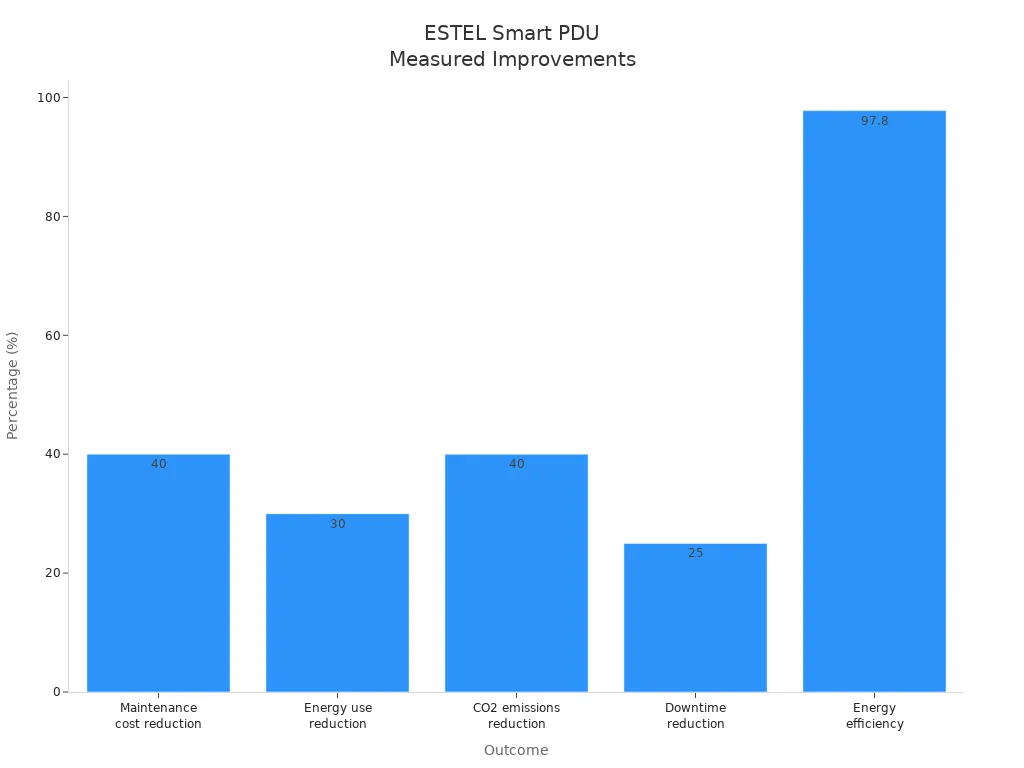
Metric | Measurable Efficiency Gain |
|---|---|
Energy efficiency | |
Reduction in energy use | 30% |
Annual cost savings | ~$120,000 |
CO2 emissions reduction | 40% |
Scalability and Future-Proofing
You benefit from scalability and future-proofing with ESTEL’s modular designs and AI integration. The system adapts to evolving workloads and network needs. Edge pue optimization ensures uninterrupted energy supply and reduces system failures. Renewable integration supports sustainability and lowers your carbon footprint. Efficient cooling and power management prepare your cabinets for future expansion.
Feature | Contribution |
|---|---|
Rectifier Efficiency | Achieves over 96% efficiency, reducing energy waste. |
Renewable Integration | Seamlessly integrates with solar and wind systems. |
ESTEL’s Best Practices for Deployment
You follow best practices to maximize energy performance and efficiency. Preventive maintenance includes regular documentation and inspection of PDU performance. Surge protection systems safeguard PDUs and improve energy efficiency. Cleanliness and ventilation prevent overheating and support optimal cooling. Staff training on troubleshooting basics reduces downtime and improves operational efficiency.
Regularly test surge protection systems.
Use digital tools for automating documentation.
Implement dust control measures like air filters.
Remote monitoring and real-time data collection help you maintain efficient power distribution and prevent overload. You optimize energy usage and keep your network running smoothly.
You unlock higher energy efficiency in telecom cabinets with edge computing-driven adaptive load scheduling and ESTEL’s smart power distribution unit. You reduce downtime, cut costs, and improve reliability.
ESTEL’s solutions help you optimize power, monitor real-time data, and automate maintenance.
Assess your site.
Select the right ESTEL model.
Implement best practices for ongoing optimization.
Choose ESTEL for innovative, quality-driven telecom solutions. Visit ESTEL’s official website to start your energy-saving journey today.
FAQ
What is edge computing in telecom cabinets?
You use edge computing to process data near your telecom equipment. This approach reduces latency and improves service reliability. Edge solutions help you optimize energy and pue. You see better power usage effectiveness and more efficient infrastructure.
How does real-time monitoring improve energy efficiency?
You gain instant insights with real-time monitoring tools. These tools track energy consumption and pue. You can quickly spot inefficiencies and adjust your systems. Real-time data helps you maintain optimal energy management and keep your infrastructure running smoothly.
Why is adaptive load scheduling important for energy savings?
You use adaptive load scheduling to balance energy loads across your infrastructure. This method prevents overloads and reduces unnecessary energy consumption. You achieve better pue and support sustainable computing by optimizing power distribution in real time.
How do ESTEL’s smart PDUs support sustainable computing?
You benefit from smart PDUs that use edge technology and real-time data. These units lower energy consumption and improve pue. You support sustainable computing by reducing waste and maximizing the efficiency of your infrastructure.
What steps should you follow for effective energy management in telecom infrastructure?
Tip: Start with a site assessment. Choose the right edge-enabled PDU. Use real-time monitoring tools. Schedule regular maintenance. Track energy consumption and pue. These steps help you optimize energy and ensure reliable infrastructure performance.
See Also
Telecom Cabinets Powered By Photovoltaic Energy Storage Solutions
Smart Energy Storage Systems For Telecom Cabinets Using Microgrids
Ensuring Consistent Power Supply For Telecom Cabinet Operations
Telecom Cabinets Utilizing Grid-Connected Inverters And Battery Systems
Enhancing Outdoor Cabinets With Power, Cooling, And Monitoring Solutions
CALL US DIRECTLY
86-13752765943
3A-8, SHUIWAN 1979 SQUARE (PHASE II), NO.111, TAIZI ROAD,SHUIWAN COMMUNITY, ZHAOSHANG STREET, NANSHAN DISTRICT, SHENZHEN, GUANGDONG, CHINA
