Digital Control Algorithm (Model Predictive Control) Optimized Telecom Power System Dynamic Response Solution


You can achieve faster and more reliable power management when you use Model Predictive Control in your Telecom Power System. This advanced digital control method predicts system behavior and adapts in real time. You see dramatic improvements in dynamic response with MPC. For example, performance indexes such as ISE and ITSE show over 93% improvement compared to traditional methods, as shown in the table below.
Performance Index | MPC Method Improvement (%) |
|---|---|
ISE | 93.26 |
IAE | 84.21 |
ITSE | 93.58 |
ITAE | 84.73 |
ESTEL leads the way in integrating these innovations, helping you create efficient and stable telecom infrastructure.
Key Takeaways
Model Predictive Control (MPC) significantly enhances telecom power system performance, achieving over 93% improvement in dynamic response compared to traditional methods.
A strong dynamic response in your power system ensures fewer service interruptions and better customer satisfaction by quickly adapting to changes in load or voltage.
Implementing real-time monitoring and advanced protection mechanisms helps prevent issues before they affect your network, leading to increased reliability and reduced maintenance costs.
MPC allows for proactive adjustments in power delivery, which helps avoid voltage dips and surges, keeping your network stable during unexpected events.
Integrating ESTEL’s Telecom Power System with MPC can lead to up to 30% fewer equipment failures and a 98% decrease in battery failure rates, enhancing overall system efficiency.
Telecom Power System Dynamics

Dynamic Response Explained
You need to understand how your Telecom Power System reacts to changes in load or input voltage. This reaction is called dynamic response. When you turn on new equipment or experience a sudden power fluctuation, the system must adjust quickly. A fast and stable dynamic response keeps your network running smoothly. If the system reacts too slowly, you may see voltage drops or interruptions. Quick adaptation means your equipment stays protected and your service remains reliable.
Dynamic response depends on several factors. These include the speed of the control algorithm, the quality of the hardware, and the ability to monitor conditions in real time. You benefit from advanced features like real-time monitoring, which helps you detect issues early. This allows you to prevent problems before they affect your network.
Importance for Telecom Reliability
You rely on your Telecom Power System to keep your network up and running. Reliable power means fewer dropped calls, faster data, and better customer satisfaction. A strong dynamic response ensures that your system can handle sudden changes without losing performance. For example, wide input voltage adaptation helps your system deliver stable power even when the grid fluctuates. Advanced protection mechanisms shield your equipment from voltage surges and sags.
Here is a summary of how key features support network reliability:
Feature | Benefit |
|---|---|
Wide input voltage adaptation | Ensures stable power delivery in fluctuating grid conditions, enhancing network reliability. |
Real-time monitoring | Allows for early detection of issues, preventing performance degradation. |
Advanced protection mechanisms | Protects equipment from voltage surges and sags, ensuring consistent operation. |
Compliance with standards | Ensures eco-friendly operation and high protection levels, contributing to overall efficiency. |
Strong current output capability | Provides excellent anti-interference and shock resistance, maintaining uptime. |
You see these benefits in every part of your network. When you choose a Telecom Power System with these features, you improve uptime and reduce maintenance. This gives you a more reliable and efficient telecom infrastructure.
Traditional Control Challenges
Limitations in Dynamic Response
You may notice that traditional control methods often struggle to keep up with the fast-changing demands of modern telecom networks. These older systems react slowly to sudden load changes or voltage fluctuations. When a disturbance occurs, the system may take too long to recover, which can lead to voltage sags and instability. In many cases, the voltage stabilizes at a lower level, such as 0.90–0.91 per unit, instead of returning quickly to the ideal value. This slow recovery can leave your network vulnerable during faults or unexpected events.
You also face challenges with equipment like DSTATCOMs. If these devices cannot respond rapidly, larger voltage dips and instability may occur. Harmonic currents from such equipment can increase losses and cause overheating, which further limits the system’s ability to handle load changes effectively. These issues highlight the need for a more dynamic and adaptive approach to power management.
Note: High operational costs often result from diesel fuel delivery and generator maintenance, especially in remote areas. These costs can make up to 70% of site operating expenses. Reliability issues, such as generator failures and voltage fluctuations, can lead to communication outages and higher repair costs. Sustainability pressures also make traditional fossil fuel systems less attractive.
Impact on System Performance
Traditional control limitations directly affect the performance of your Telecom Power System. When the system cannot adapt quickly, you may experience reduced uptime and lower energy efficiency. Sites with high energy consumption or load imbalances often suffer from increased reactive losses and transformer overheating. This not only raises operational costs but also threatens the stability of your network.
You can see measurable impacts in several areas:
Stabilizing input voltage improves energy availability and enhances uptime.
Optimizing diesel generator use reduces unnecessary runtime and improves fuel efficiency.
Reducing diesel consumption and CO₂ emissions supports sustainability goals and lowers your site’s environmental footprint.
These challenges show why advanced digital control methods are essential for modern telecom networks. By addressing these limitations, you can achieve better reliability, efficiency, and sustainability in your operations.
Digital Control Algorithms Overview
Model Predictive Control Basics
You can use digital control algorithms to improve how your Telecom Power System responds to changes. Model Predictive Control, or MPC, stands out as a modern approach. MPC works by using a mathematical model to predict how your system will behave in the future. You set your goals, and the algorithm calculates the best actions to reach them. This method allows you to adjust power delivery before problems occur. You get a system that adapts quickly and keeps your network stable.
Advantages Over Conventional Methods
You may wonder how MPC compares to older control methods like PID controllers. The main difference lies in how each algorithm makes decisions. MPC predicts what will happen next, while conventional methods only react to what is happening now. This predictive ability gives you faster and more accurate control. The table below shows the key differences:
Feature | Model Predictive Control (MPC) | Conventional Control Methods (e.g., PID) |
|---|---|---|
Algorithm Structure | Utilizes a dynamic model to predict future behavior | Relies on feedback from current states |
Response Time | Anticipates future events and adjusts actions accordingly | Lacks predictive capability, reacts to current states |
You benefit from quicker response times and fewer disruptions. Your equipment stays protected, and your network runs more efficiently.
ESTEL’s Integration Approach
You can see the power of MPC in action with ESTEL’s Telecom Power System and Telecom Rectifier System. ESTEL has integrated advanced control strategies into these products. You gain early detection of potential issues, which helps you avoid failures. The results speak for themselves:
Evidence Description | Impact |
|---|---|
Equipment failure risk reduction | |
Troubleshooting time reduction | 30% |
Decrease in battery failure rates | 98% (2018-2024) |
Early detection of potential issues | Enabled |
Extended equipment lifespan | Achieved |
You get a reliable system that reduces downtime and extends the life of your equipment. ESTEL’s focus on innovation ensures your network stays ahead of the curve.
Optimizing Dynamic Response with MPC
Predictive Modeling and Adaptation
You can use Model Predictive Control (MPC) to predict how your power system will behave before changes actually happen. This means you do not just react to problems—you prevent them. MPC uses mathematical models to simulate different scenarios. You can see how your system will respond to sudden load increases, voltage drops, or equipment failures.
When you use predictive modeling, you get several advantages:
You can adjust power output in advance.
You can avoid voltage dips and surges.
You can keep your network stable even during unexpected events.
For example, if your Telecom Power System detects a possible overload, MPC will calculate the best way to distribute power. You do not have to wait for a problem to occur. You stay one step ahead.
Tip: Regularly update your system’s model with real-time data. This helps MPC adapt to new conditions and keeps your network reliable.
Constraint Handling and Stability
You must keep your power system within safe limits. Every system has constraints, such as maximum current, voltage range, and temperature. If you ignore these, you risk damaging your equipment or causing outages.
MPC helps you manage these constraints automatically. The algorithm checks every possible action against your system’s limits. It only chooses solutions that keep your equipment safe. You do not have to worry about overloading circuits or exceeding voltage ratings.
Here is a simple table showing how MPC handles constraints compared to traditional methods:
Aspect | MPC Approach | Traditional Approach |
|---|---|---|
Constraint Awareness | Checks all actions for safety | May react after a violation |
Stability Guarantee | Maintains system balance | Can struggle with fast changes |
Fault Prevention | Proactive | Often reactive |
You get a stable network that can handle rapid changes. You also reduce the risk of faults and extend the life of your equipment.
Efficiency Improvements
You want your Telecom Power System to use energy efficiently. MPC helps you achieve this goal by optimizing every control action. The algorithm looks for the best way to deliver power with the least amount of waste. You save energy and lower your operating costs.
Here are some ways MPC improves efficiency:
Reduces unnecessary switching and power losses.
Balances loads to prevent overheating.
Minimizes the use of backup generators, which saves fuel.
Note: Efficient power management also supports your sustainability goals. You use less energy, produce fewer emissions, and help protect the environment.
You see the results in lower electricity bills and longer equipment life. When you combine predictive modeling, constraint handling, and efficiency improvements, you get a Telecom Power System that is reliable, safe, and cost-effective.
Implementation and Benefits for Telecom Power System
Integration Steps with ESTEL Solutions
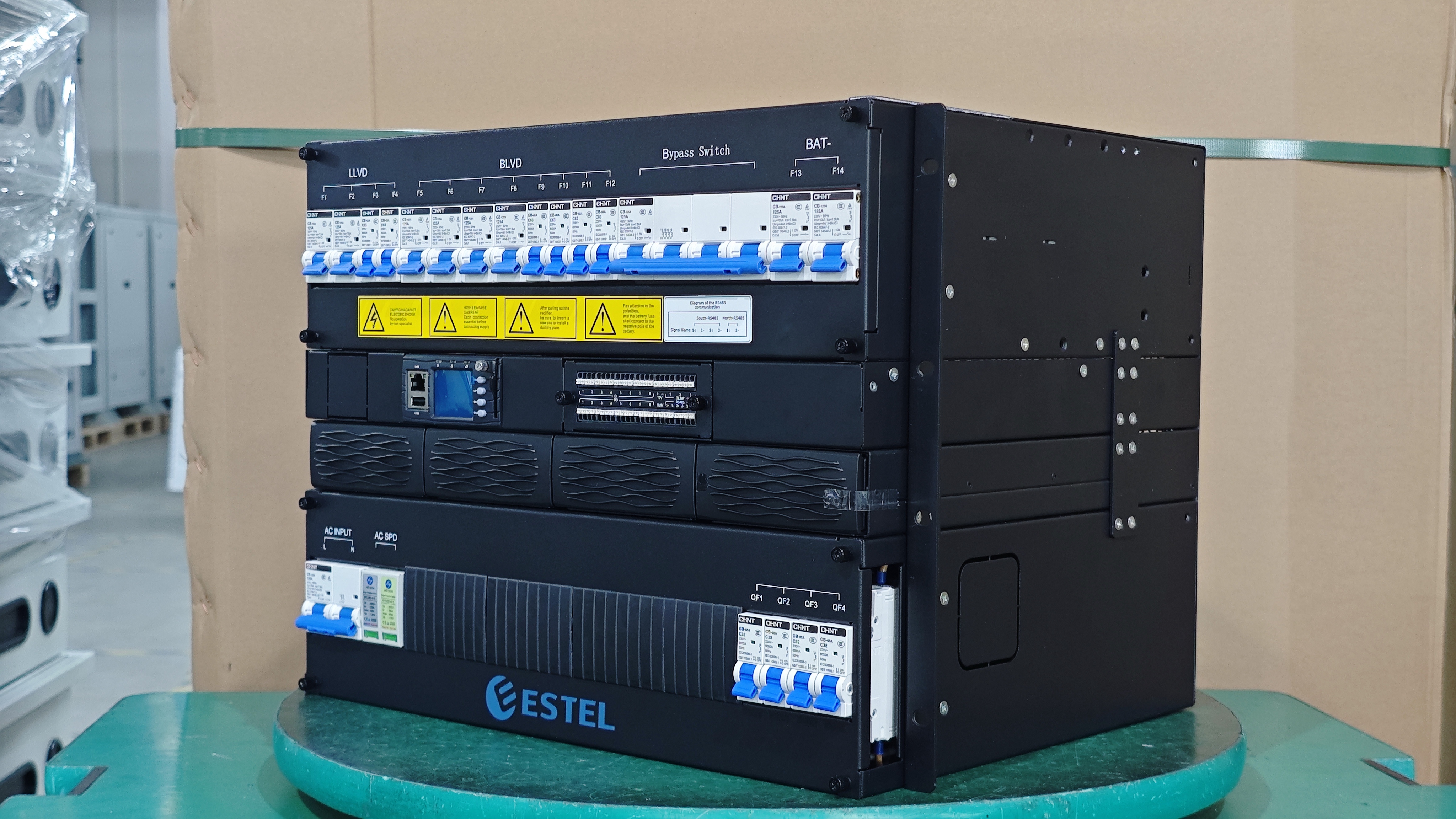
You can start by evaluating your current power infrastructure. ESTEL’s Telecom Power System and Telecom Rectifier System support advanced digital control, including Model Predictive Control. You install the system on a standard 19-inch rack or inside a cabinet. You connect the communication ports to your network for real-time monitoring. You configure the MPC algorithm through the system’s interface. This setup allows you to predict and adjust power delivery before issues arise. You gain seamless integration with your existing telecom equipment.
Hardware and Software Needs
You need reliable hardware and flexible software to implement MPC. ESTEL’s Telecom Power System provides a wide input voltage range and natural cooling, which reduces maintenance. The Telecom Rectifier System offers high efficiency and modular design. You use sensors to collect real-time data on voltage, current, and temperature. The control unit runs the MPC algorithm and communicates with the rectifier modules. You update the software regularly to adapt to changing network demands. This combination ensures your system stays efficient and responsive.
Case Studies and Real-World Results
You can see the benefits of MPC in real-world telecom sites. For example, operators using ESTEL’s solutions have reported up to 30% fewer equipment failures and a 98% decrease in battery failure rates from 2018 to 2024. You notice faster recovery from voltage dips and fewer service interruptions. These improvements lead to higher network uptime and lower operational costs. You also extend the lifespan of your power equipment, which means less frequent replacements.
Best Practices and Considerations
You should follow best practices to ensure successful deployment. Use multiple sensors for accurate system representation. Monitor variables and trends to prevent false alarms. Implement secure protocols to protect your infrastructure. The table below summarizes these practices:
Best Practice | Description |
|---|---|
Real-time Data Integration | Use multiple sensors for accurate system representation. |
Anomaly Detection Algorithms | Monitor multiple variables and trends to prevent false alarms. |
Cybersecurity | Implement secure protocols and robust measures to protect infrastructure. |
You achieve the best results when you combine advanced technology with careful planning and monitoring.
You can transform your Telecom Power System with Model Predictive Control and ESTEL’s advanced solutions. You gain faster response, higher reliability, and better energy efficiency. You prepare your network for future demands.
Explore ESTEL’s products to see how digital control can improve your operations.
Choose innovation to keep your telecom infrastructure strong and dependable.
FAQ
What is Model Predictive Control (MPC) in telecom power systems?
Model Predictive Control uses mathematical models to predict and optimize your power system’s response. You can adjust power delivery before issues occur. This helps you keep your network stable and efficient.
How does ESTEL’s Telecom Power System support MPC?
You get hardware with wide voltage input, natural cooling, and advanced communication ports. These features allow you to integrate MPC easily. You can monitor and control your system in real time.
What benefits do you see with MPC compared to traditional control?
You experience faster response, fewer equipment failures, and better energy efficiency. MPC helps you prevent problems instead of just reacting to them. Your network stays reliable and cost-effective.
Is it difficult to implement MPC in existing telecom infrastructure?
You can integrate MPC with ESTEL’s modular systems. The process involves connecting sensors, updating software, and configuring the control interface. You do not need to replace your entire setup.
See Also
Calculating Power Systems and Batteries for Telecom Cabinets
Essential Features of Power Supply in Telecom Systems
Ensuring Consistent Power Supply for Telecom Cabinets
CALL US DIRECTLY
86-13752765943
3A-8, SHUIWAN 1979 SQUARE (PHASE II), NO.111, TAIZI ROAD,SHUIWAN COMMUNITY, ZHAOSHANG STREET, NANSHAN DISTRICT, SHENZHEN, GUANGDONG, CHINA
