Ready for 2026? Telecom Rectifier Systems Deliver Off-Grid Solar + Mains Hybrid Power to Agricultural IoT Nodes

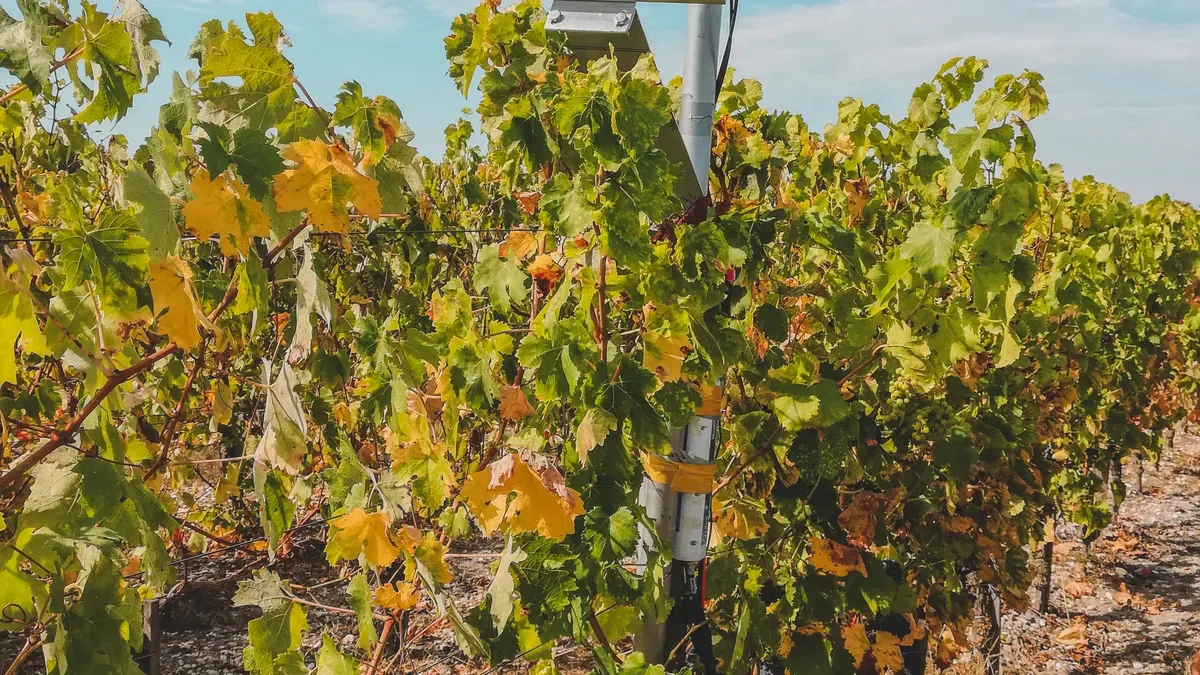
A failed sensor connection in a remote field doesn’t just delay data. It halts irrigation decisions, spoils soil readings, and weakens yield forecasts. These agricultural IoT nodes demand constant power, yet remote locations rarely offer dependable mains electricity.
Telecom Rectifier Systems, like ESTEL, provide a cleaner answer: one enclosure merging solar input, mains power, and battery backup into a managed hybrid architecture. By 2026, the smart farming market should reach USD 28.29 billion, with a 12.43% CAGR through 2034.
The real question remains: how do these industrial-grade systems operate for agricultural IoT, and how can you deploy them on your farm before next season?
Key Takeaways
Hybrid power combines solar, mains, and battery to keep your farm sensors running nonstop.
Modular design lets you add power modules as your network grows, avoiding big replacements.
You save money over time because solar does most of the work and mains is just backup.
The system survives extreme temperatures, dust, and water, so it works in tough farm conditions.
Remote monitoring lets you check power status from your phone, reducing field visits.
Off-Grid Challenges for Ag-IoT Nodes

Solar-Only Limits in Remote Fields
Remote agricultural IoT nodes depend heavily on batteries, and that dependence caps their useful life. The wireless radio that transmits your data draws more power than any sensor, so a weak battery directly weakens network reliability. Real-world battery life also falls far short of nameplate estimates. Temperature extremes can cut capacity by 20–40%, which means a 19 Ah battery may deliver only 10–12 Ah at -20°C. Self-discharge adds another loss: alkaline cells shed 2–3% of capacity per month, and long-term self-discharge can reach 10–30% over 10 years. Device cutoff voltage also strands 5–15% of stored energy unless the battery holds the minimum operating voltage.
Solar-only designs face a second limit: darkness. Properly sized solar-powered sensor systems typically deliver 3–7 days without sun. The design variable that matters is worst-case consecutive overcast days at your location, not average conditions. Size the battery bank with that figure in mind.
Battery Ah = (Daily Wh × Autonomy days) ÷ (System voltage × Allowable depth of discharge)
For temperate climates, 3–5 autonomy days is the standard target. A worked example: (16.6 Wh × 4 days) ÷ (12V × 0.8 DoD) = 6.9 Ah minimum, and a 10–12 Ah LiFePO4 battery provides the working margin you need in the field.
Environmental Demands on Farm-Grade Power
Farm hardware must survive conditions that destroy consumer electronics. Extreme temperatures, humidity, heatwaves, and frost affect both crops and IoT hardware, so your power system must tolerate the full range. Look for an operating range of -40°C to +85°C and enclosures tested at 100% relative humidity.
Ingress protection matters just as much. IP65 resists dust and water, IP67 handles high-humidity environments and washdown areas, and IP68 supports continuous underwater operation. Industrial IoT sectors prioritize IP67 and IP68 devices for reliability and longevity. Choose a UV-stabilized enclosure, and treat IP67 as the minimum for outdoor installations.
Parameter | Rating / Value |
|---|---|
Temperature | -40°C to +85°C operating range |
Humidity | Tested at 100% RH |
Dust ingress | IP67 — complete dust protection |
Water ingress | IP67 — water immersion resistance |
Additional | UV-stabilized enclosure; IP67 minimum recommended |
Seasonal and isolated deployments create varying power requirements, so a single power source cannot cover every site. Hybrid solar-plus-mains configurations solve this gap.
Telecom Rectifier Systems Explained
Hybrid Power Controller Basics
Think of a telecom rectifier system as the brain and muscle of your farm's power supply. ESTEL builds these systems as one integrated enclosure. Inside, you find DC rectifiers, battery charge management, and controller logic working together. This design eliminates the need for separate boxes, extra wiring, and multiple vendors.
The rectifier modules form the core. They accept AC input across a wide range of 90–300 Vac and convert it into regulated DC48V. That wide input window matters on farms. Rural mains power often swings wildly, and the rectifier absorbs those swings without passing them to your sensors.
A natural cooling system keeps the unit running without fans or air conditioners. Dusty barns and hot field cabinets kill fan-cooled electronics quickly. Passive cooling removes that failure point entirely.
Communication ports give you remote visibility. You can check battery status, input voltage, and load current from your phone or office computer. This capability turns a power supply into a managed asset.
The hybrid inverter and battery interface ties everything together. Solar, battery, and mains meet at this junction. The controller decides which source feeds the DC bus at any moment. Your IoT nodes never see the switchover.
Connecting Rectifiers to Ag-IoT Loads
You connect your agricultural IoT devices directly to the DC bus. Soil sensors, weather stations, irrigation controllers, and communication gateways all draw from the same regulated DC48V supply. This shared architecture simplifies wiring across your deployment.
Core Component | Function in DC Power Management | Agricultural IoT Benefit |
|---|---|---|
Rectifier modules | Convert AC input (90–300 Vac) into regulated DC48V with high efficiency | Powers remote sensors and communication devices consistently |
Modular rack/cabinet design | Allows scaling by adding or replacing rectifier modules | Supports farm IoT expansion without replacing the whole system |
Natural cooling system | Cools the unit without fans or air conditioners | Lowers maintenance in dusty/hot outdoor environments |
Communication ports | Provide network integration and remote monitoring | Enables data from soil, weather, and irrigation sensors to be collected and acted on |
Hybrid inverter/battery interface | Combines solar, battery, and mains to deliver seamless DC backup | Keeps IoT nodes running during outages or unstable rural power |
The modular rack design lets you start small. Begin with one rectifier module for a handful of sensor nodes. Add modules as your network grows. You never replace the whole system when you expand.
Voltage regulation stays tight across all connected loads. A sensor drawing milliamps and a gateway drawing several amps both receive stable DC48V. This consistency protects sensitive electronics from the voltage sags that plague direct mains connections.
Telecom Rectifier Systems also handle the transition between power sources automatically. When solar input drops, the controller draws from batteries. When batteries reach a low threshold, mains power engages. Your IoT network experiences none of these transitions.
The result is a power architecture that behaves like a utility connection in the middle of a field. You gain the reliability of grid power without the grid.
Solar + Mains Hybrid Architecture
Solar Priority with Mains Reserve
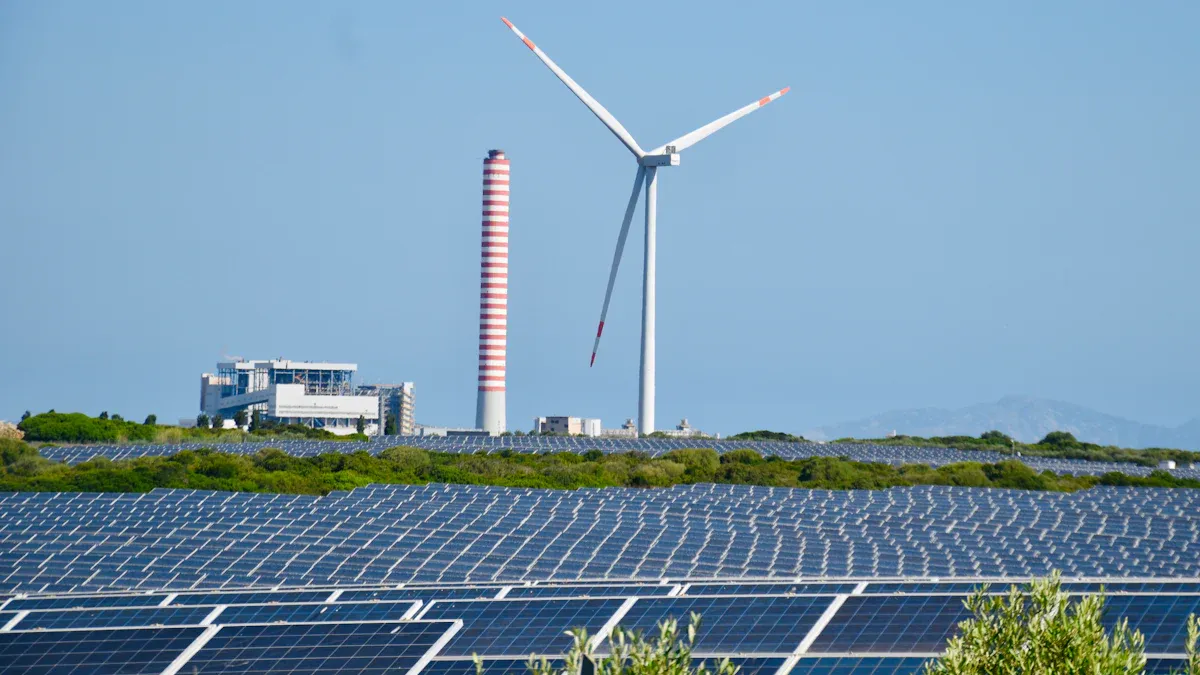
The architecture follows a clear priority order. Solar panels feed the DC bus first. The rectifiers condition that incoming power and hold the bus at a steady DC48V. Batteries sit on the same bus and absorb short gaps, such as a passing cloud or a brief load spike. Mains power stays in reserve and engages only when solar harvest drops below what the site needs.
This priority logic delivers the energy path you want. Your photovoltaic-battery subsystem carries the daily load for most of the year. The mains connection acts as a safety net rather than a primary source. On a sunny day, the array charges the battery bank while it powers your soil sensors and gateways. On a string of overcast days, the battery discharges to its low threshold. The controller then switches to mains input, which accepts a wide 90–300 Vac range and converts it to regulated DC48V. Your IoT nodes never notice the handoff.
Dual-input power management makes this possible. The controller continuously reads solar output, battery state of charge, and load current. It decides which source feeds the bus at each moment. You gain the energy savings of solar-first operation without sacrificing uptime. A single-source solar site would need a much larger battery bank to ride through the same low-sun period. A mains-only site would pay for every kilowatt-hour it consumes. The hybrid model cuts both costs.
Rectifier-Based Sizing and Scalability
Sizing starts with your load. Add up the daily watt-hours your sensors, gateways, and communication radios consume. Then apply the autonomy target for your climate. Temperate sites typically need 3–5 days without sun. That figure sets your battery bank capacity. Next, size the solar array to recharge the bank under average conditions. Finally, select rectifier modules to cover the peak load plus battery recharge current.
Telecom Rectifier Systems make this step straightforward. Each module converts AC input into regulated DC48V, and you add modules as your network grows. A single module may serve a handful of nodes. When you add irrigation controllers or weather stations, you slide in another module. The modular rack design means you never replace the whole system during expansion.
Scalability also covers site diversity. Seasonal deployments and isolated fields have different power profiles. A hybrid architecture adapts to each one through module count and battery capacity. You standardize on one platform and tune it per site. That approach keeps spare parts simple and maintenance predictable.
Energy savings versus single-source power compound over time. Solar-first operation reduces mains consumption to the low-sun periods only. The battery buffer smooths load spikes, so you avoid oversizing the mains feed. Every kilowatt-hour you harvest on site is one you do not buy from the utility.
Advantages of Hybrid Power for Farms
Reliability and Scalability for Field Deployments
The hybrid architecture removes single points of failure from your power chain. Solar feeds the DC bus during daylight. Batteries buffer cloud cover and load spikes. Mains engages only when the battery bank reaches its low threshold. Your IoT nodes stay online through every handoff.
This redundancy pays off in real field conditions. A retail chain in the Philippines experienced frequent brownouts that disrupted point-of-sale systems and refrigeration. After switching to solar plus lithium iron phosphate battery backup modules with remote monitoring, average outage downtime dropped from 14 minutes to under 3 minutes. Diesel consumption fell over 80%, and return on investment arrived in under 2.5 years.
Scalability comes from the modular rack design. Telecom Rectifier Systems let you start with one rectifier module for a small cluster of sensors. Expand to additional fields by adding modules, not replacing cabinets. Battery banks and solar arrays scale independently for each site's load profile.
Cost Savings vs. Single-Source Power
The economic case for hybrid power rests on avoided energy costs and shortened payback periods. Commercial battery storage systems typically pay back in 5–10 years. Small and medium businesses recover costs in 5–8 years. When you add lithium battery storage to an existing solar array, the payback period drops by 3–5 years compared to solar alone.
Larger installations show the same pattern at scale. A 500 kW solar system with an $800,000 investment generates $110,000 in annual savings. The federal Investment Tax Credit returns $240,000. The result is a 5.1-year payback and over $2 million in savings across 20-plus years.
Metric | Value |
|---|---|
System size | 500 kW solar |
Investment cost | $800,000 |
Annual savings | $110,000 |
Federal ITC return | $240,000 |
Payback period | 5.1 years |
Post-payback savings (20+ years) | Over $2 million |
Your farm does not need a megawatt-scale array to capture these benefits. A hybrid configuration sized to one field station eliminates diesel refueling trips, cuts mains use to low-solar periods, and reduces the battery capacity a solar-only design requires. Mains power becomes a reserve instead of a primary feed.
Deployment Results and 2026 Readiness
Site Implementation Steps
You begin with a load assessment. Add up the daily watt-hours your soil sensors, weather stations, irrigation controllers, and gateways consume. Apply the autonomy target for your climate — temperate sites typically need 3–5 days without sun. That figure sets your battery bank capacity. Next, size the solar array to recharge the bank under average conditions. Then select rectifier modules to cover peak load plus battery recharge current.
Telecom Rectifier Systems simplify this process through modular design. You start with one rectifier module for a small sensor cluster. Add modules as your network expands. The modular rack means you never replace the whole cabinet during growth. Finally, configure remote monitoring. You check battery status, input voltage, and load current from your phone or office computer. This step turns your power supply into a managed asset you can supervise without field visits.
Real-World Field Performance
Field results confirm the architecture's value. A retail chain in the Philippines faced frequent brownouts that disrupted critical systems. After deploying solar plus lithium iron phosphate battery backup with remote monitoring, average outage downtime fell from 14 minutes to under 3 minutes. Diesel consumption dropped over 80%, and return on investment arrived in under 2.5 years.
These outcomes translate directly to agricultural IoT. Your farm avoids diesel refueling trips and cuts mains use to low-solar periods only. Commercial battery storage typically pays back in 5–10 years, and adding lithium storage to an existing solar array shortens payback by 3–5 years. A 500 kW solar system with an $800,000 investment generates $110,000 in annual savings, with a 5.1-year payback and over $2 million in savings across 20-plus years. By 2026, modular scalability, remote monitoring, and predictable operating costs position hybrid power as the foundation for connected farming.
You no longer face a choice between unreliable mains power and limited solar-only designs. A hybrid model — solar, mains, and battery working as one — managed by Telecom Rectifier Systems such as ESTEL removes the power reliability barrier for agricultural IoT. Your sensors, gateways, and irrigation controllers stay online through every source handoff.
That architecture also prepares you for 2026. Modular racks let you scale one field at a time. Remote monitoring keeps every site visible from your office. Operating costs stay predictable, because solar carries the daily load and mains serves only as reserve.
Connected farming will keep growing. Telecom-grade hybrid power gives your deployment the foundation it needs to grow with it.
FAQ
Here are the answers to the most common deployment questions farm operators ask before committing to hybrid power.
What makes a telecom rectifier system different from a standard solar kit?
Telecom rectifiers integrate rectifier modules, battery management, and controller logic into one enclosure. The system regulates the DC bus to a steady DC48V regardless of source. You manage everything through one interface. Standard solar setups require separate boxes and multiple vendors. The single enclosure eliminates extra wiring.
How does the system choose between solar, mains, and battery power?
The controller reads solar output, battery state of charge, and load current continuously. Solar feeds the DC bus first. Batteries cover short gaps, like passing clouds. Mains engages only when batteries hit a low threshold. Your sensors and gateways experience no interruption.
What environmental conditions can the system survive?
The system operates from -40°C to +85°C. The enclosure meets IP67 for complete dust protection and water immersion resistance. Natural cooling removes fan failure risks. UV-stabilized materials resist sun damage. You can install it in dusty barns, hot fields, and washdown areas.
Can I monitor the system remotely?
Communication ports provide remote visibility. You check battery status, input voltage, and load current from your phone or office computer. No field visit is necessary. This capability turns your power supply into a managed asset. You catch small issues before they become outages.
How does the system scale as my IoT network grows?
The modular rack design supports expansion without replacement. You start with one rectifier module for a small sensor cluster. Add modules as you deploy more gateways or irrigation controllers. Battery banks and solar arrays scale per site load. One platform handles multiple field deployments.
See Also
Grid-Tied Solar Inverter And Battery Setup For Telecom Cabinet Systems
Solar Energy Storage Power Solution For Telecom Cabinet Applications
ESTEL Smart Microgrid Integrated Energy Storage System For Telecom Cabinets
Ensuring Reliable Power Supply For Telecom Cabinet Operations
Energy Storage Battery Solutions For ESTEL Telecom Cabinet Systems
CALL US DIRECTLY
86-13752765943
3A-8, SHUIWAN 1979 SQUARE (PHASE II), NO.111, TAIZI ROAD,SHUIWAN COMMUNITY, ZHAOSHANG STREET, NANSHAN DISTRICT, SHENZHEN, GUANGDONG, CHINA
