How Three-Proof and Strong Corrosion-Resistant Design of Telecom Rectifier Systems Achieves Ultra-Long Lifespan in High-Salt-Fog Environments

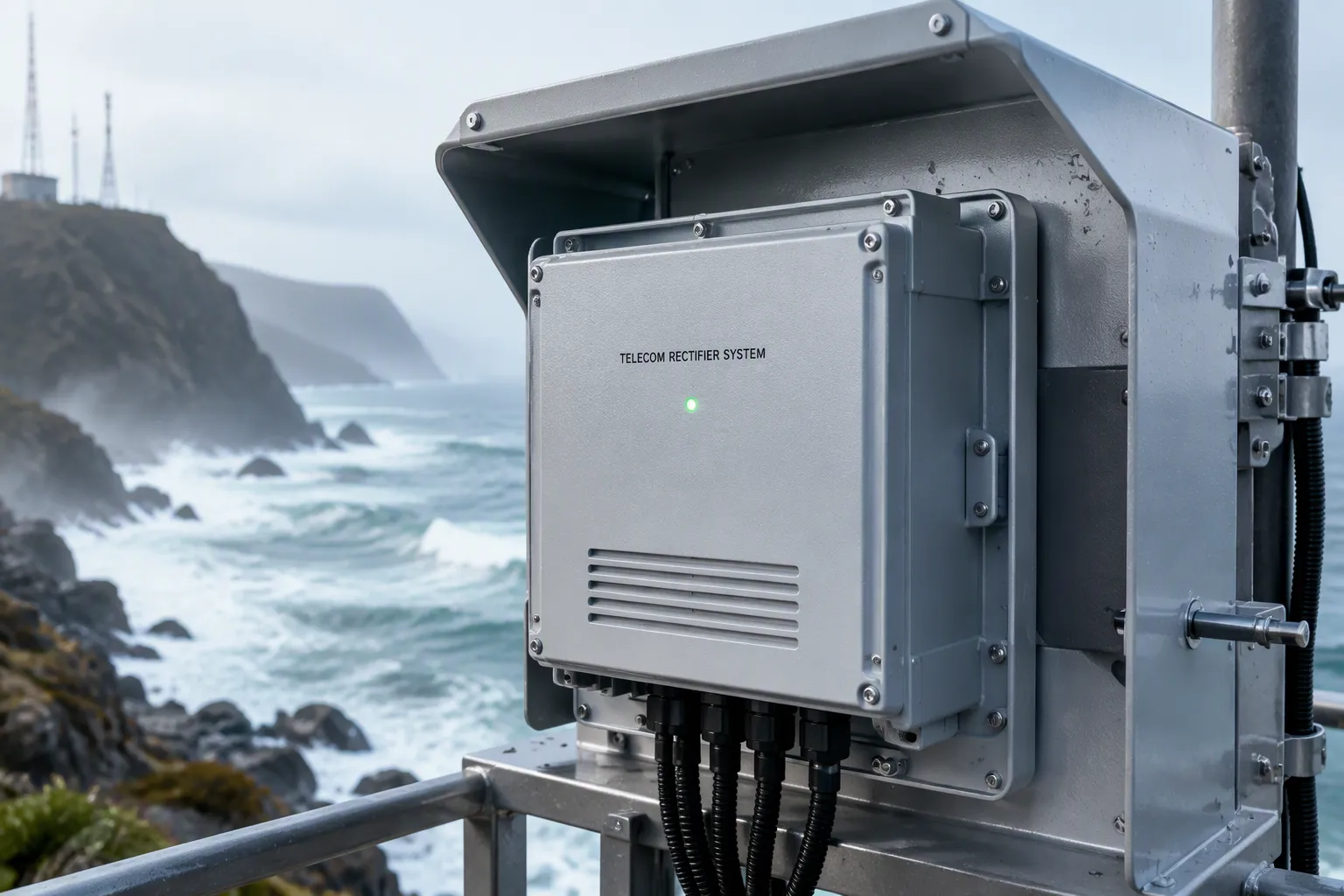
Three-proof protection and strong corrosion-resistant design explain why telecom rectifier systems achieve ultra-long lifespan in high-salt-fog environments. Sealed NEMA/IP-rated enclosures, conformal and corrosion-resistant coatings, corrosion-resistant material selection, and protected thermal paths form the core of this approach. Each element blocks a different pathway for chloride and moisture attack, so the protection holds up over years of coastal exposure. The mechanisms behind these gains are well documented, and field evidence shows how they extend service life. Corrosion-resistant designs also differ from standard designs in performance, application fit, compliance, and cost. ESTEL applies these principles to outdoor telecom power equipment, and its cabinets illustrate the approach. That combination of sealing and materials supports long-term reliability.
Key Takeaways
Salt fog causes corrosion and insulation damage in telecom rectifiers. Three-proof sealing and corrosion-resistant coatings block moisture and chloride attack.
Choose 316 stainless steel or higher alloys like 254 SMO for coastal sites. These materials resist pitting and extend equipment life.
Sealed enclosures with IP55 or better ratings keep salt fog out. Conformal coatings on circuit boards add a second layer of protection.
Corrosion-resistant designs cost more upfront. They save money over time through fewer replacements and less downtime.
ESTEL's outdoor cabinets and rectifier systems use these principles. Field evidence and ISO9001 quality control confirm their long-term reliability.
Salt-Fog Challenges for Telecom Rectifier Systems
How Salt Fog Drives Corrosion
Salt fog is airborne saltwater mist. Breaking waves and wind lift sea-salt particles into the air near coasts. These particles settle on enclosures, connectors, and unsealed board surfaces. Deposited salt is hygroscopic. Above a salt-specific relative humidity, it absorbs water from the air and dissolves into a liquid film. This process is called deliquescence. Ammonium-dominated salts deliquesce at relatively low relative humidity, around 62% for ammonium nitrate and around 78% for ammonium chloride. The film is a concentrated electrolyte. It conducts current and supports corrosion of copper, tin, silver, and solder.
The failure chain follows a predictable path. Chloride ingress starts the process. Chloride ions disrupt the passive film and accelerate anodic dissolution. They complex with copper to form intermediates such as CuCl and CuCl2−, which drives continuous copper dissolution and redeposition. Metallic corrosion follows. Fine particles of 1–2 μm rapidly absorb moisture and create localized electrolyte films that drive pitting corrosion via oxygen concentration cells. Insulation degradation comes next. Where moisture, voltage bias, and ionic contamination coexist, conductive anodic filament growth can occur inside the PCB laminate along the glass-fiber/epoxy interface. Rectifier downtime is the end result. Salt spray testing exposes these weaknesses before deployment, and chloride-induced corrosion remains the dominant threat in marine environments.
Why Standard Protection Degrades Over Time
Standard indoor-oriented designs suit milder environments well. They lack the multi-layer protection needed for sustained coastal exposure. A single sealing gasket or a basic coating handles occasional humidity. Continuous saltwater spray and high humidity demand more. Over time, repeated wetting and drying cycles push chlorides deeper into seams and connector interfaces. Each cycle adds to atmospheric corrosion and shortens service life. Corrosion prevention therefore depends on layered defenses, not one barrier. This gap explains why coastal sites need purpose-built protection for long-term reliability.
Three-Proof Design and Corrosion Prevention
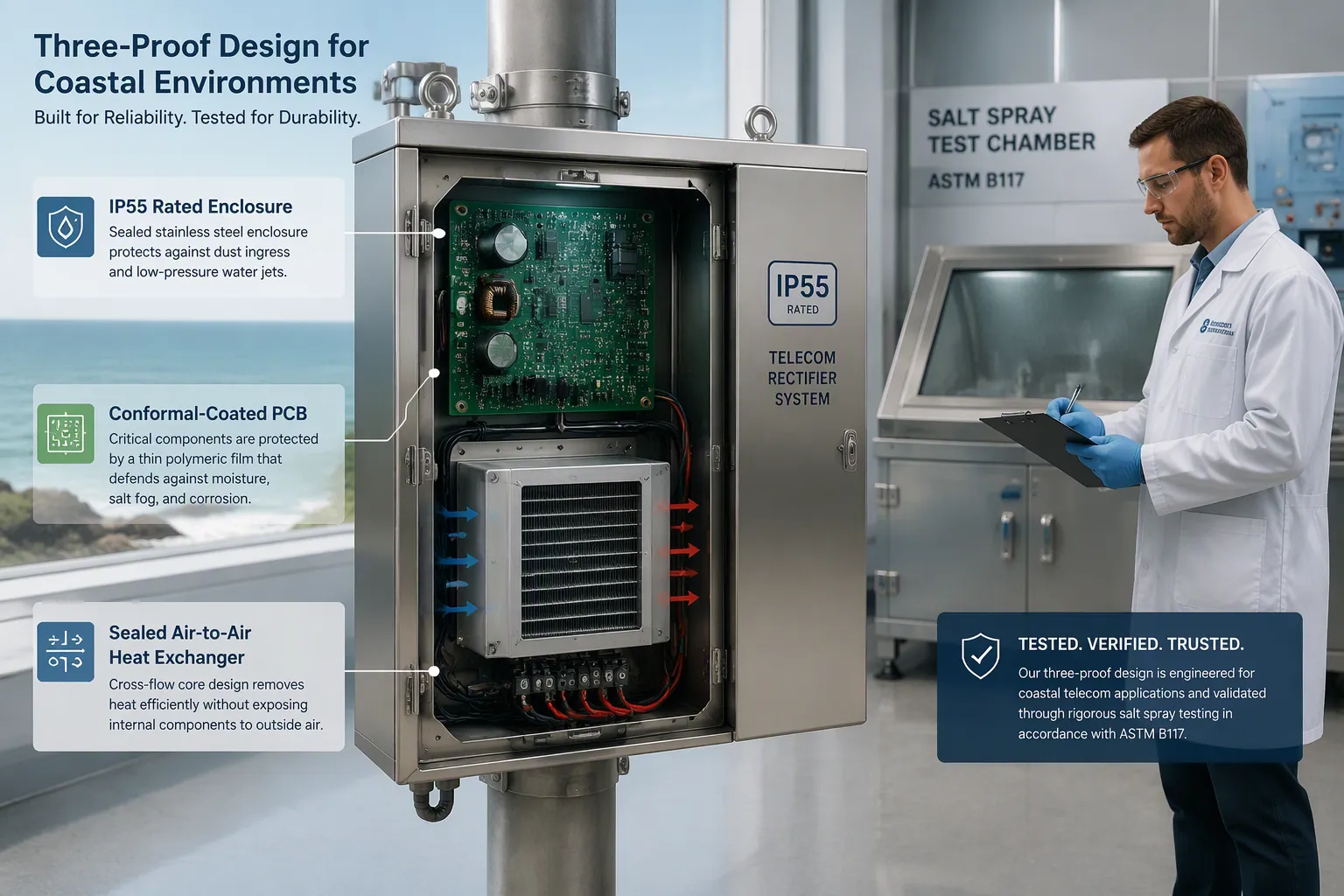
Three-proof design combines waterproof, dustproof, and corrosion-proof protection into one system. The three defenses work together. A seal alone stops water but not vapor. A coating alone protects a board but not a connector. Together they remove the pathways that salt fog needs to start corrosion.
Waterproof and Dustproof Sealing
NEMA-rated enclosures and IP55-class sealing form the outer barrier. IP55 blocks dust ingress and water jets, which covers wind-driven salt fog at most coastal sites. Material choice matters as much as the seal. Within 5 km of the coast, 316 stainless steel is non-negotiable, because 304 stainless steel shows pitting corrosion within 18 months in marine air. Buyers should verify ingress ratings through IEC 60529 testing rather than trust datasheet claims. Salt spray testing per ASTM B117 sets a minimum of 500 hours for aluminum enclosures and 1000 hours for stainless steel enclosures in coastal deployments.
Sealed air-to-air heat exchangers support this barrier. Two isolated air circuits trade heat through a cross-flow core. The internal cabinet stays sealed to IP55 or better while the unit dissipates 500–1500 W. No air exchange means dust, pollen, and insects cannot enter. This design supports salt fog ingress prevention while it manages thermal load.
An IP66 enclosure that cannot equalize pressure will draw moisture in through the smallest cable gland imperfection whenever the internal air cools. Perfect sealing without a vent is worse than good sealing with one.
Corrosion-Resistant Coatings and Internal Protection
Corrosion-resistant coatings add the second layer. Conformal coating on PCBs forms a thin polymeric film of roughly 25–250 µm. The film conforms to board contours and seals solder joints, component leads, and exposed traces. This continuous barrier blocks moisture, salt, dust, and chemicals from reaching metal surfaces. It also raises dielectric strength and reduces leakage under humid, salt-laden conditions. Polyurethane coatings maintain function under salt mist exposure, while silicone coatings resist moisture and corrosion across wide temperatures from -65°C to 200°C.
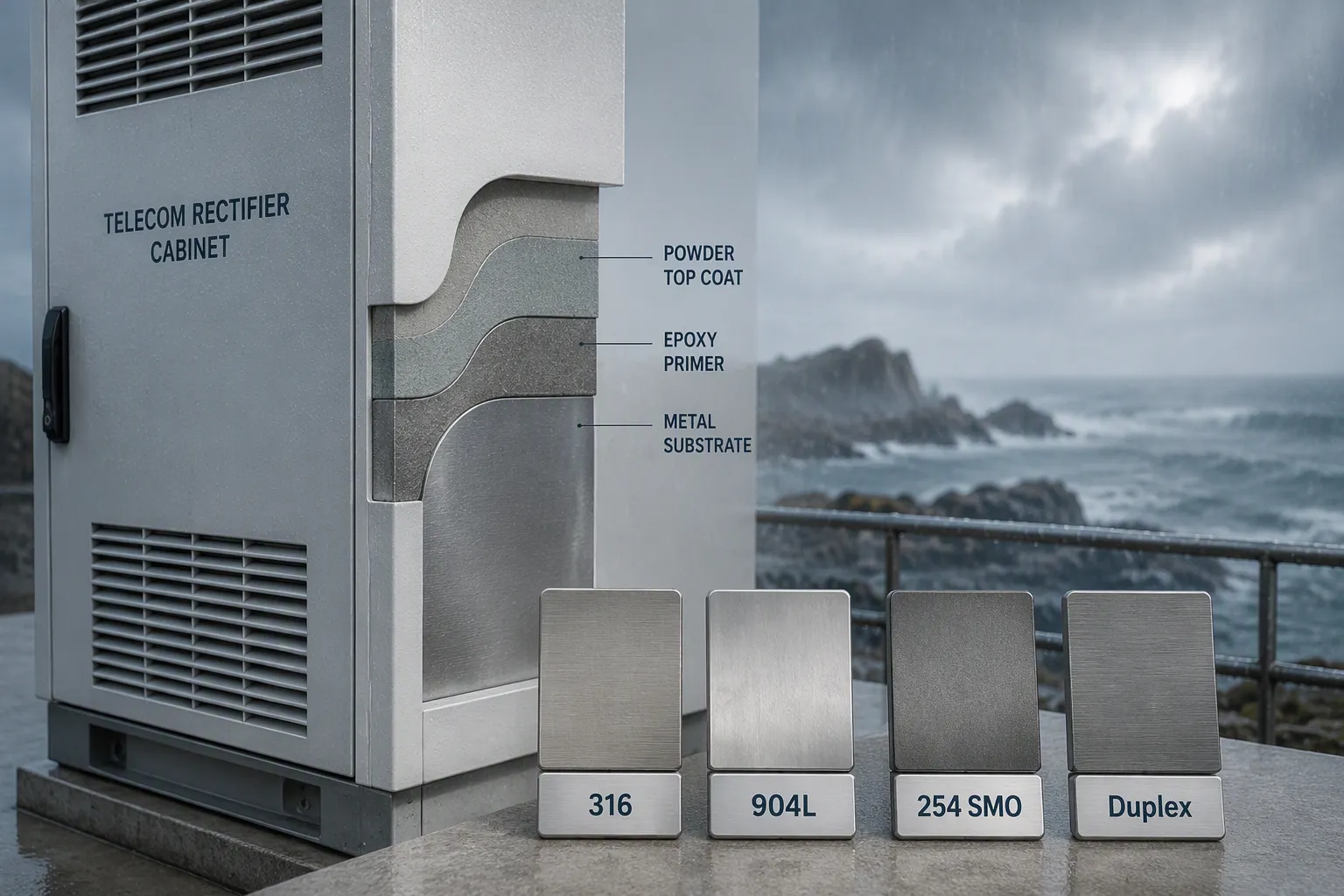
Anti-corrosion powder coating protects cabinet surfaces. Coating systems scale with the corrosivity class of the site. A C3 system uses UV-resistant polyester or polyurethane powder at 80–100 µm for UV and corrosion resistance. A C4 hybrid system pairs an epoxy zinc primer with a powder top coat for long-term outdoor protection beyond 15 years. A C5 system adds a liquid epoxy primer and epoxy MIO layer for harsh marine conditions. E-coating plus powder coating reaches up to 1000 hours of salt spray resistance, a good fit for telecom sheet metal cabinets. ESTEL's outdoor cabinets use anti-corrosion powder coating in white gray (PANTONE 428C) per GB/T 3181-2008, and its IP55 rectifier cabinets apply the same sealing logic.
Sealing plus coating supports corrosion prevention by removing moisture and chloride pathways. The seal keeps salt fog outside the cabinet. The coating keeps any residual moisture away from metal. This layered approach extends service life and supports long-term reliability at coastal sites.
Material Selection and Corrosion-Resistant Design
Corrosion-Resistant Alloys and Surface Treatments
Material selection sets the foundation of the protective stack. Standard 316 stainless steel carries a pitting resistance equivalent number (PREN) of roughly 25 and 2–3% molybdenum. It performs poorly against pitting and crevice attack at high salinity and temperature. Coastal cabinets therefore benefit from higher-grade alloys. 904L raises nickel to 23–28% and molybdenum to 4–5%, which delivers moderate performance in chloride-rich seawater and good stress corrosion cracking resistance. 254 SMO pushes PREN above 43 with 6–6.5% molybdenum, earning outstanding ratings in chloride/seawater and excellent pitting, crevice, and stress corrosion cracking performance. Duplex grades (2205 and SAF 2507) reach PREN 35–40+ and resist chloride stress corrosion cracking well, which suits structural parts.
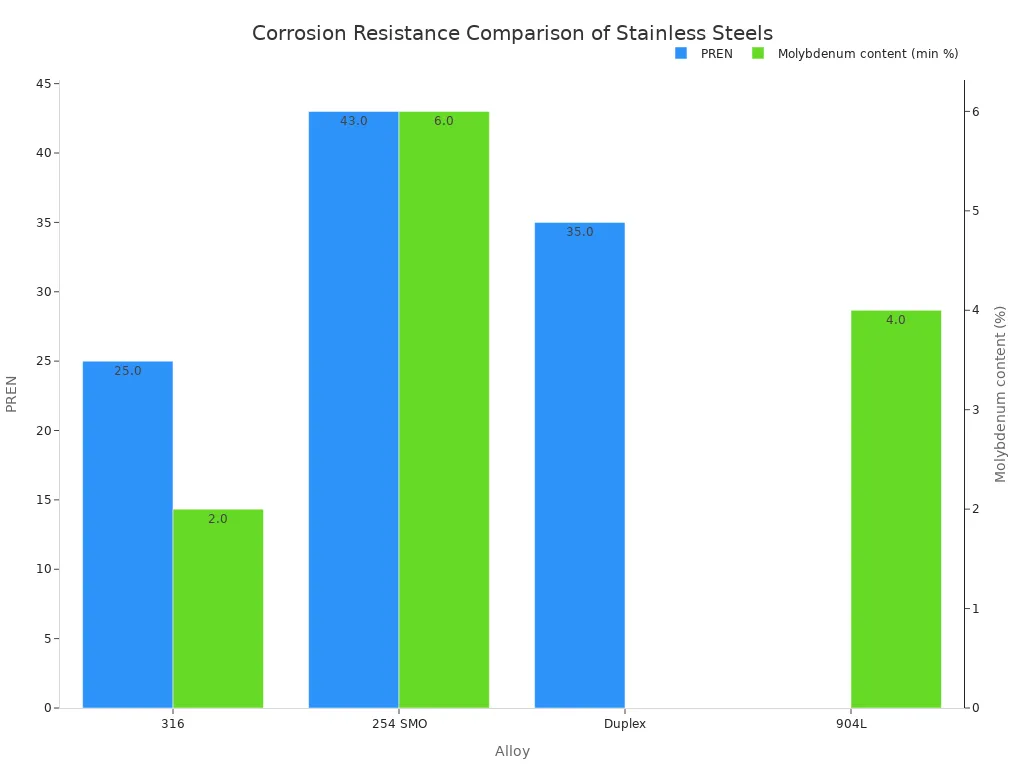
254 SMO typically offers superior corrosion resistance to 904L in high-chloride environments such as seawater, owing to its ~6% molybdenum and nitrogen content (PREN ≈ 42–45). In chloride/seawater, 904L is rated moderate while 254 SMO is rated outstanding; for pitting and crevice corrosion, 904L is moderate versus 254 SMO excellent; for stress corrosion cracking, 904L is good versus 254 SMO excellent. 904L remains excellent in sulfuric and phosphoric acids, where 254 SMO is only good/moderate.
Surface treatments build on that base. Duplex coating systems pair an epoxy primer with a powder top coat. Protective coatings scale with site corrosivity, and each layer adds corrosion protection against chloride attack. This multi-layer stack begins with cabinet material and extends outward through primer and top coat.
Enclosure Engineering and Thermal Management
Enclosure details decide whether the seal holds. Gaskets should be poured-in-place polyurethane or one-piece molded rather than cut-and-glued strips, because every glued joint is a potential leak path. A minimum gasket compression of 25% with positive door closure keeps contact as hinges sag. Cable entries need stainless steel or polymer glands with EPDM seals sized to the cable OD. EPDM handles UV, ozone, and salt for 10–15 years. A nickel-plated brass gland on a stainless enclosure invites bimetallic corrosion, also called dissimilar metal corrosion. Grounding through a copper bar must isolate dissimilar metals to avoid the same effect.
Thermal management keeps internal temperature and humidity stable. Open ventilation admits outdoor humidity, dust, salt, and corrosive pollution. Closed-loop air-to-air heat exchangers avoid intentional mixing of air streams and reduce direct contaminant exchange. Cabinet air conditioners may remove some moisture while running, yet cold surfaces and drain systems create moisture interfaces. Stable internal conditions under high humidity slow the corrosion rate and extend service life.
ESTEL's Telecom Rectifier System applies these principles. The modular 2U/3U/6U rack-mount design delivers DC48V output with efficiency above 96% and flexible AC220V/380VAC input. These features support reliability in demanding coastal sites.
How These Designs Deliver Ultra-Long Lifespan
Reduced Corrosion Rates and Component Protection
Layered protection slows the corrosion rate at every stage. Sealed enclosures keep chloride-laden moisture away from internal parts. Conformal coatings shield PCBs and connectors from any film that forms. Stable thermal conditions limit condensation and the wet-dry cycles that drive attack. Slower corrosion means less material loss, fewer insulation faults, and fewer rectifier failures. Each year of protected operation adds to the service life of the whole system.
Redundancy adds another layer of reliability. The modular rectifier design connects multiple modules in parallel to share load current, which provides built-in redundancy and defense against costly downtime. The system behaves predictably under a fault:
If one module fails, a dedicated circuit breaker trips and the unit automatically de-rates output current, so operation continues at reduced capacity instead of a full shutdown.
With a redundant module installed, full-capacity operation continues after a module failure, with no downtime.
In harsh, corrosive, or high-temperature sites, water-cooling suits the thermal load best. A water-cooled design holds optimal operating temperatures, which improves efficiency and extends component life. Redundancy and cooling together support continuous uptime and longer service life.
Standard vs. Corrosion-Resistant Design Comparison
The two design families differ across four dimensions. The table below sets out where each one fits.
Dimension | Standard design | Corrosion-resistant design |
|---|---|---|
Technical performance | Meets basic power needs in mild air | Adds sealing, coatings, and alloy choice for chloride exposure |
Application fit | Sheltered rooms and mild climates | Coastal environments, offshore sites, and humid regions |
Regulatory compliance | Meets general electrical standards | Adds NEMA ratings and ISO9001-controlled production |
Cost | Lower upfront cost | Higher upfront cost, offset by fewer replacements |
Standard designs serve sheltered or mild environments well. Corrosion-resistant designs target coastal, offshore, and humid sites, where salt fog and moisture demand more protection. Neither option is universally better. The right choice depends on site conditions, budget, and the expected product lifespan. Buyers weighing telecom rectifier systems for highly corrosive environments should match the design to the corrosivity class of the site. That match protects long-term reliability and avoids bimetallic corrosion at cable entries and grounding points. Corrosion prevention at each interface keeps the corrosion rate low in marine environments, and corrosion resistance built into the cabinet material and coatings preserves the lifespan of the installation.
Real-World Validation with ESTEL
Field Evidence from Coastal Deployments
Laboratory testing gives the first line of evidence. Salt spray testing per ASTM B117 places coated panels and sealed enclosures in a continuous fine mist of saline solution. The test compresses years of coastal exposure into weeks. Inspectors then check for blistering, creep at scribed lines, and base-metal attack. ESTEL subjects its outdoor cabinets to this regime before release.
Field data completes the picture. Coastal and offshore telecom sites expose equipment to wind-driven salt spray, high humidity, and wide temperature swings every day. Operators track corrosion at seams, cable entries, and grounding points over the years. Cabinets that hold their coating integrity and seal compression across these inspections demonstrate real durability. This evidence carries more weight than any single lab result.
Compliance and Quality Assurance
ESTEL runs production under ISO9001 quality control. Documented procedures govern incoming materials, coating thickness checks, and final inspection. This discipline keeps each unit consistent with the validated design. ESTEL equipment serves remote roads, mountains, and other challenging outdoor environments, where maintenance visits are costly and infrequent.
The Telecom Rectifier System shows these principles in deployment. Its modular 2U/3U/6U rack-mount design delivers DC48V output with efficiency above 96% and flexible AC220V/380VAC input. Sealed cabinets and coated surfaces protect the modules from chloride attack. Together these features support long-term reliability at coastal sites and extend service life in humid regions. Buyers evaluating telecom rectifier systems for marine conditions can treat this combination as a practical benchmark. Careful design, verified by test and field data, protects reliability and service life across the full deployment.
Salt fog attacks metal, insulation, and connectors. Three-proof sealing, corrosion-resistant coatings, alloy selection, and stable thermal management block that attack at every layer. Slower corrosion then translates into ultra-long lifespan.
Standard designs suit sheltered, mild sites at lower upfront cost. Corrosion-resistant designs cost more initially, yet they fit coastal, offshore, and humid sites, meet NEMA and ISO9001 requirements, and offset their price through fewer replacements. Buyers should match the design to the site's corrosivity class. ESTEL's outdoor cabinets and Telecom Rectifier System show how sealing, coating, and material choices combine to protect service life and reliability in marine conditions.
FAQ
What does an IP55 rating mean for a coastal rectifier cabinet?
IP55 blocks dust ingress and protects against water jets from any direction. That level covers wind-driven salt fog at most coastal sites. Buyers should confirm the rating through IEC 60529 testing rather than rely on datasheet claims alone.
Why do rectifier cabinets need conformal coating on circuit boards?
Conformal coating seals solder joints, component leads, and exposed traces with a thin polymeric film. The film blocks moisture and chloride ions from reaching metal surfaces. This barrier protects boards even when trace amounts of moisture enter the enclosure.
Which stainless steel grade suits high-salinity sites?
Grade 316 offers basic marine resistance. Higher alloys such as 254 SMO, 904L, and Duplex grades resist pitting and crevice attack better in chloride-rich air. The right choice depends on site corrosivity, budget, and expected service life.
Do corrosion-resistant cabinets need more maintenance?
They need less frequent inspection, not more. Operators still check gasket compression, coating integrity, and cable entry seals during scheduled visits. These checks confirm the protective layers remain intact and catch small issues before they grow.
How does a buyer choose between standard and corrosion-resistant designs?
Match the design to the site's corrosivity class. Standard designs fit sheltered, mild environments at lower upfront cost. Corrosion-resistant designs suit coastal, offshore, and humid sites, where they offset their higher price through fewer replacements.
See Also
Essential Requirements For Outdoor Telecom Cabinets To Achieve Long-Term Durability
Why Lithium Batteries Outperform Other Options In Telecom Cabinet Applications
Essential Maintenance Tips For Keeping ESTEL Telecom Cabinets Outdoors
Material Specifications And Requirements For Outdoor Telecom Cabinet Construction
Best Material Choices For ESTEL Outdoor Telecom Cabinets In 2025
CALL US DIRECTLY
86-13752765943
3A-8, SHUIWAN 1979 SQUARE (PHASE II), NO.111, TAIZI ROAD,SHUIWAN COMMUNITY, ZHAOSHANG STREET, NANSHAN DISTRICT, SHENZHEN, GUANGDONG, CHINA
