UL Standards and IP NEMA Ratings for 48V Systems

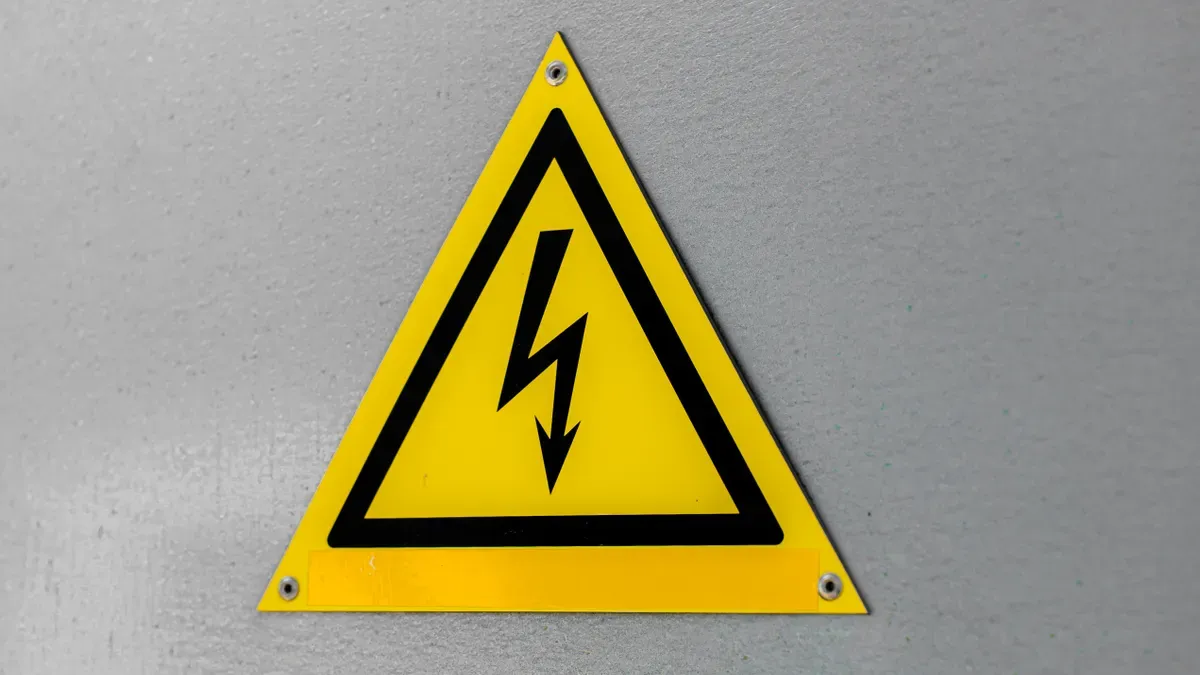
IP and NEMA ratings are two separate, self-certifying rating systems. They are not interchangeable. For 48V systems, this distinction carries real weight. An incorrect substitution can compromise safety and uptime, drive the wrong enclosure selection, and create compliance risk. You cannot treat one rating as proof of the other.
Your core concern is substitution error. How do you specify equipment with confidence when datasheets mix rating languages? This article walks through IP digits, NEMA types, the conversion gap, a conversion guide, scenario modeling, UL standards, and a verification toolkit. Each piece helps you confirm a claim instead of quietly assuming it.
Key Takeaways
IP and NEMA ratings are different systems. You cannot use one to replace the other.
You can assign an IP rating to a NEMA-rated enclosure, but you cannot convert an IP rating to a NEMA Type.
Always ask for test reports to confirm that a rating applies to the complete enclosure, not just a part.
Match the rating to the real environment. Consider dust, water, corrosion, and ice.
UL certification is a separate safety check. Confirm the UL Listed mark covers the whole product.
Why Ratings Matter for 48V Systems
Safety and Performance Stakes
For 48V systems, a wrong rating claim puts people and equipment at risk. Dust entering a live cabinet can bridge contacts. Water ingress can short a DC bus. Both failures threaten safety and uptime at once. You also carry the compliance burden when a substitution fails. IP and NEMA ratings are self-certifying, so no third party checks the claim before it reaches your desk. You must verify the evidence yourself.
The operating envelope makes this concrete. A typical 48V DC system runs within the limits below.
Parameter | Specification |
|---|---|
Output Voltage | 48V DC |
Operating Temperature | -10°C to +45°C |
Storage Temperature | -25°C to +70°C (excluding batteries) |
Relative Humidity | 5%–95% RH (non-condensing) |
Altitude | ≤2000m without derating |
Protection Rating | IP20 |
Some designs reach -10°C to +55°C through optimized cooling and industrial-grade components. An IP20 rating protects against finger contact only. It does not stop dust or water. Match the rating to the real environment, not to the datasheet headline.
Common 48V Deployments
48V systems appear across telecom sites, data centers, energy storage, industrial automation, and electric mobility. Each setting stresses the enclosure differently. Outdoor telecom sites face rain and windblown dust. Data centers face controlled air but strict uptime demands. Energy storage rooms add heat and corrosive atmospheres. Industrial floors add coolant splash and metal dust. Electric mobility adds vibration and washdown.
NEMA ratings add factors beyond ingress, such as corrosion resistance and gasket aging. A telecom power system mounted semi-outdoors should carry at least NEMA 3R, not NEMA 1. Note that NEMA 1 maps to IP10, not IP20. When you specify a telecom power system for a rack or cabinet, confirm the enclosure rating covers the full assembly. Ask for test reports for the complete unit, not just the components inside.
Decoding IP Ratings
The IEC 60529 standard defines every IP rating you will see on a 48V enclosure datasheet. The code carries two digits. Each digit describes a separate protection claim. You read them left to right, and each one stands alone.
First Digit: Solids Protection
The first digit tells you how well the enclosure blocks solid objects and dust. IEC 60529 sets seven levels, from 0 to 6.
First digit level | Protection scope | Definition (IEC 60529) |
|---|---|---|
0 | No protection | No protection against contact and ingress of objects |
1 | Objects > 50 mm | Protection against any large surface of the body, such as the back of a hand, but no protection against deliberate contact with a body part |
2 | Objects > 12.5 mm | Protection against fingers or similar objects |
3 | Objects > 2.5 mm | Protection against tools, thick wires, etc. |
4 | Objects > 1 mm | Protection against most wires, slender screws, large ants, etc. |
5 | Dust protected | Ingress of dust is not entirely prevented, but dust must not enter in sufficient quantity to interfere with safe operation of the equipment |
6 | Dust-tight | No ingress of dust; complete protection against contact (dust-tight); a vacuum must be applied, with test duration up to 8 hours based on airflow |
Level 5 and level 6 differ in a way that matters. Level 5 tolerates some dust inside the enclosure. Level 6 admits none. A cabinet rated IP66 therefore claims full dust-tight construction, not partial dust protection.
Second Digit: Liquid Protection
The second digit covers water. The scale runs from 0 to 9, and each level adds a harder test condition. Level 0 means no water protection. Level 1 covers dripping water. Level 2 covers dripping water with the enclosure tilted. Level 3 adds spraying water. Level 4 covers splashing water from any direction. Level 5 covers water jets. Level 6 covers powerful water jets. Level 7 covers temporary immersion. Level 8 covers continuous immersion under conditions the manufacturer and user agree on.
Read the two digits as a pair. An IP66 rating combines dust-tight construction with protection against powerful water jets. That pairing suits outdoor telecom cabinets exposed to rain and wind-driven spray. An IP20 rating protects against finger contact only, with no water defense at all. When you compare ip ratings across suppliers, check both digits against your site conditions. A high first digit does not guarantee a high second digit, and the reverse holds true as well.
Understanding NEMA Ratings
NEMA 250 is the standard that defines every NEMA Type rating. These nema ratings describe where an enclosure suits a given environment. They do not simply restate an ingress number. You read a Type as a package of construction and test requirements. That package is why nema enclosure standards carry weight in North American specifications.
NEMA Types and Environments
Each Type maps to a location class and a set of hazards, and nema ratings follow that logic. The table below shows the common Types you will meet on 48V equipment.
NEMA Type | Key protection | Location | Typical application |
|---|---|---|---|
Type 1 | Falling dirt, access to hazardous parts | Indoor | Conditioned telecom rooms |
Type 4 | Hose-directed water, windblown dust | Indoor or outdoor | Outdoor pump stations |
Type 4X | Type 4 plus corrosion resistance | Indoor or outdoor | Coastal washdown lines |
Type 12 | Dust-tight, drip-protected | Indoor | Factory floors with dust |
Type 13 | Adds oil and coolant resistance | Indoor | CNC cells with oil mist |
Match the Type to the site, not to a habit. A Type 1 cabinet belongs in conditioned air. A coastal site needs the X suffix.
Beyond Ingress Protection
NEMA 250 tests factors that ingress protection alone never covers. Corrosion testing uses salt spray: 24 hours for indoor Types, 600 hours for outdoor Types, and 200 hours for enhanced X Types. Icing tests chill a chamber to -3°C to -7°C and build a 20 mm ice layer. Gasket aging holds seals at 69°C–70°C for 168 hours, then checks tensile strength at 75% and elongation at 60% of unaged values. These checks explain why nema ratings and nema enclosure standards cannot be reduced to a two-digit code. Specify electrical enclosures against the full Type, and confirm the test reports.
IP vs. NEMA Ratings: The Core Difference
Why They Are Not Equivalent
An IP rating alone does not establish NEMA Type compliance. The reverse holds true as well. The two systems answer different questions, and each one measures a different scope of protection.
Aspect | IP Ratings | NEMA Types |
|---|---|---|
Primary focus | Dust and water resistance only | Broader protection: dust, water, oil, corrosive materials, and overall functionality in industrial environments |
Geographic adoption | Used internationally | Generally preferred in the United States |
Rating structure | Two digits: first (0–6) for solids, second (0–9) for water | Alphanumeric type designations covering multiple hazard categories |
Equivalence | Not equivalent to NEMA — higher NEMA numbers do not imply greater elemental protection | Not equivalent to IP — numbering does not map to IP protection levels |
The scope gap explains the mismatch. An IP code rates only solid-object ingress and water ingress. A NEMA Type also tests corrosion, external icing, oil and coolant exclusion, gasket aging, and construction details. A NEMA 4 enclosure can claim it meets or exceeds IP66. An IP66 box has never faced a corrosion or ice test, so you cannot call it NEMA 4.
Both NEMA and IP ratings are "self-certifying," meaning manufacturers can design a product to meet the standard and specify that rating without approval or certification from an outside agency. This often leads to products being placed on the market that do not actually meet the ratings.
Common Substitution Mistakes
ANSI/NEMA 250 includes a cross-reference annex, Table A-1. That table is a guide, not a substitution license. The annex states one rule plainly: you may assign an IP rating to a Type-rated enclosure, but you cannot convert IP to NEMA Type. The conversion runs one way only. NEC 110.28 reinforces the point: IP ratings are not a substitute for enclosure Type ratings.
The one-way restriction has a practical cause. Attributes of Types like 4X and 3S, such as corrosion and ice resistance, have no IP counterpart at all. Published vendor charts disagree for this reason. The same NEMA 4 maps to IP55, IP56, IP65, and IP66 across different manufacturers. Treat any nema to ip approximations chart as a screening tool, never as proof.
Two errors recur in real specifications. In a coastal case, a buyer approves a fan on its IP66 datasheet and assumes NEMA 4X compliance. The ingress digits say nothing about corrosion duty, so materials, fasteners, and assembly evidence still need checking. In an indoor case, the error runs the other way. A specifier sees an IP55 fan inside a sealed cooling loop and upgrades it to "match" a NEMA 4 cabinet. The fan sits inside the loop, not on the ingress boundary, and the site has no washdown duty. The IP55 package is adequate. Read nema and ip ratings as separate claims, and verify each against the actual environment.
IP-to-NEMA Conversion Guide
Reading the Cross-Reference
A conversion table helps you screen candidates. It does not certify anything. Use the table below as a starting point only, and treat every row as indicative.
IP rating | Closest NEMA Type | What the mapping misses |
|---|---|---|
IP54 | NEMA 3 | Corrosion, icing, gasket aging |
IP55 | NEMA 4 | Hose test details, corrosion |
IP66 | NEMA 4 or 4X | Corrosion and ice testing |
IP67 | NEMA 6 | Temporary immersion depth and time |
The table shows why nema to ip approximations stay loose. Published vendor charts map the same NEMA 4 to IP55, IP56, IP65, and IP66. The spread reflects real differences in test methods, not sloppy data. Read each row as a question to ask the supplier, not as an answer.
Applying Conversions Correctly
Start with the table, then confirm two things. First, model the actual environment: rain angle, dust load, washdown chemicals, and temperature swings. Second, request the manufacturer's test documentation for the full enclosure. A datasheet claim of ip66 means little without a test report behind it.
Remember the one-way rule from ANSI/NEMA 250 Table A-1. You may assign an IP rating to a Type-rated enclosure. You cannot convert IP to NEMA Type. Attributes like corrosion and ice resistance have no IP counterpart, so nema ratings carry information that ip ratings never capture. Check nema enclosure standards directly when the site adds salt spray or icing. A second ip66 claim on a fan or gasket does not extend to the assembled cabinet. Verify the rating at the assembly level, and keep the evidence on file.
Scenario Modeling for Specifiers
Outdoor Telecom Cabinet
Picture a roadside cabinet holding a telecom power system. Rain hits at an angle, dust settles on vents, and internal heat rises under direct sun. Winter brings ice, and a coastal site adds salt. You model each stressor against a rating claim. For rain and windblown dust, NEMA 4 covers hose-directed water and windblown dust. For salt air, nema 4x adds corrosion resistance that plain NEMA 4 lacks. An IP55 claim covers dust protection and water jets, yet it says nothing about corrosion or icing.
Verification follows the model. Request IP ingress testing per IEC 60529 on the assembled unit. Ask for salt spray results per ASTM B117, with a minimum of 600 hours for outdoor Types and 200 hours for enhanced X Types. Add thermal cycling with humidity per IEC 60068-2-30 to approximate tropical operation. ESTEL's IP55 base station cabinets pair this rating with anti-corrosion powder coating, a sensible match for humid or coastal sites. Confirm every cutout, cable gland, and antenna port seals, because each opening is an ingress path.
Indoor Industrial Control Panel
Now move indoors to a factory floor. Dust, lint, and fibers float in the air. Condensation drips from overhead pipes. A nearby press throws light coolant splash. NEMA 12 handles circulating dust, dripping water, and light splashing of noncorrosive liquids. It does not survive hose-down or pressure washing. If oil mist or coolant sprays directly, step up to NEMA 13. For repeated washdown, review NEMA 4 or nema 4x instead.
An IP54 claim fits general indoor panels with dust and drip exposure. Verify it with the manufacturer's IEC 60529 test report, and confirm testing covered the assembled enclosure with doors and glands installed. Note that ip ratings say nothing about electrical safety, so check UL 508A separately. Inspect gaskets every 6 months. Neither system ranks above the other here; each fits its own environment.
UL Compliance in 48V Telecom Power Systems

UL certification is a distinct layer from NEMA and IP ratings. An IP or NEMA claim describes how an enclosure resists dust, water, and corrosion. A UL mark describes how the product manages electrical, thermal, and fire hazards. You need all three layers aligned for 48v systems. A cabinet can carry IP55 and NEMA 4 and still fail electrical safety review.
Key UL Standards
Several ul standards apply to 48V telecom power equipment, and each one covers a different scope. UL 62368-1 replaced UL 60950-1 and UL 60065 as the unified safety standard on December 20, 2020. It covers telecom products and their power supplies, and it addresses electric shock, fire, thermal burns, mechanical hazards, hazardous substances, and radiation. UL 60950-1 remains relevant as a legacy standard. It covers mains-powered or battery-powered information technology equipment rated up to 600 V, including network powering equipment, radio basestations, repeaters, and transmission equipment. UL 1741 applies to certain power conversion equipment, so confirm its scope before you cite it. Enclosure construction falls under UL 50 and UL 50E.
Standard | Edition | Title |
|---|---|---|
UL 50 | 14 | Enclosures for Electrical Equipment, Non-Environmental Considerations |
UL 50E | 3 | Enclosures for Electrical Equipment, Environmental Considerations |
UL 60950-1 | 2 | Information Technology Equipment - Safety - Part 1: General Requirements |
UL 62368-1 | — | Audio/Video, Information and Communication Technology Equipment - Safety Requirements |
These ul standards for telecom equipment work as a set. UL 62368-1 governs the hazard analysis. UL 50E governs the enclosure. A telecom power system must satisfy both.
UL Listed vs. UL Recognized
The two marks carry different weight, and the difference matters for 48v telecom power systems.
Certification | Applies To | Mark | Meaning for 48V Telecom Power |
|---|---|---|---|
UL Listed | Complete, standalone end-use products | UL Listed Mark | The whole product passed full UL certification as a self-contained unit |
UL Recognized (Component) | Components or sub-assemblies installed inside a larger certified system | UL Recognized Component Mark (backwards "UR") | The part is certified as a component, not a standalone listing |
UL Listed means a complete product passed full UL certification and can be installed as a standalone unit. UL Recognized means the item is only a component inside a UL Listed end product. A system that is merely UL Recognized lacks full system-level safety verification. You must confirm the end product carries the Listed mark.
Apply this test to real equipment. ESTEL's Telecom Power System offers a wide 90–300 Vac input, natural cooling, 19-inch rack mounting, and up to 150A output. Those features suit diverse sites, yet they say nothing about electrical safety. Ask the supplier for the UL 62368-1 certificate on the assembled telecom power system, not on the rectifier modules alone. Verify the Listed mark covers the full unit. That step closes the gap between a component claim and true ul compliance in 48v telecom power system deployments. Specifiers who demand ul-certified telecom power solutions check the certificate scope, the standard edition, and the mark on the label. Build that check into your procurement file, and treat ul compliance as a verified fact rather than a datasheet adjective.
IP/NEMA Compliance Verification
Documentation and Markings
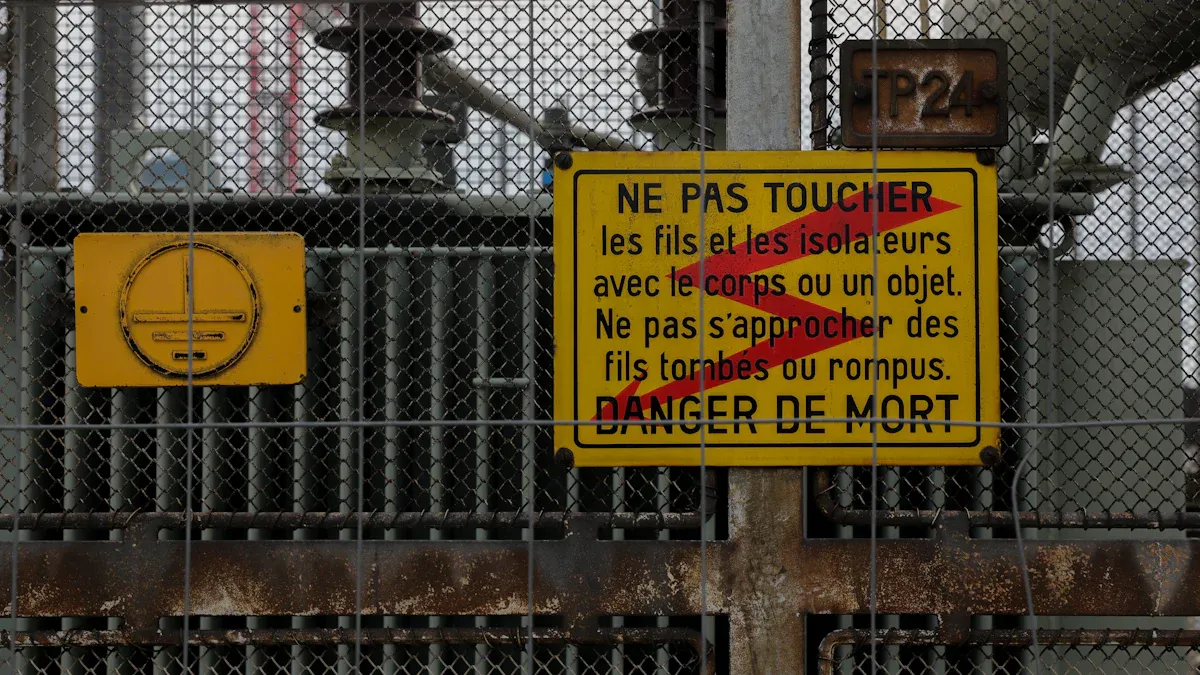
You verify ip and nema compliance with paper, not with a datasheet adjective. Ask for a documentation package before you approve any enclosure. The table below shows what each document must contain.
Document | Required contents |
|---|---|
Declaration of Conformity | All applicable standards and directives with version numbers; authorized signatures; updated when standards change |
Test reports | Test procedures, results, and the standard clause behind each test; equipment calibration records; separate type tests and routine tests |
Marking record | Legible rating label, warning marks, and traceability data |
Technical file | Assembly drawings, component certificates, and installation instructions |
Check the markings on the unit itself. An ip66 label means nothing if the digits are worn or the label sits on a removable cover. Confirm the label cites iec 60529 for ip ratings and nema 250 for the Type. For North American sites, look for UL 50 or UL 50E references and a UL listing mark. Many enclosures carry several marks at once, such as IP66, NEMA 4X, and UL listed. Each mark covers a different part of enclosure selection, so read them as a set.
A certificate confirms compliance with a standard, whereas a test report provides measured results from a specific procedure. Buyers typically need both during onboarding.
Supplier Verification Steps
Run supplier verification as a short, repeatable process. First, request the declaration of conformity and the test reports together. Second, confirm the rating applies to the full enclosure, not just a fan, gasket, or rectifier module. Third, check that the report names the standard edition and the test laboratory. Fourth, ask whether the supplier holds third-party ul certification for the assembled telecom power system, since nema compliance rests on manufacturer attestation alone.
Look for a supplier process behind the paperwork. ESTEL's ISO9001 quality control is the kind of system to check, because it ties inspection records to each production batch. Strong compliance and verification habits show up as traceable component certificates and consistent labels. Weak ones show up as missing clauses and undated reports. Treat ip and nema ratings as claims you confirm, and keep the evidence in your procurement file.
Summary Checklist for Specifiers
Rating Selection Steps
Start with your target market. A North American end user fixes the frame around NEMA Types. A global site points you to IP codes. A mixed market needs both in parallel. This filter comes first, and it shapes every later step.
Next, profile the environment in detail. Note indoor or outdoor use, water exposure, dust load, corrosive agents, and oils. Then match the profile to a rating. Prolonged liquid or chemical exposure calls for NEMA 4X with IP66 protection and corrosion-resistant construction. A dusty site with moderate splash fits NEMA 12 or IP54. High-pressure, high-temperature washdown demands NEMA 4X paired with IP69 or IP69K. Read nema and ip ratings as separate claims at every step, and confirm the enclosure rating covers the full assembly.
Compliance Confirmation Steps
Ratings alone do not close the file. Confirm ul certification for the assembled product, not just the modules inside it. Request the certificate and check that the Listed mark covers the complete telecom power system. Verify the report names the applicable ul standards and their editions.
Build compliance and verification into procurement as a fixed routine. Ask for the declaration of conformity, the test reports, and legible markings that cite the right standard. Confirm the supplier holds third-party ul compliance evidence for the end product. Treat compliance as a fact you check, not a word on a datasheet. A cabinet can carry IP66 and NEMA 4X marks and still need separate electrical safety review. Keep every record on file, and revisit it when standards change.
IP and NEMA remain separate, self-certifying systems, and UL compliance is a distinct third layer. All three must align for 48v systems.
IP testing follows IEC 60529 and covers ingress only. NEMA testing adds corrosion, icing, and gasket aging. UL 50E verifies construction and safety for listed products.
Use the conversion guide cautiously. Model the real environment first, then confirm UL listing through documentation, not datasheet claims.
Build this checklist into procurement now. Ask every supplier for test reports and certificate scope. Consult ESTEL for compliant configurations of its telecom power system, and verify nema ratings on the assembled unit before you approve.
FAQ
Can an IP rating substitute for a NEMA Type?
No. IEC 60529 covers dust and water ingress only. NEMA 250 adds corrosion, icing, gasket aging, and construction checks. ANSI/NEMA 250 Table A-1 lets you assign an IP rating to a Type-rated enclosure, but the reverse conversion does not hold. Verify each claim on its own.
How do I confirm an ip66 claim on a cabinet?
Ask for the IEC 60529 test report on the assembled enclosure, not on a single fan or gasket. Check that the report names the test laboratory and the standard edition. Inspect the label for legible digits and confirm every cable gland and cutout seals.
What is the difference between UL Listed and UL Recognized?
UL Listed covers a complete, standalone end product. UL Recognized covers a component inside a larger certified system. For a telecom power system, confirm the Listed mark covers the full unit, not just the rectifier modules. A Recognized component alone lacks system-level safety verification.
Which ul standards apply to 48V telecom power equipment?
UL 62368-1 governs hazard analysis and replaced UL 60950-1 on December 20, 2020. UL 60950-1 remains a legacy reference. UL 50 and UL 50E cover enclosure construction. Confirm the certificate names the standard and edition that match your product.
How do I build compliance into procurement?
Request the declaration of conformity and test reports together. Confirm the rating applies to the full enclosure. Check that the supplier holds third-party UL evidence for the end product. Keep every record on file, and revisit it when standards change.
See Also
A Guide to Global Standards for Communication Power Supply Systems
How ESTEL Maintains Correct Voltage Levels for Communication Cabinet Operations
Unexpected Insights Regarding NEMA Ratings for Electrical Cabinets
ESTEL's Complete Guide to Analyzing Risks in Telecom Cabinet Batteries
Grid-Tied Solar Inverter and Battery System for Telecom Cabinet Applications
CALL US DIRECTLY
86-13752765943
3A-8, SHUIWAN 1979 SQUARE (PHASE II), NO.111, TAIZI ROAD,SHUIWAN COMMUNITY, ZHAOSHANG STREET, NANSHAN DISTRICT, SHENZHEN, GUANGDONG, CHINA
