What a modular 48V power shelf with hot-swap redundancy is and how it works

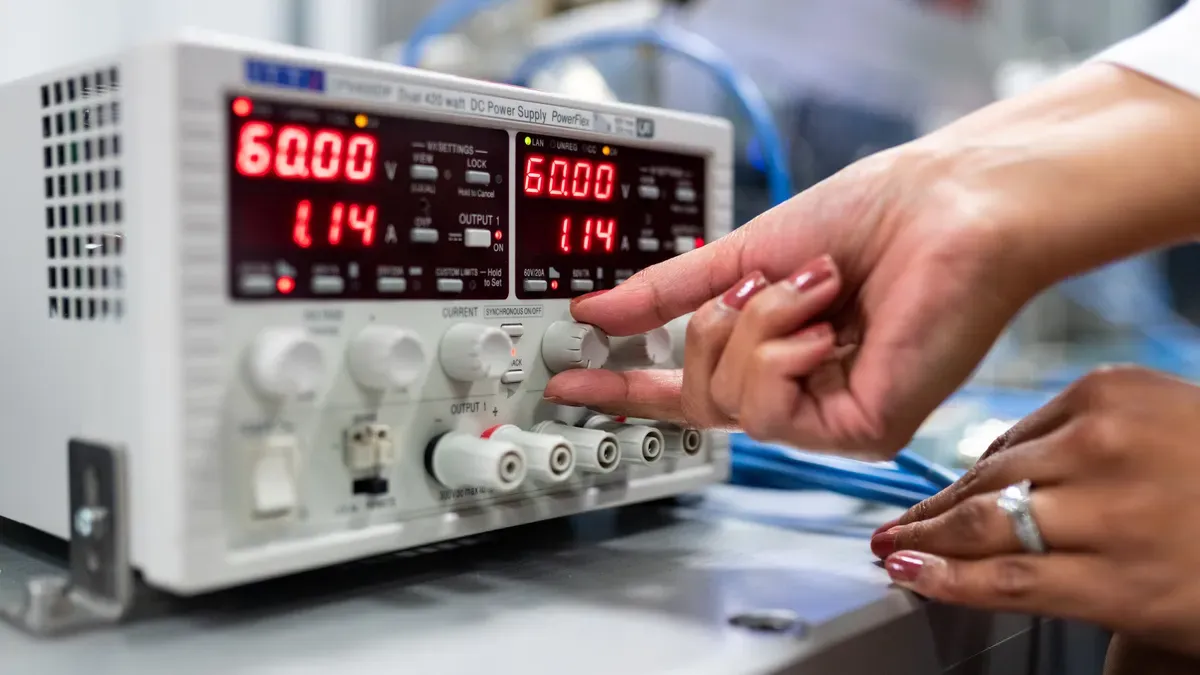
A modular 48V power shelf with hot-swap redundancy is a rack-mounted chassis that holds several parallel power modules, so your equipment keeps receiving DC power even when one module fails or you pull it for service.
Modular means you add or remove power modules as your load changes. The 48V rating sets the DC output that telecom and data center racks expect. Hot-swap redundancy means spare capacity covers a failed module, and you can replace that module live.
The payoff is simple: continuous 48v power through maintenance, faults, and capacity changes. That matters, because power failures cause 45% of impactful data center outages, and downtime can cost about $9,000 per minute. This article explains the components, the operating sequence, the benefits, and the selection criteria.
Key Takeaways
A modular 48V power shelf keeps your equipment running even when a power module fails.
Hot-swap redundancy lets you replace a faulty module without shutting down the system.
You can add or remove power modules as your power needs change.
Proper load sharing and N+1 redundancy ensure reliable power during maintenance or faults.
Choose a power shelf that matches your load, redundancy target, and monitoring needs.
Inside the Modular 48V Power Shelf
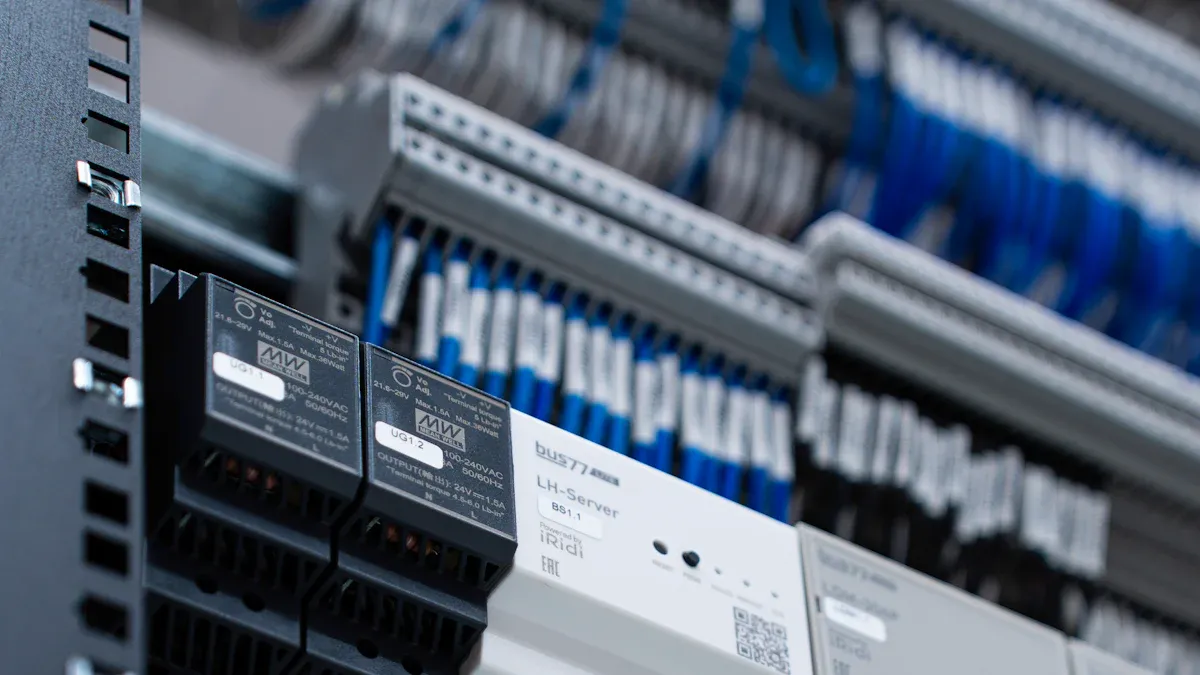
The shelf itself is a rack-mounted chassis, commonly 1U or 2U, that holds multiple parallel-connected, hot-swappable modules. You slide each unit in from the front, and it mates with a shared backplane at the rear. The chassis defines the power envelope, and the module count sets the spare capacity.
Power Modules and Load Sharing
Module ratings scale with the chassis. A 1U shelf typically takes 700W and 1500W modules and scales to about 6,000W. A 2U open rack shelf can hold up to twelve 3kW rectifiers for up to 30kW total at up to 97% efficiency. These multiple rectifier modules let a 48v telecom power system grow with the load.
Adding modules raises capacity, but sharing decides reliability. A module with a slightly higher output voltage hogs more current unless the design uses active, droop, or communication-based sharing. Two methods dominate:
Current-Sharing Method | How It Balances Load | Key Characteristics |
|---|---|---|
Passive (Droop) | Output voltage sags (typically 2.5%–5%) as current rises; the highest-set unit supplies first, then droops to match the next. | No signal wiring; sharing accuracy around 60:40 or better; slight regulation loss. |
Active | A dedicated current-share signal wire links control circuits so modules split load equally. | Most accurate balancing; needs signal connection; avoid long cable runs. |
True hot-swap redundancy depends on remaining capacity. For an 80A load, three 50A modules (150A total, 100A remaining after one fails) provide genuine N+1. Two 50A modules leave only 50A and cannot. When you parallel supplies, match output voltages to within 0.1%, use identical cable lengths in a star connection, derate total draw to about 90% of combined capacity, and add OR-ing diodes or FETs to block back-feeding. Hot-swap power distribution systems also need soft-start and connector sequencing to keep the bus stable during a swap.
48V Power Distribution and the Busbar
The backplane distributes 48v power along a 48V busbar to each IT tray, server, or storage device. A complete shelf includes AC input whips, DC busbar connections, signal harnesses, and control cabling. An intelligent controller module with a front graphic display coordinates load sharing across power modules, monitors the system, and offers optional TCP/IP remote management. The controller also reports module status and alarms to your monitoring system. Telecom racks often take direct -48vdc power from this busbar.
Busbar hardware matters for 48v dc distribution. ORv3-compliant connectors and cable assemblies support 48.0V architectures, and a single vertical busbar in the rack lowers overall cost. TE Connectivity's BB1000 PSU output connector meets OCP ORv3 interfaces and supports 1000A+ (500A+ dual-pole) with chassis grounding. Typical 48V rack busbar ratings sit in the 90A–400A range: single-pole distribution blocks reach 90A–255A, multi-pole blocks 90A–400A, and laminated or flexible busbars up to 125A with tiered ranges to 250A+. Delivering 120 kW to one rack at 48V would need roughly 2,500A, which is why high-power designs often move to 400V DC. Copper cross-section and contact resistance drive the losses you will see at these currents.
Fixed power supplies suit simpler, lower-redundancy setups. A single power shelf with hot-swappable power supply modules fits racks that need live service and steady 48v power growth. Match the shelf to your load profile before you commit.
How Hot-Swap Redundancy Works
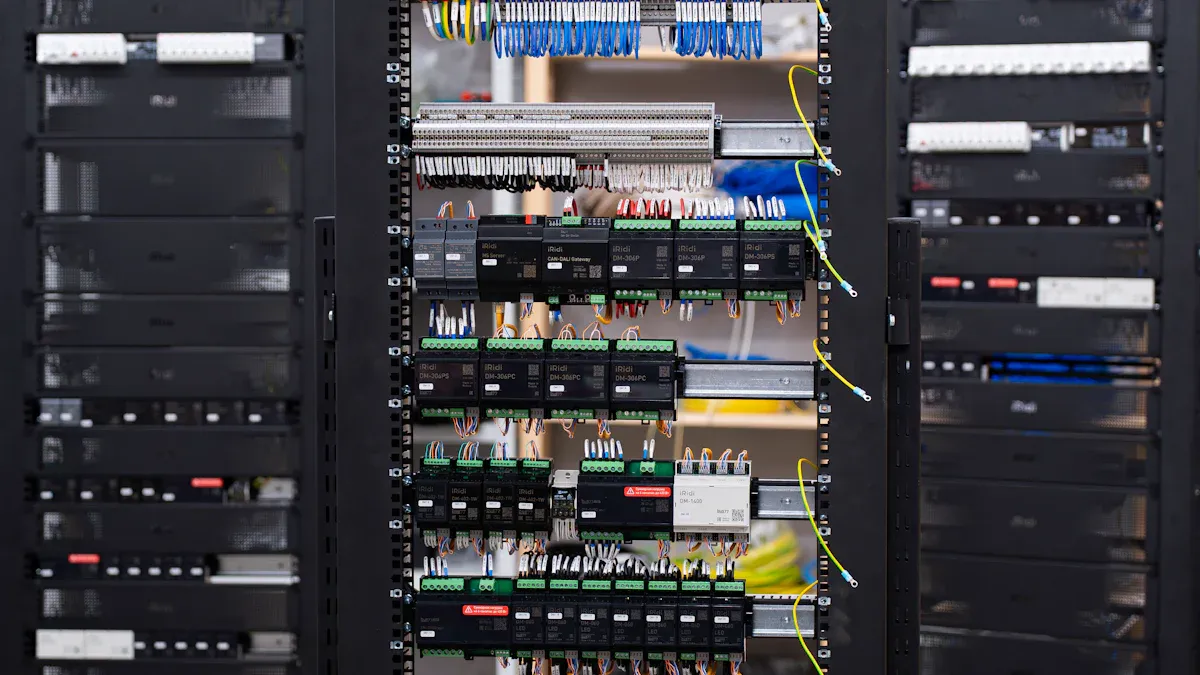
N+1 redundancy means the shelf carries one extra module beyond the number your load needs. If a single module fails, the system keeps running. Without that extra unit, one failed module could shut down the whole system. With it, the remaining modules continue supporting the load, which raises reliability and lowers the chance of service interruption. N+1 differs from N+N, where two independent feeds each carry the full load.
N+1 Redundancy and Load Sharing
The extra module is not a spare sitting idle. It shares current with the others, so every module runs below its limit and the shelf holds headroom in reserve. Load sharing keeps that reserve honest. A module that hogs current defeats the purpose, so the shelf needs accurate sharing to keep every unit inside its rating. This design gives you built-in fault tolerance. A fault in one unit does not cause total failure, and the system can switch to backup capacity without inducing a new fault. Operators gain greater dependability, fewer service interruptions, and time to diagnose an anomaly while the load stays powered. That is the reliability gain in plain terms. Sizing matters here. If the remaining modules cannot carry the load after one fails, the shelf shuts down. Count modules for the worst case, not the normal case. For a 48v telecom power system, that margin turns a single fault into a routine service event instead of an outage.
The Hot-Swap Sequence
Hot-swap means you remove and replace a module without shutting down the equipment. The hot-swapping process follows a predictable path:
A module faults, or you pull it for service.
The remaining modules absorb the load through load sharing.
The controller raises an alarm and reports the event to your monitoring system.
You insert a replacement module while the shelf stays live.
The controller rebalances current and returns the shelf to full redundancy.
Hot-swap redundancy depends on the whole chain working together. The shelf, the busbar connections, and the control cabling must all support the swap. Hot-swap capability, load sharing, and system monitoring are system-level properties, not features of one module alone. A shelf with weak busbar contacts or missing signal wiring will not deliver a clean hot-swap operation, even with capable modules installed. The controller makes each hot-swap operation safe. It detects the missing module, drives the remaining units harder, and restores balance once the new unit seats and reports ready. A hot-swap keeps the bus energized, so you can perform a hot-swap during peak traffic. Plan the swap path before you need it. Label slots, keep a spare module on hand, and confirm the controller reports module status correctly.
This hot-swap technology protects reliability and uptime in a direct way. You service a failed unit during business hours, keep the load powered, and avoid a maintenance window. The same hot-swap redundancy that covers faults also covers planned growth, because you add hot-swappable modules to a live shelf. Faster mean time to repair follows naturally, because the hot-swap itself is a slide-in action rather than a shutdown. You keep the 48v power flowing while the work happens. That combination of redundancy support and live service is the practical core of hot-swap redundancy in 48v power designs.
Why Modularity and Hot-Swap Matter
Scalability, Uptime, and Serviceability
You buy capacity as you need it. Modularity and scalability let you add modules one at a time as demand grows, so you avoid oversizing the shelf on day one. A single-busbar Open Rack V3 shelf can deliver up to 28 kW, and you reach that figure by populating slots rather than replacing the whole system. Expansion still has limits. Busbars, connectors, branch protection, airflow, and downstream conversion stages all cap how far one shelf can grow.
Hot-pluggable modules carry the service story. You insert or remove a module while the shelf stays energized, so capacity changes and repairs happen without shutting down powered equipment. In an N+1 setup, the remaining modules must carry the full load after you apply input voltage, temperature, cooling, and derating limits. That constraint shapes usable capacity, so plan headroom for the worst case. The result is high reliability and uptime for your rack, plus faster mean time to repair.
Efficiency and Total Cost of Ownership
Conversion efficiency drives your power bill. Rectifiers in a modern shelf reach 97% efficiency, and less wasted input power means less heat and lower electricity spend for the same delivered workload.
The power shelf's rectifiers demonstrate 97% efficiency, and the vendor states that "minimizing power consumption and driving down costs are key challenges for data center operators."
Natural cooling options remove fans and their maintenance from the equation. Lower maintenance costs follow, and the total cost of ownership falls across the life of the shelf. These gains belong to the modular approach, yet fixed supplies remain a reasonable fit for small, non-critical loads where live service and spare capacity add little value.
Design Considerations for 48V Telecom Power Systems
ORv3 Compliance and Selection Criteria
Open Rack V3 sets clear expectations for a 48V shelf. Check these requirements against your design:
Requirement | Detail |
|---|---|
Power output | Up to 18 kW DC (15 kW with N+1 redundancy) |
Form factor | 1U rack space |
Busbar connection | Blind-mate power connection to the busbar |
Power cord | Dedicated ORv3 power cord, available in IEC and NEMA configurations |
Beyond ORv3, weigh rack space (1U versus 2U), module wattage, your n+1 or n+n redundancy target, input voltage range, cooling mode, and monitoring options. Target 90% efficiency or higher to cut energy use and heat. A wide AC input range keeps the shelf stable during grid fluctuations. For monitoring, look for SNMP, Modbus, or dry contacts so alarms reach your network operations center.
Hot-Swap Power Shelf Integration
Hot-swap power shelf integration covers the full cable path: AC input whips, DC busbar connections, signal harnesses, and control cabling. Plan these together, because they enable hot-swap operation, load sharing, and system monitoring. ORv3 assemblies must provide plus or minus 3.00 mm float in both directions to absorb misalignment, and they must meet current ratings up to 360A in still air and 500A with airflow. Factory-installed TCP/IP monitoring modules simplify remote management.
Modular shelves fit telecom, broadband, and data center racks that need live service and growth headroom. Fixed supplies remain a reasonable choice for small, non-critical loads. ESTEL's Telecom Power System illustrates a rack-mount option: 19-inch rack or in-cabinet installation, a 2U form factor, a 90–300 Vac wide input range, natural cooling, up to 150A output current, and multiple communication ports for networking. The key features of 48v telecom power system design—wide input tolerance, fanless cooling, and networked control—support continuous power for telecom operations. Solid 48v dc distribution and careful power shelf integration protect your telecom infrastructure. A well-matched 48v telecom power system also strengthens telecom infrastructure resilience, and the right 48v telecom power system keeps 48v power flowing. Choose a 48v telecom power system that matches your standard, load profile, and redundancy target, and treat hot-swap as a system property of your telecom infrastructure.
A modular 48V power shelf with hot-swap redundancy is a rack chassis. Its parallel modules keep DC output live through faults and service. Modules share load through the backplane, the controller manages failover, and hot-swap keeps the output steady during a swap. You gain scalability, uptime, and efficiency, so match the shelf to your standard, load profile, and redundancy target. Adoption keeps climbing: 48 VDC cuts energy losses in data centers, and telecom central offices have run on it for decades. Open Compute Project standards now steer the industry toward DC power. ESTEL's 48v telecom power system shows a rack-mount path to stronger telecom infrastructure.
FAQ
What does N+1 mean in a 48V power shelf?
N+1 means the shelf carries one module beyond your load requirement. If a single module fails, the remaining units absorb the load and output stays live. Size for the worst case, because a shelf with too little spare capacity will shut down after one fault.
Can you replace a module without powering down the rack?
Yes. Hot-swap redundancy lets you pull a faulty module and slide in a replacement while the bus stays energized. The controller alarms, the remaining modules take the load, and current rebalances once the new unit seats. Confirm your shelf, busbar, and control cabling all support a hot-swap before you rely on it.
How many modules should you install?
Count modules for the worst case, not the normal case. For an 80A load, three 50A modules give genuine N+1 protection. Two 50A modules leave only 50A after a fault and cannot carry the load. A 48v telecom power system with proper headroom turns a fault into a routine service event.
What should you check when selecting a shelf?
Weigh rack space, module wattage, your redundancy target, input voltage range, cooling mode, and monitoring options. Target 90% efficiency or higher, and look for SNMP, Modbus, or dry contacts. A 48v telecom power system such as ESTEL's offers a 90–300 Vac input range, natural cooling, and up to 150A output for telecom infrastructure.
See Also
Ensuring Reliable Power Supply for Telecom Cabinets Effectively
Grid-Connected PV Inverter and Battery System for Telecom Cabinets
PV Energy Storage Power System for Telecom Cabinets
Optimizing Outdoor Cabinets with Power Cooling and Monitoring
ESTEL Smart Microgrid Integrated Telecom Cabinet Energy Storage System
CALL US DIRECTLY
86-13752765943
3A-8, SHUIWAN 1979 SQUARE (PHASE II), NO.111, TAIZI ROAD,SHUIWAN COMMUNITY, ZHAOSHANG STREET, NANSHAN DISTRICT, SHENZHEN, GUANGDONG, CHINA
