How Smart PDUs Are Designed for Ultra-Wide Temperature Operation in Outdoor Air-Conditioner-Free Cabinets

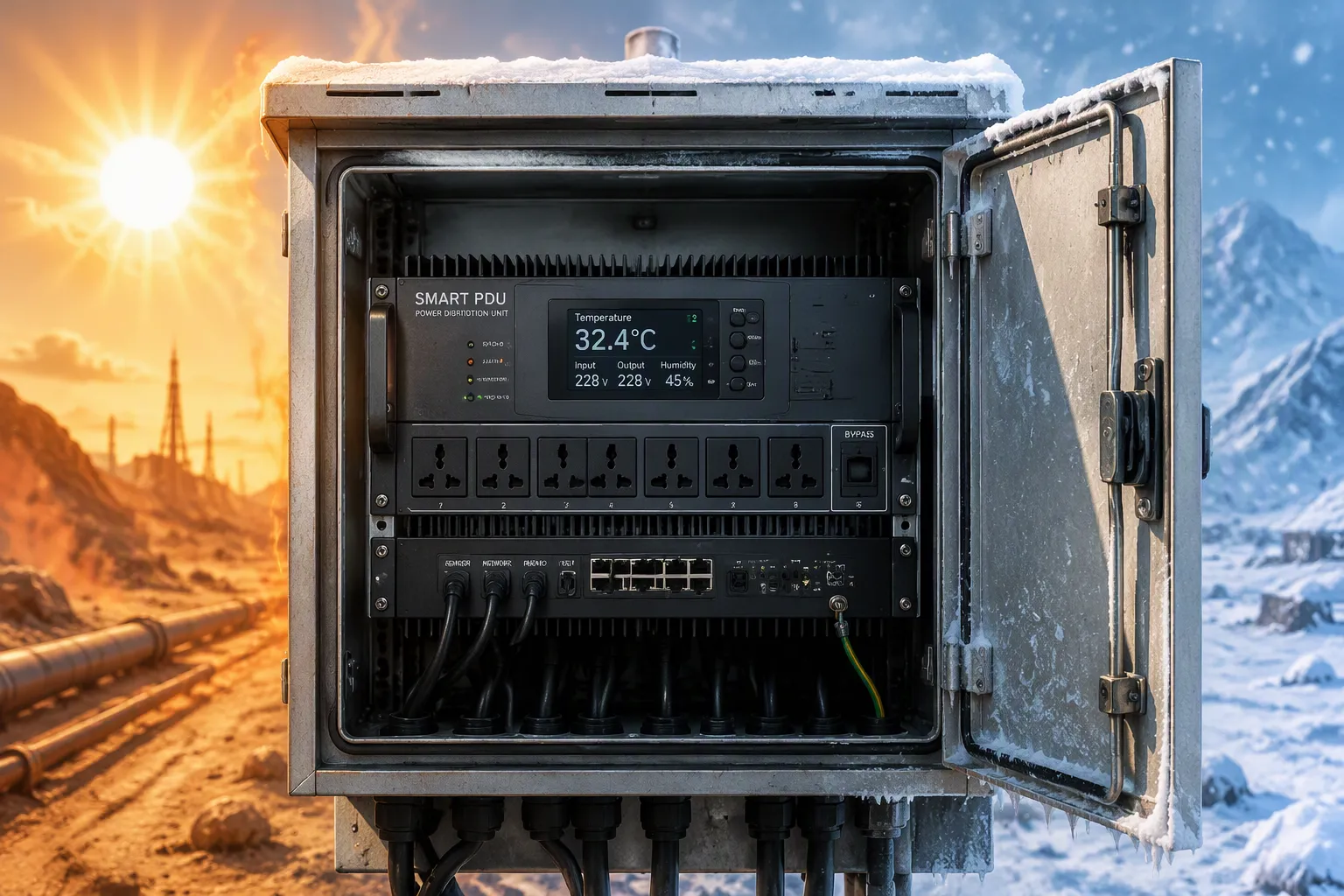
Smart PDUs achieve ultra-wide temperature operation in air-conditioner-free outdoor cabinets through deliberate component derating, passive and conduction-based thermal paths, ruggedized construction, and standards-based validation. Air-conditioner-free cabinets are increasingly preferred for their energy savings, lower maintenance, and smaller footprint. That makes the Smart PDU the thermal-critical element inside the enclosure.
This post examines the design features behind that capability, the validation methods that prove it, and the application fit, compliance, and cost trade-offs you should weigh. It also shows how ESTEL approaches smart power distribution for harsh outdoor environments.
Key Takeaways
Smart PDUs use derated components to handle extreme temperatures without air conditioning.
Passive cooling through conduction and careful mounting keeps Smart PDUs cool in sealed cabinets.
Multiple layers of protection, like sealed housings and conformal coating, keep moisture and dust out.
Rigorous testing, including thermal cycling and humidity tests, proves Smart PDUs work reliably outdoors.
Smart PDUs save energy and reduce maintenance, making them ideal for remote outdoor sites.
Smart PDU Design for Extreme Temperatures
Component Selection and Derating
You extend a PDU's operating range by choosing parts that run well below their limits. This practice is called derating, and it applies to voltage, current, and thermal margins. A component rated for a given stress handles far more when you operate it at a fraction of that stress. The Smart PDU shows this margin-aware approach in its specifications. It accepts a maximum input current of 16A, and its 230VAC 32A rated configurations leave headroom between the working load and the component ceiling. That headroom matters in a sealed cabinet. Internal temperatures climb on a hot afternoon, and derated parts keep functioning where marginal parts would drift or fail. Thermal derating works the same way. You select semiconductors, relays, and connectors that tolerate junction temperatures well above the cabinet's expected peak. The extra margin absorbs heat soak during long summer days and slow temperature swings at night. Derating also covers the internal wiring. The PDU uses 16AWG, 14AWG, and 12AWG copper conductors, and each gauge carries its rated current with room to spare. Surge protection components follow the same rule. They clamp transient voltages far above normal line levels, so everyday operation never pushes them near their threshold. You gain a wider safe operating window at both temperature extremes.
Passive Thermal Management
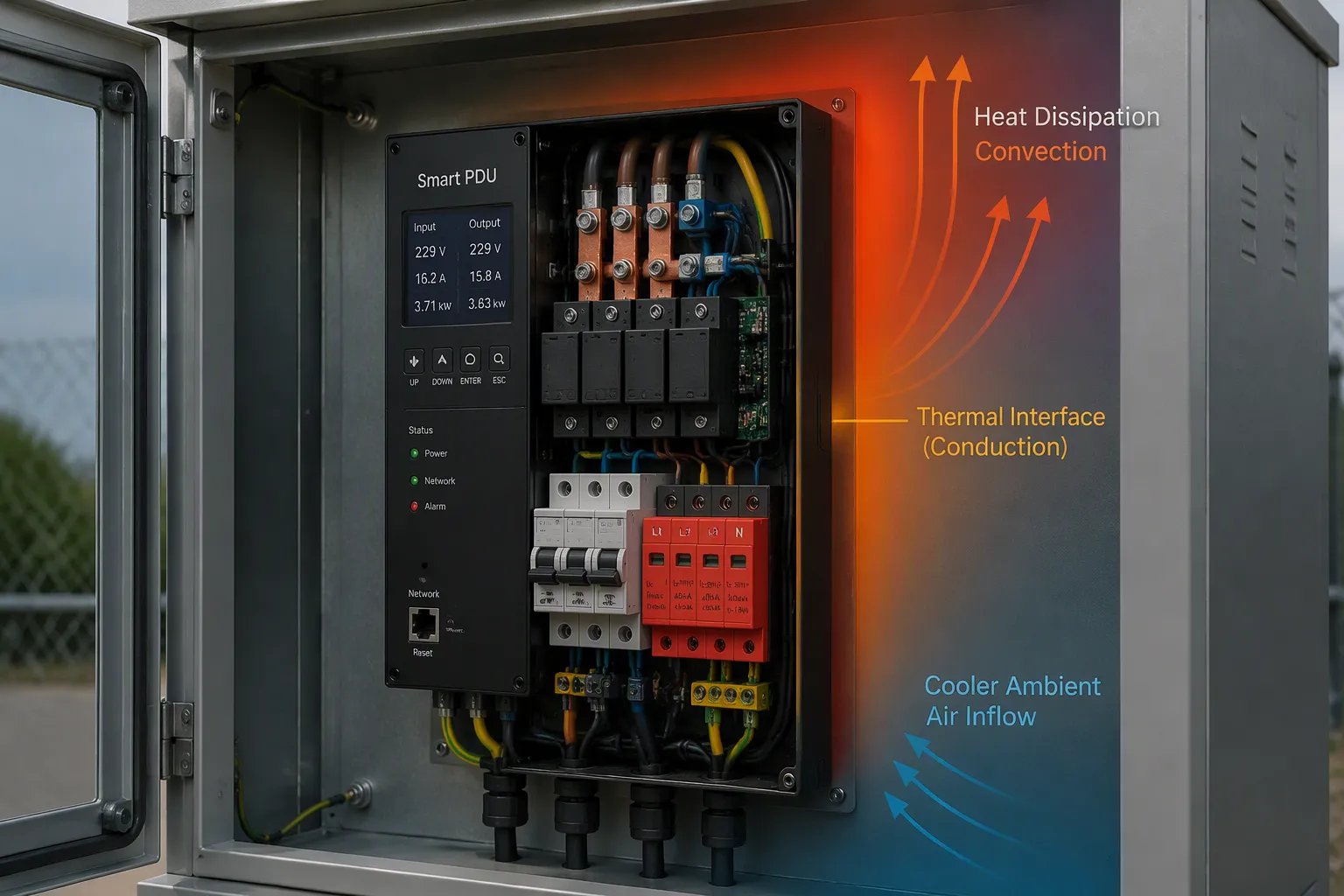
A fan-free cabinet moves heat by conduction and convection alone. Conduction carries the bulk of the load, and the path from the PDU chassis to the cabinet wall deserves careful design:
Microscopic air gaps exist between the PDU chassis and the mounting surface. Air conducts heat poorly, so these gaps trap heat at the contact junction.
Contact resistance at this junction resists heat flow, concentrates thermal energy locally, and creates hot spots.
A thin, uniform layer of thermal interface material (TIM) fills the air gaps and lowers contact resistance.
Heat then conducts away from the PDU chassis into the cabinet wall surfaces and structural frame members.
This conduction path complements convection. Combined with proper unit placement, it reduces localized heat buildup and prevents hot spots, which supports fan-free operation.
Heat spreading matters as much as the contact layer. A flat, rigid chassis base presses evenly against the mounting surface, and that even pressure keeps the TIM layer thin and consistent. Uneven mounting creates thick spots and thin spots, and the thick spots raise contact resistance again. You torque the mounting fasteners to the specified value so the pressure stays uniform over time.
Layout choices reinforce the same goal. You spread heat-generating components across the chassis instead of clustering them. You keep clearances around the enclosure so natural convection can move air along the surfaces. You position the PDU away from other heat sources and leave the upper vents unobstructed so rising air can escape. You also respect the 70°C (158°F) touch temperature limit from ASHRAE TC9.9 guidance. Receptacle and enclosure surfaces must stay below that threshold, so the thermal design protects both equipment and service personnel. Passive cooling suits many outdoor sites well, and active cooling remains a valid choice where heat loads run higher.
Ruggedizing Smart PDUs for Outdoor Cabinets
Sealing and Coating
You protect outdoor equipment with layers, not a single barrier. The sealed housing stops dust and moisture from entering the enclosure, so conductive paths stay dry and short circuits are minimized. Conformal coating forms a second defense directly on the circuit boards. It shields them from humidity and condensation and slows corrosion at terminals and connectors. Silicone gaskets seal doors and edges against rain and dust. Breathable vents equalize pressure during temperature swings while blocking liquid water. A dehumidifying function on the Smart PDU removes condensation before it can accumulate. These layers address the three dominant outdoor failure modes: short circuits, corrosion, and heat.
Corrosion-resistant materials complete the protection. Galvanized steel, rustproof phosphating, and anti-corrosion powder coating resist rust and UV exposure. ESTEL applies this experience in its IP55 cabinets and anti-corrosion powder-coated outdoor battery cabinets. Hydrophobic coatings make surfaces repel water. Mechanical resilience matters too, because a rigid chassis and secure fasteners keep seals compressed over years of thermal cycling. Strong sealing also stabilizes voltage and lowers fire risk.
Wide-Temperature Electronics
Power and monitoring electronics must carry wide-temperature ratings. The PDU's LCD display and dehumidifying function operate across the cabinet's expected range. Surge protection clamps transient voltages and safeguards connected equipment. The cable plug system complies with IEC60309 standards, which define IP ratings for plugs, socket-outlets, and couplers. An IP44 rating means protection against water splashes and solid objects larger than 1 mm.
The standard's waterproof and dustproof features make it ideal for outdoor use, where exposure to the elements is common.
Outdoor environments require higher protection levels. IEC60309 connectors reach up to IP68 for harsh humid or dusty conditions. The rating applies when the connector is detached or mated, but not during the mating process. Fixed connectors usually install angled downward to prevent water ingress. The common IP44 variant uses a spring-loaded hinged cap that hooks over a lug on the plug to retain it.
Validating Smart PDU Performance
Environmental Test Protocols
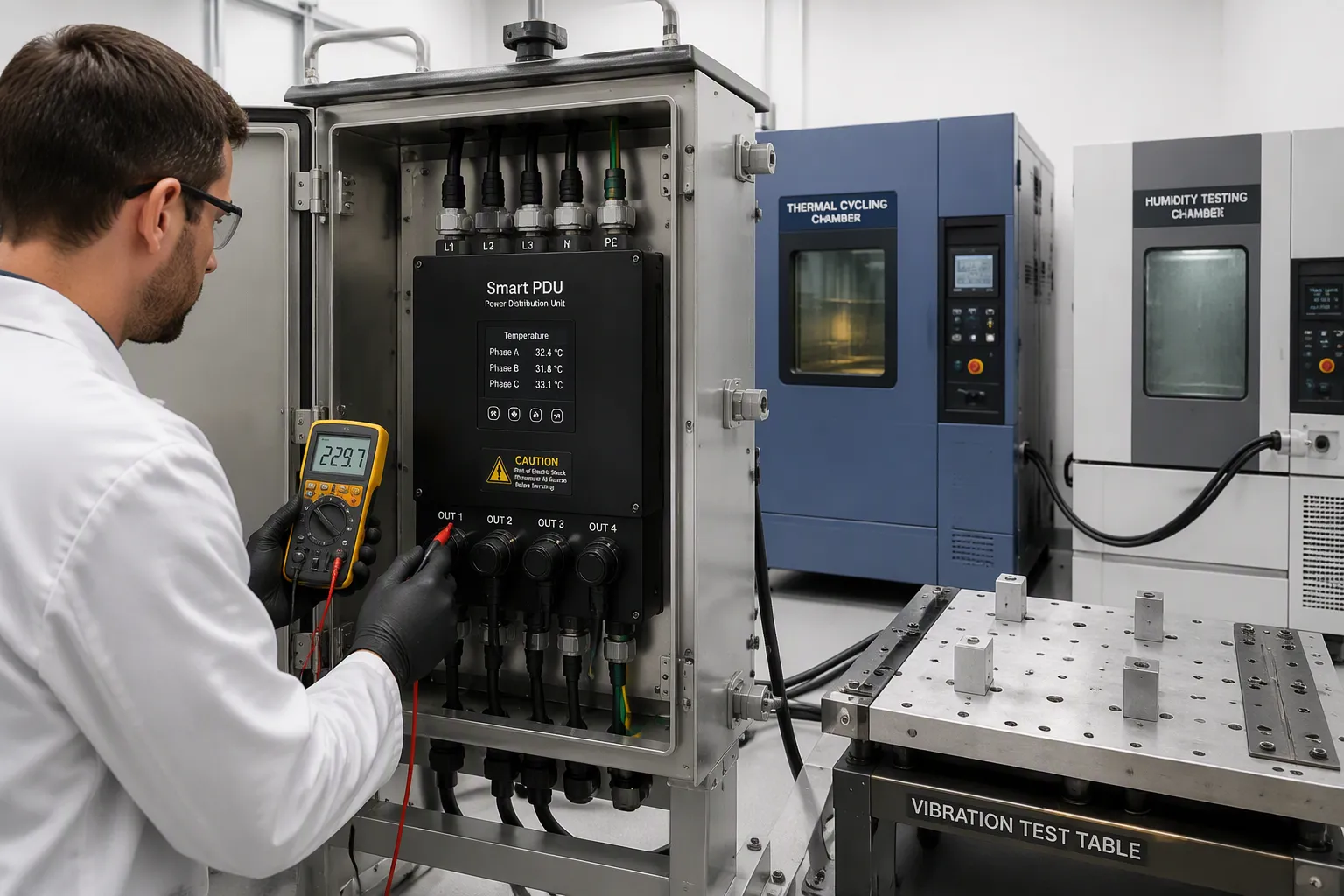
Testing proves the design claims. You validate ultra-wide temperature operation with three core protocols, and each one targets a different failure mode.
Thermal cycling moves the unit between cold and hot extremes repeatedly. Each cycle stresses solder joints, connectors, and seals. You log the internal temperature at each stage and compare it against the derating assumptions. A unit that passes thermal cycling shows stable electrical behavior at both ends of the range. You run enough cycles to cover the expected service life, and you inspect the unit between stages.
Humidity testing holds the unit at high relative humidity and varying temperature. Condensation forms on surfaces, and the test reveals whether conformal coating and sealing hold. You inspect terminals and boards afterward for corrosion or moisture paths. A sealed housing with a dehumidifying function should keep internal surfaces dry through repeated cycles.
Vibration testing simulates transport and wind-induced movement. It checks fastener retention and contact integrity. You torque fasteners to specification before the test and verify they stay tight afterward. Loose hardware raises contact resistance and creates hot spots, so this test protects the passive thermal path as much as the electrical connections. You repeat the test after thermal cycling, because heat can soften gaskets and loosen preload.
Standards alignment anchors these tests. You verify touch temperature against ASHRAE TC9.9 guidance, which sets the 70°C (158°F) limit for surfaces. You confirm connector performance against IEC60309. You also check the assembly against IEC 61439 for low-voltage switchgear and control gear assemblies, and IEC 61439-3 for distribution boards. Plug and socket safety follows BS 4573 and IEC/TR 60083. ESTEL runs these checks through its ISO9001 quality-control process, and its products also target CE, VDE, UL, and RoHS conformity.
Proactive monitoring extends validation into service. The Smart PDU collects environmental sensor data — temperature, humidity, and airflow — plus leak and smoke detection and security alerts. It forwards everything to a central management system for real-time viewing.
Sensor Type | Monitored Parameter / Purpose |
|---|---|
Environmental sensors | Temperature, humidity, and airflow measurement |
Leak/detection sensors | Early detection of smoke and water leaks |
Security sensors | Alerting to unauthorized access |
Reliability and Lifetime Testing
Lifetime testing predicts field behavior. Accelerated aging runs the unit at elevated stress to compress years of service into weeks. You track failure rates and compare them against the design target. A part that drifts early shows up here, not at the customer site. You also compare the accelerated result against field return data to confirm the model holds.
Load cycling switches current on and off repeatedly, which exercises relays and terminals. You cycle at the rated 16A input and at the 230VAC 32A configuration to cover both operating envelopes. Contact wear and terminal heating appear under this regime.
Monitoring accuracy checks compare reported voltage, current, and power against reference instruments. You repeat these checks across the temperature range, because sensor drift often appears at the extremes. A reading that stays within tolerance at room temperature may wander at the cold or hot end. Per-plug monitoring makes this check granular, and remote port enable/disable lets you isolate a suspect outlet without a site visit. You document every result and keep the records with the unit's quality file.
ESTEL Smart Power Distribution Unit Fit and Compliance
Best-Fit Deployments
Air-conditioner-free designs suit sites where power budgets are tight and service visits are costly. Remote telecom sites, roadside cabinets, and mountain installations fit this profile well. These locations often lack reliable grid power, and every watt saved on cooling extends battery runtime. ESTEL's outdoor telecom cabinet portfolio serves exactly these environments, and the company's customer base includes telecom operators and infrastructure providers working in remote roads, mountains, and other challenging terrain. A sealed cabinet with a Smart PDU inside reduces moving parts and maintenance calls.
Active cooling still earns its place in some scenarios. Dense equipment loads, direct sun exposure with limited shading, or sites with frequent high ambient temperatures may justify a cabinet air conditioner. The right choice depends on your heat load, your climate data, and your maintenance access. Passive designs fit best when the load stays moderate and the cabinet surface area provides enough conduction path to the wall.
Compliance and Cost
Compliance underpins every deployment decision. ESTEL builds to ISO9001 quality-control standards, and the Smart PDU's plug system follows IEC60309. IP ratings on the cabinet and connectors confirm dust and water protection for outdoor duty. These certifications simplify procurement and reduce integration risk.
Total cost of ownership favors the air-conditioner-free approach over time. You save energy because no compressor runs. You cut maintenance because there are fewer parts to fail. Remote management through network communication modules lets you monitor and control the unit without a site visit. Per-plug power monitoring shows exactly where power goes, and remote port enable/disable lets you reboot or isolate equipment instantly. Environmental sensors add proactive monitoring for temperature, humidity, and airflow, so you catch problems before they become outages. Active cooling remains a sound option where heat loads demand it, and the two approaches can coexist across a mixed fleet.
You now have the full picture. Component derating, passive thermal paths, ruggedized construction, and standards-based validation work together. They let a Smart PDU run across ultra-wide temperatures without air conditioning. That combination delivers real value for outdoor cabinet deployments. Energy savings, fewer maintenance visits, and remote management all add up over the service life.
This approach fits best where heat loads stay moderate and cabinet surface area provides a solid conduction path. Dense loads or harsh sun exposure may still call for active cooling. ESTEL continues to refine smart PDU design for harsh outdoor environments, and that focus keeps remote sites running reliably.
FAQ
How does a Smart PDU stay cool without a fan or air conditioner?
It spreads heat through its chassis into the cabinet wall. A thin thermal interface layer fills air gaps at the mounting surface. Derated components tolerate higher internal temperatures. This conduction path, plus careful component placement, keeps hot spots under control.
What keeps moisture from damaging the electronics?
You get several layers of protection. The sealed housing blocks dust and water. Conformal coating shields circuit boards from condensation. A dehumidifying function removes moisture before it builds up. Together, these measures address the main outdoor failure modes: short circuits, corrosion, and heat.
Which temperature limit applies to surfaces I might touch?
ASHRAE TC9.9 guidance sets a 70°C (158°F) touch temperature limit. Receptacle and enclosure surfaces must stay below that threshold. The thermal design protects service personnel as well as equipment, and you should verify this limit during validation testing.
Can I manage the PDU without visiting the site?
Yes. Network communication modules support remote management. Per-plug power monitoring shows where power goes, and remote port enable/disable lets you reboot or isolate equipment instantly. Environmental sensors add proactive alerts for temperature, humidity, and airflow, so you catch problems early.
When should I still choose active cooling?
Active cooling remains a sound option for dense equipment loads, sites with harsh sun exposure, or locations with frequent high ambient temperatures. Passive designs fit best when heat loads stay moderate and the cabinet surface provides enough conduction path. Base the choice on your heat load and climate data.
See Also
Enhancing Outdoor Cabinets Using Power, Cooling, And Monitoring Systems
The Importance Of Air Conditioning For Outdoor Communication Cabinets
Benefits Of ESTEL Cabinet Cooling Solutions For Industrial Applications
Telecom Cabinet Air Conditioning Built For Outdoor Communication Applications
Methods To Maintain Optimal Temperature In Outdoor Telecom Cabinets
CALL US DIRECTLY
86-13752765943
3A-8, SHUIWAN 1979 SQUARE (PHASE II), NO.111, TAIZI ROAD,SHUIWAN COMMUNITY, ZHAOSHANG STREET, NANSHAN DISTRICT, SHENZHEN, GUANGDONG, CHINA
