Telecom Power Systems in Industry 4.0 — Energizing Production Lines

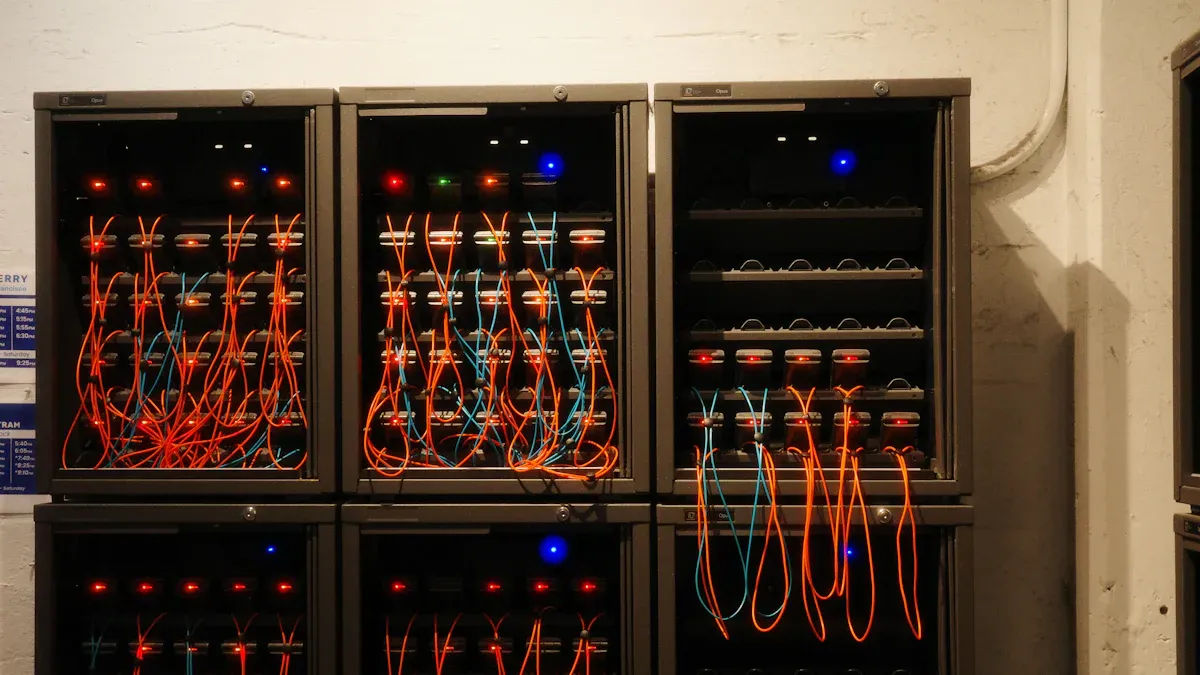
Telecom power systems now energize industry 4.0 production lines by aligning power output with the line's production rhythm. This uses real-time load sensing, adaptive control, and integration with PLCs and MES systems. You get lower operating costs, higher reliability, predictive maintenance, and energy savings.
On a production line, demand shifts each second. A telecom power supply must deliver dynamic power output that mirrors changes. ESTEL's Telecom Power System matches production rhythm via its 20-36VDC and 0-150A output.
When industry 4.0 production lines communicate through industrial iot protocols, power tracks every cycle. Such telecom power systems avoid constant maximum power. Instead, power output follows load. This cuts waste and extends power equipment life.
Key Takeaways
Telecom power systems adjust power output to match production line speed, cutting energy waste.
Real-time sensors and adaptive algorithms track load changes second by second for efficient power use.
Seamless integration with PLCs and MES systems aligns power delivery with production schedules.
Dynamic power alignment reduces energy costs by 30-70% and lowers peak demand charges.
Predictive maintenance and fewer moving parts boost reliability and extend equipment life.
Real-Time Monitoring for Dynamic Power Output
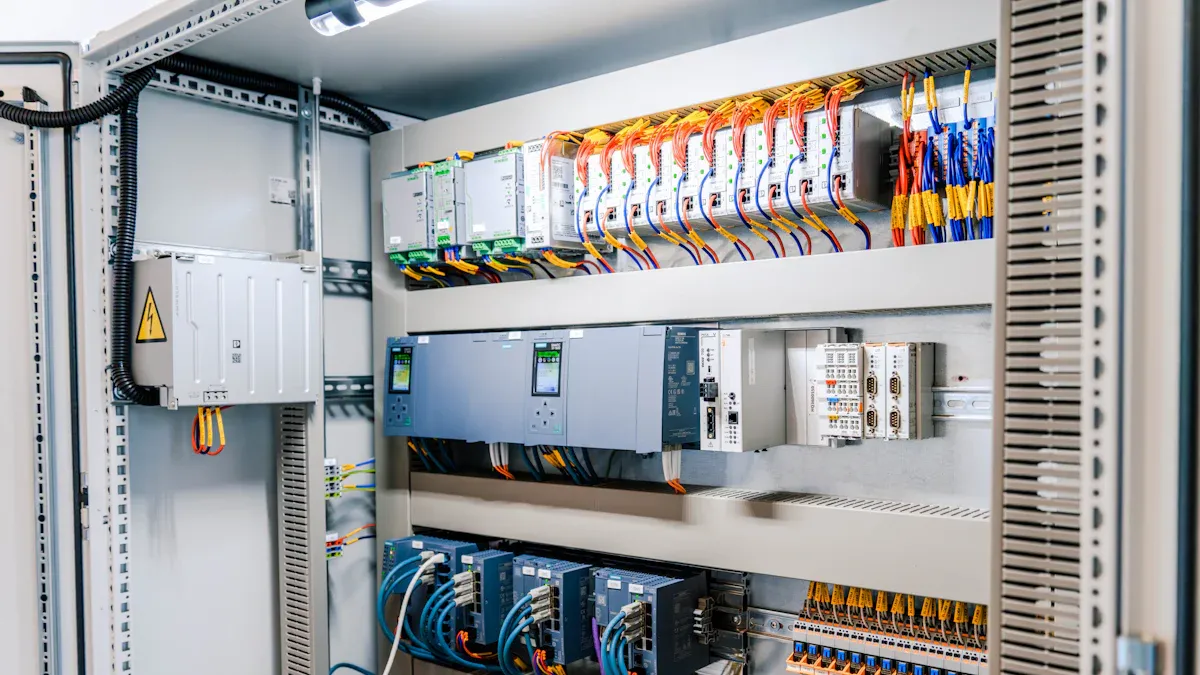
Real-time monitoring for dynamic power output starts with data acquisition from production line sensors. These sensors capture the load changes, cycle times, and idle periods that define your production rhythm. You gain a continuous picture of what the line is doing second by second.
Data Acquisition from Production Line Sensors
Production line sensors come in several forms, each suited to different equipment and integration levels. You can choose the method that fits your existing infrastructure.
Direct PLC or controller signal reads machine state from the equipment's own controller. This is the most accurate method where available because it reflects the machine's actual internal state.
Current or power sensors use clamp-on devices to infer running versus idle state from power draw patterns. These work well for older equipment lacking a modern digital controller output.
Spindle or motion sensors detect rotation or axis movement directly, providing a reliable signal for whether the machine is actively cutting or moving.
MES or SCADA integration pulls state data through an existing manufacturing execution system already connected to the equipment, avoiding duplicate hardware.
Non-invasive current transformers clamp around existing power conductors inside a panel. They capture load current without wiring changes or production stoppage. These sensors feed readings to an edge gateway that timestamps and transmits the data. The system then converts raw current into meaningful machine states: running, idle, changeover, or off.
Can power signatures actually detect whether a machine is running, idle, or down?
Yes. Every machine has a characteristic electrical profile. A CNC draws a steady base load when idle and higher, more variable power when the spindle is cutting. A packaging line steps through distinct power levels as different motors and actuators engage. Algorithms analyze these patterns in real time, classifying each interval as a specific machine state.
This real-time data feeds directly into adaptive control algorithms for power adjustment. The algorithms process production speed, load changes, and equipment status to determine the required DC output at each moment.
Adaptive Control Algorithms for Power Output
Adaptive control algorithms use this data to adjust power output in real time. When the data shows your production line speeding up, the algorithms raise output. When production slows, the algorithms lower output. These adjustments stay within the specified range of 20-36VDC and 0-150A on ESTEL's Telecom Power System.
This is what dynamic power output means in practice. The system matches supply to demand second by second. It does not simply switch between on and off states. The load-following behavior creates adaptive power output that tracks your production rhythm continuously.
Adaptive power management depends on real-time production monitoring. The algorithms receive continuous input from industrial iot devices and sensors across the line. They calculate the precise output needed at each interval. This real-time power management approach keeps power consumption aligned with actual work being performed.
The dynamic power output approach delivers adaptive power output without manual intervention. Telecom power systems that support this level of control help you avoid the waste of running at constant maximum. Instead, power follows the load. The result is efficient operation that responds to your line's actual needs.
Seamless Integration with Industry 4.0 Lines
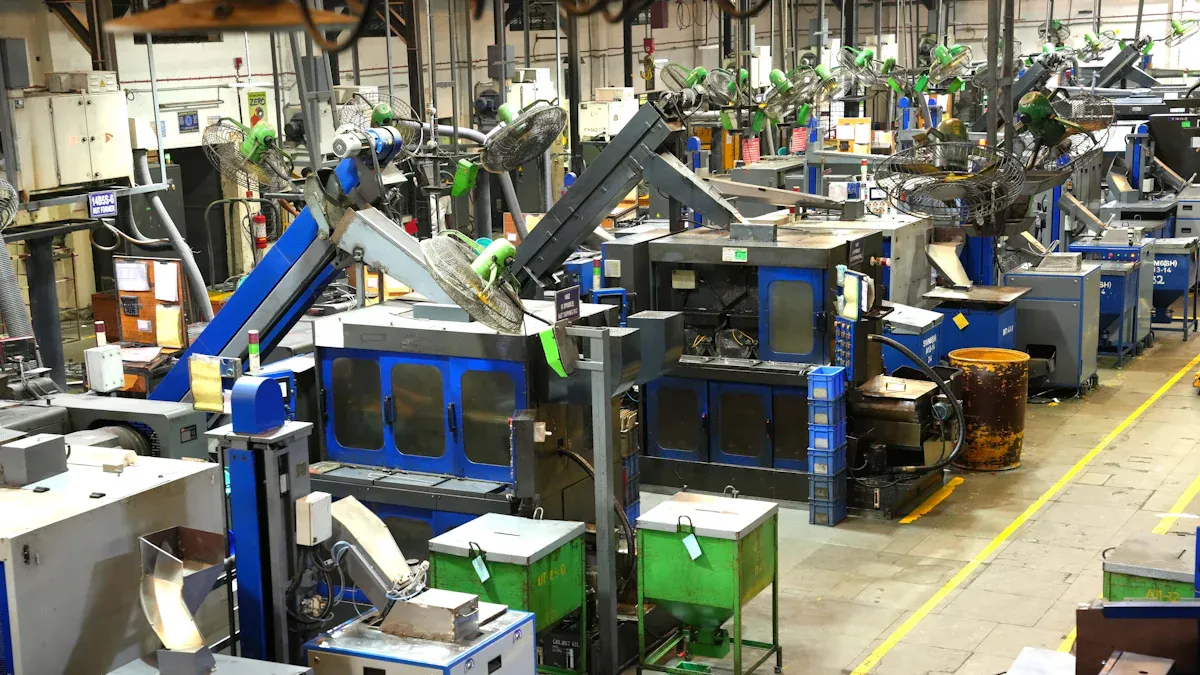
Seamless integration with industry 4.0 production lines depends on how well your power system speaks the same language as your factory network. ESTEL's Telecom Power System connects with industrial iot protocols and your existing factory networks. You plug the system into the same data backbone that carries machine status, production counts, and quality alerts. This connection turns a standalone power unit into an active participant in your line's control loop.
Industrial IoT Communication Protocols
Industrial iot protocols define how devices exchange data on the factory floor. Your power system must support the protocols your equipment already uses. ESTEL's Telecom Power System supports these protocols for this purpose. You connect the system to your network without adding protocol converters or gateways.
Industrial iot protocols carry real-time data between devices. Your power system sends voltage, current, and status information through these channels. In return, it receives commands and production context from upstream systems. This two-way flow creates real-time data exchange that keeps power delivery synchronized with line activity.
The system also supports integration with SCADA and building management systems. You monitor power output alongside other plant metrics in a single dashboard. Operators see how power consumption tracks production speed and can spot anomalies before they cause downtime. This visibility supports the adaptive control algorithms that adjust power output second by second.
Interfacing with PLCs and MES
Interfacing with plcs and mes systems forms the backbone of industry 4.0 integration. Programmable logic controllers (PLCs) manage multiple machines on a production line. They coordinate start signals, speed changes, and stop commands across conveyors, robots, and processing stations. Your power system receives these signals and adjusts its output accordingly.
MES systems provide vertical integration of information flows. They connect the shop floor to enterprise resource planning and quality management. When your MES schedules a production run, that schedule flows down to the PLC and then to your power system. The power system prepares for the expected load profile before the first machine starts. This preparation eliminates the lag that occurs when power waits for demand to appear.
ESTEL's Telecom Power System is suitable for diverse factory environments. You install the same unit in a climate-controlled electronics assembly area or a warmer metal fabrication shop. The input design handles voltage fluctuations common in older industrial facilities. The cooling approach removes the need for fans or air conditioning, which reduces maintenance and noise.
Integration enables dynamic output aligned with production pace without replacing existing equipment. You keep your current PLCs, MES, and network infrastructure. The power system adapts to your environment rather than forcing you to rebuild it. This approach lowers the cost and risk of upgrading to smart manufacturing. Your production line gains adaptive power output while your capital budget stays intact.
Key Benefits of Dynamic Power Alignment
Energy Efficiency and Cost Savings
Matching power output to your production rhythm cuts energy waste dramatically. A system that runs at constant maximum draws full power during idle periods, changeovers, and slow cycles. Dynamic power output eliminates that waste by following the load second by second. Real-world deployments show how much you can save.
Application | Reported energy savings when matching output to variable load vs constant maximum output |
|---|---|
Process blowers / aeration systems | 40–65% |
HVAC fan array (18 fans) | 65% |
Hydraulic pumps (40 HP, 6 units) | 42% |
Aeration blowers (125 HP, 2 units) | 58% |
General VFD-driven smart motors | 30–70% |
These figures come from industrial settings where load-following behavior replaced constant output. Your production line can achieve similar results when telecom power systems track demand in real time. The savings compound across every shift. You pay only for the power your equipment actually needs.
Energy efficiency and cost savings extend beyond the electricity bill. Lower power draw reduces peak demand charges. Many utilities bill based on your highest usage interval. A system that never exceeds actual load keeps that peak lower. You avoid paying for capacity you never use.
Enhanced Reliability and Predictive Maintenance
Reduced thermal stress is the first reliability gain. A power supply that runs at partial load generates less heat than one running at maximum. ESTEL's Telecom Power System removes fans and other moving parts. Fewer moving parts mean fewer failures. You spend less on maintenance and replacement components.
Predictive maintenance benefits follow directly from real-time data. The system monitors load patterns continuously. Adaptive control algorithms detect anomalies that signal early equipment wear. A motor drawing slightly more current than its baseline may need lubrication or replacement soon. You catch the problem before it stops the line.
Fewer unplanned downtime events protect your production speed and your delivery commitments. Extended equipment life lowers capital costs over time. These outcomes connect directly to industry 4.0 production lines goals. Operational efficiency rises when power delivery stays reliable. Supply chain agility improves when your line avoids sudden stops.
Telecom power systems with adaptive power output give you a practical path to these gains. The system adjusts to your production rhythm without manual tuning. You gain reliability, lower costs, and a stronger position to meet customer demand.
Case Study: ESTEL on a Smart Line
A representative deployment takes place on industry 4.0 production lines. You mount ESTEL's Telecom Power System on a rack inside an existing cabinet. One production line runs multiple shifts. In this plant, telecom power systems now deliver dynamic power output that follows the production rhythm. The unit draws only the power each production task requires.
Implementation and Measured Outcomes
Implementation follows four steps. You install current transformers on each machine feeder. You configure industrial iot protocols on the system. You interface the unit with PLCs and MES for schedules and machine states. Then you tune the adaptive control algorithm. After tuning, the unit changes its power output second by second—not in on-off steps, but continuously. This prevents wasted power.
During the initial period, you track energy use. Dynamic output replaces constant maximum power. Power consumption drops across every shift. The system reduces voltage and current during idle periods, changeovers, and slow cycles. Energy savings range from 30% to 70% depending on line variability. Peak demand charges fall because the supply never draws more power than the process requires. Uptime improves. Sensors detect anomalies early, so you fix issues before line stops. Real-time data flows to the controller every cycle, so the output always matches production speed.
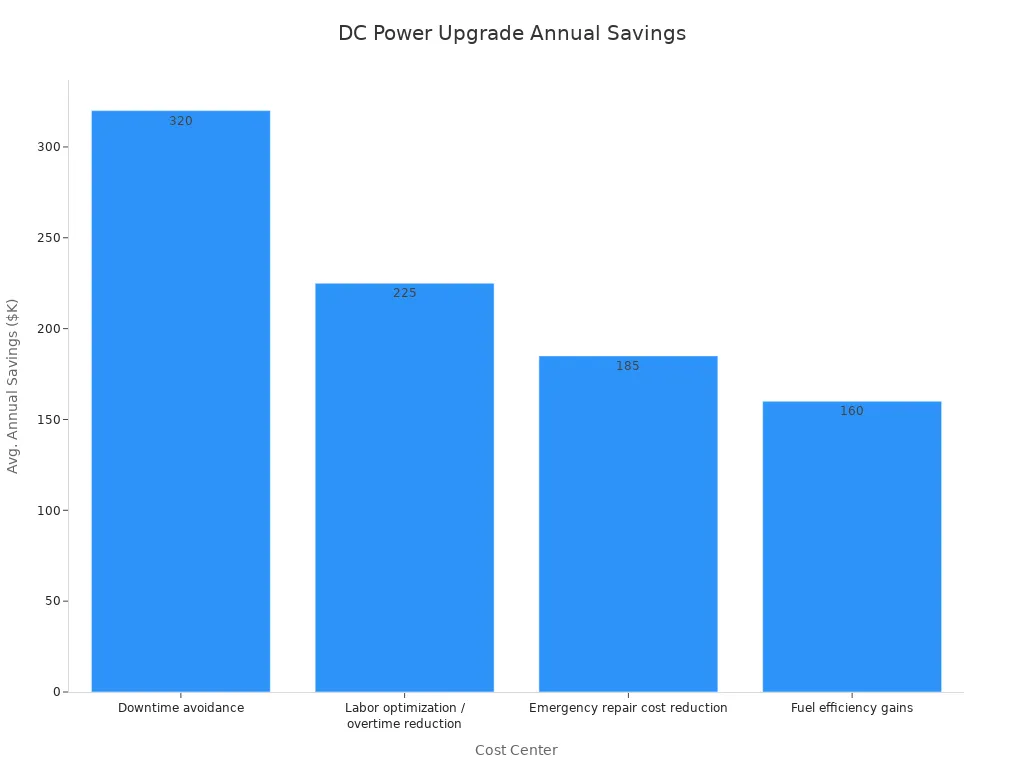
The chart below shows annual savings by cost center.
Energy Savings and Payback
Payback starts with net energy savings. You subtract added maintenance and service cost from annual utility savings. For a $125,000 upgrade, $46,000 utility savings, and $6,000 added service, net savings equal $40,000. Dividing $125,000 by $40,000 gives 3.13 years. Five-year ROI follows the same logic.
Avoided maintenance changes the calculation. Predictive alerts eliminate emergency repairs and overtime. Adding downtime avoidance and labor savings lifts combined annual savings to $890K. At that level, payback falls to 4-6 months. The exact period depends on load profile and electricity rate. Every production line follows this payback logic. The formula stays simple: total net investment divided by total annual savings. Power delivery stays efficient over the long run.
Telecom power systems energize industry 4.0 production lines by continuously adjusting power output to the production rhythm. Three pillars make this work: real-time monitoring, seamless integration, and adaptive algorithms. ESTEL's Telecom Power System delivers 20-36VDC and 0-150A power output. This power design enables measurable energy savings and reliability gains on your production line. The system supports industrial iot protocols and maintains dynamic power output across every shift. You gain adaptive power output that follows load changes second by second. This power approach is a practical step toward fully adaptive smart factories. Power delivery stays efficient, and power reliability improves.
FAQ
What output range does the Telecom Power System provide?
The system delivers 20-36VDC and 0-150A. This range covers most production line equipment. You match the power output to your line's actual demand at each moment. The unit adjusts continuously within these limits.
How does the system connect to my factory network?
The unit links to industrial iot protocols and your existing network. You connect without adding converters. The system exchanges data with PLCs and MES systems. This integration keeps power delivery aligned with production pace.
What cooling method does the system use?
The system's cooling design requires no fans or air conditioning units. This design reduces maintenance needs and noise. You install the same unit in different factory environments without special cooling infrastructure.
Can I install the system in my existing cabinet?
Yes. The unit fits a standard rack or mounts inside a cabinet. You keep your current setup and avoid replacement costs. The input design handles voltage fluctuations in older facilities.
How much energy can I save?
Energy savings range from 30% to 70% depending on line variability. The system follows load changes second by second. It avoids constant maximum draw during idle periods and changeovers. Your power consumption drops across every shift.
See Also
Essential Facts To Understand Regarding Telecom Power Supply Features
Solar Energy Storage Power System Intended For Telecom Cabinets
Ways To Ensure Reliable Electrical Supply Inside Telecom Cabinets
Utility Tied Solar Inverter With Battery Backup For Telecom Cabinets
Calculation Approaches For Telecom Cabinet Power Supply And Batteries
CALL US DIRECTLY
86-13752765943
3A-8, SHUIWAN 1979 SQUARE (PHASE II), NO.111, TAIZI ROAD,SHUIWAN COMMUNITY, ZHAOSHANG STREET, NANSHAN DISTRICT, SHENZHEN, GUANGDONG, CHINA
