A Guide to How Telecom Power Systems Use Peak-Valley Arbitrage for Low-Price Reserve Storage

Peak-valley arbitrage lets you charge your battery reserves during off-peak, low-price hours. You then discharge that stored power during peak, high-price hours. Telecom Power Systems cut energy costs this way while preserving reliable backup power. This approach turns a backup asset into a money-saving tool.
This strategy matters now. Electricity prices keep rising. Time-of-use tariffs widen the price gap between day and night. Telecom energy budgets face growing pressure.
You will learn the core concept. You will see the essential components. You will understand how the system captures low-price power automatically. You will discover the benefits and the practical steps to implement this strategy.
Key Takeaways
Peak-valley arbitrage saves money by charging batteries when power is cheap and using that power when prices are high.
Smart controllers and efficient batteries automatically manage the charging and discharging cycles for you.
This strategy lowers energy bills, extends battery life, and keeps backup power reliable during outages.
You can implement it by sizing your system correctly, using smart control algorithms, and monitoring performance.
Start with one site, measure the savings, and then expand to more sites for greater benefits.
What Peak-Valley Arbitrage Means for Telecom Power Systems
Peak-valley arbitrage flips your battery from a fixed cost into a money-saving tool. You charge the reserve when grid power is cheap. You then use that stored energy when grid power becomes expensive. The gap between the two prices becomes your profit. This model changes how you think about energy storage.
Peak-valley arbitrage is a model for liberalized electricity markets. Energy storage stations purchase and store electricity when prices are low. They sell it when prices are high, either through the spot market or directly to consumers, profiting from the price differential.
From Standby Cost to Energy Asset
Most telecom sites treat batteries as emergency equipment. Batteries sit idle, waiting for a power outage. This approach costs you money every month. The battery exists, but it produces no value during normal operation. You still pay for its purchase, installation, and maintenance.
Peak-valley arbitrage changes the equation. Instead of leaving the battery passive, you actively manage it. Your system shifts electricity consumption across different hours of the day.
The battery imports energy during a lower-cost period.
It stores that energy until demand and prices rise.
It supplies your site during a higher-cost period.
The gross value equals the difference between the avoided purchase price and the charging price.
The net value subtracts round-trip losses, auxiliary power usage, maintenance, and financing costs.
You must know these factors. A battery that wastes some energy during charge still delivers solid net savings when the price gap is wide. The key is discipline: charge only during valleys, discharge only during peaks.
How Time-of-Use Tariffs Create the Opportunity
Time-of-use tariffs make this strategy possible. Your utility sets different rates for different blocks of the day. Night hours often carry low prices. Afternoon hours on weekdays carry the highest rates. The wider the gap, the larger your potential savings. Some markets also include shoulder periods, giving you even more flexibility to schedule charging.
Liberalized electricity markets reinforce this opportunity. You gain the freedom to buy power when prices dip and reduce grid draw when prices spike. Telecom Power Systems exploit this flexibility automatically. The same battery bank serves two jobs: it remains a backup reserve, and it becomes an energy storage asset. You preserve your outage protection while cutting operating costs.
Key Components of an Arbitrage-Ready System
Smart Controllers and Rectifiers
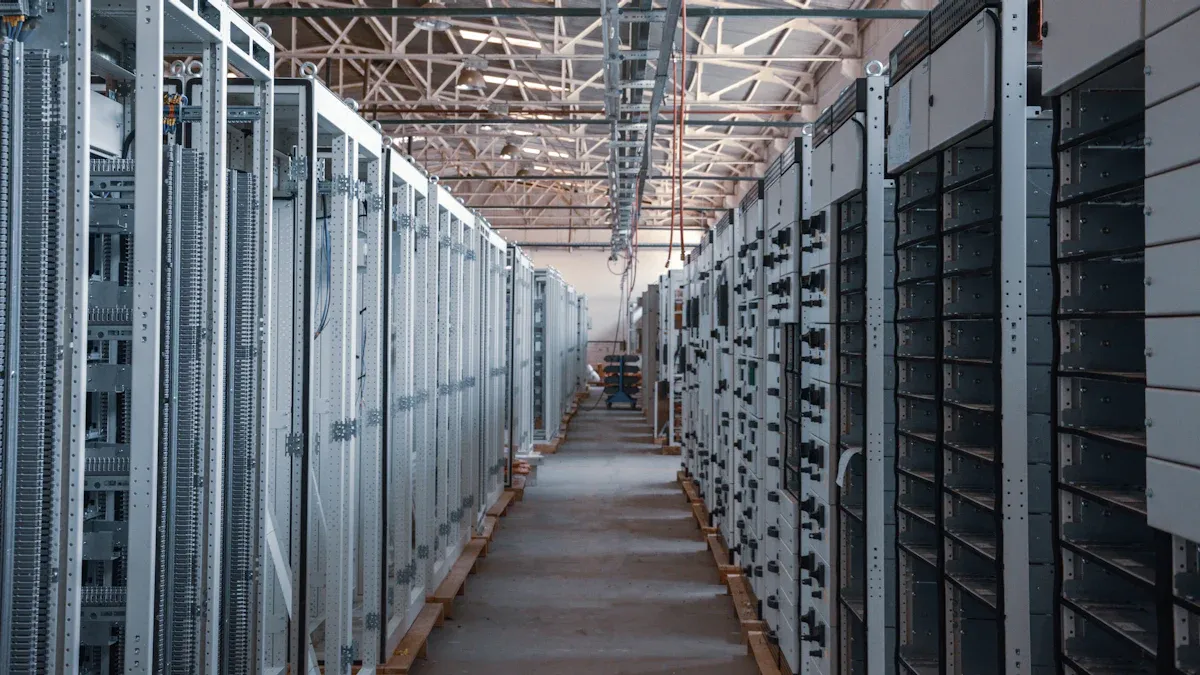
The smart controller acts as the brain of Telecom Power Systems. It reads time-of-use price signals from the utility and tracks real-time load at your site. A price drop into the valley window triggers a charge command. A price spike switches the site to battery power. The controller protects the reserve, keeping enough charge for an outage. This dual duty defines the arbitrage model.
Rectifiers handle the energy conversion. They turn alternating current from the grid into direct current for the battery and the telecom load. ESTEL's Telecom Power System accepts any AC input between 90 and 300 Vac. It remains stable through voltage fluctuations. The unit uses natural cooling, eliminating extra fans and maintenance. You can mount it on a standard 19-inch rack or inside a cabinet. It delivers up to 150A of output current.
Multiple communication ports make remote control possible. You can schedule charge and discharge windows from a central platform. You can adjust thresholds when the tariff changes. You can receive alerts about abnormal behavior.
Battery Banks and Grid Interaction
The battery bank provides storage capacity. Lithium iron phosphate (LFP) batteries suit daily arbitrage cycling better than traditional lead-acid units.
Advantage Area | LFP | Lead-Acid (VRLA) | Relevance to Daily Peak-Valley Arbitrage |
|---|---|---|---|
Cycle life | 1,000–3,000+ cycles to 80% DoD | 200–400 cycles to 50% DoD | Daily cycling makes VRLA replacement frequent; LFP can last a decade or more. |
Usable depth of discharge | 80–90% of rated capacity | Limited to 30–50% for longevity | LFP needs a smaller bank for the same usable energy. |
Round-trip efficiency | 95–98% | 80–90% | Less energy lost as heat, lowering operating cost. |
Temperature tolerance | Wider operating range; less permanent capacity loss at high temperatures | Life halves for about every 10°C above 25°C; significant loss below 0°C | Better for uncontrolled site temperatures. |
Space and weight | 30–50% less space and 40–60% less weight than VRLA | Larger, heavier bank for equivalent usable energy | Saves shelter space and simplifies installation. |
Total cost of ownership | Higher upfront cost, but fewer replacements and lower maintenance | Lower initial price, but more frequent replacement and higher maintenance | Over a 15-year horizon, LFP can need only one replacement versus 3–5 for VRLA. |
The table shows why LFP suits daily cycling. A lead-acid bank fades quickly when you cycle it every day. The same cycle barely stresses an LFP bank, so your reserve stays healthy for years. Higher round-trip efficiency also matters. More cheap valley energy reaches your load during peak hours. Less escapes as heat. A battery management system monitors cell voltage, temperature, and state of health. This keeps the bank safe through daily cycling.
The battery interacts with the grid through the controller and rectifier. The controller opens the charging path in valley periods. The rectifier pulls low-price power from the grid. Peak periods trigger the reverse. The controller closes the grid draw and lets the battery supply the site. This change happens automatically.
Telecom Power Systems with communication ports and a wide input range make this interaction easy to integrate. The same hardware that protects against outages now earns savings on every tariff cycle. You get reliability, efficiency, and automation in one package.
How the System Auto-Captures Low-Price Power
The controller never guesses. It monitors the tariff schedule, site load, grid health, battery state of charge, battery state of health, PV production, generator availability, charge limits, and discharge limits. All arrive continuously. A price drop below the charging threshold opens the window. A price spike above the discharge threshold closes it. You do not need to watch the meter yourself. The system handles this. It also knows when the spread makes no sense. On a flat-price day, it waits.
Monitoring Price Signals and Load Demand
The energy management system compares the current price with the next tariff period. It asks one basic question: does the spread justify a cycle? If the spread is too narrow, it does nothing. If the spread is wide, it prepares for action. Site load matters too. A site with low consumption in the valley period may need less charging. A site with high consumption in the peak period may discharge more aggressively. Battery state plays an equal role. Old batteries accept less charge. Cold batteries perform differently. The system updates its plan every few minutes. Site priority influences the decision. A critical site with a strict SLA gets a conservative schedule. A low-priority site takes more risk.
This monitoring never stops. When the grid fails, the signal changes instantly. The controller switches the battery from economic mode into backup mode. The protected reserve becomes available for the critical load. When the grid returns, the controller checks the outage risk and solar production before deciding to recharge now or wait for a cheaper tariff.
Scheduling Charge and Discharge Cycles
Scheduling starts with one calculation. Dispatchable energy equals current usable battery energy minus backup reserve minus operational safety margin. Use this example: a 50 kWh bank, a 20 kWh reserve, and a 5 kWh safety margin leave 25 kWh for arbitrage. That power can flow during a peak period. The 20 kWh backup reserve stays locked for outages. The numbers shift as the battery ages. The controller recalculates them constantly.
During a low-cost period, the grid supplies the telecom load and charges the battery toward its target state of charge. During a high-cost period, the controller discharges the battery inside the dispatchable window. It stops at the protected reserve. Economic use never touches that boundary. If the grid fails mid-discharge, the controller halts economic output instantly.
Backup reserve sizing is not fixed. It comes from critical site load multiplied by required backup hours. Then you adjust for battery aging, depth of discharge, BMS limits, temperature, weather, solar availability, generator availability, service-level agreements, and site criticality. A remote mountain site needs more reserve than a city site with a strong grid. This calculation is risk-aware. The objective: reduce total energy cost while satisfying telecom reliability constraints.
Communication ports make remote scheduling possible. You connect the system to a central platform. You review savings, cycle counts, and battery health. You change thresholds when the tariff changes. Telecom Power Systems with communication ports and wide input ranges enable this workflow. The hard boundary stays intact: only energy above the protected reserve can be scheduled for arbitrage. That is how you capture low-price power without losing your backup.
Benefits of Peak-Valley Arbitrage for Telecom Sites
Lower Energy Bills and Grid Stability
You capture the price spread every day, and that spread reduces your monthly energy bills. The distributed PV plus storage model applied to telecom base stations has delivered relatively stable returns through peak shaving and valley filling arbitrage. Your site buys cheap valley power and avoids expensive peak power. The savings accumulate month after month.
Discharging during peak periods also eases strain on the grid. Utilities face their highest demand during those hours. When your battery supplies the site instead of the grid, you lower that demand. The large number of concentrated base stations allows coordinated storage dispatch to unlock substantial dispatchable resources and aggregate scale. Your single site contributes a small amount, but thousands of sites together create meaningful grid relief.
Longer Battery Life and Smarter Reserve Management
Disciplined charge and discharge cycles balance near-term savings with long-term battery health. You avoid random, deep discharges that shorten battery life. The controller keeps cycling within safe limits. This discipline protects your investment.
Energy storage at telecom base stations can capture additional marginal value beyond basic arbitrage via backup-plus-storage integration. This improves project economics and investment enthusiasm. Storage provides backup power and enhances supply reliability, especially during extreme weather. Peak-valley price arbitrage and emergency backup power are core user-side applications of energy storage. Telecommunication base stations are a recognized industry scenario for storage. Your reserve serves both cost-saving arbitrage and operational backup needs. Telecom Power Systems make this dual role practical. Smarter reserve management improves reliability and service delivery. You gain lower costs, a healthier battery, and stronger uptime.
How to Implement It Effectively
System Design and Control Algorithms
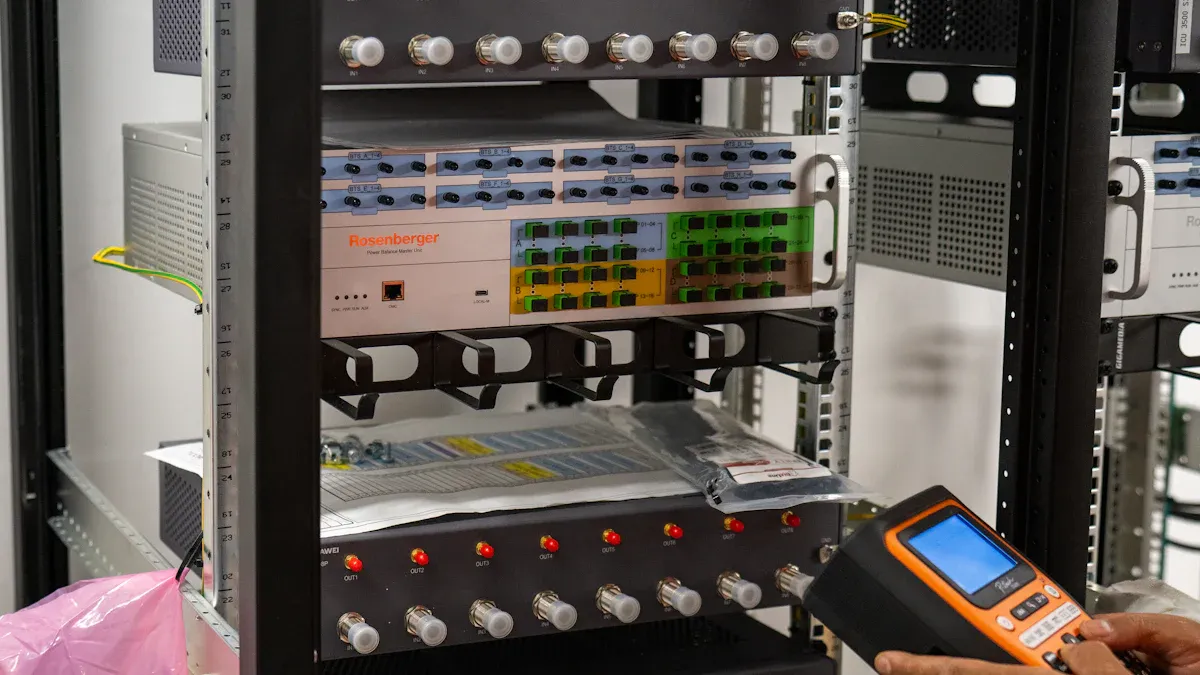
Start with system design. You estimate daily energy demand and backup requirements. Calculate total equipment load and identify peak hours. Then size the battery bank and rectifier capacity to match your site load and tariff structure. A system with a wide input voltage range, natural cooling, and flexible rack or cabinet installation simplifies deployment. ESTEL's Telecom Power System meets these needs with an AC input range of 90 to 300 Vac and multiple communication ports for networking.
Develop control algorithms that balance arbitrage revenue against battery degradation and backup requirements. You can apply optimization methods such as deterministic, stochastic, robust optimization, dynamic programming, model predictive control, and degradation-aware optimization. These methods decide when to charge and discharge. They also extend battery life. Adopt time-of-use pricing to align charging schedules with off-peak periods. Discharge during peak-price windows to reduce operational costs. Automated charging strategies handle demand spikes without manual effort.
Safety Measures and Performance Monitoring
Add safety measures to protect your system. The battery management system provides overcharge protection by halting charging once a cell hits its maximum safe voltage threshold. Over-discharge protection terminates power draw before deep depletion causes permanent cell damage. Overcurrent protection blocks extreme currents from overloaded systems or short circuits. Thermal management regulates cooling or heating elements to avert thermal runaway.
Performance monitoring tracks savings, cycle counts, and system health over time. Deploy an energy management platform that monitors real-time data and automatically adjusts charging and discharging cycles. This optimizes savings and backup reliability. In harsh climates, confirm power derating under extreme temperatures. Fire safety assessments should cover smoke detection, pressure relief, and thermal runaway propagation control. Regular monitoring helps you stay compliant with local rules and grid codes.
Peak-valley arbitrage transforms your telecom battery reserve from a passive safety net into an active cost-saving asset. The system charges during low-price valleys and discharges during high-price peaks automatically. You preserve backup power while cutting energy bills. You need no daily manual intervention after setup.
You gain four benefits: lower electricity costs, reliable outage protection, extended battery life, and better grid citizenship. Each daily cycle strengthens your site's economics. The same battery bank serves both roles without sacrificing resilience.
Evaluate your tariff structure and battery capacity today. Then consider a smart energy management platform. ESTEL's Telecom Power System provides wide input range, natural cooling, and remote scheduling ports. Start with one site. Measure the savings. Scale what works.
FAQ
What Hardware Do I Need for Peak-Valley Arbitrage?
A smart controller, a rectifier, a battery bank, and communication ports. Your battery should handle daily cycling. Systems like ESTEL's Telecom Power System accept 90 to 300 Vac input and deliver up to 150A. These features integrate easily.
Does Daily Arbitrage Weaken My Backup Reserve?
No. The controller locks a protected reserve. Dispatchable energy equals usable battery energy minus reserve and safety margin. Economic cycling never touches that boundary. An outage during discharge stops arbitrage instantly. Your backup capacity remains intact.
What Happens if the Grid Fails During Discharge?
The controller detects the outage immediately. It halts economic output and switches to backup mode. The protected reserve then powers critical loads. Communication ports send an alert. This switch happens automatically. You need no manual action.
Can I Use Existing Lead-Acid Batteries?
Yes, but cycle life limits savings. Lead-acid banks handle 200–400 cycles to 50% depth of discharge. Daily arbitrage causes frequent replacements. Lithium iron phosphate banks suit daily cycling better. They offer higher efficiency and longer service life. Consider replacement for sustained savings.
How Do I Know a Tariff Spread Is Large Enough?
Your system compares current price with the next tariff period. It checks round-trip losses and battery wear. If the spread covers those costs, it charges. Flat price days cause it to wait. The platform reports savings and decisions.
See Also
Solar Energy Storage Power Systems Designed for Telecom Cabinets
Beginner's Guide to Understanding Telecom Power Supply Systems
Essential Facts About Telecom Power Supply Features
Calculation Methods for Telecom Cabinet Power Systems and Batteries
ESTEL's Complete Guide to Telecom Cabinet Battery Risk Analysis
CALL US DIRECTLY
86-13752765943
3A-8, SHUIWAN 1979 SQUARE (PHASE II), NO.111, TAIZI ROAD,SHUIWAN COMMUNITY, ZHAOSHANG STREET, NANSHAN DISTRICT, SHENZHEN, GUANGDONG, CHINA
