How Telecom Power Systems Enable Rapid Emergency Communication

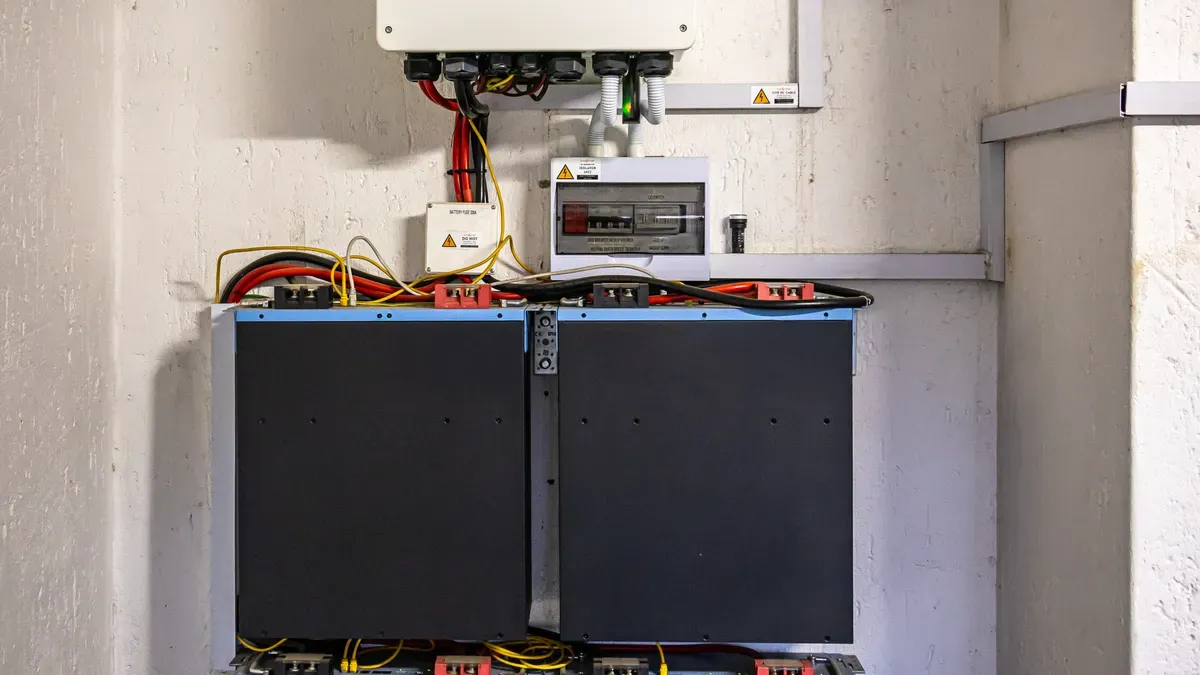
Telecom power systems are the true enabler of rapid emergency communication. Pre-integrated, reliable power is what lets your communication gear go live within the critical first hour. The 60-minute rapid deployment benchmark sets the standard, and this article explains how power systems help you meet it. Three enablers make the difference: essential power components, compact vehicle integration with quick-deploy brackets, and proven operational reliability. You get a complete, fast-to-activate package instead of separate parts that slow you down. Each enabler shortens the path from arrival to reliable communication on site. Together, they turn a parked vehicle into a working telecom node.
Key Takeaways
Telecom power systems help you meet the 60-minute deployment benchmark for emergency communication.
A pre-packed kit with a rectifier, batteries, and quick-deploy brackets speeds up field setup.
LiFePO4 batteries offer longer life and better safety for backup power.
Plan backup runtime around the 72-hour mission window using generators and battery layers.
Regular drills and maintenance keep your kit ready for rapid deployment.
Core Components of Telecom Power Systems
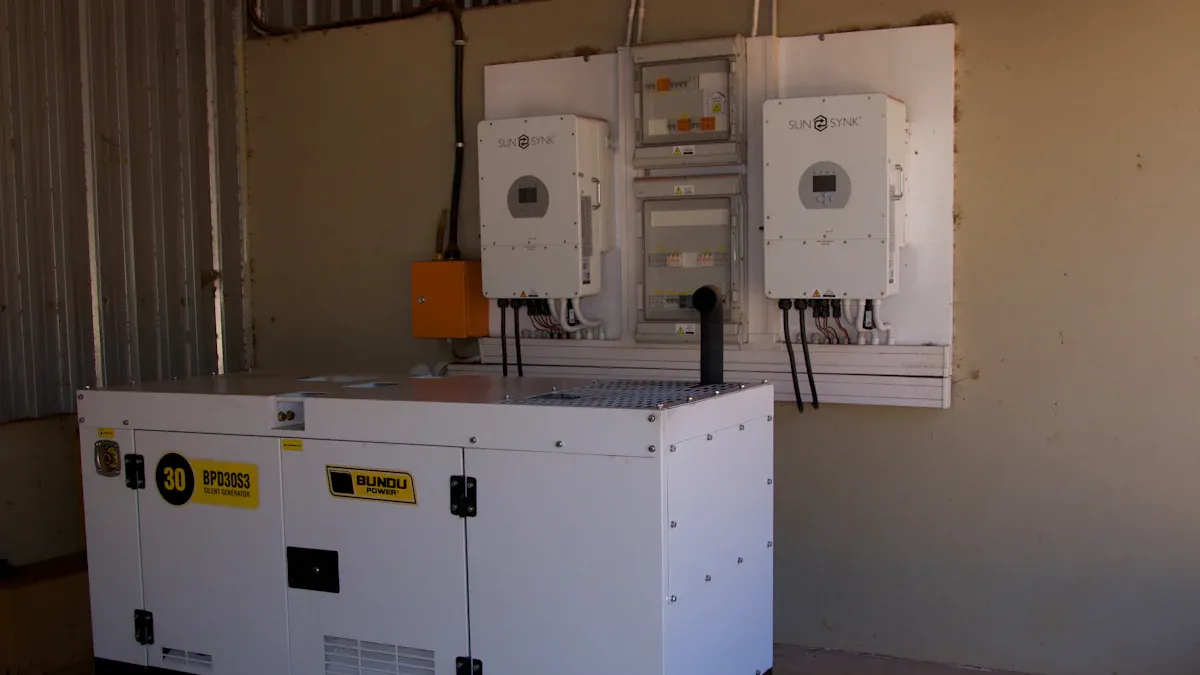
An emergency communication vehicle kit is a complete package. It bundles telecom power systems, a rectifier, batteries, communication devices, and protective gear into one unit. Each part plays a role in rapid activation, not just steady-state operation. You unpack the kit, connect the power path, and start passing traffic. The design of each component decides how fast that sequence runs.
Rectifiers and Power Conversion
The rectifier converts AC power into the DC voltage your communication equipment needs. Modern rectifier systems in 48V telecom networks achieve efficiencies above 96%. That high efficiency minimizes power loss and heat generation, which matters for dense or outdoor deployments. Equipment from vendors such as Unipower and Huawei reaches up to 96% efficiency. Only about 4% of the power passing through the rectifier is lost during AC-to-DC conversion. For rapid activation, this efficiency pays off in two ways. First, less heat means you need less cooling capacity, so the vehicle can run a compact thermal design. Second, a cooler rectifier reaches stable operation faster after startup. When you evaluate telecom rectifier system features, look at conversion efficiency, startup time, and how the unit handles input voltage swings. A power system with inverter capability adds AC output for devices that need it, which extends the kit's usefulness beyond pure DC loads. These power and electrical systems choices determine how quickly the site becomes operational.
Batteries and Backup Duration
Batteries carry the load when grid power fails or when you deploy before a generator arrives. The chemistry you choose shapes backup duration, maintenance needs, and safety. The table below compares two common options.
Feature | LiFePO4 | Lead-Acid |
|---|---|---|
Typical lifespan | 8–10 years | 2–4 years |
Depth of discharge | Full capacity with BMS protection | Deep discharge shortens life |
Safety | Stable, no swelling, no toxic leakage | Swelling, acid leak, gas risk |
Efficiency | High charge/discharge efficiency | Lower efficiency, capacity loss |
Environmental impact | Non-toxic, recyclable, long life | Hazardous lead, recycling challenges |
LiFePO4 has no cobalt and far greater chemical stability than LCO or NMC chemistries. That stability gives very low overheating and combustion risk, which makes it the preferred choice for mission-critical backup power such as DAS and public safety systems. Lead-acid costs less upfront and offers familiar maintenance practices. Lithium carries a higher initial investment and requires an integrated BMS. For North American operators aiming to cut long-term OPEX and improve site availability, lithium is becoming the preferred option. It also performs more stably across wide temperature ranges and supports remote monitoring at hard-to-access sites.
A battery management system protects runtime and reliability. Cell balancing maximizes usable capacity and improves runtime consistency. Temperature management prevents capacity loss and reduces degradation. Overcharge and deep discharge protection preserve battery health. Runtime accuracy from state-of-charge and state-of-health analysis gives you accurate predictions based on charge, health, load, and temperature. Without a BMS, you get inaccurate runtime expectations and undetected degradation.
Overcurrent protection safeguards against excessive charge or discharge rates that could generate dangerous heat or cause cell degradation. Modern BMS units can disconnect the battery from the load or charger within milliseconds when overcurrent conditions occur, preventing potential fires or explosions.
Together, these components turn stored energy into dependable connectivity. The rectifier system and battery bank work as one power path. You get an emergency communication vehicle kit that activates fast and keeps communications running.
Emergency Communication Vehicle Kit Design
Compact Layout for Small, Medium, and Large Vehicles
Compact vehicle design supports small-, medium-, and large-sized command vehicles. Each size gets a customized communication system configuration. A small SUV carries a lean kit for a single crew. A large mobile command vehicle carries a full rack of radios, a dispatch console, and extended backup power. You match the layout to the mission, not the other way around.
Space planning drives the result. You place the power system, batteries, and radios in one organized footprint. Organized storage lets you deploy and set up in disaster zones within a few hours. A custom mobile command center can also include a collapsible antenna mast, a rugged tablet for dispatch and mapping, and a portable repeater for range extension. Every item earns its place in the layout.
Quick-Deploy Brackets and Pre-Packed Kits
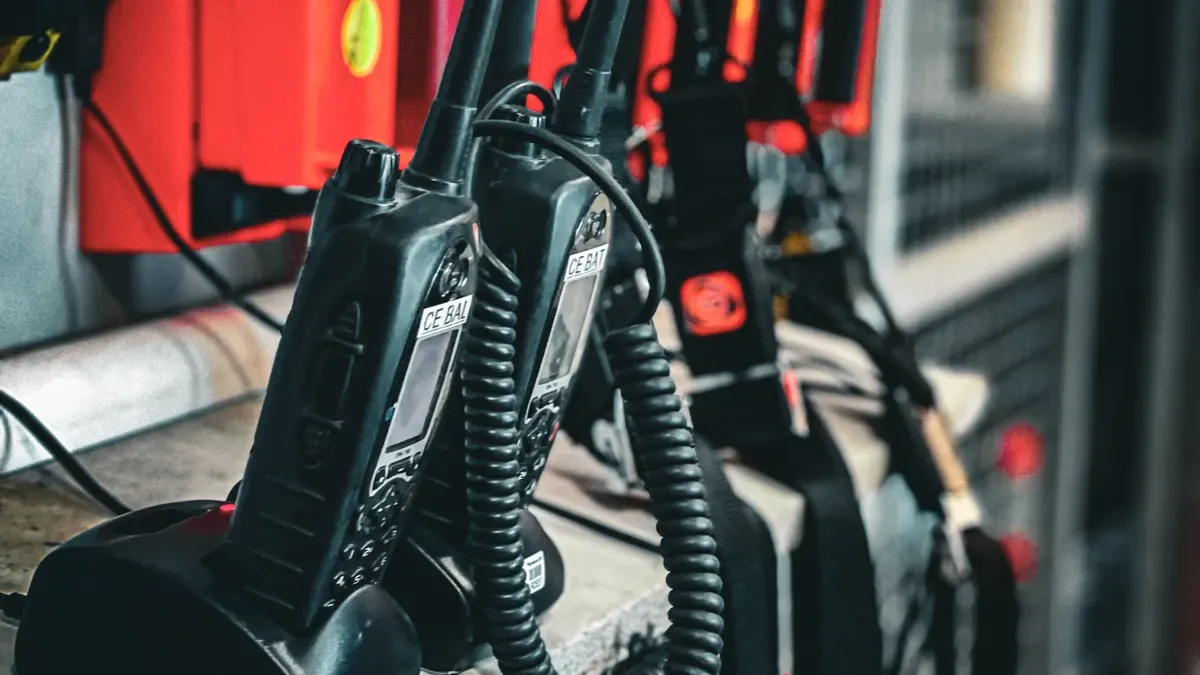
A pre-packed emergency communication vehicle kit shortens field time. The kit holds nationwide PTT radios, spare batteries and a multi-bank charger, noise-canceling headsets, GPS-enabled units with panic buttons, a laminated quick-start card, and a rugged, waterproof case. Charging systems and automatic cord ejects support quick vehicle deployment. You grab the case, mount it, and power up.
ESTEL's quick-deploy bracket and pre-packed kit approach offers one example of fast field setup. The bracket holds equipment secure during transit and releases it fast on arrival. Other mounting options remain valid for different vehicles and budgets. A simple staging routine keeps the kit ready: scan inventory quarterly, top off batteries before dispatch, seal and date-stamp the case, and log its location. That routine protects rapid setup and reliable connectivity on arrival.
Mobile Command Vehicle Operations
Deployment Timelines and Startup Sequences
The 60-minute benchmark has a simple definition. You move a pre-packed emergency communication vehicle kit into position, power it up, and pass traffic. Each step depends on the one before it. A mobile command vehicle that arrives with its kit staged and its power path pre-wired skips the slowest part of any deployment: hunting for parts and making connections in the field.
The startup sequence follows a fixed order. You park and level the vehicle, ground the chassis, and connect the external power feed or start the onboard generator. The telecom power systems then bring the rectifier online, and the battery bank takes over any gap in the transfer. Radios and dispatch consoles boot next. You confirm a signal check and begin passing traffic. A practiced crew runs this sequence without hesitation, and the 60-minute target stays within reach.
Onboard equipment needs three customized systems to survive the trip and the mission. A customized power supply matches the DC voltage and current draw of your radios and consoles. Heat dissipation keeps dense racks within their operating range, since a mobile command center packs electronics into a small space with limited airflow. Damping systems absorb road shock and protect sensitive boards and connectors. Together, these three systems decide whether your gear works on arrival.
Backup Runtime and Load Management
Runtime planning starts with the mission window, not a fixed hour count. Command communications and critical operational points must be established within the first 72 hours of a critical incident, or cascading events can occur. That 72-hour window frames the duration a mobile command vehicle must sustain operations.
Command communications and critical operational points must be established within the first 72 hours of a critical incident, or cascading events can occur.
In practice, mobile command vehicles rely on onboard generators as the primary power source. These generators run quietly for extended periods and use easily refillable fuel, so operations do not stop for recharging. A secondary battery layer activates when the generator stops or runs low. That layer prevents sudden outages and gives your team time to switch to another source. Backup runtime bridges the gap between power sources rather than meeting one fixed hour requirement.
A sound backup configuration covers three layers:
The command center must remain functional without plug-in power.
Recommended backup includes gas generators, battery backups, and renewable energy harvesting such as solar panels.
The goal is consistent, uninterrupted access to power during emergencies.
Load management ties these layers together. You prioritize radios and dispatch consoles first, then shed non-critical loads as battery state of charge drops. This approach protects reliable communication and keeps your custom mobile command center, or a mobile command and drone operations hub, running through the full incident window. A mobile command center built this way delivers steady connectivity when the grid stays down.
Reliability Through Telecom Power System Integration
Integrated power, cooling, and damping raise uptime and cut field failures. You treat them as one system, not three separate purchases. A sealed cabinet with engineered thermal management keeps internal temperatures stable despite external heat or cold. That stability protects routers, switches, and batteries from thermal degradation. Climate-controlled enclosures also prevent internal condensation that corrodes electronics and shield gear from UV radiation and humidity. The result is less thermal stress on circuit boards and connections, longer hardware life, and stronger uptime for reliability-sensitive networks.
Resilience Metrics and Environmental Ratings
Intelligent thermal derating keeps your power systems running under extreme heat. When cabinet temperatures climb past 55°C in outdoor enclosures without air conditioning, the supply automatically reduces output to roughly 80% of rated power. At 65°C with forced cooling, output drops to about 60%. The system keeps operating safely instead of failing, and temperature alarms flag blocked ventilation or fan failures without a site visit.
Wide-temperature fan cooling extends that range. Fully sealed ball-bearing fans with low-temperature lubricants enable startup down to -40°C. Intelligent fan control adjusts speed to load and internal temperature, which reduces bearing wear and extends equipment lifespan. An independent airflow design separates the cooling path from the sealed electronics chamber. Dust and moisture then affect mainly the heat sink area, so your circuit boards stay protected even if cabinet sealing degrades.
Selection Criteria and Field Maintenance
Choosing the right telecom power system starts with your mission profile. Match the rectifier system to your DC load and input voltage swings. Size the battery bank to your incident window. Confirm the enclosure rating suits your climate, then check that cooling and damping match your vehicle and terrain. Each configuration fits a different job: a lean kit suits a small response vehicle, and a full rack suits a large mobile command center.
Field maintenance stays simple with the right design. Schedule quarterly checks of fan operation, filter condition, and battery state of health. Log temperature alarms and investigate them early. These habits protect reliable communication and uninterrupted communication across every deployment.
Real-World Communications Deployments
Agency Use Cases and Rapid Deployment Platforms
The Connecticut Telecommunications System (CTS) Unit shows how agencies put this technology to work. The unit assigns Rapid Deployment Vehicles to engineers. Each vehicle carries a pre-packed emergency communication vehicle kit, so an engineer drives to the scene and starts the power path without waiting for a supply truck. The engineer owns the vehicle, knows the kit, and runs the startup sequence from memory. That ownership model shortens the gap between dispatch and live traffic.
You do not need a large agency to adopt the same model. Emergency communications vehicle technology can be deployed by any sized emergency response agency. A volunteer department can field a small mobile command vehicle with a lean kit. A state-level team can run a full mobile command center with extended backup. The platform scales to your budget and your mission.
Measured Results and Lessons Learned
Agencies that run these platforms report a common lesson. The kit matters less than the readiness routine behind it. Quarterly inventory scans, topped-off batteries, and a sealed, date-stamped case keep the emergency communication vehicle kit deployable at a moment's notice. Teams that skip the routine lose time in the field.
A second lesson concerns training. Crews that rehearse the startup sequence reach the 60-minute benchmark with margin. Crews that read the manual on arrival do not. You should drill the sequence until it becomes automatic.
The payoff is reliable communication during disasters. A staged kit, a rehearsed crew, and integrated power, cooling, and damping deliver secure, reliable communication when the grid fails. Connectivity and communications become predictable outcomes instead of hopes. Any agency can copy this pattern, and the results follow the discipline you build into the routine.
Telecom power systems enable rapid emergency communication. They combine essential power components, compact vehicle integration, and quick-deploy brackets into one reliable, fast-to-activate package. That package meets the 60-minute deployment benchmark.
Deployment speed gets you on air fast. Backup duration keeps you there when the grid fails. Resilience features protect the gear through heat, cold, and rough roads. Together, they turn power into communication continuity when it matters most. Multi-channel planning strengthens that continuity further, so messages still get through if one route drops.
Designs like ESTEL's vehicle kits and brackets keep shortening response times. Each refinement moves your emergency communication vehicle kit closer to instant readiness, and your team closer to reliable communication on arrival.
FAQ
How do you meet the 60-minute deployment benchmark?
Stage a pre-packed kit, pre-wire the power path, and drill the startup sequence. Your crew parks, grounds the chassis, connects power, and boots radios in a fixed order. Teams that rehearse reach the target with margin. Teams that read the manual on arrival do not.
Which battery chemistry should you choose for backup power?
LiFePO4 offers an 8–10 year lifespan, full depth of discharge with BMS protection, and low overheating risk. Lead-acid costs less upfront and uses familiar maintenance practices. Match the chemistry to your budget, climate, and how often you cycle the bank.
How long should backup runtime last?
Plan around the mission window, not a fixed hour count. Command communications must be established within the first 72 hours of a critical incident. Use a generator as the primary source and a battery layer to bridge gaps between sources.
What maintenance keeps a kit deployable?
Scan inventory quarterly, top off batteries before dispatch, and check fan operation, filter condition, and battery state of health. Seal and date-stamp the case, then log its location. Investigate temperature alarms early. This routine protects reliable communication across every deployment.
See Also
Essential Features Of Telecom Power Supply You Should Know
How To Guarantee Reliable Power Supply In Telecom Cabinets
Understanding The ESTEL Telecom Cabinet Power System Explained
Calculation Methods For Telecom Cabinet Power Systems And Batteries
Photovoltaic Energy Storage Power Systems For Telecom Cabinets
CALL US DIRECTLY
86-13752765943
3A-8, SHUIWAN 1979 SQUARE (PHASE II), NO.111, TAIZI ROAD,SHUIWAN COMMUNITY, ZHAOSHANG STREET, NANSHAN DISTRICT, SHENZHEN, GUANGDONG, CHINA
